KAT VR has officially introduced the KAT Walk C3 Ultra, a next-generation omnidirectional treadmill (ODT) designed to bridge the gap between physical movement and virtual reality locomotion. As the latest iteration in the company’s specialized hardware lineup, the C3 Ultra is marketed as a comprehensive solution for VR enthusiasts seeking to eliminate "joystick-induced" motion sickness by replacing thumbstick movement with physical walking. This device functions by detecting user steps through sensor-integrated footwear and translating that data into in-game movement, effectively emulating smooth locomotion across any VR title that supports standard thumbstick input.

The Evolution of Omnidirectional Locomotion
The development of the KAT Walk C3 Ultra comes at a pivotal time for the VR hardware industry. While headsets like the Meta Quest 3 and Valve Index have advanced visual and tracking fidelity, physical movement remains a primary bottleneck for immersion. According to market research, a significant percentage of VR users experience vestibular-ocular conflict—the disconnect between perceived virtual movement and physical stillness—which leads to motion sickness.

KAT VR, established as a leader in the ODT space, has spent several years refining the "slipmill" concept. Unlike motorized treadmills found in gyms, the C3 Ultra utilizes a concave, low-friction platform combined with specialized footwear. This design allows users to slide their feet back toward the center of the device with every step, maintaining a fixed position in physical space while moving infinitely in the virtual environment.

Technical Specifications and Logistics
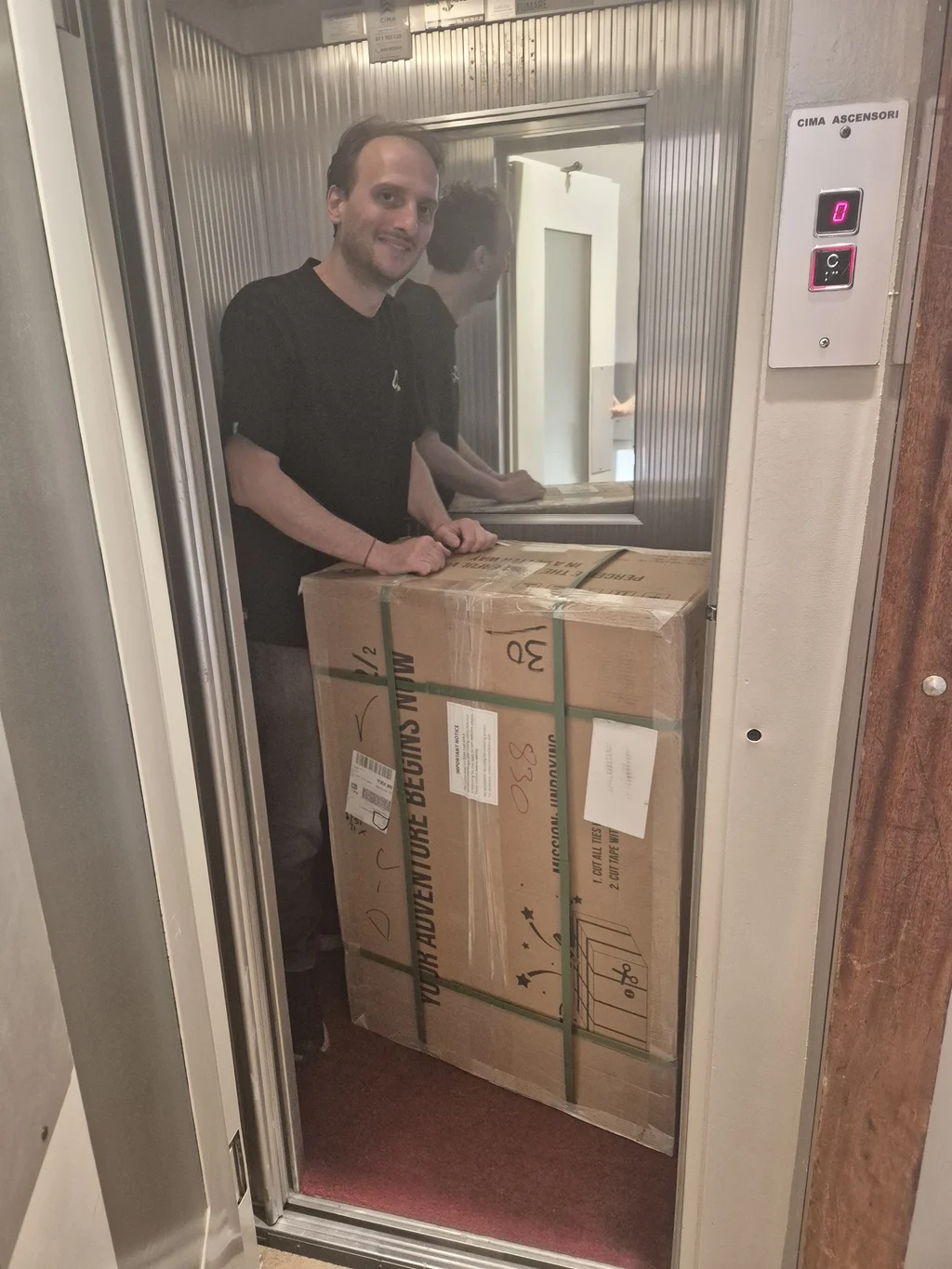
The KAT Walk C3 Ultra is a substantial piece of hardware, emphasizing its target market of dedicated "prosumers" and VR enthusiasts. The unit arrives disassembled in four separate containers, with a total shipping weight of approximately 70 kilograms (154 pounds).

Spatial Requirements and Assembly
For optimal operation, the device requires a dedicated footprint of approximately 1.5 meters by 1.5 meters (5 feet by 5 feet). Assembly is comparable to high-end modular furniture, requiring roughly 90 to 120 minutes for a single person to complete. The structure consists of a concave base, a vertical support rail, and a 13-kilogram (28-pound) rotating back harness. The harness is engineered with low-friction bearings to allow for 360-degree rotation, enabling the user to turn, strafe, and move backward without mechanical resistance.

Sensor Integration and Connectivity
Movement detection is handled by proprietary sensors embedded within the soles of the KAT shoes. These sensors communicate via Bluetooth to the treadmill’s base, which is then connected to a host PC via USB. The KAT Gateway software serves as the intermediary, translating kinetic data into SteamVR or Oculus input commands.

Operational Performance and User Mechanics
The "walking sensation" on the C3 Ultra differs significantly from natural terrestrial walking. Users must adopt a specific posture—slightly leaning the torso forward—to counteract the slippery surface and the gravitational pull of the concave base.

Walking and Running Fidelity
Field testing of the C3 Ultra indicates that the device excels during high-intensity movement, such as running in open-world environments or competitive shooters. When a user maintains a consistent pace, the speed detection is reported as highly responsive. However, the system faces challenges with "room-scale" accuracy. Fine, micro-movements required for precise positioning in cramped virtual spaces can be difficult to execute, as the sensors are optimized for the stride length of a standard walk.

The Impact of Mechanical Inertia
One critical factor in the C3 Ultra’s performance is the inertia of the rotating harness. The 13-kilogram back assembly, while smooth, carries significant momentum. Rapid changes in direction can result in the harness continuing to rotate after the user has stopped, requiring the user to use their core strength and leg stability to "brake" the movement. While experienced users reportedly adapt to this swinging sensation over time, it represents a learning curve for those accustomed to static VR play.

Safety and Onboarding Procedures
Due to the low-friction nature of the platform and shoes, the onboarding and offboarding processes are high-stakes maneuvers. KAT VR has implemented a "waist lock" system, involving heavy-duty straps that secure the user to the rotating harness.

Industry analysts note that safety remains a primary concern for ODT manufacturers. The C3 Ultra includes hooks on the harness to hold the VR headset and controllers, allowing the user to have their hands free to grip the support structure while stepping onto the slippery base. Once secured, the harness supports the user’s weight, allowing for crouching and small jumps. However, reports suggest that crouching can feel unstable due to the lack of traction, leading some users to adopt a "one-knee-down" pivot strategy for stability.

Software Integration and Haptic Feedback
The KAT Gateway companion software provides a robust suite of customization tools. Users can adjust:

- Data Smoothing: Reducing jitter in movement translation.
- Sensitivity: Calibrating the effort required to initiate a walk.
- Haptic Settings: Managing the platform’s built-in vibration modules.
The C3 Ultra features a vibration system intended to simulate terrain feedback. While this adds a layer of sensory input, early feedback suggests the haptics are relatively subtle and can be noisy during high-intensity sessions. The software also includes fitness-tracking modules, calculating distance traveled and calories burned, positioning the device as a legitimate tool for VR-based exercise.

Market Positioning and Pricing
The KAT Walk C3 Ultra is positioned as a premium peripheral. It is available in two primary configurations:

- Standard Edition: Priced at $1,499. This includes the treadmill and one pair of specialized shoes.
- Power Edition: Priced at $1,699. This version includes integrated charging for the VR headset, allowing for extended play sessions without battery depletion.
For users wishing to use the device with standalone headsets like the Meta Quest 3 without a PC, the "KAT Nexus" adapter is required, which adds an additional layer of setup and cost.

Broad Implications for the VR Industry
The release of the C3 Ultra signifies a maturing market for VR locomotion. By offering a consumer-available ODT at the $1,500 price point, KAT VR is targeting the "hardcore" segment of the market—users who have already invested in high-end GPUs and headsets.

Impact on Fitness and Training
Beyond gaming, the implications for enterprise training and fitness are significant. The physical exertion required to operate the C3 Ultra is substantial; users report being "soaked in sweat" after 30 minutes of play. This makes the device a viable candidate for gamified fitness. Furthermore, for industrial or military training where "muscle memory" for navigating a space is required, the C3 Ultra provides a level of physical engagement that teleportation or joystick movement cannot replicate.

Future Outlook
KAT VR has acknowledged that the units currently being reviewed by early testers are preview prototypes. The company has stated that the mass-production version will feature a "wider friction adjustment range," allowing users to more precisely tune the slipperiness of the shoes to their comfort level. This adjustment could address one of the primary criticisms regarding the "unsafe" feeling during onboarding.

In conclusion, the KAT Walk C3 Ultra represents a sophisticated, albeit niche, advancement in virtual reality. While its size, cost, and mechanical quirks prevent it from being a mass-market consumer product, it offers a glimpse into a future where virtual exploration is a full-body physical activity. For the enthusiast willing to dedicate the space and the time to master the "slipmill" technique, the C3 Ultra provides a level of immersion that currently has few rivals in the consumer sector.
About the Author