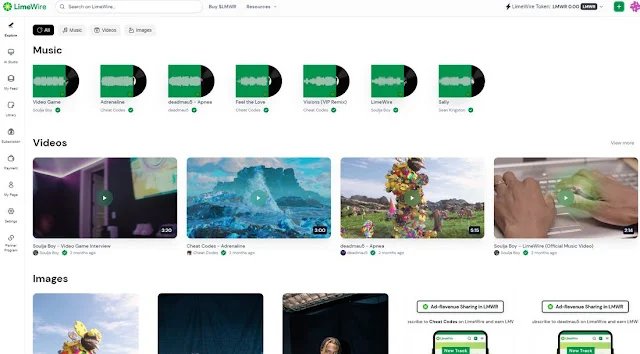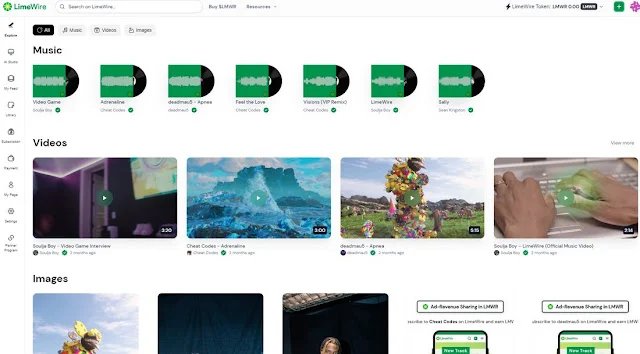
In a landscape increasingly defined by rapid technological advancement, the emergence of LimeWire as a generative AI content platform marks a significant evolution. This revamped entity, shedding its past association with peer-to-peer file sharing, now positions itself as a comprehensive ecosystem for creators to not only generate AI-powered content but also to distribute, share, and crucially, monetize their digital creations. The platform’s innovative approach, blending cutting-edge AI tools with blockchain technology, offers a compelling proposition for artists, musicians, and a new generation of digital creators seeking to harness the power of artificial intelligence.
The resurgence of the LimeWire brand has been met with considerable interest, particularly given its historical significance in the early days of digital media distribution. While the original LimeWire was shuttered in 2010 due to copyright infringement lawsuits, its reintroduction as a platform focused on legitimate content creation and ownership represents a stark contrast and a strategic pivot. This transformation began with the initial focus on AI image generation, leveraging sophisticated models to empower users with a visual creation toolkit. However, the platform’s vision extends far beyond static imagery, with ambitious plans to integrate AI-driven music and video generation, signaling a comprehensive content creation suite for the future.
The Genesis of the New LimeWire: From File Sharing to Creative Hub
The original LimeWire, launched in 2000, became a ubiquitous name in the digital age, enabling users to share music, movies, and software files. Its widespread adoption, however, was inextricably linked to significant copyright infringement issues, ultimately leading to its downfall. Fast forward to the present, the name "LimeWire" has been resurrected by a new leadership team with a fundamentally different objective: to build a platform that fosters creativity and rewards creators legally and ethically.
This modern iteration of LimeWire officially launched its AI Studio in late 2022, aiming to capitalize on the burgeoning interest in generative AI. The platform’s strategy has been to offer an accessible, user-friendly interface that lowers the barrier to entry for AI content creation. By providing free credits and a tiered subscription model, LimeWire seeks to attract a broad user base, from hobbyists to professional artists. The integration with blockchain technology, specifically through Non-Fungible Tokens (NFTs), is central to its value proposition, offering creators verifiable ownership and new monetization avenues.
Empowering Creators: Features and Functionality of LimeWire AI Studio
LimeWire AI Studio currently offers robust AI image generation capabilities, serving as its primary creative engine. Users can engage with advanced AI models, including Stable Diffusion 2.1, Stable Diffusion XL, and DALL-E 2, to transform textual prompts into visual art. The platform supports a spectrum of complexity, allowing for simple, concise prompts as well as more detailed and nuanced instructions, catering to diverse creative needs.
A key differentiator for LimeWire is its seamless integration of multiple AI models and distinct artistic styles. Users can effortlessly switch between various models and experiment with aesthetic approaches such as cinematic, digital art, pixel art, anime, and analog film. This flexibility allows for extensive exploration of visual possibilities, enabling creators to achieve a wide range of artistic outcomes. Further customization is facilitated through features like samplers, which allow for fine-tuning of detail and quality, alongside prompt guidance and additional customization options designed to enhance the user experience for both beginners and seasoned AI artists.
The platform is not resting on its current achievements. LimeWire is actively developing its own proprietary AI model, a move that signifies a commitment to ongoing innovation and enhanced creative output. This proprietary model is anticipated to unlock further possibilities for users, solidifying LimeWire’s position as a dynamic and evolving player in the AI art generation space.
The NFT Connection: Automating Ownership and Distribution
A cornerstone of the LimeWire platform is its automated NFT minting process. Upon completion of a creative work within the AI Studio, users have the option to publish their content. This publication triggers an automatic minting of the creation as an NFT on either the Polygon or Algorand blockchain. This process imbues the digital artwork with a unique digital signature, establishing verifiable authenticity and ownership within the decentralized digital realm.
LimeWire empowers creators with significant control over the accessibility of their NFT creations. They can opt for a public release, making their work discoverable by a broad audience and enabling potential trading within the LimeWire community. Alternatively, creators can choose to offer their content exclusively to premium subscribers, fostering a sense of exclusivity and providing a more intimate experience for their dedicated fanbase. This dual approach to content distribution underscores LimeWire’s commitment to creator autonomy.
Monetization Strategies: Beyond Royalties and Ad Revenue
LimeWire has engineered a multi-faceted revenue generation model designed to benefit its creators. Beyond the potential for royalties generated from the trading of their NFTs, creators can also earn ad revenue from their published content. When users view images, music, or videos on the platform, the creator receives 70% of the associated ad revenue. This model is particularly beneficial for designers and artists experimenting with AI tools, offering a supplementary income stream alongside their creative endeavors.
The revenue earned through these mechanisms is disbursed in the form of LMWR tokens, LimeWire’s native cryptocurrency. These tokens can be traded on major cryptocurrency exchanges such as Kraken, ByBit, and UniSwap, providing creators with liquidity and flexibility. Furthermore, LMWR tokens can also be utilized within the LimeWire ecosystem to pay for prompts when utilizing the generative AI tools, creating a circular economy for creators on the platform.
Pricing Tiers and Accessibility
LimeWire offers a tiered pricing structure designed to accommodate various user needs and budgets. A free tier is available, providing users with an initial allocation of 10 credits, allowing for the generation of up to 20 AI images per day. Free users also benefit from a 50% ad revenue share.
For users seeking more advanced features and higher generation limits, several premium plans are available:
- $9.99 per month: Grants 1,000 credits, enabling up to 2,000 image generations. This tier includes early access to new AI models and a 50% ad revenue share.
- $29 per month: Offers 3,750 credits, allowing for up to 7,500 image generations. Subscribers also receive early access to new AI models and a 60% ad revenue share.
- $49 per month: Provides 5,000 credits, supporting up to 10,000 image generations. This plan includes early access to new AI models and a 70% ad revenue share.
- $99 per month: The highest tier offers 11,250 credits, facilitating up to 22,500 image generations. It also includes early access to new AI models and a 70% ad revenue share.
All premium plans come with additional benefits such as a Pro profile badge, access to full creation history, faster image generation speeds, and an ad-free experience. This comprehensive pricing strategy aims to make the platform accessible while rewarding more engaged and active creators.
Broader Implications and the Future of AI Content Creation
The emergence of platforms like LimeWire signifies a broader shift in the digital creative landscape. By democratizing access to powerful AI tools and integrating robust monetization strategies, LimeWire is lowering the barriers to entry for aspiring creators. The ability to generate unique digital assets, prove ownership through NFTs, and earn revenue from these creations has the potential to foster a new wave of independent artists and entrepreneurs.
The implications extend beyond individual creators. The increasing sophistication of AI-generated content raises questions about copyright, authenticity, and the very definition of art. Platforms like LimeWire, by providing transparent mechanisms for ownership and distribution, are contributing to the ongoing discourse and development of best practices in this rapidly evolving field.
The planned expansion of LimeWire into AI music and video generation will further solidify its position as a comprehensive creative suite. This move is poised to unlock unprecedented possibilities for artists across various disciplines, allowing for the seamless creation and distribution of diverse forms of digital content. As AI technology continues its relentless advance, platforms like LimeWire are at the forefront, shaping how content is created, owned, and valued in the digital age. The platform’s commitment to innovation and creator empowerment suggests a future where the lines between human and artificial intelligence in creative endeavors are increasingly blurred, offering exciting prospects for artistic expression and economic opportunity.
About the Author