The fundamental act of creating art is, for many, an inherently social endeavor. It thrives on the connection between creator and audience, a dialogue where expression meets reception, and meaning is forged through shared experience. This innate desire for engagement – to have one’s work seen, understood, and responded to – mirrors basic human communication, where a speaker seeks not just to utter words but to evoke understanding and validation from a listener. When this connection occurs, it is validating; when it challenges, it is informative, fostering growth and refinement. However, the digital landscape, once hailed as a boundless frontier for artistic expression and global connection, has increasingly become a complex, often opaque, environment that paradoxically hinders genuine discovery and interaction for a vast majority of creators.
The Fading Promise of the Early Internet
In the nascent stages of the modern internet, particularly around the turn of the millennium and into the early 2010s, a different vision of online community and artistic dissemination took hold. This era was characterized by a more decentralized structure, often referred to as the "blogosphere," where independent websites, forums, and nascent social platforms allowed for relatively organic discovery and direct interaction. Content creators, from musicians and visual artists to writers and game developers, could release their work and find an audience with a reasonable expectation of visibility. The design of the internet at that time facilitated a more level playing field, where innovative content, regardless of massive marketing budgets, had a genuine chance to resonate.
A salient example of this earlier dynamic can be found in the experience of independent game developers. In 2010, the release of a game like "100 Rogues," despite being a debut title with acknowledged bugs, inconsistent artwork, and generally lower production values compared to industry giants, managed to garner significant community engagement. Players created fan art, uploaded gameplay videos, and independent websites frequently sought interviews with its creators. This level of organic interaction and media attention was not the result of extensive marketing campaigns or pre-existing fame. Instead, it was largely a function of an internet ecosystem where discovery was less mediated by complex algorithms and more driven by genuine interest and peer-to-peer sharing. The environment encouraged a vibrant, participatory culture where niche communities could thrive and independent voices could find their footing without prohibitive financial or algorithmic barriers.
The Rise of Platform Dominance and Algorithmic Gatekeeping
Over the subsequent decade, this egalitarian promise of the internet began to erode. A series of strategic decisions by major technology companies, coupled with a perceived lack of proactive regulation from governmental bodies, led to a profound shift in the digital landscape. The internet has become increasingly "top-heavy," a term that describes the concentration of engagement and visibility among a diminishing number of entities. Data from various digital analytics firms consistently highlights this trend: while the total number of content creators has exploded, the distribution of audience attention has become severely skewed. For instance, studies from institutions like the Pew Research Center and analyses by digital marketing agencies indicate that the top 1-5% of creators on major social media and content-sharing platforms often capture 80-90% of total engagement, a significant concentration compared to the more distributed attention patterns observed in the early 2010s.
This phenomenon is not accidental. It is a direct consequence of several interconnected factors:
-
Corporate Consolidation: The digital and creative industries have witnessed an unprecedented wave of mergers and acquisitions. In the gaming sector, for example, the landscape has been reshaped by massive corporations like Activision Blizzard, Tencent, and Take-Two Interactive, which have systematically acquired smaller studios and intellectual properties. This consolidation reduces competition, limits pathways for independent developers, and centralizes control over distribution channels. What was once a diverse ecosystem of game companies has largely coalesced into a few dominant players, each vying for a larger slice of the potential player base. Similar trends are observable across music, publishing, and other creative industries, where independent labels, publishers, and platforms are often absorbed or marginalized by larger conglomerates.
-
Algorithmic Optimization: The core mechanism driving content visibility on most major platforms today is the algorithm. These complex computational systems are designed to maximize user engagement and, by extension, advertising revenue for the platforms. However, this optimization often comes at the expense of genuine discovery and equitable access for creators. To achieve visibility, creators are compelled to "radically optimize" their content, not for human connection or artistic merit, but for algorithmic approval. This means adhering to specific formats, posting frequencies, keyword strategies, and engagement baiting tactics that may not align with authentic artistic expression. The "bar for entry" has thus shifted from creating compelling content to mastering the platform’s intricate, often opaque, rules of visibility.
-
Monetization Imperatives: The drive for profit on ad-supported platforms inherently prioritizes scale and virality over niche communities and diverse voices. Advertising models often reward content that generates high volumes of clicks, shares, and watch time, which naturally favors sensationalized or broadly appealing content over experimental or challenging art forms. Independent creators, lacking the marketing budgets of larger entities, find themselves in a perpetual struggle against algorithmic hurdles, needing to invest significant capital not just in production, but in digital marketing campaigns designed to circumvent or appease the algorithms. This dynamic creates an environment where artistic integrity can be compromised by the demands of digital visibility.
Policy Failures and the Shaping of the Digital Landscape
The current state of the internet is not an inevitable outcome of technological progress; rather, it is significantly shaped by policy decisions and, critically, the absence thereof. Critics argue that governments worldwide have largely failed to uphold the principles of fair competition and public interest in the digital sphere. A key area of concern is the lack of enforcement of existing anti-trust laws, which were designed to prevent monopolies and foster competitive markets. For decades, regulatory bodies have allowed tech giants to acquire competitors, consolidate power, and integrate services, creating vast digital ecosystems that are difficult for new entrants to challenge.
Moreover, governments have been slow to introduce new legislation specifically tailored to the unique challenges of the digital age. This includes a failure to establish regulations that would:
- Promote Data Portability and Interoperability: Enabling users and creators to easily move their data and content between platforms could foster competition and reduce vendor lock-in.
- Ensure Algorithmic Transparency and Accountability: Requiring platforms to disclose how their algorithms prioritize content and providing mechanisms for creators to appeal unfair visibility reductions could level the playing field.
- Address Platform Liability: Debates continue on the extent to which platforms should be held responsible for the content they host and amplify, with implications for content moderation and creator rights.
Digital rights advocates, independent creators, and some policymakers have increasingly called for a renewed focus on regulatory oversight, advocating for policies that would restore a more open, discoverable, and equitable internet. The vision of an early internet with a thriving "blogosphere," functional search, and genuine "discovery" has largely been overshadowed by walled gardens and algorithmic gatekeepers, a direct consequence of a regulatory vacuum that permitted unchecked corporate expansion. While acknowledging the complexity of reversing these trends, there is a growing consensus that proactive governmental intervention is essential to build a more balanced digital future.
The Open Mic: A Paradigm of Equitable Engagement
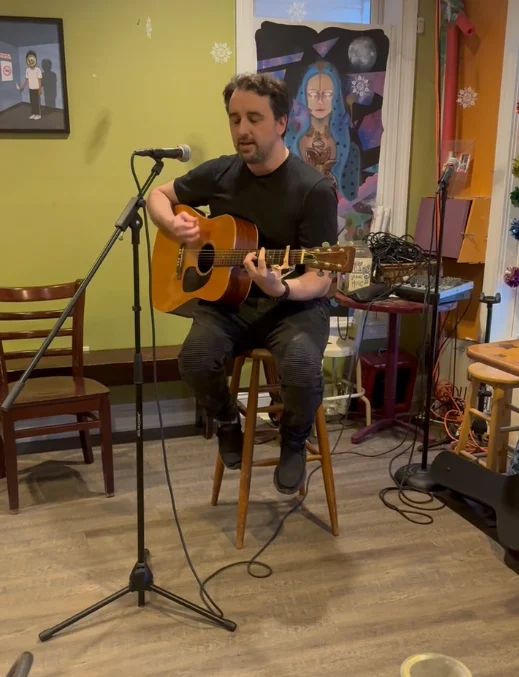
In stark contrast to the algorithm-driven, corporatized digital sphere stands the humble "open mic." This physical space, often found in local coffee shops, community centers, or bars, represents an almost antithetical model of artistic engagement. At an open mic, the pervasive influences of corporate interference, algorithmic biases, and multi-million dollar barriers to entry are conspicuously absent. Instead, every participant is typically afforded an equal opportunity – a fixed time slot, perhaps three to five minutes – to step onto a stage and share whatever they choose.
This democratic format welcomes a diverse array of expressions: poetry, amateur musical performances, stand-up comedy, or simply personal narratives. Performers span all demographics – young children, older adults, individuals from varied socioeconomic backgrounds, body shapes, and ethnic origins. The core principle is one of shared space and mutual curiosity. The audience and performers are united by their physical presence, fostering an immediate, unmediated human connection. In this environment, visibility is not determined by complex algorithms or marketing budgets, but by the simple act of showing up and taking a turn. The validation comes from direct audience response – applause, laughter, attentive silence – and the inherent value placed on shared experience.
While it is important to acknowledge that the broader "IRL art world" is often fraught with its own set of arbitrary barriers, biases, and commercial influences, the open mic offers a unique sanctuary. Its egalitarian nature is often preserved precisely because it operates outside of significant financial incentives. Most performers do not earn money from open mics, nor do they typically spend large sums to participate, insulating it from the corrupting forces of commercialization that pervade both the traditional art market and the contemporary internet. It serves as a powerful reminder of what equitable, community-driven artistic interaction can look like.
Reimagining Digital Spaces: Lessons from Open Mics and Discord
The stark contrast between the open mic and the contemporary internet prompts a critical examination of how digital platforms could evolve. The desire for genuine connection and accessible expression remains strong, suggesting that the internet does not have to be the way it is. While the open mic represents an ideal of decentralized, human-centric interaction, some online platforms offer glimpses of what a more equitable digital future might entail.
The messaging platform Discord, for instance, has gained traction precisely because it fosters environments where chatters within a specific community generally operate on a more equal footing. Messages receive attention based on their content and relevance to the ongoing conversation, rather than being filtered or amplified by a complex, opaque algorithm. This model encourages direct engagement, peer-to-peer interaction, and the organic formation of communities around shared interests, echoing the spirit of mutual curiosity found at an open mic.
Building a "better internet" would involve a multi-faceted approach, drawing inspiration from these models:
- Prioritizing User-Centric Design: Shifting away from designs that prioritize algorithmic engagement metrics to those that facilitate genuine human connection and discovery.
- Implementing Algorithmic Fairness and Transparency: Developing and enforcing standards that ensure algorithms do not unduly penalize independent creators or niche content, and providing clear explanations of how content is ranked.
- Fostering Interoperability and Open Standards: Encouraging or mandating technologies that allow users and creators to easily migrate their data and audiences between different platforms, thereby reducing the power of any single dominant platform.
- Supporting Decentralized Platforms: Investing in and promoting alternative digital infrastructures that are not controlled by a few corporate entities, such as federated social networks or blockchain-based platforms.
The journey towards a more equitable internet would undoubtedly be long and complex, requiring sustained effort from policymakers, technologists, and users alike. However, the foundational principles observed in spaces like the open mic offer a compelling blueprint for how digital interactions could be reimagined to prioritize human connection and artistic freedom over corporate profit and algorithmic control.
Broader Societal Implications and the Call for Physical Presence
The implications of an internet increasingly dominated by algorithms and corporate consolidation extend far beyond the realm of artistic discovery. This digital architecture has profound societal, cultural, and economic consequences. It can stifle cultural diversity by prioritizing mainstream, algorithm-friendly content, leading to a homogenization of expression. Economically, it creates immense hurdles for independent creators to monetize their work and build sustainable careers, pushing them towards precarity or dependence on a few powerful platforms.
Furthermore, the erosion of accessible digital public squares and the increasing atomization of online experience underscore the critical importance of physical, real-world community. In an era marked by growing social fragmentation and political polarization, the act of "being there" in physical spaces takes on heightened significance. Such spaces – whether an open mic, a community gathering, or a local activist meeting – provide essential opportunities for direct human interaction, the forging of unexpected collaborations, and the shared experience of inspiration.
Beyond personal and artistic enrichment, physical presence in community spaces serves a vital civic function. It fosters social cohesion, strengthens local networks, and provides platforms for collective action. In an increasingly volatile global landscape, where communities may face external pressures or internal challenges, the ability to gather, communicate directly, and mobilize is paramount. Being physically present means being in a position to witness, engage, and contribute to the resilience of one’s community, offering a tangible counterpoint to the often isolating and algorithmically mediated world of the internet. The demand for a more equitable internet must therefore be paralleled by a renewed commitment to nurturing and valuing the irreplaceable spaces where human beings connect, create, and stand together.
About the Author