The ability to accurately represent diverse materials within three-dimensional digital environments is a cornerstone of modern visual content creation, impacting industries from film and gaming to architectural visualization and product design. Achieving a high degree of realism hinges on a deep understanding of the fundamental properties that govern how different substances interact with light. Recognizing a pervasive gap in accessible, in-depth knowledge regarding metallic materials, renowned educator and 3D artist Richard Yot has unveiled a comprehensive, free online course designed to demystify the complexities of metal shading. This initiative aims to empower 3D artists across all skill levels to move beyond guesswork and approximation, enabling the creation of exceptionally lifelike metallic surfaces.
The course, titled "Shading Masterclass – Understanding Metals," is built upon the principle that effective material representation begins with a thorough comprehension of underlying physical characteristics. Yot, known for his clear pedagogical approach and extensive experience in the field, states that the primary objective is to equip artists with the theoretical knowledge necessary to translate real-world metallic behaviors into their digital projects. "Working effectively with different types of materials requires insight into why they work a certain way," Yot explains. "In this free course, Richard Yot explains the theory of material properties and helps you effectively apply them in your projects." This educational endeavor addresses a long-standing challenge for 3D artists: the often intuitive and trial-and-error process involved in achieving convincing metallic renders.
Addressing the "Guesswork" in Metal Shading
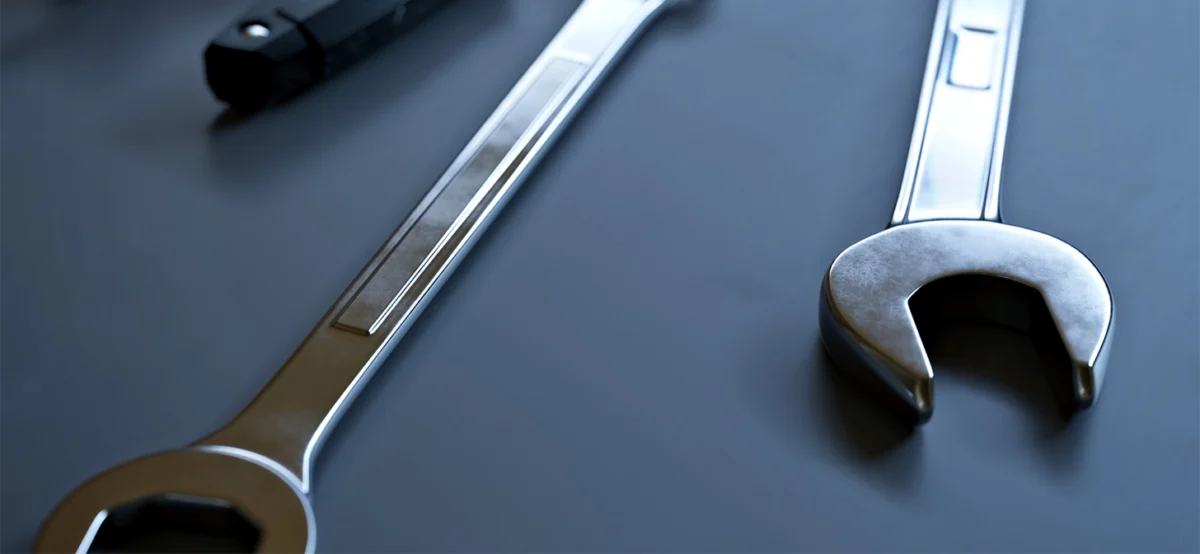
Metals, by their very nature, possess unique optical and physical properties that distinguish them significantly from dielectric materials like plastics, wood, or glass. These properties, including high reflectivity, spectral variations in reflectance, and susceptibility to surface imperfections and environmental degradation, present a distinct set of challenges for 3D artists. The "Shading Masterclass – Understanding Metals" delves into these specific characteristics, promising to elevate shading skills to an unprecedented level of realism.
The curriculum is structured to provide a deep dive into all crucial aspects of metallic materials. Participants will develop an expert-level understanding of why metals exhibit their characteristic appearances, what differentiates one metal from another (e.g., gold from aluminum, or copper from steel), and, most importantly, how to faithfully recreate these nuances in any 3D application. This software-agnostic approach is a significant benefit, as the core principles taught are universally applicable, regardless of the specific 3D modeling or rendering software used. While example scenes are provided in Blender, a popular open-source 3D creation suite, the methodologies and theoretical frameworks are designed to transcend platform limitations, benefiting artists working with Maya, 3ds Max, Cinema 4D, Houdini, or any other industry-standard software.
A Comprehensive Curriculum: From Foundation to Advanced Realism
The course’s scope extends beyond basic reflectivity, encompassing the entire lifecycle and physical state of metallic surfaces. Key areas covered include:
- Manufacturing and Finishing: Understanding how manufacturing processes (e.g., casting, forging, extrusion) and finishing techniques (e.g., polishing, brushing, anodizing) affect a metal’s surface texture and reflectivity. This includes detailed explanations of how microscopic surface irregularities contribute to macro-level visual characteristics.
- Corrosion and Wear: Investigating the natural processes of oxidation, tarnishing, and wear that alter the appearance of metals over time. This knowledge is critical for creating believable aged or weathered metal assets, a common requirement in many visual mediums.
- Color and Reflectance Values: Demonstrating how to accurately derive the correct color and reflectance values for different types of metals. This involves understanding the concept of Fresnel reflectance and how it varies across the electromagnetic spectrum for various metals, moving away from arbitrary RGB values.
- Brushed Anisotropic Metals: Providing techniques for creating convincing brushed metal effects. This requires understanding anisotropic reflections, where light reflects differently depending on the viewing angle relative to the brushed surface, a phenomenon often challenging to replicate accurately.
- Micro-Scratches and Wear: Detailing methods for adding subtle but crucial surface imperfections like micro-scratches, crucial for conveying the realism of worn steel or other heavily used metallic objects.
- Realistic Corrosion Effects: Guiding artists on how to create believable rust, verdigris, and other forms of corrosion, adding depth and history to metallic assets.
- Specific Metal Archetypes: Encouraging a shift from creating generic "metal" shaders to developing shaders tailored to specific metal types, ensuring authenticity and visual distinction.
Yot emphasizes that the ultimate goal is to equip artists with the confidence and knowledge to tackle any metal shading challenge without resorting to guesswork. "No more generic materials. No more approximations or guesswork," the course description asserts, highlighting a commitment to precision and empirical understanding.
Background and Context: The Evolution of 3D Material Representation
The development of realistic material shaders has been a continuous pursuit in the field of computer graphics since its inception. Early 3D graphics relied on simplified models and diffuse shading, with metallic appearances often achieved through simple metallic-looking textures. The advent of physically based rendering (PBR) in the early 2000s marked a significant paradigm shift. PBR aims to simulate the physical behavior of light as it interacts with surfaces, leading to more consistent and realistic results across different lighting conditions and render engines.
However, even within the PBR framework, accurately representing metals remains a complex task. Metals behave differently from non-metals (dielectrics) in fundamental ways. For instance, metals have a non-zero albedo (base color) that is typically dark and highly saturated, and their reflectivity is not governed by the same Fresnel curves as dielectrics. Understanding these distinctions is crucial for correct PBR implementation.
Richard Yot has been a prominent figure in 3D education for many years, building a reputation for his in-depth tutorials and courses on topics ranging from rendering principles to specific software techniques. His commitment to providing high-quality, accessible educational content has garnered a significant following within the 3D artist community. This free course on metal shading is a testament to his dedication to advancing the skills of artists globally, particularly in an era where visual fidelity is increasingly paramount. The availability of such a comprehensive resource at no cost is a noteworthy contribution to the broader 3D education landscape.
Potential Impact and Broader Implications
The implications of this free course are far-reaching. For individual artists, it offers a direct pathway to improving the quality and realism of their work, potentially leading to greater professional opportunities and client satisfaction. The ability to create truly convincing metallic surfaces can be a significant differentiator in portfolios and a crucial skill for roles in visual effects, game development, and high-end architectural visualization.
For studios and production houses, a workforce equipped with a deeper understanding of material properties can lead to more efficient workflows, reduced iteration times, and ultimately, higher quality final products. The course’s software-agnostic nature means that training can be implemented across diverse pipelines without requiring specific software licenses for educational purposes.
Furthermore, by demystifying metal shading, Yot’s course contributes to the democratization of advanced 3D art techniques. Free, high-quality educational resources can level the playing field, allowing aspiring artists from all economic backgrounds to acquire critical skills and compete in the professional market. This aligns with a broader trend in digital education where open-source software and freely accessible learning materials are empowering a new generation of creators.
The inclusion of a video preview, as seen with the embedded YouTube iframe, further enhances accessibility. This format allows potential learners to sample Yot’s teaching style and the depth of the content before committing to the full course. The "Shading Masterclass – Understanding Metals – Part 1" video provides a glimpse into the foundational concepts, hinting at the detailed explanations that will follow in the complete curriculum.
In essence, Richard Yot’s "Shading Masterclass – Understanding Metals" is more than just a tutorial; it is an educational initiative poised to significantly impact how 3D artists approach one of the most challenging yet rewarding aspects of digital material creation. By bridging the gap between theoretical understanding and practical application, the course promises to equip artists with the tools to transform their digital creations from merely looking metallic to truly embodying the rich and complex nature of real-world metals.
About the Author