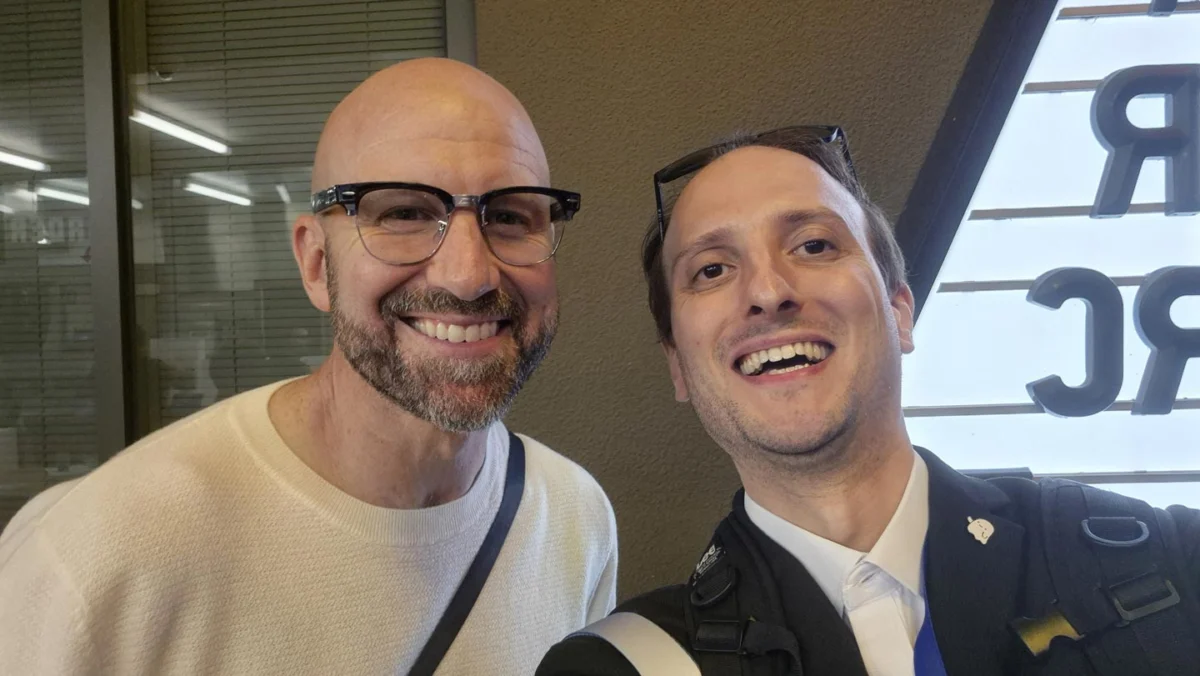
During the recent Meta Connect conference, Andrew “Boz” Bosworth, the Chief Technology Officer of Meta, provided a rare, unscheduled look into the company’s strategic direction for mixed reality (MR) and augmented reality (AR) hardware. In a spontaneous interaction with an independent industry analyst, Bosworth addressed critical questions regarding the mainstream adoption of virtual reality (VR), the technical viability of smart contact lenses, and the foundational principles of technical leadership within one of the world’s largest technology conglomerates.
The interaction occurred against the backdrop of Meta’s 2024–2025 product cycle, a period defined by the company’s aggressive pivot toward "AI-first" wearables and the refinement of its Quest headset lineup. While Meta Connect typically serves as a highly choreographed stage for CEO Mark Zuckerberg, Bosworth’s informal comments offered a more granular perspective on the consumer behavior patterns currently shaping Meta’s Reality Labs division.
Consumer Trends: The Quest 3 vs. Quest 3S Performance
One of the most significant revelations from the exchange involved the market performance of Meta’s latest hardware. Historically, the VR industry has operated under the assumption that price is the primary barrier to entry for the general public. However, Bosworth noted that internal data has challenged this narrative.
According to Bosworth, the Quest 3—Meta’s premium consumer headset featuring pancake optics and high-resolution color passthrough—has maintained a sales pace remarkably similar to that of the more affordable Quest 3S. This parity is notable because the Quest 3S was specifically designed as a value-oriented entry point to the Meta Horizon OS ecosystem.

“This showed us that comfort and quality of experience mattered as much as a $200 price difference for many people,” Bosworth indicated. This data point suggests a shift in the early-adopter and mid-market demographic, where users are increasingly willing to pay a premium for a reduced form factor and superior visual clarity. This trend has directly influenced Meta’s long-term roadmap, reinforcing the company’s commitment to the development of lightweight AR glasses, such as the "Orion" prototype, which prioritize a glass-like form factor over the bulky "goggle" design of traditional VR.
Technical Constraints of Ocular Wearables
When questioned about the potential for smart contact lenses—a concept long romanticized in science fiction and explored by firms like Mojo Vision—Bosworth provided a pragmatic assessment of the current technological landscape. He clarified that Meta is not currently pursuing this form factor due to insurmountable physiological and power-related hurdles.
Bosworth explained that for a contact lens to provide meaningful AR functionality—such as an active display or integrated sensors—it would likely need to be a "scleral lens." Unlike standard soft contact lenses, scleral lenses are larger, more rigid, and vault over the entire corneal surface, resting on the white of the eye (the sclera). While these lenses provide more surface area for micro-electronics, they present significant challenges regarding oxygen permeability, user comfort, and, most critically, power delivery.
“I haven’t seen any solution that is not a big scleral lens and that is able to be powered properly,” Bosworth stated. For Meta, the path to mainstream AR remains firmly rooted in spectacles and lightweight frames, where battery life and thermal management are more manageable than in an ocular-insert format.
The Chronology of Meta’s Hardware Evolution
The context of these comments is rooted in a decade-long timeline of development within Reality Labs. To understand the significance of Bosworth’s remarks, one must look at the progression of Meta’s hardware strategy:

- 2014–2019 (The PC-VR Era): Following the acquisition of Oculus, Meta (then Facebook) focused on high-end tethered experiences like the Rift.
- 2019–2022 (The Standalone Revolution): The launch of the Quest and Quest 2 moved the industry toward mobile chipsets, making VR accessible without a computer.
- 2023–Present (The MR and AR Pivot): The introduction of the Quest 3 and the Ray-Ban Meta smart glasses signaled a shift from closed-off VR to "Mixed Reality" and AI-assisted wearables.
The "Phoenix" project and the subsequent reveal of the Orion AR glasses represent the current "North Star" for the company. Bosworth’s presence at Meta Connect emphasized the company’s transition from a social media firm to a "hard tech" organization capable of designing custom silicon and complex optical stacks.
Leadership Philosophy in High-Stakes Environments
Beyond hardware specs, Bosworth shared his philosophy on technical leadership, a role he has held since 2022 after previously leading the company’s advertising and social hardware divisions. His approach to the CTO role emphasizes vision and trust over consensus-driven management.
“Leadership is not about being popular; it is about having a vision, being consistent, and being someone people can trust,” Bosworth remarked. He argued that a successful CTO must establish a set of principles that guide the organization even when the leader is not in the room. This "delegated clarity" ensures that thousands of engineers can make decentralized decisions that align with the company’s ultimate goals.
Bosworth also addressed the necessity of making unpopular decisions, particularly in the volatile XR (Extended Reality) industry. He noted that while employees may not always agree with a strategic pivot or the cancellation of a project, they must trust that the decision was made based on a consistent set of data-driven values.
Industry Analysis: Implications for the XR Market
The information provided by Bosworth carries several implications for the broader tech industry. First, the success of the Quest 3 relative to the 3S suggests that Apple’s entry into the market with the Vision Pro may have successfully "anchored" consumer expectations toward higher-quality displays, even if Apple’s price point remains out of reach for most.

Second, Meta’s dismissal of contact lenses clarifies the competitive landscape. While smaller startups may continue to chase the "invisible" AR dream, the industry’s largest player is doubling down on "Smart Glasses" as the definitive successor to the smartphone. This confirms that the next five years will likely see a battle of optics and AI integration within traditional eyewear frames.
Finally, the accessibility of Meta’s executive leadership at events like Connect serves as a strategic differentiator. By engaging directly with the developer community and independent analysts, Bosworth and Zuckerberg maintain a "builder-centric" image that contrasts with the more guarded and secretive corporate cultures of competitors like Apple or Google.
Conclusion
The impromptu interview at Meta Connect highlights a pivotal moment for Meta’s Reality Labs. With the Quest 3 proving that consumers value quality over the lowest possible price and the Orion project setting a new benchmark for AR, the company is moving out of the experimental phase and into a period of refined execution. As Meta continues to burn billions of dollars in R&D annually, the insights provided by Andrew Bosworth suggest a leadership team that is increasingly confident in its data and its long-term vision for the future of human-computer interaction.
About the Author