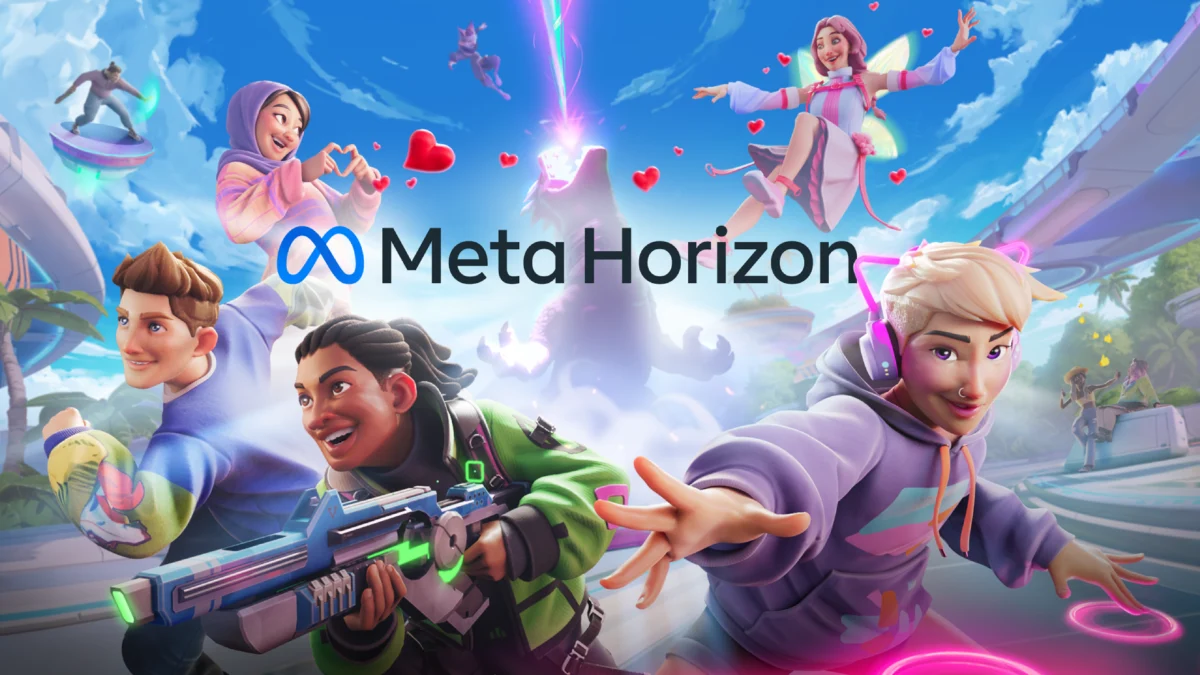
Meta Horizon Worlds, the ambitious virtual reality social network application launched in December 2021 as a cornerstone of Meta’s metaverse vision, is slated to cease its availability in VR by June of this year. This significant strategic pivot, announced recently by the technology giant, marks a critical juncture for the platform, which will transition to an exclusively "mobile-only" experience. The move is presented by Meta as a crucial step to "streamline" users’ Quest experience throughout 2026, beginning with the removal of Horizon Worlds from the Quest store by March 31.
The phased withdrawal will see several prominent VR worlds within the Horizon platform — including Horizon Central, Events Arena, Kaiju, and Bobber Bay — becoming inaccessible in virtual reality. The definitive end of the VR application for Horizon Worlds is scheduled for June 15, when the app will be entirely removed from Meta Quest devices. Following this date, users will be directed to access their preferred mobile-optimized worlds via the Meta Horizon mobile app, effectively severing the platform’s ties to its original VR-first inception.
Beyond the core Horizon Worlds application, the restructuring extends to other associated services. The Meta Horizon Hyperscape Capture app, designed for capturing and sharing content within Horizon Worlds, is being relocated out of the platform. Furthermore, the Meta Horizon Plus subscription, which offered exclusive Horizon-specific perks, will see these benefits — including Meta Credits, digital clothing, avatars, and in-world purchases — entirely removed. This indicates a comprehensive unbundling of Horizon Worlds from Meta’s broader VR ecosystem and subscription offerings.
This strategic redirection occurs against a backdrop of immense financial investment and persistent losses within Meta’s Reality Labs division, the segment responsible for developing the company’s metaverse technologies. Despite these substantial setbacks, Meta maintains its long-term conviction in the potential of virtual reality. The company attributes these recent decisions to a "renewed focus" for the current year, a strategy that Reality Labs VP of content Samantha Ryan elaborated upon last month. This refined strategy rests on three primary pillars: a deepened commitment to the VR developer ecosystem, the cultivation of an enhanced platform for creators, and a significant bet on mobile platforms through the Meta app.
Samantha Ryan articulated the rationale behind the separation, stating, "We’re explicitly separating our Quest VR platform from our Worlds platform in order to create more space for both products to grow." She further elaborated, "We’re doubling down on the VR developer ecosystem while shifting the focus of Worlds to be almost exclusively mobile. By breaking things down into two distinct platforms, we’ll be better able to clearly focus on each." This statement underscores Meta’s intent to differentiate its hardware-centric Quest VR platform, aimed at fostering a robust developer community, from the content-focused Horizon Worlds, which is now envisioned as a mobile-first social experience. The stated goal remains to empower developers and creators to build sustainable businesses, with the belief that these revised roadmaps will ultimately increase their chances of success.
A Chronology of Meta’s Metaverse Ambitions and Reality Labs’ Evolution
Meta’s journey into the metaverse and virtual reality has been characterized by audacious ambition, significant investment, and evolving strategies. The company, formerly known as Facebook, officially rebranded to Meta Platforms Inc. in October 2021, signaling a profound corporate commitment to building the metaverse. This rebranding was spearheaded by CEO Mark Zuckerberg, who envisioned the metaverse as the next evolution of social connection, a persistent, interconnected virtual space where users could interact, work, and play.
- 2014: Facebook acquires Oculus VR for approximately $2 billion, marking its initial major foray into virtual reality hardware.
- 2019: The company launches Oculus Quest, an all-in-one VR headset, aiming for broader consumer adoption.
- October 2021: Facebook rebrands to Meta Platforms Inc., solidifying its pivot to the metaverse. Mark Zuckerberg outlines his vision for an embodied internet, with Horizon Worlds at its social core.
- December 2021: Meta Horizon Worlds officially launches in the U.S. and Canada, offering a social VR platform where users can create, explore, and interact.
- 2022: Meta continues heavy investment in Reality Labs, introducing new VR headsets like the Quest Pro, aimed at professional users. Despite continued spending, reports of low user engagement and significant financial losses begin to surface.
- Late 2022 – Early 2023: Meta initiates multiple rounds of company-wide layoffs, impacting thousands of employees across various divisions, including Reality Labs, as part of a broader "year of efficiency."
- Late 2023 – Early 2024: Reality Labs experiences further restructuring, including the closure of several VR studios.
- January 2024: Reality Labs reports its largest annual loss to date, signaling continued financial challenges.
- February 2024: Reality Labs VP Samantha Ryan outlines a "renewed focus" for the year, emphasizing a separation between the Quest VR platform and the Horizon Worlds platform, with the latter pivoting to mobile.
- March 2024: Meta announces the cessation of Horizon Worlds’ VR availability, with the app becoming mobile-only by June 2024.
This timeline illustrates a consistent pattern: initial high investment and bold announcements, followed by a period of reassessment and strategic adjustment in the face of market realities and financial pressures.
The Financial Strain on Reality Labs
The strategic adjustments to Horizon Worlds are inextricably linked to the staggering financial performance of Meta’s Reality Labs division. The unit has been a persistent drain on Meta’s profitability, recording multi-billion dollar losses year after year since the company’s full-throated embrace of the metaverse concept.
In late January, Meta’s Reality Labs division disclosed an annual loss of $19.19 billion for the fiscal year ended December 31, 2025. This figure represents the largest single-year loss for the division to date and contributes to an alarming cumulative total of approximately $83.55 billion lost over the past six years. To put this into perspective, $83.55 billion is roughly equivalent to the GDP of countries like Guatemala or Sri Lanka, or more than twice the entire annual revenue of a major gaming company like Nintendo. These losses dwarf the revenue generated by the division, underscoring the immense capital expenditure required to pursue Meta’s metaverse vision.
These financial setbacks have precipitated a series of difficult decisions, including significant workforce reductions and the closure of several VR development studios. Meta has regularly undertaken layoffs within its Reality Labs division, a measure often framed as necessary "trimming" to optimize its long-term strategic plan. However, the scale of these reductions points to more fundamental challenges.
This year alone, Meta shuttered multiple VR studios housed within Reality Labs. These included Sanzaru Games, the developer behind the critically acclaimed Asgard’s Wrath; Twisted Pixel Games, known for Deadpool VR; and Armature Studio, which developed Resident Evil 4 VR. Additionally, Meta reportedly laid off a substantial number of employees at Camouflaj, the studio developing Batman: Arkham Shadow, reportedly leaving the studio with only a "handful" of remaining workers. These closures and layoffs reflect a harsh reality check for Meta’s VR content strategy, indicating a consolidation of resources and a reevaluation of which projects and studios align with the evolving "renewed focus."
During an earnings call, Meta CFO Susan Li candidly addressed the financial rebalancing: "We are meaningfully reducing our investment in VR and Horizon this year, but we’re growing our investment in wearables to capitalize on the momentum that we’re seeing in our position as a market leader." This statement provides crucial insight into Meta’s immediate strategy: a contraction in certain VR and Horizon-specific investments, coupled with an expansion in the broader "wearables" category, which could encompass smart glasses and other augmented reality devices beyond traditional VR headsets.
Strategic Rebalancing: Quest VR vs. Mobile Horizon
Meta’s decision to "explicitly separ[ate] our Quest VR platform from our Worlds platform" is a critical distinction that reveals a more nuanced strategy than a complete retreat from VR. Instead, it appears to be a recalibration, recognizing that the demands and user base for a VR hardware platform (Quest) are distinct from those of a social content platform (Horizon Worlds).
The Quest VR platform, encompassing the hardware (Quest headsets) and the underlying operating system and developer tools, remains a core focus. Meta continues to invest in enhancing the Quest experience, with recent updates introducing features like Surface Keyboard and Touchpad support, customizable app and window positioning, and the ongoing rollout of Navigator, a modernized interface. This indicates a commitment to improving the foundational VR ecosystem and attracting developers to build high-quality, immersive VR applications and games that can leverage the Quest hardware’s capabilities. The stated goal of "doubling down on the VR developer ecosystem" suggests Meta aims to position Quest as a premier platform for VR content creation, perhaps moving away from the "metaverse as a single destination" concept towards a more diverse VR app store model.
Conversely, the shift of Horizon Worlds to an "almost exclusively mobile" experience acknowledges the challenges of achieving widespread social VR adoption and the greater accessibility of mobile devices. By making Horizon Worlds mobile-only, Meta is likely targeting a much larger potential user base, reducing the barrier to entry (no VR headset required), and potentially aiming for a more casual, everyday social interaction model akin to traditional social media apps. This could also be an attempt to leverage existing mobile infrastructure and user habits, hoping to scale Horizon Worlds’ user numbers more effectively than it has been able to in VR.
Implications for Users and Developers
For existing VR users of Horizon Worlds, the transition will necessitate a fundamental change in how they interact with the platform. Those who invested time and effort into creating or engaging with VR-specific content will find their experience irrevocably altered. The removal of VR-specific perks from the Meta Horizon Plus subscription further diminishes the value proposition for dedicated VR users. While Meta promises "all your favorite mobile-optimized worlds" will be available, the immersive quality and interaction paradigms of VR cannot be fully replicated on a 2D mobile screen. This move may alienate a segment of the early adopter VR community who were drawn to the promise of an immersive social metaverse.
For developers, the implications are mixed. On one hand, the "doubling down on the VR developer ecosystem" for Quest suggests continued support and investment for creating VR applications. However, the pivot of Horizon Worlds to mobile creates uncertainty for developers who specifically built content for the VR version of Horizon Worlds. While Meta claims the new roadmap will increase developers’ chances for success, the sudden shift in platform focus for a flagship product could undermine confidence in the stability of Meta’s long-term platform strategies. Developers might be forced to re-optimize their content for mobile or abandon their VR Horizon Worlds projects altogether, representing a loss of time and resources. The explicit separation of platforms might clarify future development paths but also demands a clear understanding of where Meta’s resources and priorities truly lie.
The Broader Metaverse Landscape
Meta’s strategic adjustment for Horizon Worlds also sends signals across the broader metaverse and virtual reality industry. While Meta has been the most vocal proponent and investor in the metaverse concept, other players such as Roblox, VRChat, Decentraland, and The Sandbox continue to evolve their own virtual worlds. The challenges faced by Horizon Worlds highlight the difficulties in achieving mass adoption for immersive social VR experiences, particularly given the high cost and specialized nature of VR hardware.
The shift to mobile for Horizon Worlds could be interpreted as a concession to market realities, acknowledging that the immediate future of widely accessible social interaction may still reside on smartphones and tablets rather than VR headsets. However, Meta’s continued investment in the Quest platform and "wearables" demonstrates that the company is not abandoning its long-term vision for spatial computing. Instead, it appears to be recalibrating its approach, separating the mass-market social application from the more technologically demanding, high-fidelity VR experiences. This might suggest a future where different aspects of the metaverse exist on different platforms, each optimized for its respective hardware and user context.
Conclusion: Meta’s Continued Commitment Amidst Challenges
Meta’s decision to transition Horizon Worlds to a mobile-only experience is a significant strategic maneuver, reflecting a company grappling with the immense financial and logistical challenges of pioneering the metaverse. While the move represents a retreat from Horizon Worlds’ original VR-first premise, it simultaneously underscores Meta’s intent to refine its broader VR strategy by focusing on the core Quest platform and expanding into other wearables.
The staggering losses incurred by Reality Labs serve as a stark reminder of the financial stakes involved in this ambitious endeavor. Yet, Meta’s leadership, including Mark Zuckerberg, has consistently reiterated its long-term commitment to VR and the metaverse, viewing it as the next computing platform. This pivot for Horizon Worlds, while impacting current VR users and developers, is framed as a necessary rebalancing to achieve that long-term vision, allowing the Quest VR ecosystem to flourish independently while Horizon Worlds seeks a wider audience on mobile. The success of this new two-pronged approach — a robust VR platform for developers and an accessible mobile social app — will be closely watched as Meta continues its costly, yet determined, pursuit of the future of digital interaction.
About the Author