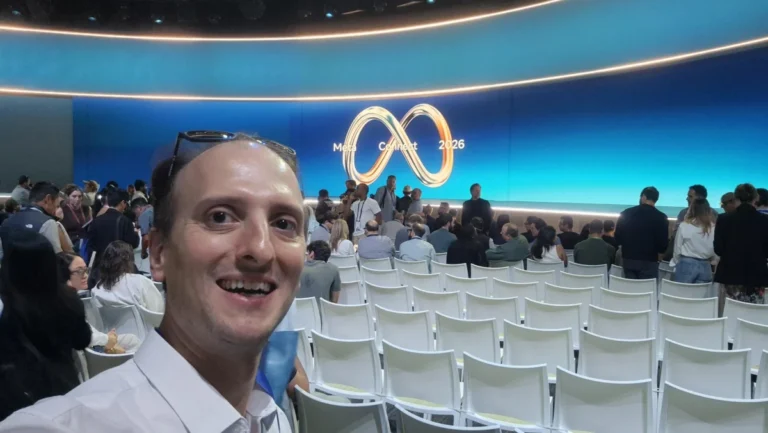
The recent launch of the Meta VR Glasses at the Meta Connect 2026 conference has catalyzed a significant shift in the discourse surrounding extended reality (XR) hardware, prompting a reevaluation of the industry’s trajectory toward mainstream adoption. Following a week of intense public scrutiny and technical comparisons, the device has emerged as a focal point for debating the balance between immersion, comfort, and functional utility. Positioned as a lightweight alternative to traditional head-mounted displays (HMDs), the Meta VR Glasses represent a strategic pivot for Meta as the company attempts to capture a broader consumer demographic beyond its established gaming and enthusiast base.
Hardware Specifications and Design Philosophy
The Meta VR Glasses depart from the "all-in-one" standalone architecture popularized by the Meta Quest series, opting instead for an "all-in-two" configuration. This design utilizes a tethered computational "puck" to house the processing hardware and battery, allowing the eyewear itself to remain significantly lighter than its predecessors. Weighing approximately 100 grams, the device is roughly one-sixth the weight of the Apple Vision Pro, which has been criticized for its 600-to-650-gram mass.
The primary engineering objective of the Meta VR Glasses is to prioritize social acceptance and long-term wearability. To achieve this, Meta has utilized high-density displays that offer sharp visual fidelity, specifically optimized for media consumption and productivity tasks. However, this focus on a slim form factor has necessitated technical compromises, most notably in the field of view (FOV). Initial technical assessments indicate an FOV of approximately 90 degrees, which is narrower than the 110-degree-plus range found in high-end gaming headsets. This limitation has sparked criticism among "hardcore" VR enthusiasts who argue that the reduced FOV diminishes the sense of presence and immersion essential for high-fidelity virtual experiences.

A Chronology of Meta’s Hardware Evolution
The release of the Meta VR Glasses in 2026 marks a decade of evolution since the launch of the original Oculus Rift. Meta’s hardware strategy has transitioned through several distinct phases:
- The Enthusiast Era (2016–2018): Focused on PC-tethered high-immersion devices like the Oculus Rift and Rift S.
- The Standalone Revolution (2019–2023): The introduction of the Quest and Quest 2 brought VR to a wider audience by removing the need for external sensors and cables, prioritizing affordability and ease of use.
- The Mixed Reality Pivot (2023–2025): The Quest 3 and Quest Pro emphasized color passthrough and augmented reality (AR) capabilities, attempting to position the headset as a general-purpose computing device.
- The Wearable Integration (2025–Present): The launch of the Ray-Ban Meta smart glasses and the subsequent Meta VR Glasses indicates a shift toward "invisible" technology—devices that mimic traditional eyewear while maintaining sophisticated XR functionality.
This timeline reflects a broader industry trend where the focus is shifting from "maximum immersion" to "maximum utility," as manufacturers seek to integrate XR into daily life rather than confining it to dedicated gaming sessions.
Comparative Analysis: Meta VR Glasses vs. Apple Vision Pro
The industry has naturally compared Meta’s new offering to the Apple Vision Pro, which launched roughly three years prior. While both devices target the "spatial computing" market, their underlying philosophies are diametrically opposed. Apple’s approach prioritized uncompromising graphical power and a "prestige" user experience, utilizing dual-4K micro-OLED displays and a sophisticated M-series chipset. This came at the cost of weight, price (starting at $3,499), and a design that many found socially isolating.
In contrast, the Meta VR Glasses, priced at $1,300, target a mid-tier market. Meta’s strategy emphasizes "social acceptance" and the "glasses" form factor over pure technical specifications. Market analysts have noted that while the Vision Pro was designed to replace a high-end desktop or home theater system, the Meta VR Glasses are intended to serve as a portable productivity and media tool for users on the move. The "all-in-two" design of the Meta VR Glasses is a direct response to the "front-heavy" ergonomics of the Vision Pro, though it introduces its own set of challenges, such as the management of a physical cable and a separate pocket-sized compute unit.

Market Reactions and Community Sentiment
The reception of the Meta VR Glasses has been polarized along demographic lines. Industry observers have identified two primary groups of critics: the "Vision Pro loyalists" and the "Hardcore VR enthusiasts."
Loyalists of the Apple ecosystem have criticized Meta’s lower field of view and perceived lack of interface polish compared to Apple’s visionOS. Conversely, hardcore VR enthusiasts—many of whom utilize high-end PCVR setups with RTX 50-series GPUs—view the Meta VR Glasses as a step backward for the medium. They argue that by sacrificing FOV and stability for a lightweight form factor, Meta is abandoning the core promise of virtual reality: total immersion.
However, the mainstream technology press has been largely positive, with many reviewers suggesting that the Meta VR Glasses represent the form factor that consumers originally expected from Apple. The consensus among mainstream testers is that the device solves the "comfort barrier" that has long prevented VR from achieving mass-market penetration.
Economic Implications and the "Killer Ecosystem"
The introduction of a $1,300 device into a market dominated by either $500 headsets or $3,500 spatial computers creates a new pricing tier. Meta’s objective, as stated by CEO Mark Zuckerberg in previous years, is to bring one billion people into the XR ecosystem. To achieve this, the company must move beyond the "niche" audiences of tech enthusiasts and "furry" communities that have historically populated platforms like VRChat and Horizon Worlds.

Analysts suggest that the success of the Meta VR Glasses will depend on the development of a "killer ecosystem" rather than a single "killer app." This ecosystem includes:
- Productivity: Seamless integration with laptops and mobile devices for virtual multi-monitor setups.
- Entertainment: High-fidelity, private viewing of 2D and 3D media.
- Communication: Realistic holographic telepresence and social interaction.
- Social Acceptance: A form factor that can be worn in public spaces (e.g., airplanes or offices) without social stigma.
Broader Industry Impact and Future Outlook
The launch of the Meta VR Glasses is expected to force a response from other major players in the XR space. Competitors such as XREAL, Viture, and RayNeo have already seen success with tethered "smart glasses" that offer virtual screens, and Meta’s entry into this specific category validates the "glasses-first" approach. Furthermore, rumors suggest that Samsung and Google are accelerating their own XR wearable projects to compete with Meta’s new lightweight design.
The industry is also monitoring the potential impact on Apple’s roadmap. Reports indicate that Apple may be pivoting toward a lighter "Vision" model to address the weight concerns that Meta has highlighted in its recent marketing campaigns. The competition between these two tech giants is likely to accelerate the miniaturization of optics and the efficiency of mobile processors over the next three to five years.
While the Meta VR Glasses may not achieve the multi-million unit sales figures of the Quest 2 in its first year, they serve as a critical "proof of concept" for the future of wearable computing. By addressing the primary complaint of the XR industry—physical discomfort—Meta has established a new benchmark for the sector. The coming months will determine if the mainstream consumer is ready to adopt a $1,300 accessory for the sake of portable productivity and media, or if the device will remain a high-end tool for a specific subset of mobile professionals. Regardless of the immediate sales outcome, the Meta VR Glasses have effectively shifted the industry’s focus from "how much can we fit in a headset" to "how little can we make a user feel."
About the Author