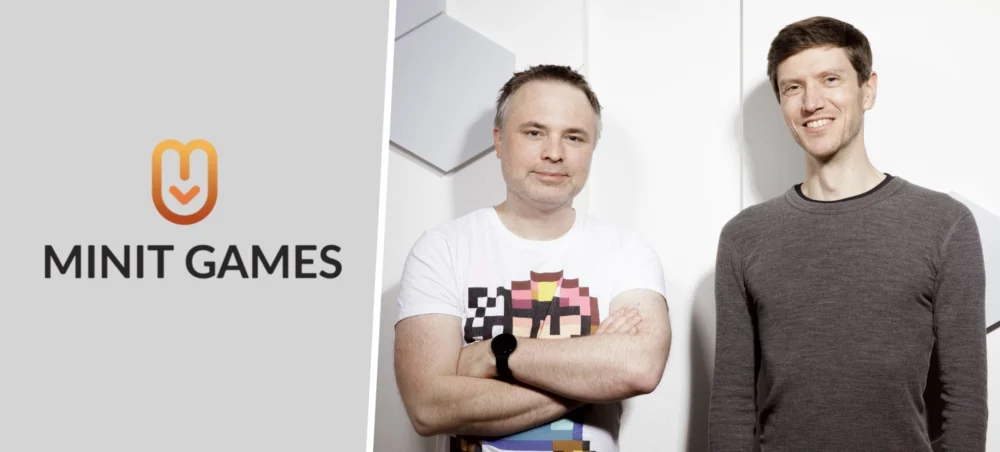
Minit Games, a Hamburg-based startup specializing in the burgeoning sector of "instant play" mobile gaming, has successfully closed a $2 million pre-seed funding round. The investment was co-led by London Venture Partners (LVP) and the Sony Innovation Fund, two prominent entities in the global interactive entertainment and technology investment landscape. This significant capital injection is supplemented by a group of high-profile angel investors with deep roots in the European gaming industry, including Stefan Klemm, co-founder of Goodgame Studios and executive at Bigpoint; Timo Soininen, former CEO of Small Giant Games; and Klaas Kersting, the founder of Gameforge and Flaregames.
The primary objective of Minit Games is to disrupt the traditional mobile gaming distribution model by creating a personalized, algorithmically driven feed of HTML5 games. These games are designed to be "bite-sized" and capable of loading instantly within a user’s mobile browser or social media interface, effectively bypassing the friction associated with traditional app stores. By adopting a TikTok-style discovery mechanism, Minit Games aims to align gaming with the consumption habits of modern audiences who have become accustomed to vertical, short-form content across platforms like Instagram, YouTube, and TikTok.
Leadership and Strategic Pedigree
The foundation of Minit Games rests on the extensive experience of its co-founders, Ole Schaper and Mark Buchholz. Both executives have held leadership roles at several high-stakes gaming ventures, providing them with a nuanced understanding of game development, studio management, and platform scaling.
Prior to founding Minit Games, Mark Buchholz served as the founder of Sviper, a mobile gaming studio known for its high-quality production values. His resume also includes a tenure as Head of Studio and Game Director at The Sandbox, a leading decentralized gaming virtual world, and a co-founding role at Kyna Games. Ole Schaper similarly brings a wealth of executive experience, having served as the CEO of Sviper and the Mobile Director and Head of Studio at The Sandbox.
This leadership team’s transition from traditional mobile game development to platform-based "instant play" solutions reflects a broader industry shift. Their experience at The Sandbox, in particular, highlights their familiarity with user-generated content and platform-driven ecosystems—skills that are essential for building an algorithmic feed that must balance developer needs with user engagement.
The Evolution of Game Discovery: From Stores to Feeds
The central thesis of Minit Games is that while music, video, and social interactions have migrated to algorithmic feeds, video games remain largely "trapped" within traditional digital storefronts. In the current mobile ecosystem, a player must typically navigate through an advertisement, click through to the Apple App Store or Google Play Store, authenticate a download, and wait for the software to install before they can engage with the content. Each step in this process represents a point of friction where a significant percentage of potential users are lost.
"Players live in algorithmic feeds, but games are still trapped in stores," stated Ole Schaper during the funding announcement. "We’re building a destination where short-form games are as easy to discover and engage with as any other modern media format. We aren’t just showing clips; we are delivering the full, interactive experience immediately."
By utilizing HTML5 technology, Minit Games enables "instant play" functionality. This allows for a seamless transition from discovery to gameplay. The platform’s "TikTok-style" interface will allow users to swipe through various titles, with games loading in the background to ensure that the interactive experience begins the moment the user stops scrolling. For developers, Minit Games offers a direct-to-consumer publishing route, allowing them to bypass the rigorous and often restrictive submission processes of major app stores.
Competitive Landscape and Market Context
Minit Games enters a competitive market that has seen several attempts to create a "TikTok for games." The most notable competitor is HypeHype, a platform backed by the Finnish mobile giant Supercell. HypeHype has been in a soft-launch phase for several years, focusing on a no-code editor that allows users to create and share games within the app. Another contender, Smirk, emerged in late 2024 with a similar focus on rapid discovery, though it has yet to achieve a wide-scale global release.
The path to success in this sector is fraught with challenges, as evidenced by the closure of Playbyte, one of the earliest pioneers in the vertical game feed space. Furthermore, TikTok itself experimented with playable, in-feed games in 2023, testing approximately 14 titles in the UK market. However, the social media giant eventually pivoted away from hosting a proprietary gaming platform, opting instead to position itself as a launchpad for third-party games.
The struggle for these platforms often lies in the balance between technical performance and content quality. HTML5 games, while portable and quick to load, have historically struggled to match the graphical fidelity and depth of native applications built in engines like Unity or Unreal. However, recent advancements in web-based graphics technologies (such as WebGL and WebGPU) and the increasing power of mobile hardware have narrowed this gap, making high-quality "instant" experiences more viable than ever before.
Industry Data and Economic Drivers
The investment in Minit Games comes at a time of significant transition for the mobile gaming industry. According to industry reports from Newzoo and Sensor Tower, the mobile gaming market has faced headwinds following the implementation of Apple’s App Tracking Transparency (ATT) framework. This privacy-focused change made it significantly more difficult and expensive for developers to target specific user segments with advertisements, leading to a spike in User Acquisition (UA) costs.
As the Cost Per Install (CPI) continues to rise, developers are seeking alternative distribution channels that prioritize organic discovery. Instant play platforms offer a potential solution to this crisis. By lowering the barrier to entry (no download required) and utilizing an algorithmic recommendation engine (which targets users based on behavior rather than intrusive tracking), Minit Games could provide a more cost-effective ecosystem for both indie developers and established studios.
Data suggests that short-form video consumption is the fastest-growing segment of digital media. TikTok reached 1 billion monthly active users faster than any other social platform, largely due to its "For You" feed. Minit Games is betting that the "swipe-to-play" mechanic will capture the same psychological engagement patterns that have made short-form video a global phenomenon.
Strategic Backing and Investor Reactions
The involvement of LVP and Sony Innovation Fund provides Minit Games with both financial stability and strategic advantages. LVP is well-known for its early-stage investments in multi-billion dollar companies like Supercell, Unity, and Playfish. Their participation suggests a high level of confidence in the scalability of Minit’s platform model.
Sony Innovation Fund’s participation is equally notable. As Sony continues to expand its presence beyond the PlayStation console ecosystem and into mobile and social gaming, Minit Games represents a strategic interest in how the next generation of gamers will discover content. The presence of angel investors like Timo Soininen—who led Small Giant Games to a $700 million acquisition by Zynga—adds a layer of operational expertise in game monetization and retention strategies.
While official statements from the lead investors focused on the strength of the founding team, the underlying sentiment suggests a move toward "platformization" in the mobile space. Investors are increasingly looking for ventures that own the relationship with the user (the platform) rather than just the individual pieces of content (the games).
Chronology of the "Instant Play" Movement
The emergence of Minit Games is part of a decade-long evolution in web-based gaming:
- The Flash Era (Pre-2010): Web gaming was dominated by Adobe Flash, providing a rich but non-mobile-friendly ecosystem of indie titles.
- The App Store Boom (2010–2018): The rise of the iPhone and Android shifted the focus to native apps. HTML5 was initially seen as an inferior alternative.
- The Hypercasual Wave (2018–2021): Developers focused on extremely simple, ad-supported native games. Discovery was driven by massive ad spend.
- The Privacy Pivot (2021–Present): Apple’s ATT changes disrupted the hypercasual model. Developers began looking for platforms with built-in discovery.
- The Algorithmic Shift (2023–2024): Following the success of TikTok, the industry began experimenting with vertical, feed-based game discovery.
- Minit Games Pre-Seed (2024): Minit Games secures funding to formalize the algorithmic HTML5 feed model.
Broader Impact and Future Outlook
The success of Minit Games could have profound implications for the mobile gaming value chain. If the platform successfully captures a significant audience, it could challenge the duopoly of the Apple and Google app stores, particularly for "lite" or hypercasual gaming experiences.
For developers, the platform promises a "publish once, reach many" approach. By focusing on HTML5, developers can create games that run across various devices and social platforms without needing to manage multiple codebases for different operating systems. This reduces development overhead and allows for more rapid experimentation with game mechanics.
However, the "TikTokification" of games also presents risks. The algorithmic nature of such feeds often prioritizes short-term engagement and "clicky" content, which may push developers toward increasingly simplified or derivative gameplay to satisfy the algorithm. Minit Games will need to ensure that its "personalized" feed can surface diverse genres and sustain long-term player interest beyond the initial novelty of instant access.
Minit Games has announced that an invite-only alpha launch is forthcoming. This phase will be critical for testing the platform’s technical stability and the efficacy of its recommendation engine. As the team in Hamburg prepares for this launch, the industry will be watching closely to see if Minit can succeed where others have stalled, finally bringing the "feed" revolution to the world of interactive entertainment.
About the Author