The global mobile gaming landscape, a sector projected to generate nearly $100 billion in annual revenue, is currently undergoing a period of significant strategic recalibration. As user acquisition costs rise and the impact of privacy changes such as Apple’s App Tracking Transparency (ATT) continues to resonate, major publishers are increasingly relying on extended soft launch periods to refine monetization, retention, and gameplay mechanics. This comprehensive report examines the latest titles currently in testing phases, categorized by publisher, and analyzes the broader industry trends these projects represent.

The Strategic Importance of Soft Launching in Modern Game Development
A soft launch serves as a controlled release of a game in specific territories—often the Philippines, Malaysia, Canada, or the Nordic countries—allowing developers to gather data on player behavior before a full global rollout. This phase is critical for identifying technical bugs, balancing competitive economies, and ensuring that the "Long Term Retention" (LTR) metrics meet the rigorous standards required to sustain a live-service product. Recent data suggests that for every ten games that enter a soft launch, only three to four successfully transition to a global release, highlighting the "fail fast" philosophy adopted by industry leaders like Supercell and King.

Blizzard and Electronic Arts: Leveraging Established Intellectual Property
Blizzard Entertainment has entered the mobile hero shooter arena with Overwatch Rush. Currently in soft launch across the Philippines, Malaysia, and Indonesia, the title represents a specialized, made-for-mobile adaptation of the successful Overwatch franchise. By targeting the Southeast Asian market first, Blizzard is tapping into a region with high mobile-first engagement and a strong appetite for competitive team-based shooters. This move follows the successful, if controversial, launch of Diablo Immortal, signaling Blizzard’s intent to remain a dominant force in high-fidelity mobile experiences.

Simultaneously, Electronic Arts (EA) via its subsidiary PopCap is iterating on one of the most recognizable brands in gaming with Plants vs. Zombies 3: Evolved. Unlike its predecessors, which focused strictly on tower defense, this iteration introduces merge-based mechanics. Title Update 1.0.5 has recently reworked the tutorial and reward structures, indicating a shift toward optimizing early-game player funnels. The game is currently accessible in the UK, Philippines, and Indonesia, markets chosen for their diverse player demographics and representative spending patterns.

Supercell’s Iterative Philosophy: Mo.co and Project Rise
Supercell remains the industry benchmark for selective publishing. The Finnish developer recently announced that its monster-hunting title, Mo.co, has returned to a beta phase. Despite an initial invite-only launch in 2025, internal assessments indicated the game needed "big changes to achieve mass appeal." Rather than canceling the project—a fate that befell previous titles like Clash Quest and Everdale—Supercell is keeping the game in a "low maintenance" testing mode to iterate on core features.

Furthermore, Project Rise, an action RPG set within the Clash of Clans universe, is entering a new beta phase as of late August 2024. Originally revealed as Clash Heroes in 2021, the game underwent a complete reboot in 2024. This extended development timeline underscores the difficulty of translating the "Clash" brand’s accessibility into the more complex ARPG genre. The upcoming tests will likely focus on social features and cooperative gameplay, which are central to Supercell’s long-term engagement strategy.

Casual Gaming and the Hybridization Trend: Playrix, Moon Active, and Rovio
The casual gaming sector is witnessing a "genre-blurring" trend, where traditional Match-3 mechanics are combined with narrative-driven renovation and merge elements. Playrix, a leader in this space, is testing several projects simultaneously:

- Aqua Match: An underwater-themed Match-3 title.
- Austin’s Odyssey: A spin-off focusing on the popular character from the "Scapes" series, currently testing in North America and India.
- Questbound: A significant departure for the studio, featuring a fantasy-themed squad battler.
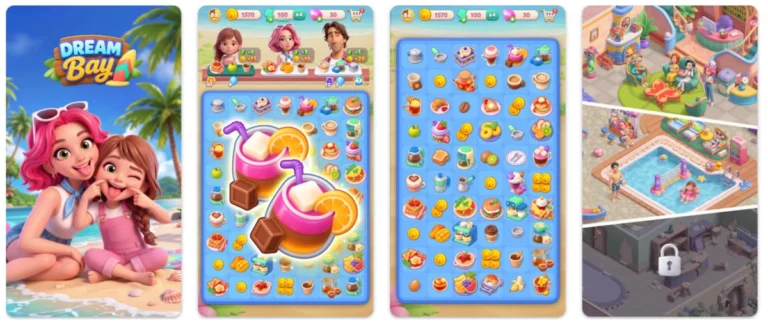
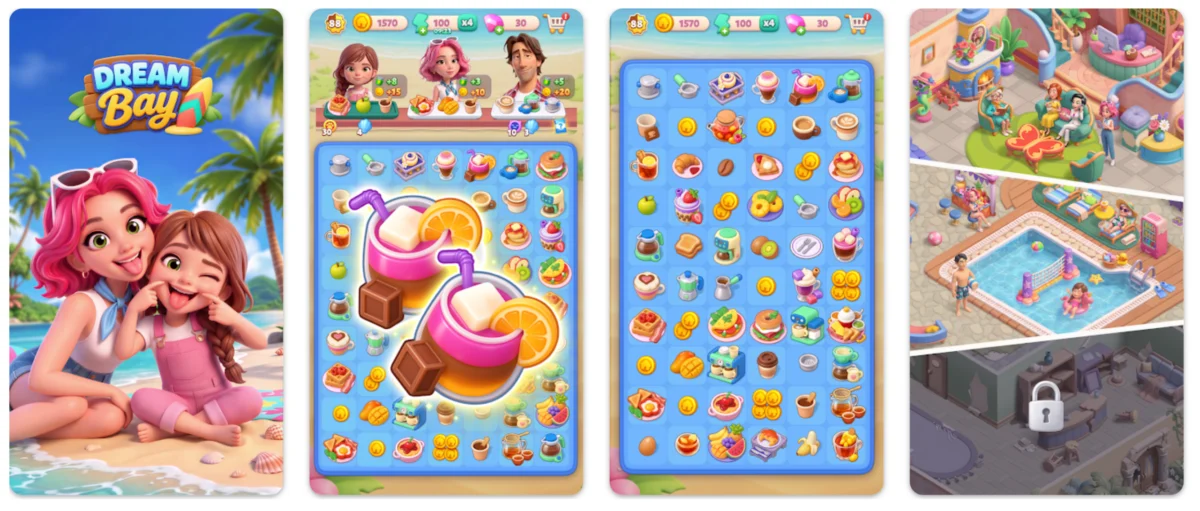
Moon Active, the creator of the high-grossing Coin Master, is also diversifying its portfolio with Dream Bay, a renovation-themed merge game, and Royal Splash: Tower Blast, a physics-based puzzler. By expanding into these sub-genres, Moon Active aims to reduce its reliance on a single hit title and capture a broader segment of the casual market.

Rovio, now under the Sega umbrella, continues to leverage the Angry Birds IP. Angry Birds Match and Angry Birds Rush are currently in testing, with the latter being a "luck battle" game developed in collaboration with the French studio OhBiBi. These projects represent Sega’s broader strategy to utilize Rovio’s mobile expertise to bring legacy IPs to the small screen while maintaining the Angry Birds brand’s relevance.

The Rise of AI and User-Generated Content: Meta’s Pocket
Perhaps the most unconventional project in the current testing landscape is Meta’s Pocket. Recently rolled out to US players after a test phase in Brazil, Pocket is an AI-powered platform for creating and sharing "gizmos"—brief interactive games and experiences. Users generate content through text prompts, photos, and sound, mirroring the TikTok interface for a gaming audience.

The implications of Pocket are significant. By democratizing game creation through AI, Meta is positioning itself to compete with platforms like Roblox and Fortnite’s Creative Mode. The lack of traditional marketing suggests that Meta is focusing on organic growth and algorithmic refinement before a broader push into the social gaming space.

Competitive Action and Open World Ambitions: Garena, Fingersoft, and PlayStation
Garena, known for the global phenomenon Free Fire, is testing Garena Free City. The title appears to be a mobile-optimized open-world crime game, drawing clear inspiration from the Grand Theft Auto series. After an initial launch in Argentina, the game has expanded its testing to the Philippines. This move indicates a growing demand for high-fidelity, open-world social experiences on mobile devices.

Fingersoft is iterating on its flagship racing franchise with Hill Climb Racing 3. The introduction of real-time multiplayer is a pivotal shift for the series, which has historically been a single-player, physics-driven experience. The game is currently being tested in the UK and Nordic regions, where the franchise has a deeply established player base.

Sony’s PlayStation Mobile division is also making strides with Ratchet & Clank: Ranger Rumble. Developed by Oh BiBi, this multiplayer platformer shooter is live in several European and Asian markets. This project is part of Sony’s stated goal to bring its iconic PlayStation franchises to mobile, following the precedent set by titles like Sackboy: A Big Adventure.

Data and Regional Trends in Soft Launching
The selection of soft launch territories is rarely arbitrary. According to data from AppMagic, the Philippines remains the most popular test market due to its high proficiency in English, low cost per install (CPI), and a population that mirrors global trends in mobile engagement.

| Country | Primary Benefit for Soft Launch |
|---|---|
| Philippines | High English literacy, low CPI, representative of SEA growth. |
| Canada | Consumer behavior closely mirrors the United States at a lower cost. |
| Nordics | High ARPU (Average Revenue Per User), tech-savvy early adopters. |
| United Kingdom | High-quality feedback, representative of Western European markets. |
Chronology of Recent Soft Launch Activity
- February 2024: Zynga and NaturalMotion begin testing CSR 3 in select Asian and European markets.
- May 2024: Ninja Kiwi soft launches Bloons Blitz, a "bullet heaven" style game, in the Philippines.
- August 2024: Meta brings its AI-powered Pocket app to the US market; Supercell announces the Project Rise beta.
- September 2024: Moon Active’s Dream Bay expands its Google Play presence across Western Europe.
Broader Industry Implications
The current volume of games in testing suggests that while the "hyper-casual" era may be waning, the appetite for "hybrid-casual" and "mid-core" experiences is stronger than ever. Publishers are no longer satisfied with simple mechanics; they are seeking depth, social connectivity, and sophisticated monetization models that can withstand the volatility of the modern app store economy.

As these titles move toward global releases, the industry will be watching closely to see which IPs can successfully make the transition. The success of Overwatch Rush or Ratchet & Clank: Ranger Rumble could redefine how console developers approach mobile ports, while Meta’s Pocket could signal a paradigm shift in how games are created and consumed in the age of generative AI. For now, these games remain in the "testing crucible," where data and player feedback will ultimately decide their fate.
About the Author