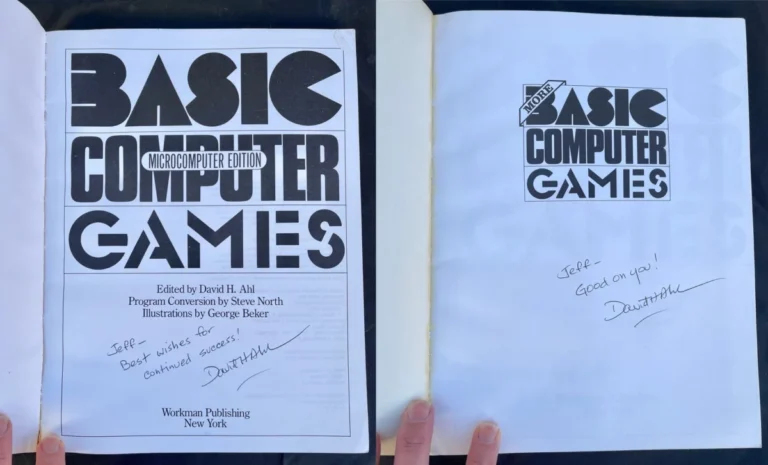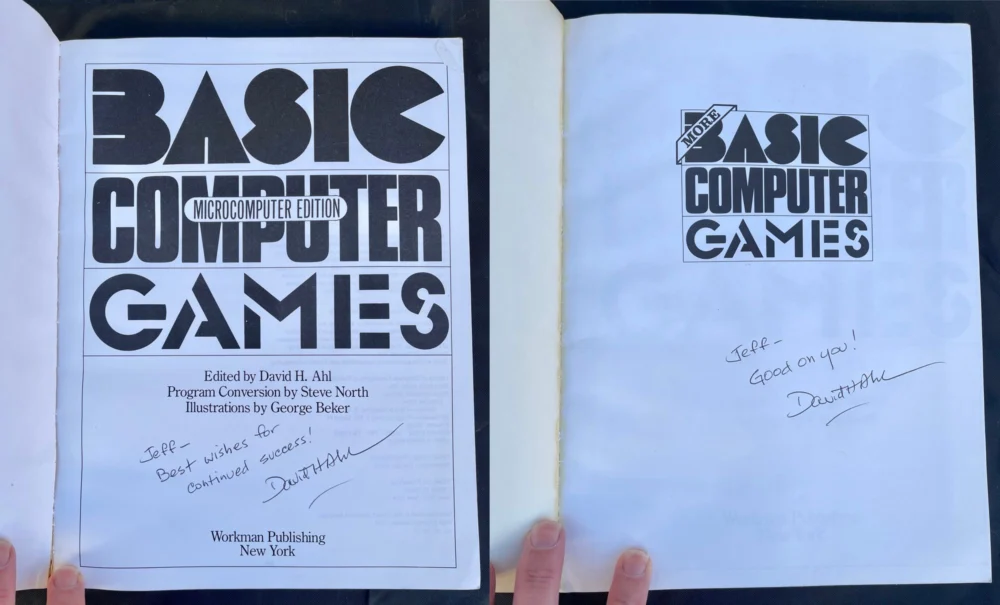
A significant collaborative initiative is underway, spearheaded by prominent technologist Jeff Atwood of Coding Horror, to meticulously update and preserve the foundational programming exercises from David H. Ahl’s seminal 1973 publication, "101 BASIC Computer Games." This project seeks to translate the collection of early computer games, which profoundly influenced an entire generation of programmers, into ten modern, memory-safe scripting languages, ensuring their accessibility and relevance for contemporary and future audiences. The endeavor not only aims to digitally preserve these "precious artifacts of early computing" but also to foster a new wave of programming enthusiasts through an open-source, community-driven approach, coupled with a philanthropic commitment to Girls Who Code.
The Genesis of a Digital Era: Computing in the 1970s and 80s
To fully appreciate the impact of Ahl’s work and the necessity of this modernization project, it is crucial to understand the nascent landscape of computing in the 1970s and early 1980s. Unlike today’s intuitive graphical user interfaces (GUIs) and app-filled desktops, early personal computers presented users with a stark command-line interface upon boot-up. Interaction was purely text-based, requiring users to input precise commands to navigate the system or execute programs. Storage options were rudimentary; magnetic tape drives, often cassette-based, were expensive add-ons. For many aspiring computer users, the primary method of interacting with and programming these machines involved manually typing lines of code directly from printed books.
This era was characterized by a distinct "boot-to-command-line" culture, where the barrier to entry for running software was the ability to meticulously transcribe programs. The process was often tedious and fraught with errors, as a single typo could render an entire program non-functional. Yet, it was through this laborious manual entry that countless individuals first grasped the fundamental principles of programming logic, problem-solving, and debugging. This hands-on, line-by-line engagement with code fostered a deep understanding of how software functioned, an experience largely absent in today’s more abstracted computing environments.
David H. Ahl: A Pioneer’s Vision and the Birth of a Classic
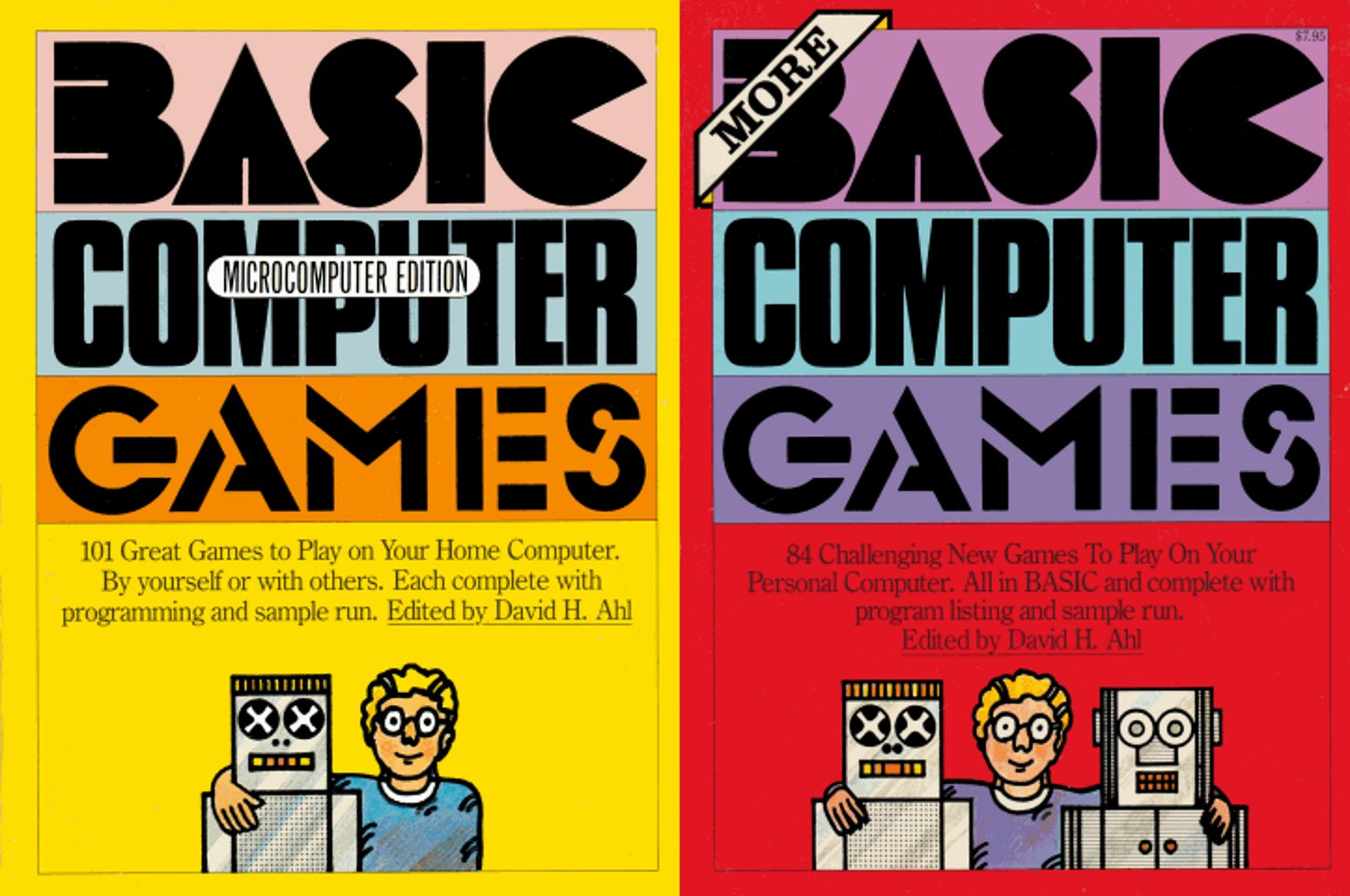
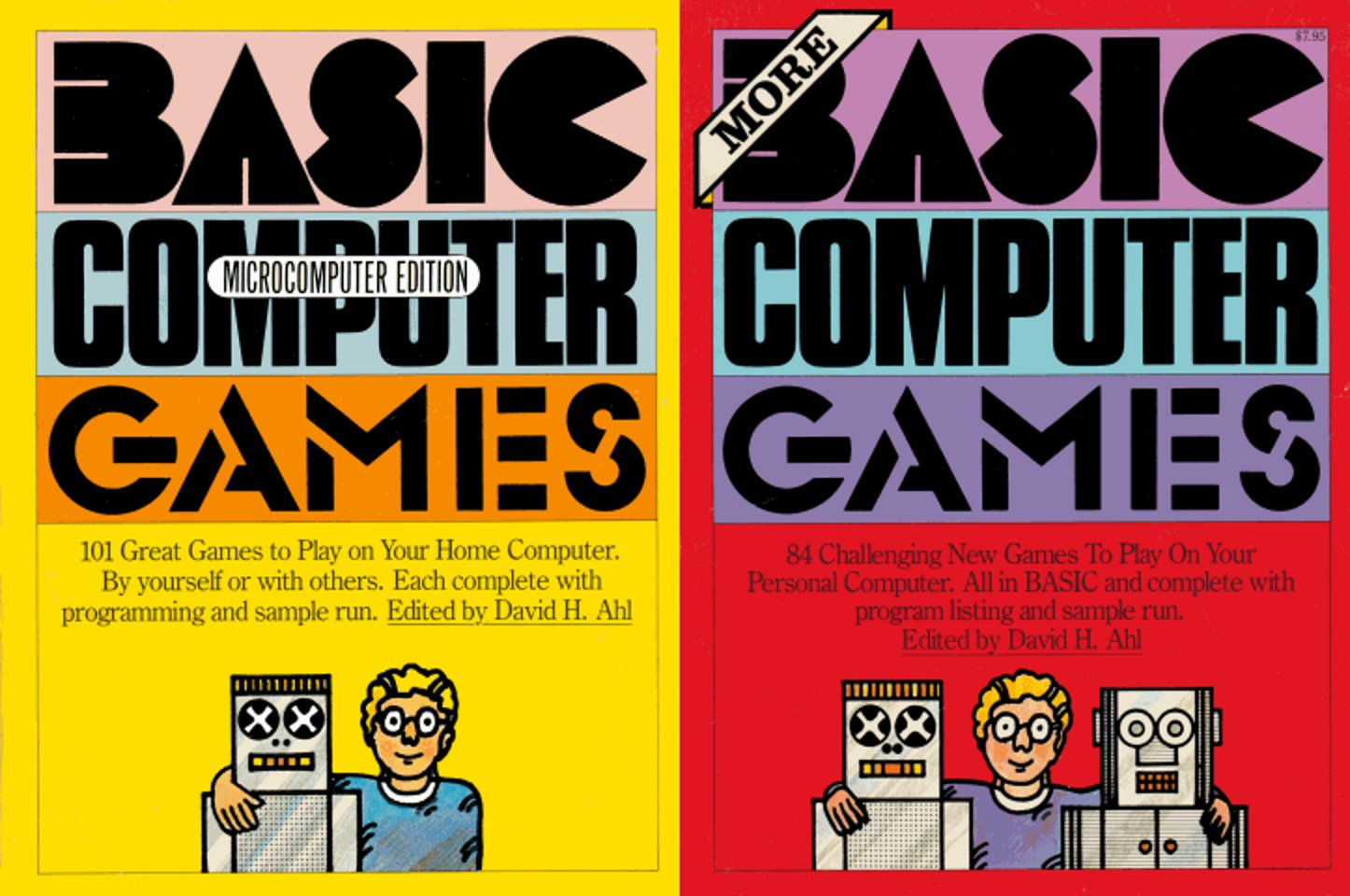
At the heart of this early programming culture was David H. Ahl, a visionary figure whose contributions were instrumental in democratizing computing. Ahl, initially working at Digital Equipment Corporation (DEC), recognized the immense potential of computers beyond their industrial and scientific applications. He understood that to make computing accessible, a user-friendly language and engaging content were paramount. This realization led to the publication of "101 BASIC Computer Games" in 1973 by DEC. The book served as an anthology, compiling a diverse array of simple games written in BASIC (Beginner’s All-purpose Symbolic Instruction Code), a language specifically designed for ease of learning and use.
Ahl’s entrepreneurial spirit extended beyond book publishing. In June 1974, he announced his intention to launch Creative Computing Magazine, a publication dedicated to making computing understandable and enjoyable for a broader audience. Leaving DEC, Ahl embarked on a remarkable journey of "sweat equity," as described in historical accounts. He meticulously managed every aspect of the magazine’s creation, from editing articles and writing his own content to typesetting, photography, illustration, and even the physical labor of mailing issues. His initial print run of 8,000 copies for only 600 subscribers demonstrated a profound belief in the burgeoning computer hobbyist market. He sent the unsolicited copies to libraries and schools nationwide, laying the groundwork for a movement that would transform computing from a niche academic pursuit into a mainstream phenomenon. Creative Computing quickly became a beloved resource, known for its accessible articles, programming tutorials, and innovative ideas, further cementing Ahl’s legacy as a key evangelist for personal computing.

"101 BASIC Computer Games": An Unprecedented Cultural and Educational Impact
"101 BASIC Computer Games" rapidly transcended its humble origins to become a monumental success, achieving an unprecedented level of penetration into the nascent computing market. Initially published by DEC, the book quickly required a second printing, bringing its total sales to 10,000 copies. This figure alone was remarkable, especially considering that in 1973, the number of personal computers capable of running BASIC was significantly lower. As Ahl himself recounted, "That was far more books than there were computers around, so people were buying three, four, five of them for each computer." This anecdote vividly illustrates the book’s profound influence and the fervent desire among enthusiasts to engage with programming, even before widespread hardware availability.
As inexpensive personal computers began to trickle down to the mainstream in the late 1970s and early 1980s—machines like the Apple II, Commodore PET, and TRS-80—the book’s popularity exploded. It became an essential companion for new computer owners, serving as both an instruction manual and a source of immediate, tangible results. For many, "101 BASIC Computer Games" was their very first introduction to programming, offering a playful and accessible entry point into the complex world of software development. Its games, though primitive by today’s standards, provided instant gratification and a clear understanding of cause and effect in code. The book went on to achieve another historic milestone, becoming the first computer book to sell over a million copies, solidifying its status as arguably the most influential programming text of its era. This widespread adoption meant that Ahl’s book was not merely a collection of games, but a de facto curriculum that shaped the foundational understanding of an entire generation of technologists, including figures like Jeff Atwood, who credits the book as "responsible for my entire professional career."
Previous Modernization Attempts and the Call for a Comprehensive Update
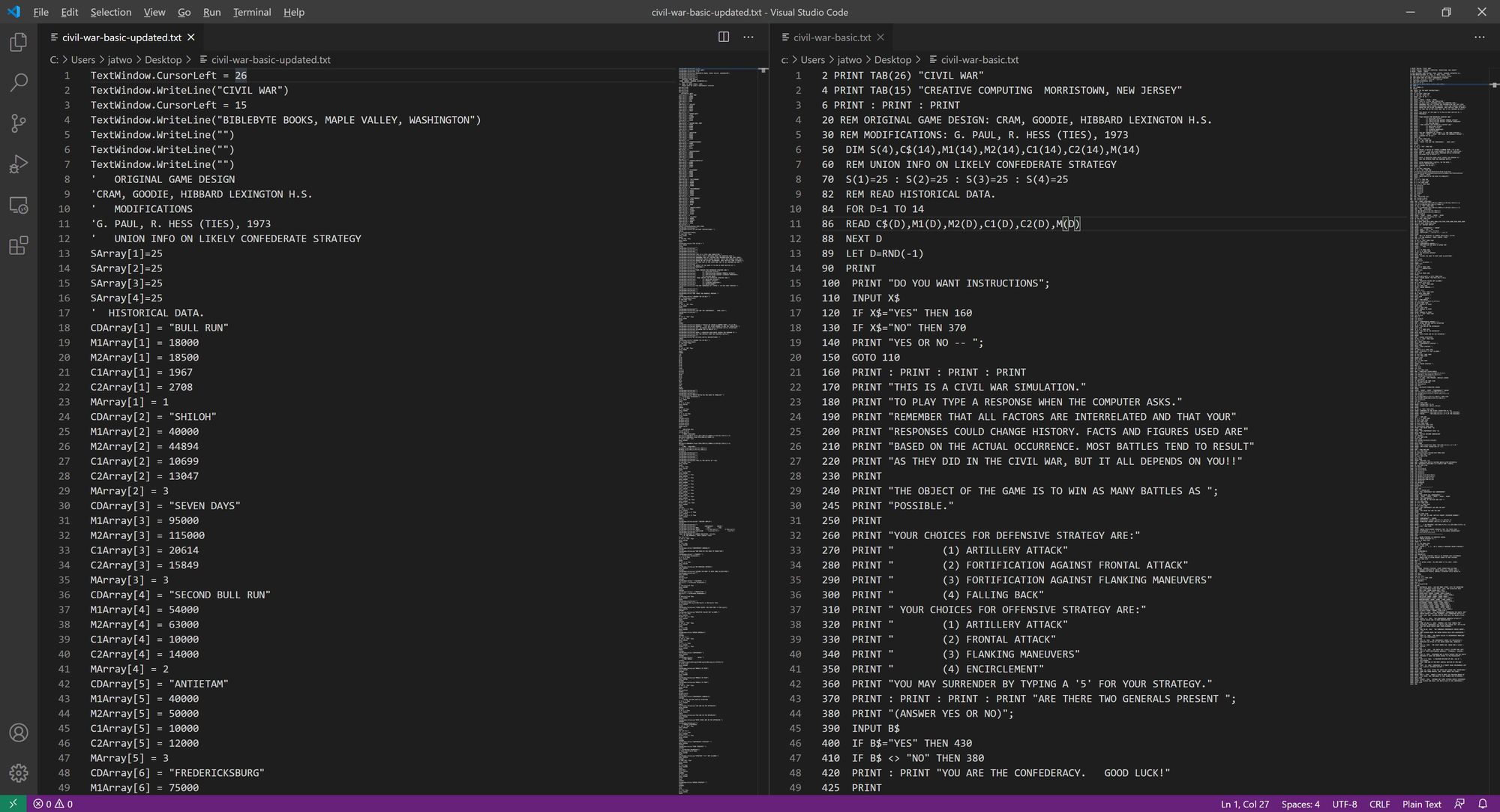
The enduring legacy of "101 BASIC Computer Games" has periodically inspired attempts to bridge the gap between its vintage code and modern computing environments. One notable effort occurred around 2010, when a project sought to modernize these early BASIC programs using Microsoft SmallBasic. While well-intentioned, this port largely fell short of truly updating the code for contemporary programming paradigms. A comparison between the original 1973 BASIC "Civil War" game and its 2010 SmallBasic counterpart reveals that the modernization primarily involved removing line numbers, a relic of early BASIC interpreters, but did little to integrate more advanced structural programming concepts.
The core issue with such superficial updates, as highlighted by Atwood, is the failure to incorporate fundamental advancements in computer science. Concepts like subroutines—which Atwood champions as "merely the greatest invention in computer science"—were conspicuously absent from these earlier modernization attempts. Modern programming emphasizes modularity, abstraction, and reusability, principles that allow for more organized, maintainable, and scalable code. The primitive, monolithic structure of the original BASIC programs, while effective for their time, contrasts sharply with contemporary best practices. This stark difference underscored the need for a more thoughtful and comprehensive approach to updating Ahl’s collection, one that would truly bring the code up to modern standards without losing its original spirit.
The Coding Horror Initiative: A Collaborative Vision for Digital Preservation
It was with this understanding and a profound sense of historical respect that Jeff Atwood embarked on his ambitious project to thoroughly update these ancient BASIC programs. After obtaining explicit permission from David H. Ahl himself—a crucial step underscoring the project’s legitimacy and reverence for the original author’s work—Atwood launched a collaborative effort on GitHub. The initiative, hosted at github.com/coding-horror/basic-computer-games, invites programmers worldwide to contribute to the monumental task of translating Ahl’s 101 games into ten carefully selected modern, memory-safe, general-purpose scripting languages.
The languages chosen reflect a commitment to contemporary relevance and robust programming practices. Initially including Python, Ruby, C#, JavaScript, Go, PHP, Perl, Swift, and PowerShell, the list has since been refined. As of March 2022, Kotlin was offered as an alternative to Java, Pascal was removed due to inability to guarantee memory safety and replaced by Rust (known for its strong memory safety guarantees), and Lua was added, recognizing its growing popularity in the TIOBE index and its strong adherence to scripting and memory-safe criteria. This careful selection ensures that the updated versions are not only runnable on modern systems but also demonstrate exemplary coding practices pertinent to the current technological landscape.

The Significance of Modern Programming Practices
The project’s emphasis on "modern, memory safe languages that embody the original spirit of BASIC" and "modern programming practices including subroutines" is a cornerstone of its educational and preservation goals. Memory safety, for instance, is a critical concern in contemporary software development, addressing vulnerabilities that can lead to crashes, security breaches, and unpredictable program behavior. Languages like Rust are specifically designed with memory safety in mind, preventing common programming errors at compile time. By porting these games to such languages, the project implicitly educates contributors and users about the importance of writing secure and stable code.
Furthermore, the integration of structured programming concepts, particularly subroutines (or functions/methods in modern parlance), transforms the original linear, ‘spaghetti code’ style into modular, readable, and maintainable software. This transition from a flat program structure to one organized around reusable components is a fundamental shift in programming methodology. It highlights how seemingly simple games can serve as pedagogical tools for demonstrating complex concepts, making the updated versions valuable learning resources for students and aspiring developers. The project thus offers a practical bridge between the historical evolution of programming and its current best practices, showing how foundational ideas can be expressed with greater elegance and efficiency.
Preserving Digital Heritage and Inspiring Future Generations
Beyond the technical aspects, the project carries immense cultural and historical significance. These games, though "very primitive" and unlikely to win awards for gameplay or sophistication, are invaluable "precious artifacts of early computing." They represent the earliest forms of interactive digital entertainment and educational software, providing a tangible link to the pioneers who shaped the industry. Preserving these games in modern formats ensures that future generations can experience and study them, understanding the roots of digital culture and the evolution of human-computer interaction.
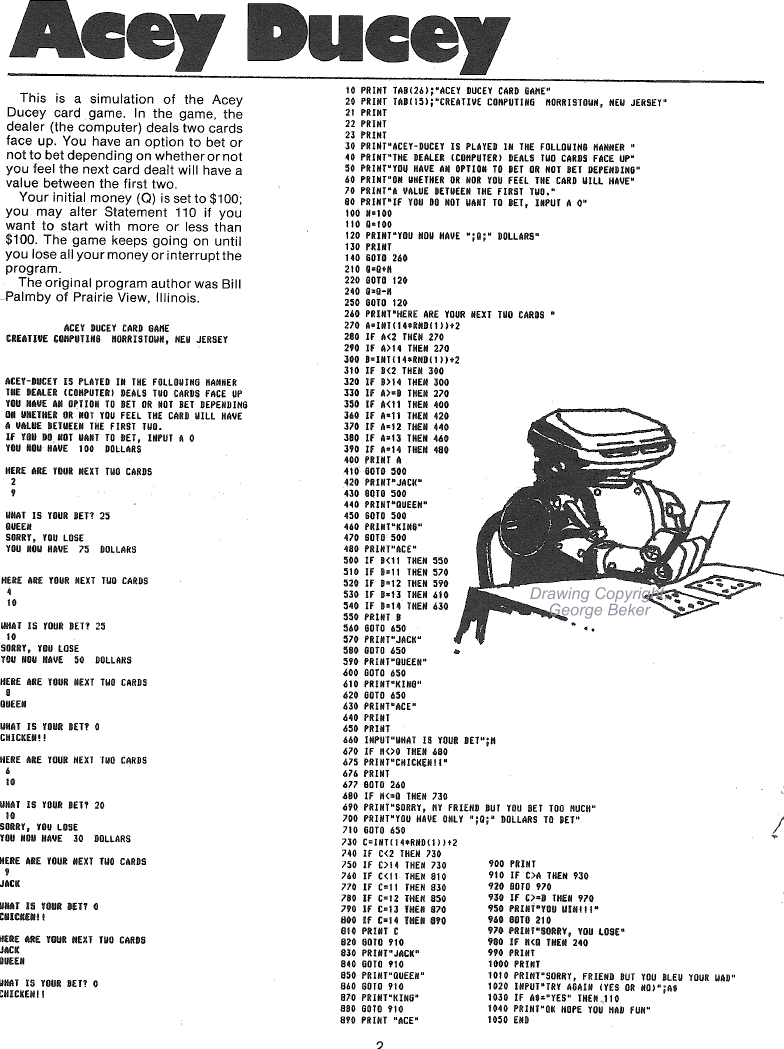
The project also pays homage to the original aesthetic contributions, particularly the "wonderful original art by George Beker." Beker’s distinctive illustrations, which adorned the pages of Ahl’s book, are an integral part of its charm and historical context. The project implicitly acknowledges that the experience of early computing was not solely about the code but also about the visual and tactile elements of the books and magazines that guided users. By making these elements accessible, the initiative safeguards a holistic piece of computing history.
Community Engagement and Philanthropic Goals
The "101 BASIC Computer Games" modernization project is fundamentally a collaborative, open-source endeavor, leveraging the power of collective intelligence that defines modern programming. Atwood frames it as a global, simultaneous coding session, a stark contrast to the solitary experience of typing code from a book in 1984. This communal aspect is designed to make the process more engaging, efficient, and educational, fostering a shared sense of purpose among contributors.
To further incentivize participation and underscore the project’s broader societal impact, Atwood has pledged a philanthropic component. By the end of 2022, for every functioning program submitted in each of the ten indicated languages, he committed to donating $5 to Girls Who Code. This organization is renowned for its mission to close the gender gap in technology and change the image of what a programmer looks like and does. This initiative connects the preservation of historical programming with the cultivation of future diverse talent, creating a virtuous cycle of learning and contribution. The project also actively seeks co-owners to help organize and sustain this long-term effort, recognizing that such a significant undertaking benefits from shared leadership and diverse perspectives. Detailed guidelines and a discussion forum on Discourse are provided to guide contributors and facilitate collaboration.
Broader Implications for Education and Open Source
This ambitious project holds significant implications for both computer science education and the open-source community. For educators, the updated collection offers a unique pedagogical tool. It provides a historical context for programming concepts, allowing students to trace the evolution of software development from its rudimentary beginnings to modern paradigms. By comparing the original BASIC code with its modern counterparts, learners can gain a deeper appreciation for structured programming, memory safety, and algorithmic efficiency. These games can serve as excellent entry-level exercises, demonstrating core programming logic in a simple, engaging format that resonates with the original intent of BASIC.
For the open-source community, the initiative serves as a model for digital heritage preservation through collaborative effort. It demonstrates how historical artifacts, even those as seemingly simple as early computer games, can be revitalized and made relevant for contemporary audiences through collective action. The project encourages participation from diverse skill levels, from seasoned developers to aspiring programmers, fostering a culture of mentorship and shared learning. By embracing a variety of modern languages, it also promotes polyglot programming and cross-language understanding, enriching the collective knowledge base of the community.
In conclusion, Jeff Atwood’s project to update "101 BASIC Computer Games" is more than just a coding exercise; it is a profound act of digital preservation, a significant educational resource, and a testament to the enduring power of collaborative innovation. It honors the legacy of pioneers like David H. Ahl, bridges the gap between past and present computing, and actively contributes to shaping a more inclusive and knowledgeable future for programming. The call to action remains for enthusiasts and professionals alike to join this historic endeavor, ensuring that one of the most influential books in computing history continues to inspire for generations to come.
About the Author