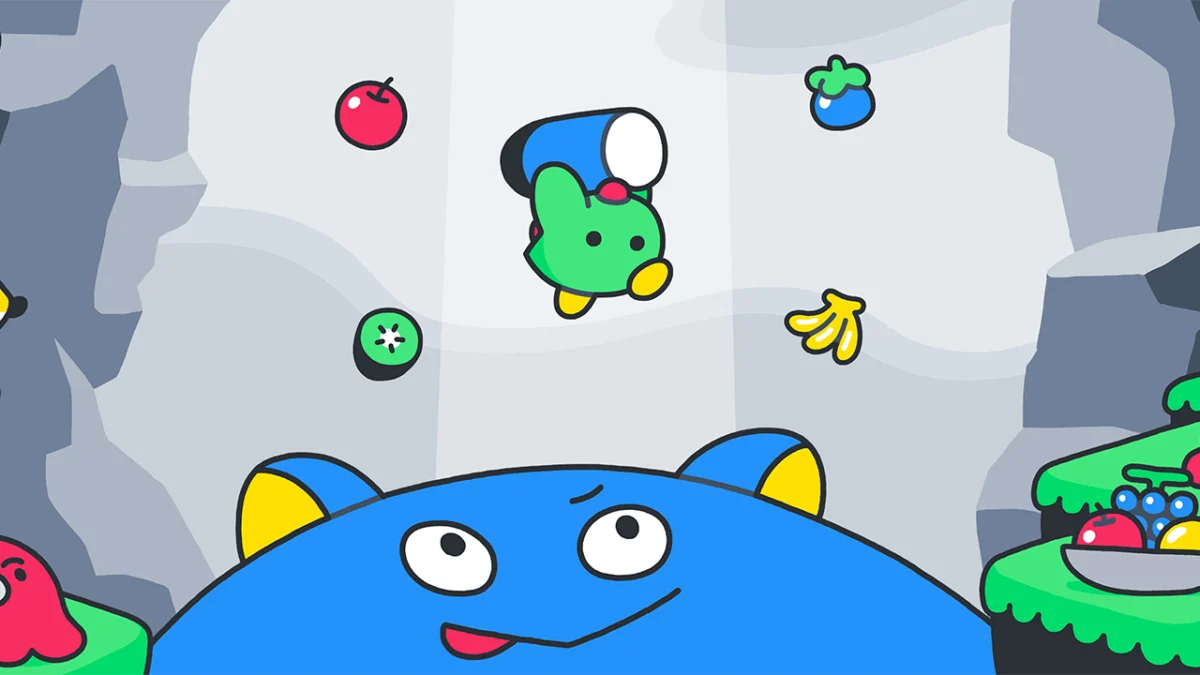
Last week marked a significant moment for mobile gaming enthusiasts and the broader industry, as Devolver Digital orchestrated the triumphant return of the critically acclaimed platformer Poinpy. Approximately one year after its mysterious disappearance from the Netflix Games catalog, the effusive title, developed by Downwell creator Ojiro Fumoto, has re-emerged on mainstream mobile platforms, now available entirely free of charge, supported by an innovative optional "tip" system. This resurrection not only brings a beloved game back to a wider audience but also sheds light on the intricacies of platform exclusivity deals and signals a potentially groundbreaking approach to premium mobile game monetization.
The game’s delisting from Netflix Games in mid-2025 had sparked considerable concern and speculation within the gaming community. Poinpy, lauded for its vibrant visuals, intuitive "juice-em-up" mechanics, and addictive gameplay loop, had initially debuted as a Netflix exclusive in 2022. Its abrupt removal, without clear explanation, left many players and industry observers questioning the stability of content on subscription-based gaming services and the fate of titles caught in strategic shifts. Forbes, among other outlets, highlighted the impending loss, fueling public dismay over a "perfect video game" seemingly vanishing indefinitely.
The Enigma of the Delisting and the Clarity of Contractual Terms
The initial absence of Poinpy from Netflix’s roster was widely presumed to be a casualty of the streaming giant’s evolving video game strategy. In the years following its ambitious foray into gaming, Netflix had notably recalibrated its focus, shifting away from a diverse portfolio of premium mobile titles towards a more concentrated effort on casual games and party experiences designed primarily for television screens, leveraging virtual controllers or companion apps. This pivot led to the departure of several high-profile titles and developers, including Monument Valley 3 and Spry Fox, highlighting the precarious position of studios operating under the Netflix Games umbrella.
However, Devolver Digital co-founder Nigel Lowrie has since clarified that Poinpy‘s delisting was not a consequence of Netflix’s strategic redirection or any corporate fallout. Instead, the situation was far more straightforward: a timed exclusivity agreement. "Netflix saw the game when it was in development and worked with Ojiro and our team at Devolver on a deal that had Poinpy debut on the service," Lowrie explained. "Once that term was up, we were free to release on mobile ourselves with no strings attached." This revelation underscores the importance of meticulously structured publishing contracts, particularly in an increasingly complex digital distribution landscape where platform-specific exclusivity remains a significant commercial tool. The ability for a publisher to reclaim and redistribute intellectual property post-exclusivity is a crucial safeguard for creators and content longevity.
Netflix’s Evolving Gaming Ambitions: A Strategic Pivot
To fully appreciate Poinpy‘s journey, it is essential to understand the broader context of Netflix’s venture into video games. Launched globally in November 2021, Netflix Games was positioned as a value-add for its existing subscriber base, offering a curated library of mobile titles free of ads and in-app purchases. The initial strategy appeared to be a blend of original IP tie-ins (like Stranger Things: 1984 and Stranger Things 3: The Game) and acquiring acclaimed indie titles or commissioning new ones from established developers. The goal was to enhance subscriber retention by providing premium gaming experiences, differentiating Netflix from other streaming services.
Early reports, however, indicated that subscriber engagement with the gaming catalog was initially modest, with a relatively small percentage of Netflix’s vast subscriber base actively playing the games. While Netflix reported steady growth in engagement over time, the challenges of discoverability within a streaming app, the need to download separate apps for each game, and the inherent friction for non-traditional gamers proved considerable. Analysts frequently pointed to the difficulty of converting passive viewers into active players, especially when competing with the established ecosystems of mobile app stores and dedicated gaming platforms.
This context provides a clearer rationale for Netflix’s subsequent strategic pivot. By mid-202X, the company began to emphasize games that could be more seamlessly integrated into the television viewing experience, often leveraging mobile devices as virtual controllers. This shift aimed to cater to a broader, more casual audience, potentially tapping into the social dynamics of living room gaming. While this strategy may align better with Netflix’s core identity as an entertainment provider, it inherently changed the types of games and partnerships it prioritized, leading to a narrower focus that inevitably excluded certain titles, including those like Poinpy that were designed as dedicated mobile experiences. The impact of this shift was felt across the industry, with developers like ustwo (creators of Monument Valley 3) and Spry Fox publicly discussing their adjustments post-Netflix collaboration.

The Creator’s Perspective: Gratitude and Reach
Despite Poinpy‘s temporary hiatus from Netflix and the broader industry changes, Ojiro Fumoto harbors no ill will towards the streaming giant. On the contrary, he expresses profound gratitude for their initial support. "I’m forever thankful that they collaborated with us," Fumoto stated. He further emphasized the invaluable role Netflix played in Poinpy‘s initial reach: "As for finding an audience, it helped for sure as they did some fun things to reveal and release the game, and they even gave us a spotlight as part of the first batch of titles for their platform. Given their reach, which is unlike any typical games publisher’s, I think it put Poinpy into the hands of many users who would have otherwise never come into contact with the game."
Fumoto’s perspective highlights a critical benefit that non-traditional gaming platforms can offer indie developers: unparalleled audience access. For a creator, especially one known for unique, niche experiences like Fumoto’s previous hit Downwell, gaining visibility amidst the colossal volume of new mobile game releases is a constant struggle. Netflix’s massive subscriber base, coupled with its promotional capabilities, provided a unique launchpad for Poinpy, ensuring it bypassed many of the typical discoverability hurdles faced by premium indie mobile games. This symbiotic relationship, where Netflix gained exclusive premium content and developers gained a vast, built-in audience, showcases the potential value of such partnerships, provided the contractual terms are mutually beneficial for post-exclusivity distribution.
Devolver Digital’s Distinctive Approach: Free-to-Play with a Conscience
Perhaps the most striking aspect of Poinpy‘s re-release is its monetization model: entirely free, devoid of hidden in-app purchases, microtransactions, or intrusive advertisements. Instead, Devolver Digital and Ojiro Fumoto opted for a "small tip option for folks that wanted to show their appreciation." This decision is a bold statement in a mobile gaming market dominated by free-to-play (F2P) models heavily reliant on IAPs and ads.
Lowrie elaborated on this innovative choice: "[Poinpy creator] Ojiro [Fumoto] took some time to make sure it was smooth as a game outside the Netflix service, things like leaderboards, etc. As for making the game free, Ojiro had this idea to make it totally free with a small tip option for folks that wanted to show their appreciation—which we loved." This model aligns perfectly with Devolver Digital’s reputation for championing independent creators and fostering unique artistic visions. It reflects a philosophy that values the player experience above aggressive monetization, trusting that genuine appreciation for quality content will translate into voluntary support.
In an industry where premium mobile games often struggle to find a sustainable audience at a fixed price point, and where F2P can sometimes compromise design integrity for monetization, the "free with optional tip" model presents an intriguing alternative. It removes the barrier to entry entirely, allowing anyone to experience Poinpy‘s acclaimed gameplay. For those who connect with the game and wish to support its creator, the tip option provides a direct and transparent way to do so, fostering a sense of community and direct patronage. This approach could serve as a valuable case study for other indie developers grappling with how to monetize high-quality mobile experiences in a market saturated with often exploitative F2P mechanics.
A Timeline of Poinpy’s Journey:
- November 2021: Netflix Games officially launches globally, signaling the company’s ambitious entry into the video game market with a "no ads, no IAPs" model for subscribers.
- Summer 2022: Poinpy, developed by Ojiro Fumoto and published by Devolver Digital, launches exclusively on Netflix Games, receiving critical acclaim for its innovative mechanics and charming design.
- Late 202X – Early 2025: Netflix begins to subtly shift its gaming strategy, moving towards more casual, TV-friendly experiences and re-evaluating its portfolio of mobile-first premium titles.
- Mid-2025: Poinpy is delisted from the Netflix Games catalog as its timed exclusivity agreement expires, leading to confusion and disappointment among players and industry observers. Other titles and studios also depart from Netflix Games around this period.
- July 2026: Devolver Digital officially re-releases Poinpy on major mobile app stores (iOS and Android), now completely free to play with an optional "tip" feature, clarifying that its initial disappearance was due to the natural conclusion of a contractual term.
Broader Implications for Indie Developers and Digital Distribution
Poinpy‘s unique trajectory offers several key takeaways for the video game industry, particularly for independent developers navigating the complex waters of digital distribution and platform partnerships.
Firstly, the saga underscores the double-edged sword of exclusivity deals. While platforms like Netflix can offer significant financial backing and unparalleled audience reach at launch, developers must carefully consider the long-term implications of such agreements. Retaining intellectual property rights and ensuring clear, favorable terms for post-exclusivity distribution are paramount. The ability for Devolver Digital to swiftly re-release Poinpy on its own terms, with no "strings attached," serves as a testament to a well-negotiated contract. Without such foresight, beloved titles could genuinely vanish into digital oblivion, highlighting the ephemeral nature of content tied to specific platform ecosystems.
Secondly, the "free with optional tip" model challenges conventional wisdom in mobile game monetization. In an era where players have become accustomed to either paying an upfront premium or engaging with ad-supported/IAP-driven F2P experiences, Poinpy‘s approach tests the hypothesis that goodwill and artistic appreciation can translate into sustainable revenue. If successful, this model could empower a new wave of premium indie mobile games to reach wider audiences without compromising their design integrity or resorting to aggressive monetization tactics. However, its scalability and long-term viability will depend on factors such as player generosity, game quality, and the developer’s marketing capabilities.
Finally, Poinpy‘s return also subtly critiques the broader challenges of game preservation in the digital age. When games are tied to specific platforms or services, their continued availability is often at the mercy of corporate strategies and contractual terms. The widespread relief and celebration surrounding Poinpy‘s re-release highlight a collective desire within the gaming community for enduring access to quality experiences, irrespective of platform shifts or business decisions. This incident serves as a reminder that robust distribution channels and developer autonomy are crucial for ensuring that games, as a cultural and artistic medium, remain accessible for future generations.
The Enduring Charm of "Poinpy": More Than Just a Name
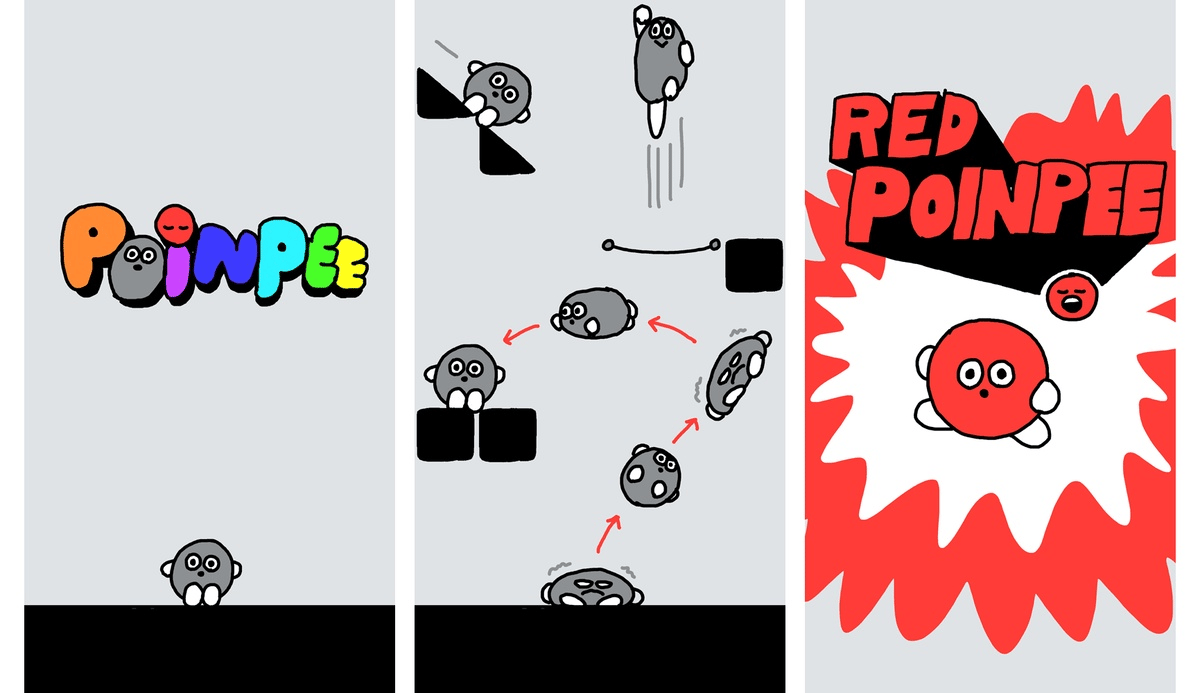
Beyond the business implications, the story of Poinpy also delves into the creative process behind a truly unique game. The game’s distinct name, a "truly sumptuous word that has burrowed its way into my brain," as the original article’s author Chris Kerr describes it, holds a special significance for its creator.
Ojiro Fumoto revealed the intriguing origin of the "Funny story is, the title being ‘Poinpy’ was the first thing that was decided about the game, even before we had any concept for it. Me and the lead (sole) artist on the game were trying to get a project going together and we sort of jammed out ideas, one of which was his ‘Poinpee’ sketch." This foundational artistic element, a simple sketch that predated any gameplay mechanics, served as a "spiritual pillar" throughout the entire development cycle.
From that initial "Poinpee" concept, Fumoto began to experiment with "pull-and-release 2D platformer controls for touchscreens," which eventually evolved into the game’s signature combo mechanics, "juicing" elements, and the challenging "beast" encounters. Despite "drastic changes made to all aspects of the game over the course of development," the name "Poinpy" remained constant, guiding the team whenever they faced creative crossroads: "What sort of a game would one named ‘Poinpy’ be?" This anecdote beautifully illustrates how abstract artistic concepts can profoundly influence the tangible design and identity of a video game, imbuing it with a cohesive vision from its very inception.
In summary, Poinpy‘s journey from exclusive debut to temporary disappearance and triumphant, open-access return is more than just a feel-good story for mobile gamers. It is a microcosm of the dynamic, often unpredictable nature of the modern video game industry. It underscores the critical role of well-structured contracts, the shifting sands of platform strategies, the enduring power of creator vision, and the potential for innovative monetization models to redefine how quality games reach and sustain their audience. For Poinpy, all’s well that ends well, and its resurrection stands as a beacon of hope for premium indie mobile games.
About the Author