
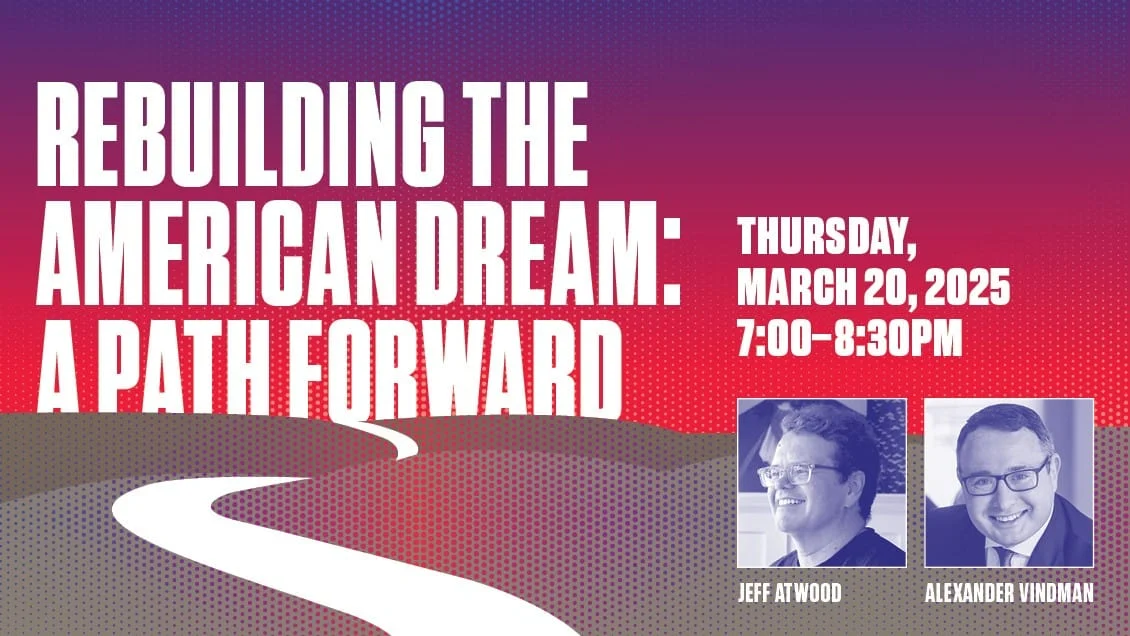
New York, NY – In a pivotal discussion held at the historic Cooper Union Great Hall, technology entrepreneur Jeff Atwood and retired Lieutenant Colonel Alexander Vindman convened to address the evolving landscape of the American Dream, proposing concrete pathways for its revitalization. The joint talk, titled "Rebuilding The American Dream: A Path Forward," took place two weeks after its announcement, drawing significant attention to its focus on democracy, community, and economic mobility. The event, streamed live on the Cooper Union Great Hall YouTube channel, underscored a shared commitment to fostering a more secure, dignified, and opportunity-rich future for all Americans.
A Convergence of Ideals at a Historic Venue
The Cooper Union Great Hall, a hallowed ground for American discourse where Abraham Lincoln delivered his influential "Might Makes Right" speech in 1860, once again served as a backdrop for a critical national conversation. The choice of venue was symbolic, linking contemporary challenges to a historical legacy of civic engagement and the pursuit of national ideals. This setting amplified the gravity of the discussion, emphasizing the enduring relevance of foundational American principles.
The collaboration between Atwood and Vindman brought together two distinct but complementary perspectives. Jeff Atwood, renowned for co-founding influential online platforms like Stack Overflow and Discourse, has extensively explored the dynamics of digital communities, governance, and constructive discourse in the internet age. His insights into building scalable, self-governing digital spaces provided a unique lens through which to examine societal structures. Alexander Vindman, a decorated military veteran and former Director for European Affairs on the National Security Council, gained national prominence for his unwavering commitment to democratic principles and rule of law, notably during the 2019 impeachment inquiry. His firsthand experience defending American ideals at great personal cost offered a profound understanding of civic duty and the integrity required to uphold foundational values.
The genesis of this discussion traces back several months to Atwood’s essay, "Stay Gold," which explored the imperative of preserving the best aspects of oneself, one’s community, and the American Dream. That essay posited that "staying gold" is not a passive state but an active endeavor requiring hard work, deliberate action, and candid conversations about the nation’s past, present, and desired future. The Cooper Union event was framed as the tangible manifestation of this philosophy, moving beyond theoretical musings to concrete proposals for structural change.
Dissecting the American Dream in 2025
The central premise of the talk revolved around a fundamental question: "How can we build on our dream so that it works for everyone?" This query acknowledges a prevailing sentiment in 2025 that the traditional promise of the American Dream—that hard work, fairness, and opportunity lead to upward mobility and a better future—feels increasingly elusive for a significant portion of the population. Data from various sociological and economic studies supports this perception. For instance, a 2023 survey by the Wall Street Journal and NORC at the University of Chicago found that only 36% of Americans believe the American Dream is attainable, a stark decline from 53% in 2012. This erosion of faith is often attributed to factors such as rising income inequality, stagnant wages for many, increasing cost of living, and diminishing intergenerational economic mobility.
The discussion delved into the multifaceted nature of this challenge, dissecting it through three primary lenses: democracy, community, and economic mobility. These pillars, the speakers argued, are interdependent and crucial for any meaningful revitalization of the American Dream.
Democracy: Upholding Integrity and Participation
Colonel Vindman’s perspective on democracy was deeply rooted in his personal history and professional service. Born in the Soviet Union and immigrating to the U.S. as a child, his lived experience provided a profound appreciation for democratic freedoms. His 21-year military career, culminating in service at the National Security Council, demonstrated a consistent commitment to upholding the values he swore to protect, even when faced with immense pressure. His decision to report concerns about foreign interference in U.S. elections, which ultimately cost him his career, was presented as a powerful example of civic duty and the integrity essential for a functioning democracy.
Vindman emphasized that democracy is not merely a system of government but a set of ideals that require constant vigilance and active participation. He highlighted the importance of accountability, transparency, and the rule of law as non-negotiable foundations. His narrative served as a powerful reminder that defending democratic institutions often requires personal sacrifice and a steadfast refusal to "look the other way" when core values are threatened. This resonated with the broader public discourse around democratic resilience and the challenges posed by political polarization and misinformation.
Community: Bridging Digital Divides and Fostering Shared Purpose
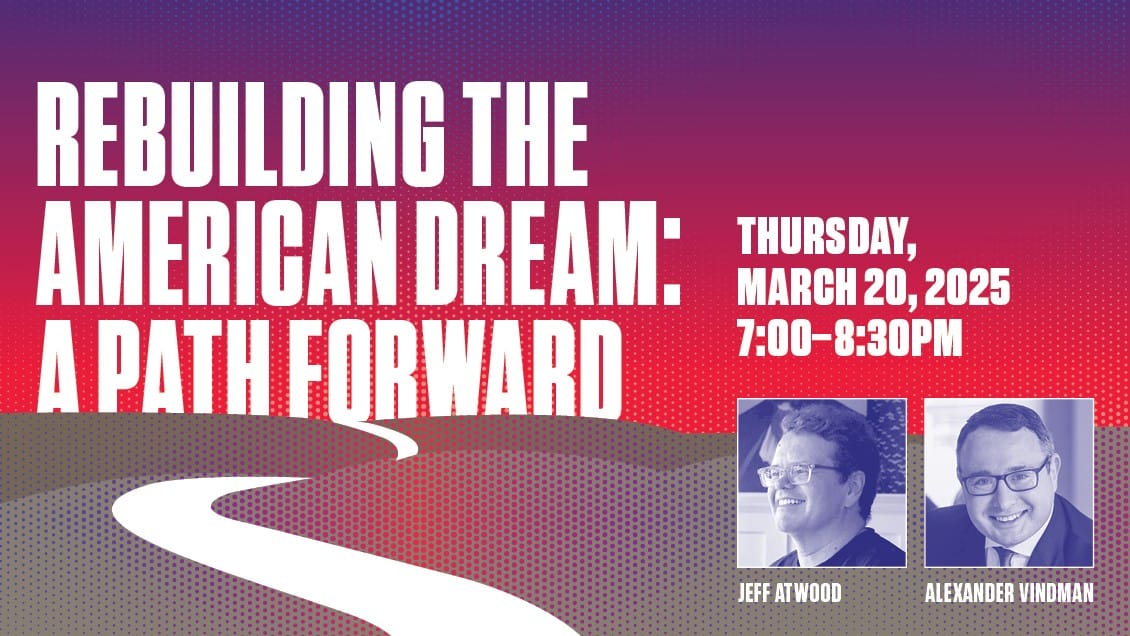
Jeff Atwood brought to the discussion his extensive experience in building and moderating large-scale online communities. He articulated that whether one is "running a country or running a forum," similar principles apply: clear expectations, fair systems, strong boundaries, and a shared sense of purpose are paramount. His work with platforms like Stack Overflow, which facilitates knowledge sharing among developers, and Discourse, an open-source platform for online discussions, has provided him with unique insights into how diverse groups of people can collaborate constructively, self-govern, and create "artifacts for the common good."
Atwood drew parallels between the challenges of managing digital communities—such as combating toxicity, ensuring equitable participation, and fostering civil discourse—and the broader societal challenges facing democratic nations. He argued that the principles of effective online community management, focused on creating spaces that encourage fairness and participation, are surprisingly relevant to the future of democracy itself. The notion of creating digital "local parks" where everyone can engage together safely and productively served as a powerful metaphor for fostering inclusive civic spaces, both online and offline.
Economic Mobility: From Individual Generosity to Systemic Change
Perhaps the most ambitious aspect of the talk was its pivot from the idea of individual generosity to the necessity of systemic change to create security, dignity, and possibility for all. The speakers acknowledged the complexity of this problem, recognizing that economic mobility is influenced by a myriad of factors including education, healthcare access, housing affordability, technological disruption, and labor market dynamics.
Historically, the American approach to addressing inequality has often relied on philanthropic efforts and individual acts of charity. While valuable, Atwood and Vindman argued that these measures, while commendable, are insufficient to address deeply entrenched structural inequities. They called for a re-evaluation of national priorities and a commitment to designing systems that inherently promote opportunity and reduce barriers to advancement. This would involve policy interventions in areas such as progressive taxation, investment in public education and infrastructure, affordable healthcare initiatives, and robust social safety nets.
Data on economic mobility in the United States often paints a concerning picture. Research from institutions like the Brookings Institution and the Federal Reserve indicates that intergenerational mobility has stagnated for decades, with children born into low-income families having a significantly lower chance of reaching higher income brackets than their counterparts in other developed nations. The speakers implicitly challenged the audience to consider how policy frameworks could be re-engineered to counteract these trends, ensuring that the "promise" of the American Dream is more universally accessible.
The Call to Collective Action
While acknowledging the absence of "easy answers," the speakers promised an "honest, unfiltered conversation about how we move forward, with specifics." Colonel Vindman contributed the perspective of someone who has literally put his life on the line for American ideals, embodying the spirit of principled action. Jeff Atwood offered the pragmatic experience of building scalable, self-governing digital communities, demonstrating how clear rules and shared purpose can lead to collective good.
The conclusion of the talk was a powerful call to collective action. "Imagine what we can do if Alex and I work together. Imagine what we could do if we all worked together," Atwood stated, encapsulating the core message. This emphasized that while leadership and vision are crucial, the ultimate success in "rebuilding the American Dream" hinges on broad-based participation and a renewed commitment from all citizens to work towards common goals. It implicitly highlighted that the challenges facing the American Dream are too complex for any single individual or group to solve and require a collaborative effort that transcends political divides and individual interests.
Broader Implications and Future Discourse
The discussion at Cooper Union Great Hall is expected to resonate within civic discourse, particularly among technology leaders, policy makers, and community organizers. The interdisciplinary approach, combining insights from technology, military service, and civic engagement, offered a fresh perspective on enduring national challenges. It suggested that solutions to complex societal problems might emerge from unexpected convergences of expertise and experience.
The event’s emphasis on moving "beyond individual generosity and toward systems that create security, dignity, and possibility for all" represents a significant shift in framing. It challenges the prevailing narrative that individual effort alone is sufficient for success, advocating instead for a societal infrastructure that supports universal opportunity. This perspective aligns with a growing body of academic and policy research that points to systemic factors as primary drivers of inequality and limited mobility.
The live stream of the event, now available on the Cooper Union Great Hall YouTube channel, ensures that the conversation can reach a wider audience, extending its impact beyond the physical confines of the historic hall. As the nation continues to grapple with questions of identity, purpose, and equitable opportunity, the insights shared by Atwood and Vindman provide a valuable framework for continued dialogue and action, urging Americans to collectively define and pursue the next chapter of their shared history. The legacy of Cooper Union, a place where ideas have historically shaped the nation’s trajectory, suggests that this discussion could mark an important inflection point in the ongoing effort to realize the promise of the American Dream for future generations.
About the Author







