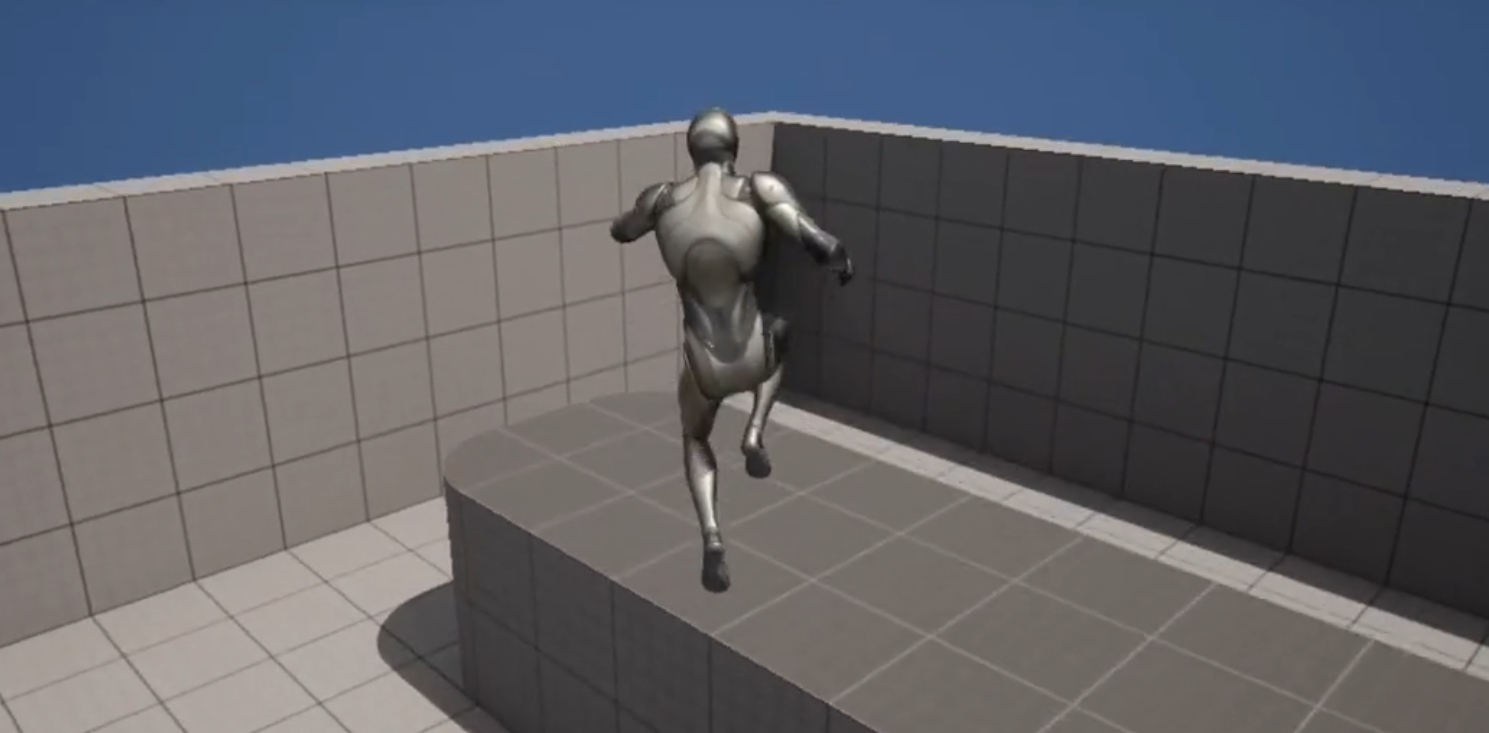
The ubiquitous double jump, a staple mechanic in countless classic and contemporary video games, has seen its implementation dramatically simplified within Unreal Engine 5 (UE5), marking a significant stride in game development accessibility. This enhancement allows creators, from seasoned studios to independent developers and hobbyists, to integrate this fundamental platforming ability with unprecedented ease, fostering a more efficient and creative development environment.
The Enduring Legacy of the Double Jump
The double jump is not merely a common feature; it is a foundational element that has shaped entire genres and player expectations. Games like Konami’s "Castlevania: Symphony of the Night" (1997), Naughty Dog’s "Crash Bandicoot" series (beginning 1996), Nintendo’s "Kirby" franchise (since 1992), and Rare’s "Banjo-Kazooie" (1998) all leveraged multi-jump mechanics to define their distinct platforming challenges and character traversal. This ability often serves as a core progression gate, demanding precise timing and spatial awareness from players, and its presence signals a certain level of verticality and exploration within game worlds.
Historically, integrating such a mechanic required a nuanced understanding of character controllers, physics engines, and intricate coding logic. Developers often had to manually manage jump counts, reset states upon landing, and ensure smooth transitions between single and multiple jumps. This process, while rewarding, consumed valuable development resources that could otherwise be allocated to innovative gameplay elements or narrative design. The recent advancements in UE5, however, significantly alleviate this burden, positioning Epic Games’ flagship engine as an even more attractive platform for game creation.
Unreal Engine 5’s Approach to Developer Empowerment
Epic Games has consistently championed tools that democratize game development, and Unreal Engine 5 stands as a testament to this philosophy. The engine’s robust architecture, particularly its Character Movement Component and Blueprint visual scripting system, provides a powerful yet intuitive framework for building complex game logic without extensive C++ programming. The simplification of the double jump mechanic exemplifies this commitment, allowing developers to focus on creative expression rather than technical minutiae.
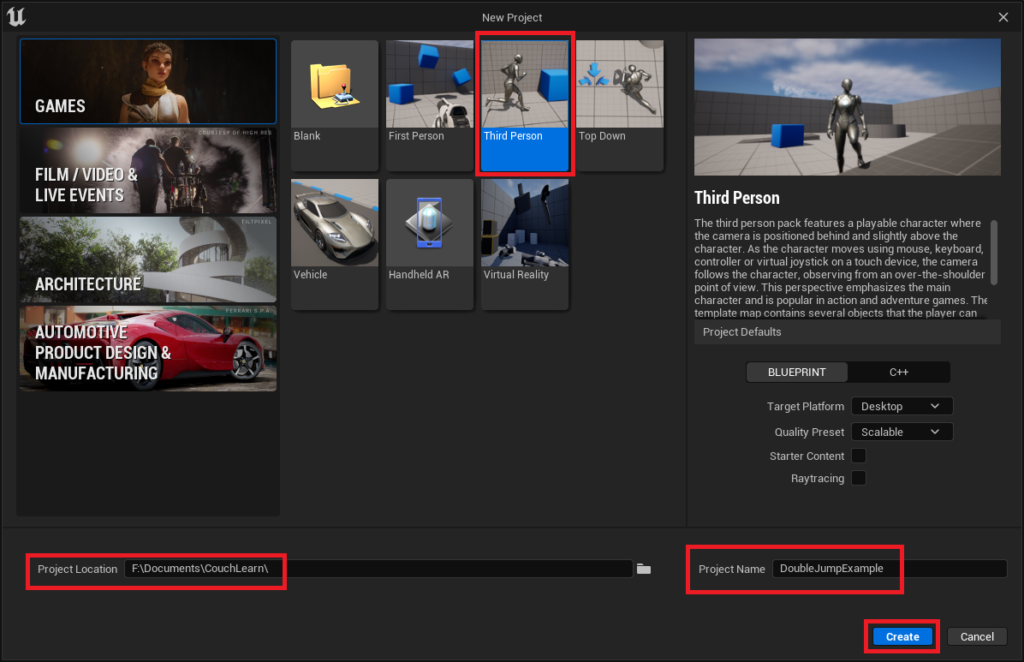
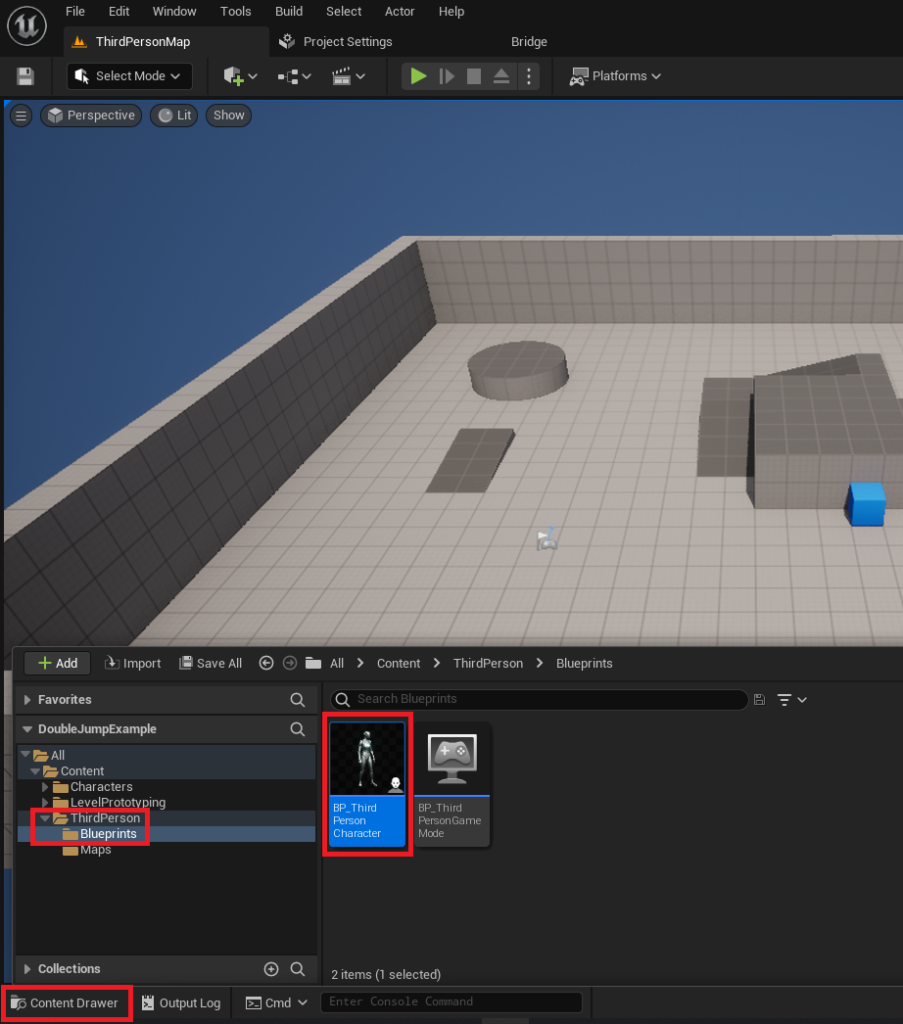
The core innovation lies in a straightforward parameter adjustment within the engine’s default character blueprint. For new developers starting a project, the Unreal Engine 5 Third Person template offers an immediate foundation. Upon creating a new project, typically by selecting the "Third Person" template and assigning a project name and location, developers gain access to a pre-configured character. This character’s behavior, including movement and jumping, is managed through a Blueprint class, specifically the BP_ThirdPersonCharacter object located in the Content/ThirdPerson/Blueprints folder.
A Seamless Integration: The Technical Breakdown
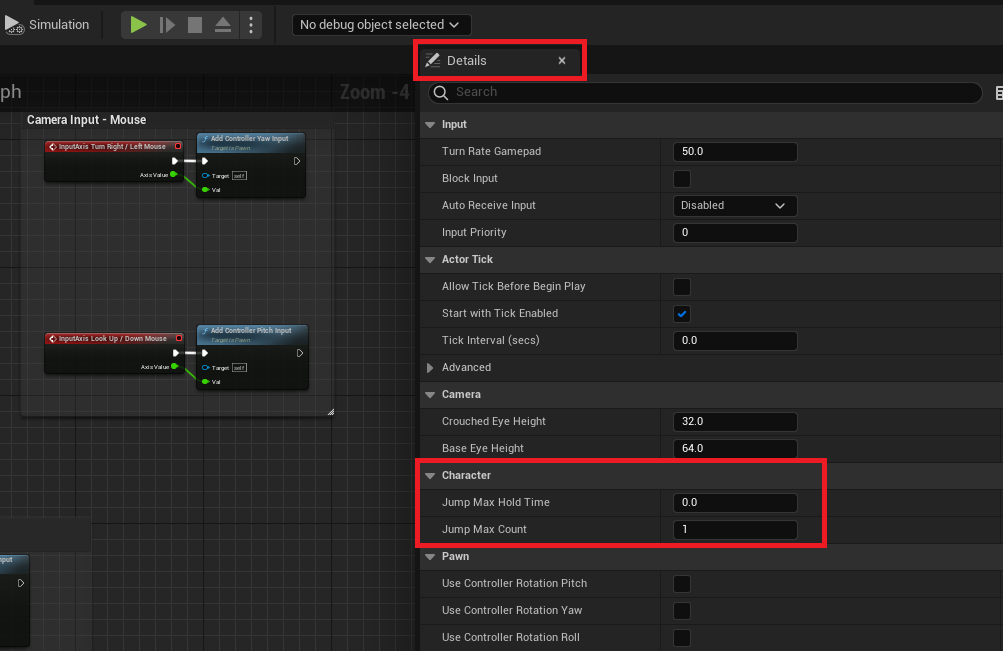
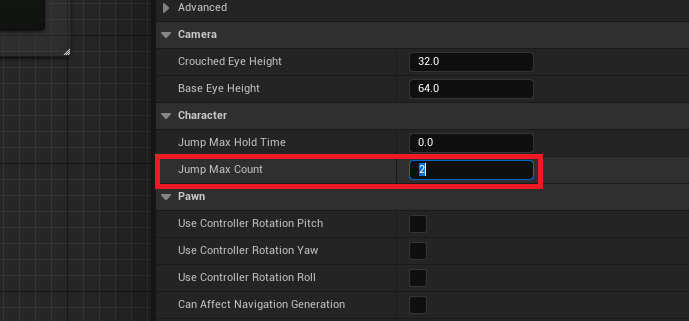
The process of enabling a double jump is remarkably direct. Within the BP_ThirdPersonCharacter Blueprint editor, selecting the main character component (often labeled BP_ThirdPersonCharacter (Self)) reveals a "Details" tab on the right side of the editor window. Among the various character parameters, a crucial setting is found under the "Character" category: Jump Max Count. By default, this value is set to ‘1’, allowing only a single jump. To enable a double jump, developers simply change this value to ‘2’. For games requiring more intricate multi-jump mechanics, such as a triple jump or an aerial dash, this value can be adjusted to suit any design requirement.
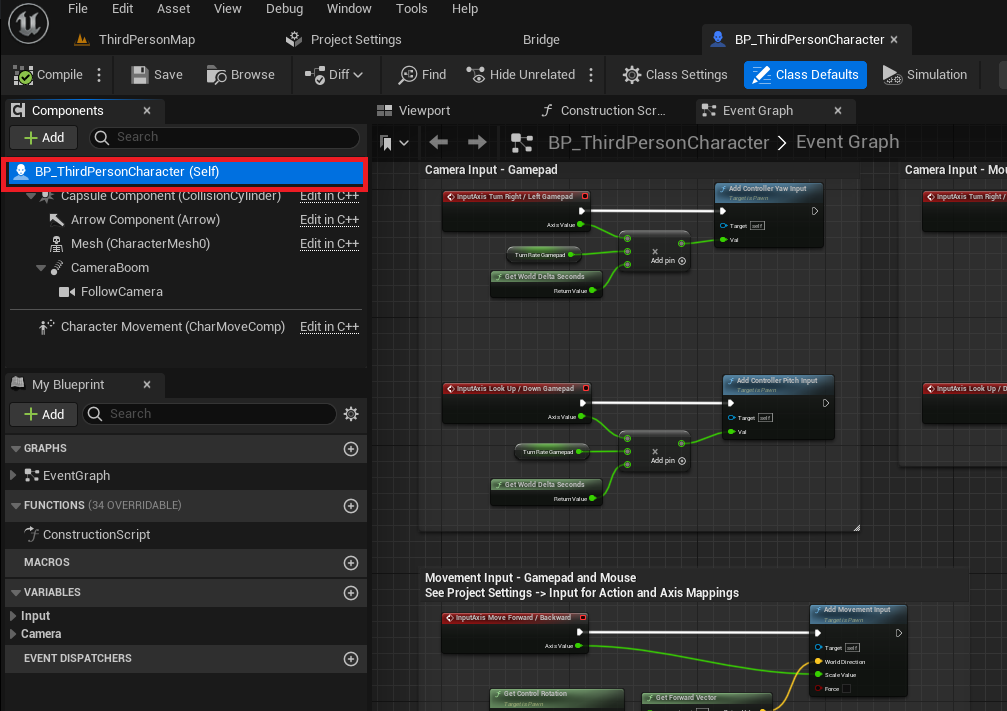
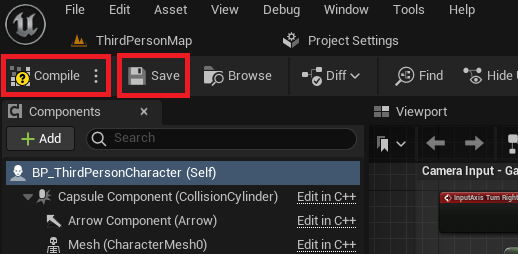
This minimal configuration change immediately grants the character the ability to perform multiple jumps in quick succession. Once the value is modified, compiling and saving the Blueprint class ensures the changes are applied to the project. This streamlined approach stands in stark contrast to previous iterations or other engines where similar functionality might necessitate custom code snippets, event graphs with complex logic gates, or even the development of custom character movement components.
Enhancing Player Feedback: The Importance of Animation
While the core functionality of the double jump is effortlessly implemented, the visual fidelity of the mechanic plays a crucial role in player experience. An un-animated double jump, where the character simply performs the same jump animation twice, can feel disjointed and lack impact. This is where Unreal Engine 5’s animation system, while requiring a slightly more intermediate understanding, offers powerful tools to refine the visual feedback.
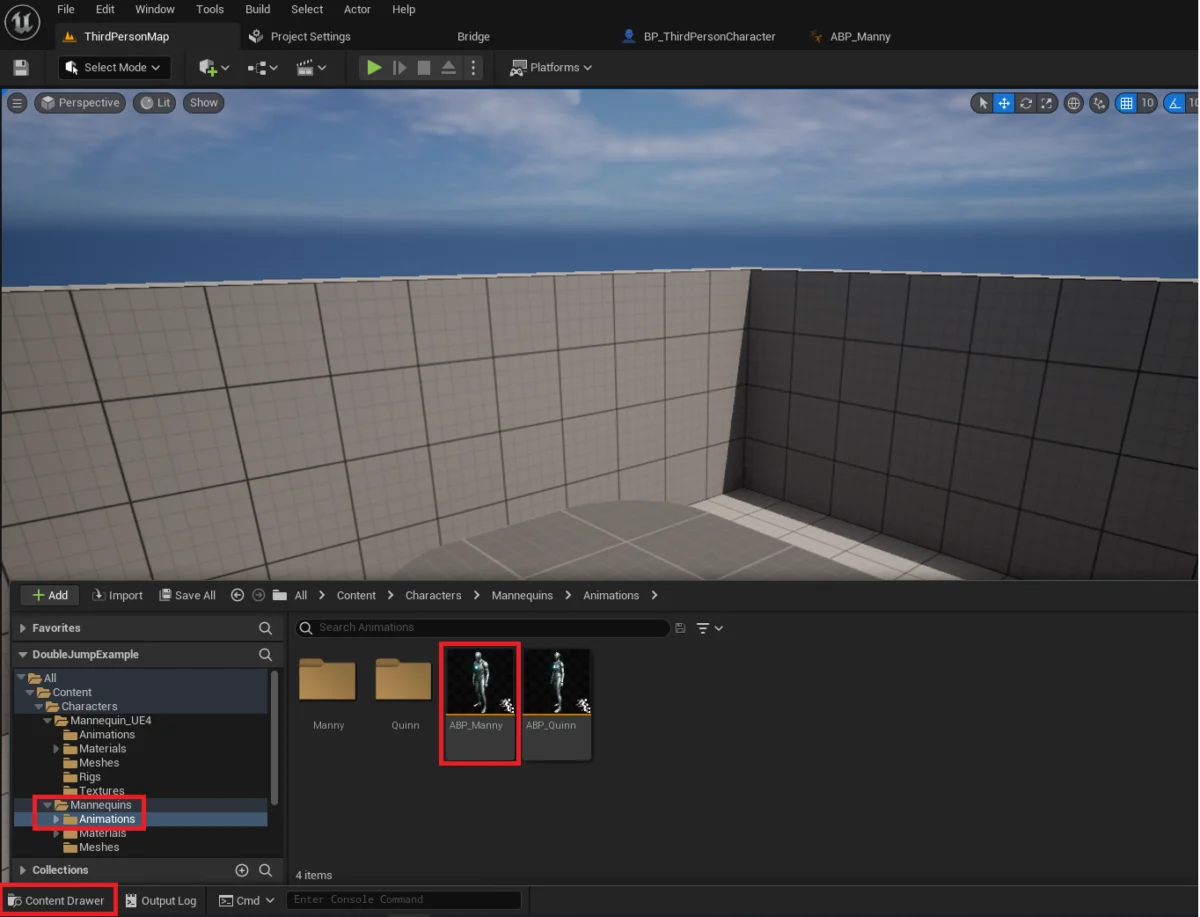
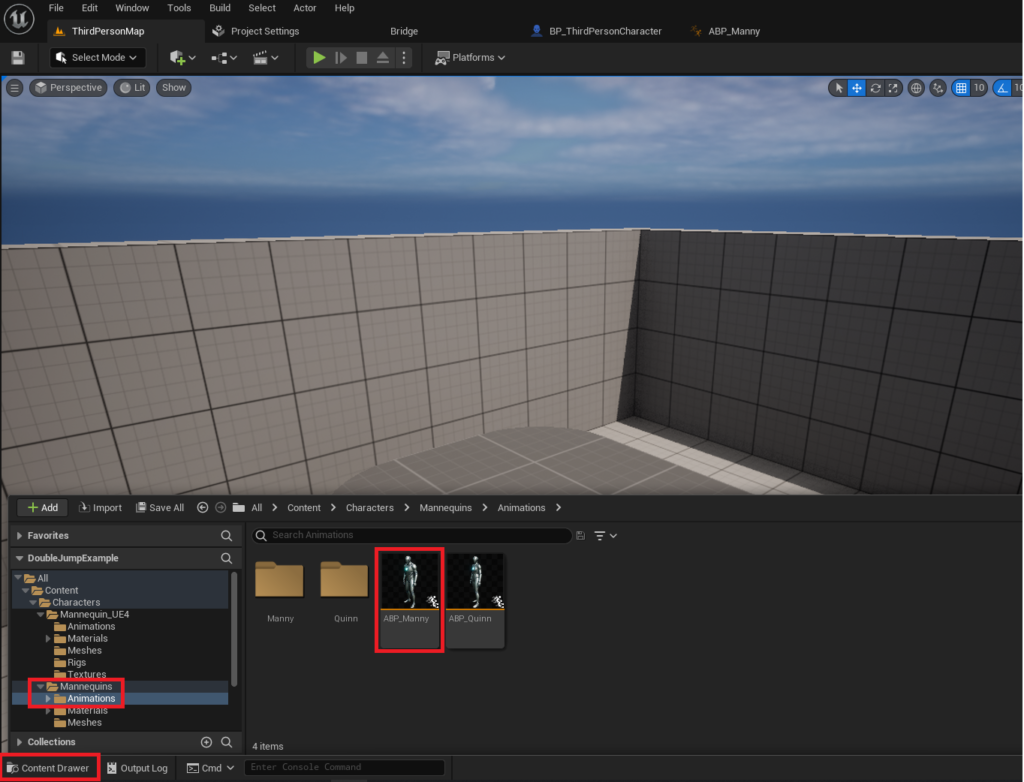
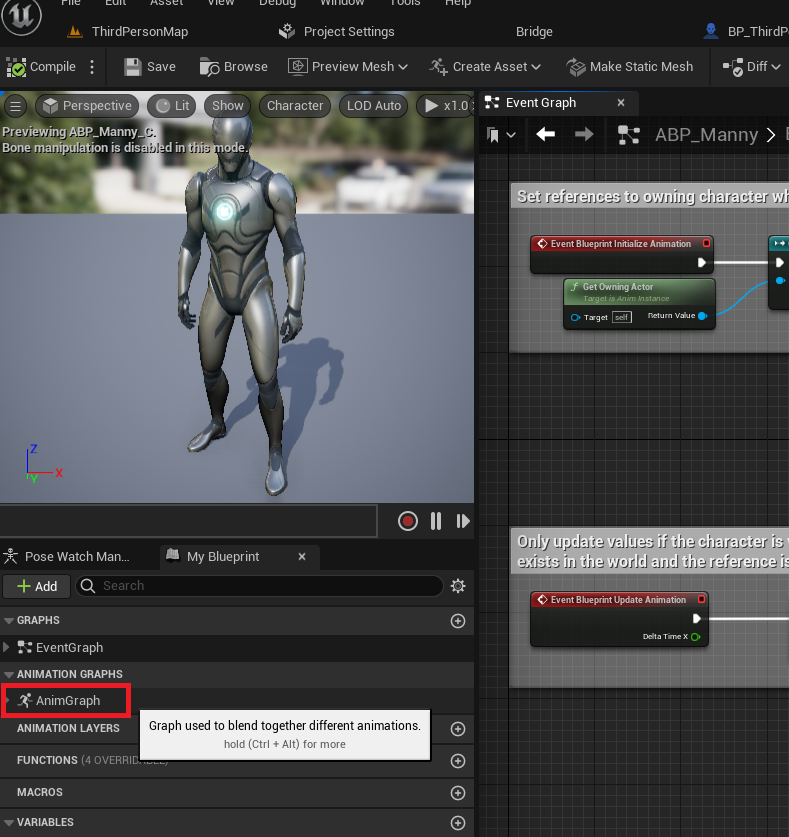
The standard Unreal Engine 5 Third Person template typically uses an animation Blueprint, such as ABP_Manny (found in Content/Characters/Mannequins/Animations), to manage character animations. To ensure the double jump is visually distinct and responsive, developers can modify the animation state machine within this Blueprint. The AnimGraph within the animation Blueprint contains the Main States state machine, which dictates how the character transitions between various movement animations (e.g., idle, walk, run, jump, fall).
The key to improved animation lies in creating a transition rule that allows the character to re-enter the "Jump" animation state even when already airborne and in a "Fall Loop" state. By dragging a new transition from the Fall Loop state to the Jump state, developers can then define the conditions under which this transition occurs. Within the transition editor, Blueprint nodes are added to check if the character is currently falling (IsFalling) and if a new jump input has been detected. This logic ensures that when the second jump is triggered mid-air, the character’s animation system correctly resets and plays the initial jump animation again, providing clear visual reinforcement to the player that a distinct action has occurred. This attention to detail elevates the double jump from a functional input to a satisfying, responsive player ability.
Industry Reactions and Broader Implications
The simplification of such a pervasive mechanic is not merely a minor convenience; it carries significant implications for the entire game development ecosystem. Industry analysts suggest that reducing the complexity of common features can drastically cut down development time, particularly for smaller independent studios. "Features like the streamlined double jump in Unreal Engine 5 are absolute game-changers for indie developers," comments Dr. Evelyn Reed, a lead game design consultant. "What used to be a multi-hour coding task, often involving debugging physics interactions, can now be configured in minutes. This frees up invaluable resources, allowing small teams to dedicate more time to innovative gameplay loops, unique level design, or rich storytelling, rather than reinventing the wheel for basic character movement."
From an educational standpoint, the accessible nature of UE5’s core mechanics is equally impactful. Universities and educational institutions globally are increasingly adopting Unreal Engine as a primary teaching tool. Professor Alistair Finch, head of a prominent game development program, states, "Simplified engine features allow our students to grasp fundamental game design principles much faster. They can experiment with complex mechanics like the double jump early in their learning journey without getting bogged down in low-level programming challenges. This accelerates their understanding and empowers them to prototype ideas more rapidly, fostering a new generation of more versatile game creators."
Epic Games, while not issuing a specific press release solely for the double jump feature, consistently emphasizes its commitment to developer accessibility. A spokesperson for Epic Games, in a recent developer conference, reiterated, "Our overarching goal with Unreal Engine 5 is to democratize game development. We want to ensure that powerful, production-ready tools are available to everyone, from AAA studios crafting cinematic masterpieces to solo developers bringing their unique visions to life. The continuous refinement of core components, making them intuitive and robust, is central to this mission." This sentiment underscores a broader industry trend where engine developers are increasingly providing comprehensive, out-of-the-box solutions for common development hurdles.
The Future of Game Development with Accessible Tools
The ease of implementing the double jump in Unreal Engine 5 serves as a microcosm of a larger trend in game development: the shift towards more abstract, user-friendly tools that empower creators. This trend is not about simplifying game design itself, but rather simplifying the technical barriers to entry, thereby enabling a wider array of creative voices to contribute to the gaming landscape.
By abstracting away much of the underlying complexity, Unreal Engine 5 allows developers to iterate faster, prototype ideas more fluidly, and ultimately deliver more polished and engaging experiences to players. The ability to quickly integrate and refine essential mechanics like the double jump means that development teams, regardless of size, can focus their energy on crafting unique game systems, innovative narratives, and distinctive artistic styles. This accessibility fosters a more diverse and vibrant industry, where creativity can flourish unhindered by daunting technical obstacles. The double jump, once a moderately complex coding task, now stands as a prime example of how modern game engines are evolving to put unprecedented power directly into the hands of every aspiring and established game developer.
About the Author