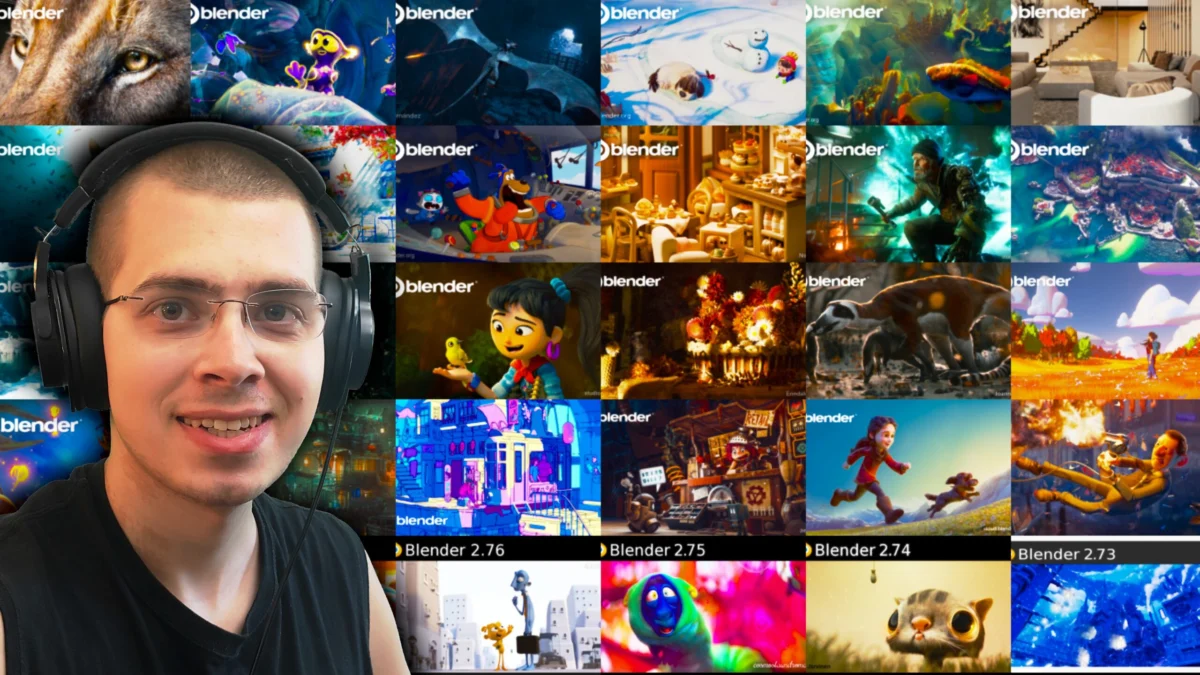
In a recent and ambitious endeavor, 3D artist and YouTuber Ryan King has undertaken the monumental task of ranking every single Blender splash screen ever released. The comprehensive evaluation, presented in a detailed video on his YouTube channel, "Ryan King Art," offers a unique perspective on the evolution of Blender’s visual identity and the artistic talent that has graced its launch screens over the years. The project, released on August 16, 2026, delves into the artistic merit, technical execution, and overall impact of these often-overlooked visual elements that have welcomed millions of users into the world of 3D creation.
The Genesis of a Creative Challenge
Blender, the open-source powerhouse for 3D creation, has a rich history, and its splash screens have served as a recurring canvas for showcasing the capabilities of the software and the artistry of its community. Each release of Blender is typically accompanied by a distinct splash screen, a static image that provides a glimpse into the possibilities of digital art and design. These images are not merely decorative; they often represent significant milestones in Blender’s development, experimental techniques, or collaborations with prominent 3D artists.
The idea of creating a definitive ranking of these splash screens likely emerged from King’s deep engagement with the Blender community and his own passion for visual storytelling. By compiling and analyzing each splash screen, he aims to provide a historical overview and a critical assessment of their artistic value, offering a new lens through which to appreciate the software’s visual heritage.
Methodology and Tiering System
King’s approach to ranking the splash screens is systematic. While the specific criteria used are detailed within the video itself, a tiered system is a common and effective method for such comparative analyses. Typically, these systems categorize items into distinct levels, such as S-tier (exceptional), A-tier (excellent), B-tier (good), C-tier (average), and potentially lower tiers for those deemed less impactful or successful.
Factors likely considered in King’s ranking would include:
- Artistic Composition: The balance, harmony, and visual appeal of the artwork.
- Technical Proficiency: The skill demonstrated in rendering, texturing, lighting, and overall 3D execution.
- Originality and Innovation: How unique or groundbreaking the artwork is in its concept and execution.
- Thematic Relevance: How well the splash screen represents the spirit of Blender or the specific features of the release it accompanies.
- Memorability and Impact: How well the image sticks in the viewer’s mind and its overall influence on the perception of Blender.
- Nostalgia and Historical Significance: For older splash screens, their place in the evolution of Blender’s visual language.
By applying these or similar metrics, King provides a structured and reasoned evaluation, moving beyond subjective preference to offer a more analytical appraisal.
A Visual Chronology of Blender’s Evolution
The collection of Blender splash screens represents a visual timeline of the software’s progress and the broader trends in 3D art. Early splash screens, from the late 1990s and early 2000s, likely reflect the nascent stages of 3D graphics technology and the artistic styles prevalent at the time. As Blender matured and its capabilities expanded, so too did the complexity and sophistication of its splash screens.
- Early Years (Late 1990s – Early 2000s): These splash screens might showcase simpler models and rendering techniques, focusing on fundamental 3D concepts. They would likely be indicative of the hardware limitations and artistic conventions of the era.
- Growth and Feature Expansion (Mid-2000s – Early 2010s): As Blender gained more features and a larger user base, splash screens began to reflect this growth. They might feature more intricate scenes, diverse subject matter, and potentially showcase specific new tools or workflows introduced in various versions.
- Modern Era (Mid-2010s – Present): With advancements in rendering engines (like Cycles), the introduction of Eevee, and a robust community of skilled artists, the splash screens in recent years have become incredibly sophisticated. They often represent photorealistic or highly stylized artworks, pushing the boundaries of what can be achieved within Blender and inspiring users with cutting-edge visuals.
King’s video allows viewers to revisit these distinct periods, observing how the artistic direction and technical execution of splash screens have evolved in tandem with Blender itself. This offers a unique historical narrative, not just of the software’s development, but also of the artistic trends within the 3D community.

The Role of Community and Collaboration
Many Blender splash screens are the result of community submissions or collaborations with well-known artists within the 3D world. This open-source ethos is a cornerstone of Blender, and the splash screens often serve as a testament to this collaborative spirit. Artists are invited to submit their work, and the selection process for the official splash screen can be a significant honor.
The video implicitly highlights the diverse talent pool within the Blender community. By ranking these works, King is not only evaluating the art but also acknowledging the individual artists who have contributed to Blender’s visual identity. This can foster further engagement and encourage aspiring artists to create and submit their own work for future releases.
Data and Supporting Evidence
While specific numbers of splash screens or the exact duration of their release periods are not provided in the initial snippet, a project of this scale would encompass dozens, if not hundreds, of individual artworks. For instance, if Blender has been in active development for over two decades with multiple releases per year, the number of unique splash screens could easily exceed fifty.
- Estimated Number of Splash Screens: Assuming an average of 2-4 major releases per year over 25 years, there could be between 50 and 100 distinct splash screens to analyze.
- Artist Contributions: A breakdown of how many splash screens were created by community members versus core developers or commissioned artists would provide further insight into the collaborative model.
- Release Cadence: Understanding the historical frequency of Blender releases (e.g., annual, bi-annual, quarterly) would contextualize the timeline of the splash screens.
King’s video would ideally present a visual gallery of each splash screen as it is discussed, allowing viewers to directly compare and contrast the artworks.
Analysis and Implications
The implications of Ryan King’s "Blender Splash Screen Tier List" extend beyond a simple ranking exercise.
- Artistic Benchmarking: The video serves as a valuable resource for aspiring 3D artists, offering examples of high-quality work across different eras and styles. It demonstrates what has been considered visually compelling and technically proficient within the Blender ecosystem.
- Historical Documentation: This project acts as an unofficial archive and critical review of Blender’s visual history. It provides a curated narrative that might be overlooked in more technical release notes.
- Community Engagement: By generating discussion and potentially debate about the rankings, the video can foster greater community interaction and appreciation for the artists involved. It might also inspire new artistic challenges or projects within the Blender community.
- Marketing and Perception: Splash screens play a role in how Blender is perceived by new users. A strong splash screen can convey professionalism, creativity, and technological advancement. King’s analysis implicitly touches on the effectiveness of these visual introductions.
- Evolution of Software Art: The video offers a micro-history of how digital art has evolved in parallel with software development, particularly in the realm of open-source creative tools.
The decision to create such a video reflects a growing trend of in-depth analysis and appreciation of digital art within online creative communities. It moves beyond simple tutorials to offer critical engagement with the aesthetic and historical aspects of creative software.
Potential Reactions and Future Developments
While direct statements from Blender Foundation officials are not available, it is highly probable that such a comprehensive and community-focused project would be met with appreciation. The Blender Foundation actively encourages community contributions and artistic expression. A project that celebrates the visual heritage of Blender, especially one executed with the thoroughness King demonstrates, is likely to be viewed positively.
One might infer that such a video could inspire:
- Official Recognition: The Blender Foundation might consider highlighting or referencing King’s work on their official channels, recognizing its value to the community.
- Future Community Projects: This could spark similar deep-dive analyses of other aspects of Blender, such as iconic default scenes, popular add-ons, or influential tutorials.
- Artist Spotlights: It could lead to a renewed interest in the artists who created some of the highest-ranked splash screens, potentially resulting in interviews or features on their current work.
As Blender continues its trajectory of innovation and development, future splash screens will undoubtedly continue this tradition of showcasing artistic excellence and technological prowess. Ryan King’s initiative provides a valuable retrospective, celebrating the visual journey of one of the world’s most powerful and accessible 3D creation tools. His work offers a unique and insightful perspective for both long-time Blender enthusiasts and newcomers alike, enriching the understanding and appreciation of the software’s visual legacy.
About the Author