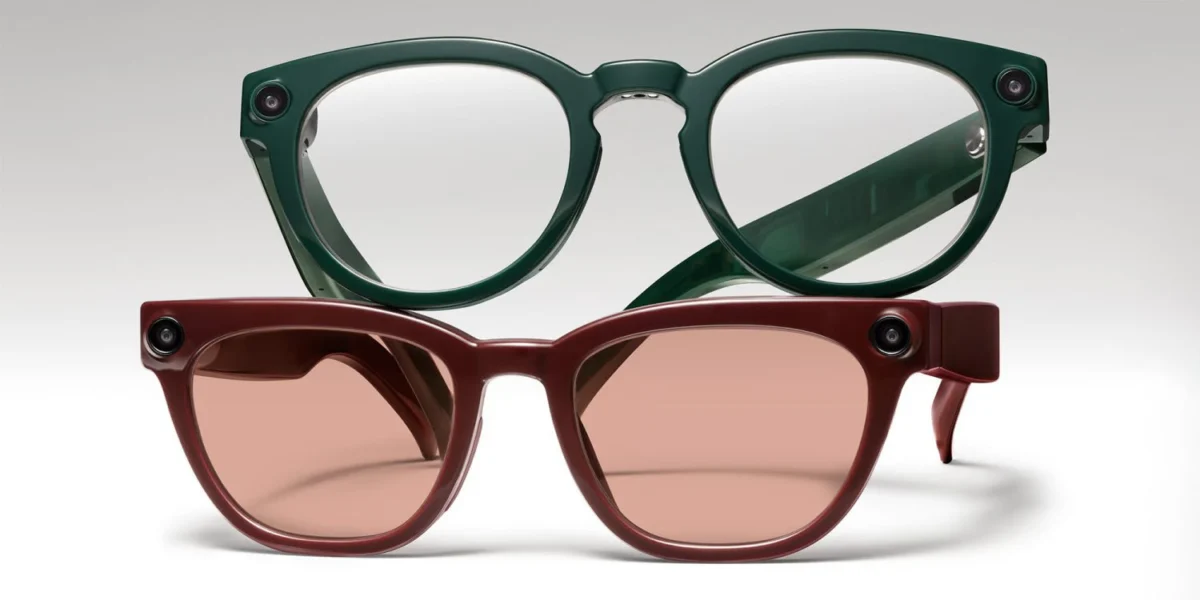
The augmented reality (AR) and extended reality (XR) sectors have experienced a series of high-profile developments this week, headlined by a significant leadership appointment at Snap Inc. and the emergence of detailed technical specifications for Samsung’s upcoming smart glasses. These movements occur against a backdrop of technical standardization and shifting market dynamics for established software platforms. Snap Inc. officially announced that Academy Award-winning actor Robert Downey Jr. has joined the organization as the honorary Chief Customer Experience Officer (CCEO). This strategic move is designed to bridge the gap between complex AR hardware and consumer understanding, specifically focusing on the company’s new fifth-generation Spectacles.
According to the official press release, Downey Jr. will play a multifaceted role within the Spectacles organization. His responsibilities include guiding consumers through the capabilities of see-through AR glasses, exploring new software capabilities, and shaping the development of original Lens experiences. Industry reports suggest the partnership involves a substantial financial commitment, with rumors of a deal valued in the range of $100 million. While Snap has not officially confirmed the dollar amount, the partnership represents one of the most significant celebrity-tech integrations in the XR space to date. The collaboration aims to leverage Downey Jr.’s public association with advanced technology to position the $2,200 Spectacles as a "cool" and accessible piece of hardware, despite its current primary target being the developer community.
Technical Specifications Leak for Samsung’s Smart Glasses
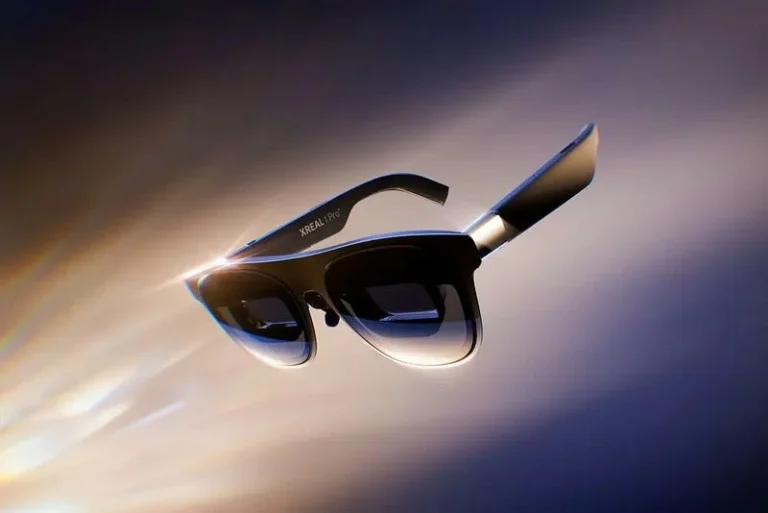
Concurrent with Snap’s marketing push, a comprehensive leak has provided a detailed look at the hardware specifications for Samsung’s forthcoming smart glasses, developed in partnership with Google and Qualcomm. The data, initially reported by SammyGuru and 9to5Google, suggests that Samsung is positioning its device to compete directly with the market-leading Ray-Ban Meta glasses.
The leaked specifications include the use of the Qualcomm Snapdragon AR2 Gen 1 chipset, a Sony IMX681 12MP camera sensor, and a 155mAh battery. Notably, the glasses are reported to weigh 41 grams, which would make them significantly lighter than many current market offerings, including the standard Ray-Ban Meta frames. Samsung is reportedly collaborating with fashion-forward brands such as Warby Parker and Gentle Monster to offer a variety of styles and prescription lens options. While a specific release date remains unconfirmed, industry observers anticipate a formal unveiling as early as November.

The emergence of these glasses underscores a broader industry trend toward "smart glasses" that prioritize form factor and AI integration over full immersion. By matching the technical profile of Meta’s hardware while offering a lighter frame, Samsung aims to capture a segment of the market that prioritizes all-day wearability.
OpenXR Standardizes Spatial Containers for Multitasking
In a move that signals a shift toward a more unified XR ecosystem, the Khronos Group has announced the inclusion of "spatial containers" within the OpenXR standard. This development is technically significant as it formalizes the management of bounded AR and mixed reality (MR) experiences.
Spatial containers allow for applications to exist as floating 3D widgets within a user’s environment rather than requiring a fully immersive, exclusive session. This architecture is central to the operating systems of the Apple Vision Pro and the upcoming Pico Space Pro. By standardizing these containers, OpenXR enables developers to create multitasking-capable applications that can run across different hardware platforms without extensive rewriting. These bounded apps also possess the capability to transition into fully immersive experiences at the user’s discretion, facilitating a hybrid workflow that mirrors the functionality of a traditional PC desktop within a spatial context.
Market Volatility: Relaunches and Shutdowns
The XR software market continues to demonstrate significant volatility, characterized by both the revival of legacy platforms and the closure of high-profile titles. This week, the social VR platform AltspaceVR was officially rebooted under the stewardship of the team behind SideQuest. Following Microsoft’s decision to shutter the original service in early 2023, the new iteration has launched on the Horizon Store. Early reception has been cautious, with industry analysts watching to see if the platform can recapture its former community in a landscape now dominated by VRChat and Horizon Worlds.
In contrast, Ramen VR announced the permanent closure of Zenith: The Last City, one of the first and most prominent VR Massively Multiplayer Online (MMO) games. Despite raising millions in venture capital and launching with significant fanfare, the developers cited the immense complexity and cost of maintaining an MMO in a niche market as the primary reasons for the shutdown. The servers are scheduled to go offline on December 18, 2024.

Conversely, the fitness application Supernatural has completed a successful transition back to its original founders at Supernatural Health. After being acquired by Meta, the app has been "rebooted" on the Horizon Store, allowing users to migrate their fitness data to the new independent version. This move is seen as a rare instance of an acquired application returning to its original leadership to maintain its specific brand identity and community focus.
Technical Milestones and Software Updates
Several critical technical updates were released this week, addressing long-standing issues and introducing new functionalities for power users. NVIDIA released Driver 621.01, which reportedly resolves a persistent bug that caused Horizon Link (formerly Quest Link) to freeze during PC VR sessions. This fix is expected to significantly improve the stability of the tethered VR experience for millions of users.
VRChat has introduced native support for face tracking in its latest Avatar SDK beta. While face tracking was previously possible through third-party Open Sound Control (OSC) solutions, official integration allows for a more streamlined experience as more headsets, such as the Meta Quest Pro and various enterprise devices, incorporate eye and face-tracking sensors.
In an unusual development, Valve updated the Steam Frame runtime to support external CD-ROM drives via USB. This update followed a user request on the Steam forums, highlighting Valve’s continued commitment to niche hardware compatibility and legacy media support within its ecosystem.
Broader Industry Impact and Outlook
The collective events of this week suggest an industry in transition. The appointment of Robert Downey Jr. by Snap indicates a shift from technical evangelism to celebrity-driven lifestyle marketing, a necessary step if AR glasses are to move beyond the enthusiast "nerd" demographic. However, the high price point of current hardware remains a significant barrier to entry.

The leaked Samsung specifications and the Khronos Group’s standardization of spatial containers point toward a future where "spatial computing" is defined by multitasking and lightweight hardware rather than isolated, high-intensity gaming. As developers gain the tools to build cross-platform 3D widgets, the utility of XR devices in daily productivity is expected to rise.
Finally, the closure of Zenith serves as a reminder of the economic challenges facing large-scale VR projects. As the industry matures, the focus appears to be shifting toward sustainable software models and hardware that can integrate seamlessly into the user’s existing digital life. With major hardware releases from Samsung and potentially Apple on the horizon, the final quarter of the year is poised to determine the trajectory of the consumer XR market for 2025.
About the Author