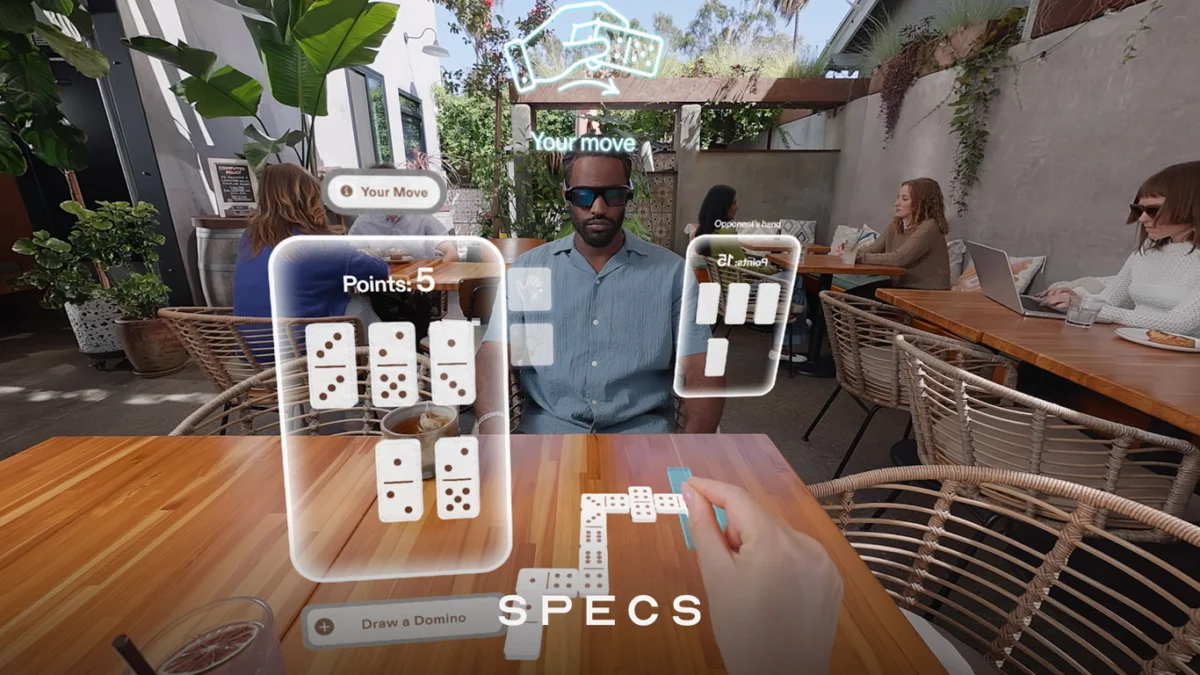
Snap Inc. has formally transitioned its fifth-generation "Specs" augmented reality (AR) glasses from a developer-focused prototype to a commercially available product, marking a significant milestone in the company’s decade-long hardware evolution. Following an initial preview at the Augmented World Expo (AWE), the official launch introduces a comprehensive ecosystem designed to bridge the gap between high-end AR capabilities and practical daily utility. Priced at $2,195, the device represents Snap’s most ambitious attempt to secure a foothold in the competitive spatial computing market, positioning itself against industry giants like Meta and Apple while pivoting toward enterprise-level applications.

Innovation in Mobile Connectivity and the Connected Case
Perhaps the most significant technical advancement introduced with this launch is the SPECS Connected Case. Unlike previous iterations of AR hardware that rely exclusively on localized Wi-Fi or tethering to a smartphone, Snap’s new accessory provides dedicated cellular connectivity. The case serves a dual purpose: it functions as a portable charging station capable of recharging the glasses four times and acts as a mobile hotspot to ensure the device remains online in environments without Wi-Fi.

To support this infrastructure, Snap has secured strategic partnerships with major global telecommunications carriers. In the United States, Verizon will offer custom data plans starting at $10 per month for existing customers and $20 for others. The SPECS Connected Case bundle is priced at $2,395, with financing options extending over 36 months to lower the barrier to entry for early adopters. Similar partnerships have been established with Orange in France and EE in the United Kingdom, reflecting a coordinated international rollout strategy. This move addresses a common pain point in the AR industry: the requirement for constant, high-speed data to process spatial information and cloud-based AI tasks.

The Strategic Pivot to Enterprise Solutions
While Snap’s heritage is rooted in social media and consumer-facing filters, the high price point of the new Specs has necessitated a shift toward the business-to-business (B2B) sector. The company has announced a suite of enterprise-oriented partnerships with industry leaders including Salesforce, Amazon Web Services (AWS), HoloLight, Trifork, and NVIDIA.

The integration of the NVIDIA XR AI framework allows corporate clients to deploy AI assistants on local workstations while streaming data to the glasses, ensuring that sensitive company information remains within a secure internal network. Furthermore, Snap is introducing compatibility with Mobile Device Management (MDM) systems, a critical requirement for IT departments to manage hardware fleets. Use cases in this sector include remote assistance, hands-free document visualization for field technicians, and complex 3D data modeling. By entering the enterprise space, Snap is positioning the Specs as a direct competitor to the Microsoft HoloLens and Magic Leap, leveraging its lighter form factor and more mature software development kit (SDK), Lens Studio.

Specs Intelligence: A Multi-Platform AI Ecosystem
Central to the user experience is "Specs Intelligence," a sophisticated AI assistant designed to provide contextual support throughout the day. Unlike isolated AI features found in earlier smart glasses, Specs Intelligence is built on a multi-platform architecture, operating across macOS, iOS, and the glasses themselves. By syncing with a user’s calendar, emails, and apps, the AI can offer proactive reminders, summarize daily activities, and assist with logistical tasks like booking flights.

Crucially, the AI utilizes the spatial awareness of the glasses to understand the wearer’s physical environment. This allow the assistant to identify objects or provide instructions based on what the user is currently seeing. Addressing growing concerns over data security, Snap has issued a formal privacy statement confirming that personal content used with Specs Intelligence will not be utilized to train the company’s AI models or to serve personalized advertisements. The assistant is currently available for preview via the Specs iOS app, allowing potential users to interact with the interface before committing to the hardware.

Expanding the Content Library: Sports, Entertainment, and Productivity
To demonstrate the versatility of the 51-degree field of view (FOV), Snap has unveiled a diverse array of "Lenses" or applications. These range from high-production entertainment experiences to practical training tools:

Interactive Sports Training
In collaboration with the NBA and WNBA, Snap has developed a basketball lens that uses computer vision to track a real ball and hoop. The glasses provide visual guidance and drills, layering digital progress markers over the physical court. Similar applications have been developed for soccer and golf, with the "Soccer Skills Lens" offering dribbling drills and the golf lens providing swing mechanics analysis endorsed by PGA professionals.

Immersive Entertainment and Media
Snap has partnered with HBO Max to launch a Harry Potter-themed experience coinciding with the premiere of the new original series. This lens allows users to engage with "milestone moments" from the franchise, such as casting spells and interacting with digital artifacts. For general media consumption, the Specs browser supports streaming from YouTube and HBO Max, projecting a virtual 115-inch display that remains stable even in "Travel Mode" during flights or train rides.

Productivity and Spatial Workspaces
The device is also marketed as a mobile workstation. Specs can connect wirelessly to a computer, allowing users to expand their desktop into a multi-window spatial environment. Applications like "Whiteboard" enable collaborative brainstorming in a 3D space, and the hardware supports Bluetooth peripherals such as keyboards to facilitate document editing on the go.

Retail Strategy and Hardware Specifications
Recognizing the difficulty of marketing AR through traditional media, Snap is launching "SPECS First Look," a dedicated experience center at Westfield Century City in Los Angeles, starting October 1. This retail strategy mirrors the "demo-first" approach adopted by Apple for the Vision Pro, emphasizing that physical interaction is essential for consumer understanding of spatial computing.

The hardware itself weighs approximately 130 grams, a significant increase from standard eyewear but considerably lighter than traditional mixed-reality headsets. The frames include a prominent external LED that illuminates when recording is active, a design choice intended to mitigate privacy concerns regarding unauthorized filming in public spaces. The device also features real-time translation capabilities for up to 60 languages, utilizing spatial audio to place translated text near the person speaking.

Market Implications and Chronology
The journey to this launch has been iterative. Snap first introduced Spectacles in 2016 as a simple camera-equipped wearable. Subsequent versions added water resistance and improved optics, but the fifth generation represents a fundamental shift into true augmented reality with integrated displays and onboard processing.

Industry analysts suggest that Snap’s current strategy is one of long-term ecosystem building rather than immediate mass-market penetration. By targeting prosumers and enterprise clients first, Snap can refine its "OS" and Lens Studio software while hardware costs eventually decrease. The $2,195 price tag places it in a niche category, but the inclusion of cellular data and a robust AI assistant suggests a vision where the glasses could eventually replace the smartphone for many daily tasks. Shipping is expected to begin later this fall in the United States, the United Kingdom, and France, with a $200 refundable deposit currently required for pre-orders.
About the Author