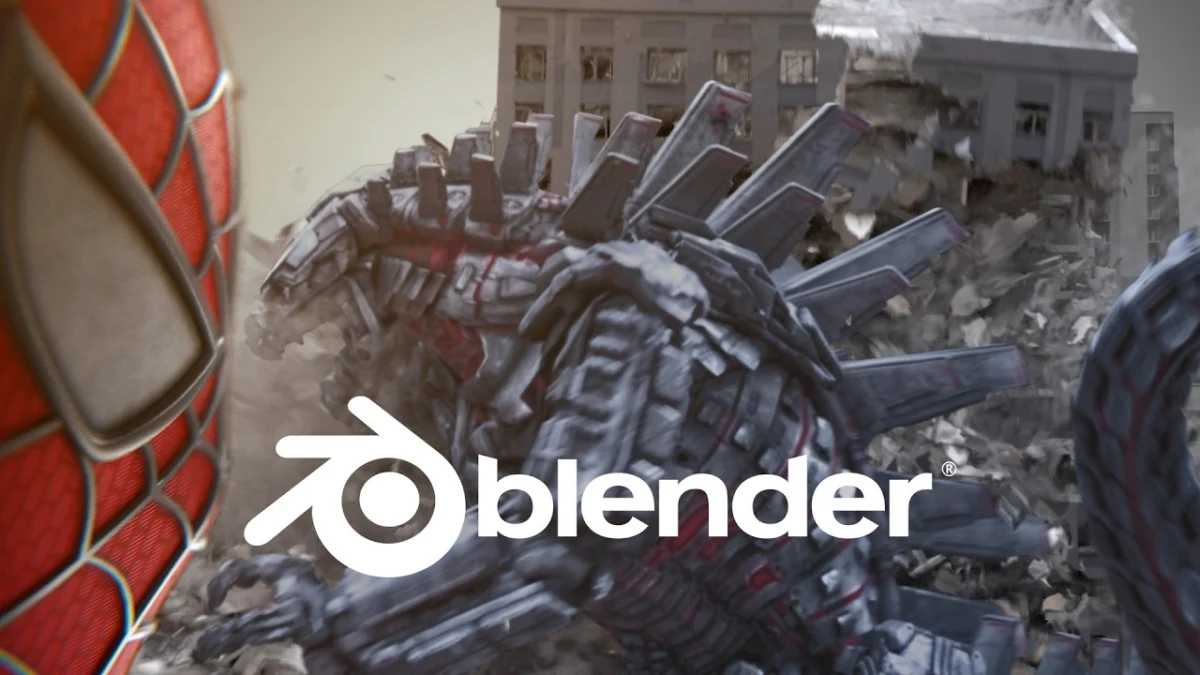
A visually stunning short film, "Spiderman VS MechaGodzilla," has recently captured the attention of the digital art and animation community, not only for its impressive visual effects and dynamic action but also for the cutting-edge technology and creative process behind its creation. The project, spearheaded by digital artist Raffo VFX, highlights the burgeoning capabilities of accessible motion capture technology and its integration into independent animation workflows. This ambitious undertaking demonstrates a significant leap in what independent creators can achieve, blurring the lines between professional studio productions and individual artistic endeavors. The film, rendered entirely in Blender and edited using DaVinci Resolve, eschews AI-generated content, emphasizing a hands-on approach to digital artistry.
The Genesis of a Digital Spectacle
The genesis of "Spiderman VS MechaGodzilla" can be traced back to Raffo VFX’s acquisition of a Rokoko motion capture suit. This pivotal moment marked a turning point in his creative process, offering a new dimension of realism and fluidity to his character animations. Motion capture, a technology once confined to high-budget Hollywood productions, has become increasingly democratized, with companies like Rokoko offering sophisticated yet relatively affordable solutions for independent creators. This accessibility has opened doors for a new wave of artists to explore complex animation techniques that were previously out of reach.
Raffo VFX’s decision to invest in this technology was driven by a desire to elevate his existing skill set and to push the boundaries of his personal projects. The suit, designed to capture the nuances of human movement, allows for the translation of real-world performances into digital avatars with remarkable accuracy. This process typically involves attaching sensors to key points on the body, which then transmit positional data to a computer, enabling animators to record and apply these movements to 3D character models. The successful implementation of this technology in "Spiderman VS MechaGodzilla" serves as a compelling case study for other independent artists looking to enhance their animation pipelines.
A Deep Dive into the Production Pipeline
The production of "Spiderman VS MechaGodzilla" was not merely about capturing motion; it was a comprehensive exercise in digital filmmaking, involving meticulous attention to detail across multiple disciplines. Raffo VFX’s behind-the-scenes documentation, shared with the public, offers an invaluable glimpse into the intricate stages of creating such a film. This transparency is crucial for fostering a community of learning and innovation within the digital art sphere.
The workflow began with conceptualization and storyboarding, the foundational elements of any visual narrative. Following this, the 3D modeling of the characters, Spiderman and MechaGodzilla, and the environments in which they would interact, took center stage. Blender, a free and open-source 3D creation suite, proved to be the workhorse for these modeling, texturing, rigging, and animation tasks. Its robust feature set, continually expanded through community contributions and professional development, makes it a formidable tool for a wide range of 3D projects.
The core of the film’s dynamism, however, stems from the motion capture data. Raffo VFX utilized the Rokoko suit to perform the character animations, capturing the essence of movement for both Spiderman’s agile acrobatics and the imposing gait of MechaGodzilla. This data was then meticulously cleaned, refined, and applied to the respective 3D models within Blender. The process of translating raw motion capture data into a polished animation often involves significant post-processing, including correcting jitter, smoothing out movements, and ensuring the captured performance aligns with the artistic intent.
Following the animation phase, the scenes were meticulously lit and rendered. Rendering, the process of generating the final images from the 3D scene data, is often one of the most computationally intensive aspects of 3D animation. The quality of the lighting and the rendering engine directly impacts the final visual fidelity of the film, determining the realism of shadows, reflections, and material properties.
Finally, the post-production phase, handled in DaVinci Resolve, brought all the rendered elements together. This involved compositing, color grading, sound design, and the final editing of the film. DaVinci Resolve, a powerful professional video editing and color grading software, provided the tools necessary to refine the visual aesthetic, enhance the cinematic impact, and assemble the narrative into a cohesive whole. The explicit mention of "no AI" by Raffo VFX is a significant detail in the current landscape of digital content creation. It underscores a commitment to traditional animation techniques and human artistry, distinguishing the project from others that might leverage artificial intelligence for certain aspects of production.
The Rokoko Advantage: Democratizing Motion Capture
The integration of the Rokoko motion capture suit into Raffo VFX’s workflow is particularly noteworthy. Rokoko has been at the forefront of making motion capture technology more accessible and user-friendly. Their suits, such as the Smartsuit Pro, are designed for ease of use, allowing individuals to capture motion data with minimal setup and technical expertise. This has empowered a growing number of independent animators, game developers, and filmmakers to incorporate realistic character movements into their projects without the need for expensive studio setups or large motion capture teams.
The impact of such technology on independent creators cannot be overstated. It levels the playing field, enabling them to compete visually with larger studios that have historically held a monopoly on high-fidelity motion capture. The ability to capture nuanced performances directly from the animator translates into more believable and engaging character animations, a crucial element in storytelling. For "Spiderman VS MechaGodzilla," this likely meant capturing the fluidity of Spiderman’s web-slinging and combat maneuvers, as well as the heavy, deliberate movements of the colossal MechaGodzilla.

Blender and DaVinci Resolve: The Open-Source Powerhouses
The choice of Blender and DaVinci Resolve as the primary software tools further reinforces the project’s commitment to accessible yet professional-grade production. Blender, as previously mentioned, is a comprehensive 3D creation suite that covers the entire pipeline from modeling to rendering. Its open-source nature means it is free to use for any purpose, including commercial projects, making it an indispensable tool for countless independent artists and studios worldwide. Its continuous development, driven by both a dedicated development team and a vibrant user community, ensures it remains at the cutting edge of 3D technology.
DaVinci Resolve, while offering a free version with extensive capabilities, also provides a professional-grade paid version that rivals proprietary software used in Hollywood. Its strengths lie in its powerful color correction and grading tools, as well as its robust editing and visual effects capabilities. For Raffo VFX, this likely provided a seamless transition from the 3D rendering environment to the final assembly and polish of the film. The fact that the entire production, barring the motion capture hardware, was achieved with free or affordably priced software is a testament to the current state of digital content creation tools.
A Chronology of Creation (Inferred)
While a precise timeline for the production of "Spiderman VS MechaGodzilla" has not been publicly detailed, a logical chronological progression can be inferred based on standard animation workflows and the technologies employed:
- Phase 1: Conceptualization and Pre-production (Weeks/Months): This would involve script development (if applicable for a short film narrative), character design, concept art, and storyboarding to define the visual language and action sequences.
- Phase 2: Asset Creation (Months): 3D modeling and texturing of Spiderman, MechaGodzilla, and the relevant environments. Rigging of characters to prepare them for animation.
- Phase 3: Motion Capture and Animation (Weeks/Months): Acquisition of motion capture data using the Rokoko suit. Cleaning, retargeting, and refining the motion data within Blender. Keyframe animation for any elements not captured or requiring specific artistic manipulation.
- Phase 4: Scene Assembly, Lighting, and Rendering (Weeks/Months): Importing animated characters and environments into Blender scenes. Setting up lighting to achieve the desired mood and visual style. Rendering individual frames for each scene. This is often the most time-consuming phase due to computational demands.
- Phase 5: Post-production and Editing (Weeks): Importing rendered sequences into DaVinci Resolve. Compositing visual effects. Color grading to establish the final look and feel. Sound design, including music and sound effects. Final editing and mastering of the short film.
- Phase 6: Release and Promotion (Ongoing): The public release of the film on platforms like YouTube, accompanied by behind-the-scenes content and promotional efforts.
Broader Implications for the Animation Industry
The success of projects like "Spiderman VS MechaGodzilla" has significant implications for the broader animation and visual effects industry.
Democratization of High-Quality Animation: It demonstrates that sophisticated animation techniques, including motion capture, are no longer exclusive to large studios with massive budgets. Independent artists can now produce work that rivals the quality of mainstream productions, fostering a more diverse and innovative creative landscape.
Rise of the "One-Person Studio": Raffo VFX’s solo effort highlights the potential for individuals to manage and execute complex projects from start to finish. This "one-person studio" model, empowered by accessible technology and software, is becoming increasingly viable.
Validation of Open-Source Tools: The reliance on Blender and DaVinci Resolve further validates the power and maturity of open-source and professional-grade free software. These tools are no longer considered niche alternatives but are now industry-standard solutions for many creators.
Emphasis on Artistic Skill over Pure Technology: By explicitly stating "no AI," Raffo VFX emphasizes the value of human artistry, performance, and creative decision-making. While AI tools are rapidly evolving, this project underscores the enduring importance of traditional animation principles and the artist’s touch.
Community and Knowledge Sharing: The sharing of behind-the-scenes insights fosters a culture of learning and collaboration. This transparency allows other artists to understand the methodologies, troubleshoot challenges, and adapt successful workflows for their own projects, accelerating innovation across the community.
In conclusion, "Spiderman VS MechaGodzilla" is more than just an impressive fan film; it is a beacon of innovation and a testament to the power of accessible technology in the hands of a skilled and dedicated artist. Raffo VFX’s achievement with the Rokoko motion capture suit, coupled with the robust capabilities of Blender and DaVinci Resolve, sets a new benchmark for independent digital filmmaking and inspires a generation of creators to push the boundaries of what is creatively and technically possible. The film’s success serves as a powerful reminder that compelling storytelling and artistic vision, amplified by modern tools, can indeed create extraordinary visual experiences.
About the Author