The decision to pivot away from a base defense model underscores Nintendo’s unwavering commitment to maintaining the core identity of its beloved franchises, even when venturing into new genres. Yoshihiko Ito, the director of Splatoon Raiders, alongside producer Seita Inoue, detailed the initial explorations and the critical turning points that shaped the game’s evolution, offering valuable insights into the creative struggles inherent in game design.
The Genesis of a Spin-Off: Beyond Splatoon 3’s Horizon
The conceptualization of Splatoon Raiders began as the development team was concluding updates for the highly successful Splatoon 3. With the mainline series firmly established as a competitive multiplayer phenomenon, there was a growing desire within the team to explore new avenues for the vibrant, ink-splattered universe. Specifically, the developers sought to craft a single-player experience that could effectively leverage the engaging gameplay mechanics of Salmon Run, Splatoon‘s popular Player-versus-Environment (PvE) cooperative mode.
Salmon Run itself is a distinct offering within the Splatoon ecosystem. Introduced in Splatoon 2, it pits a team of four Inklings or Octolings against waves of aggressive Salmonids, tasking them with collecting Golden Eggs and depositing them in a basket within a strict time limit. Its chaotic yet strategic cooperative play, combined with its high replayability and unique boss Salmonid encounters, quickly earned it a dedicated fanbase. The mode successfully translated the fast-paced, ink-centric combat of the main game into a cooperative challenge, proving the versatility of Splatoon‘s core mechanics.
However, adapting a mode designed for four players into a compelling single-player experience presented immediate challenges. The inherent difficulty scaling and strategic interdependence of Salmon Run’s design meant a direct translation for a solo player would be problematic. Director Ito noted that the initial idea revolved around building gameplay centered on placing traps. "The first thing we tried was building gameplay around placing traps," Ito explained during the interview. "The idea was to place traps all over the place and to fight alongside them." This approach naturally led the prototype towards a base defense style of gameplay.
The Base Defense Dilemma: A Fortified Stalemate
As development progressed, Splatoon Raiders began to resemble a classic defense game. Players would strategically position an array of traps, fortifying their position against incoming waves of enemies. While this concept offered tactical depth, it gradually became clear that something fundamental was missing. The dynamic, high-energy engagement synonymous with Splatoon began to dissipate.
"It didn’t really feel like a Splatoon game to us," Ito candidly admitted. The core issue, as both Ito and Inoue articulated, was the perceived passivity of the player in a base defense scenario. Rather than being an active, continuously engaged participant in the ink-flinging action, the player found themselves more in the role of an overseer, building defenses and then largely observing their effectiveness. This detachment from the moment-to-moment combat loop contradicted the very essence of what makes Splatoon unique.
The "Splatoon feel" that Ito refers to is a complex interplay of several signature mechanics and design philosophies. It encompasses the constant act of inking the ground for both traversal and combat advantage, the seamless transformation between humanoid and squid forms to navigate ink, the rapid-fire weapon engagements, and the overall intensity of performing multiple actions within short bursts. This dynamic, fluid combat system, where players are perpetually moving, painting, and strategizing, is a hallmark of the series’ success.
"We think the intensity of the action is one of the game’s key strengths," Ito emphasized. "But when the core gameplay shifts to building a fortress and fighting off enemies, it becomes difficult to make the most of that strength." In a base defense game, the rhythm of play often involves periods of preparation followed by waves of combat, where the player’s primary interaction might be activating traps or repairing structures, rather than the continuous, aggressive ink-splattering action. This stark contrast was a significant hurdle for the team.
The Turning Point: Reclaiming the Ink and Action
Seita Inoue, the producer for Splatoon Raiders, further elaborated on the crucial distinction. Despite the Splatoon series having three mainline titles and various downloadable content expansions—some of which included single-player campaigns—the underlying "sense of action and unity with the character and the ink" has always remained paramount. This intrinsic connection ensures that, regardless of the mode or objective, the experience consistently feels like Splatoon. With the trap-focused base defense prototype, the team found themselves unable to authentically recreate that essential feeling.
This realization proved to be a pivotal "turning point" for Director Ito and the entire development team. It prompted a "major shift" away from the fortress-building concept. The objective became clear: the game needed to prioritize and expand the range of dynamic actions available to the player, ensuring continuous engagement and embodying the fast-paced spirit of the franchise. This fundamental re-evaluation led to the introduction of "gadgets."
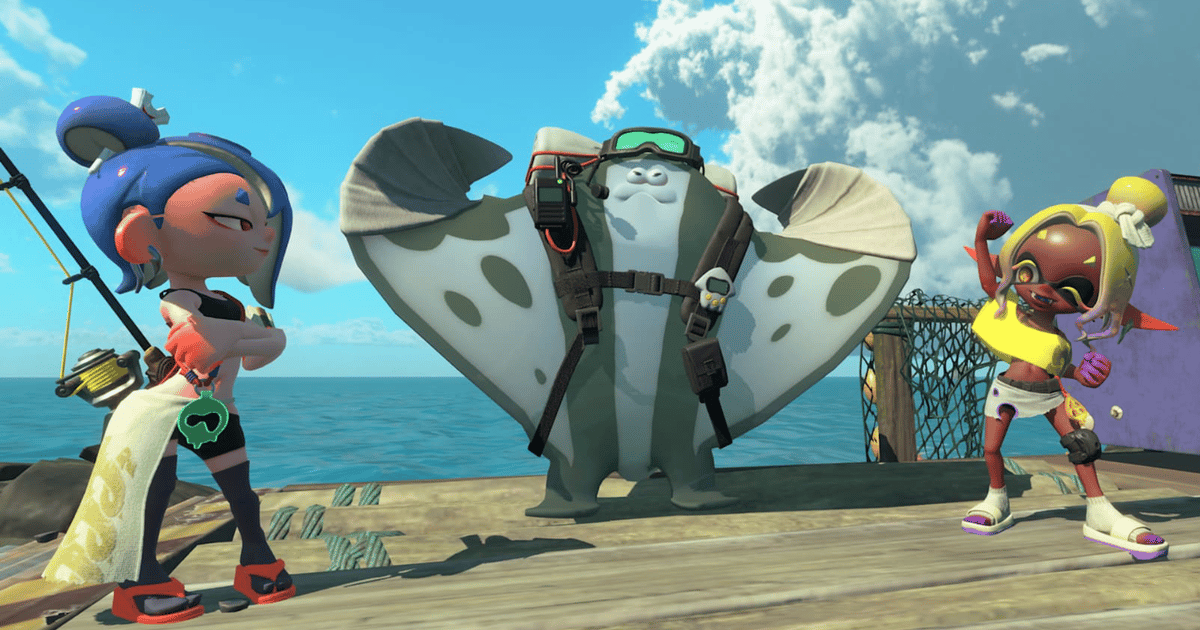
These gadgets were designed to empower players with a diverse array of movement and combat abilities, injecting the much-needed dynamism back into the gameplay. Players could now equip gadgets to charge forward with formidable power, execute high leaps to gain vertical advantage, or briefly hover above the battlefield to reposition or survey the situation. This new system transformed the player from a passive overseer into an agile, proactive combatant, constantly adapting and engaging with the environment and enemies.
The "In the Zone" Philosophy: Gadgets and Dynamic Engagement
Inoue drew a compelling analogy to describe the desired player experience, comparing the satisfaction of playing Salmon Run to the feeling of being "in the zone" during sports. This state of heightened focus and instinctive reaction, where actions flow seamlessly without conscious thought, was precisely what the team aimed to replicate in Splatoon Raiders. "(…) I thought that level of immersion might be really satisfying in a video game too. And it’s not just sports—busy jobs offer a similar sense of satisfaction, don’t you think?" he posited to Ito.
Ito enthusiastically concurred, affirming that the game was explicitly designed to create an experience where players could feel that "same sense of pleasant busyness." This philosophy is embodied in the gadget system: in addition to their primary weapon, players can equip two distinct gadgets, offering strategic flexibility to adapt to the hordes of attacking Salmonids in real-time.
The tactical depth of the gadgets lies in their cooldown mechanics. "Once a gadget has been used, it can’t be used again for a certain period of time," Ito explained. However, the brilliance of the system emerges in the player’s ability to rapidly swap between their weapon and the two equipped gadgets. This minimizes downtime, allowing players to maintain a relentless offensive and efficiently dismantle large numbers of Salmonids. Ito concluded, "Once I’d experienced the satisfaction of busily alternating between gadgets, I really felt like this could become the core gameplay." This fast-paced, action-oriented loop is a stark contrast to the earlier, more contemplative base defense prototype.
Broader Implications and The Future of Splatoon
The developmental journey of Splatoon Raiders offers significant insights into Nintendo’s rigorous design philosophy and the challenges inherent in expanding beloved intellectual properties. It highlights the iterative nature of game development, where initial concepts, however promising, must yield to the overarching goal of delivering an authentic and engaging player experience consistent with the brand’s identity.
For the Nintendo Switch 2: The announcement of Splatoon Raiders as a Nintendo Switch 2 exclusive immediately positions it as a potential launch title or early system seller. Introducing a spin-off from a highly successful franchise in a new genre, particularly one as popular as the looter-shooter, could be a strategic move to attract a broader audience to the new console. It signals Nintendo’s willingness to innovate with its flagship IPs on new hardware, potentially setting a precedent for more genre-bending experiences. The rumored capabilities of the Switch 2 would undoubtedly enhance the visual fidelity and gameplay fluidity of a title designed around fast-paced action and dynamic environments.
For the Splatoon Franchise: Splatoon Raiders represents a bold expansion of the Splatoon universe beyond its established competitive multiplayer roots. While the series has included single-player campaigns in its mainline entries and the critically acclaimed Octo Expansion DLC, a full-fledged single-player looter-shooter spin-off marks a significant diversification. This could pave the way for future spin-offs exploring other genres or aspects of Inkopolis lore, demonstrating the versatility and enduring appeal of the Splatoon world. It also caters to players who enjoy the aesthetics and mechanics of Splatoon but prefer a less competitive, more progression-focused experience.
For Game Design and Development: The Splatoon Raiders story serves as a case study in the importance of core identity in game design. Developers often face the dilemma of innovating while remaining true to a franchise’s essence. The team’s decision to scrap the base defense prototype, despite significant investment, because it "didn’t feel Splatoon enough," underscores a commitment to player experience over initial design convenience. This iterative process, marked by critical self-assessment and a willingness to pivot, is fundamental to creating unique and resonant games. It also highlights the value of internal "Ask the Developer" style interviews, which provide invaluable transparency and educational material for aspiring game designers and the wider gaming community.
Market Context and Player Expectations: The looter-shooter genre has seen immense success with titles like Borderlands, Destiny, and The Division, captivating players with their blend of satisfying combat, character progression, and the allure of rare loot. Splatoon Raiders brings a unique, family-friendly, and vibrant aesthetic to this genre, potentially appealing to both existing Splatoon fans and those new to the franchise who enjoy the looter-shooter loop. The challenge will be to balance the core Splatoon mechanics with the progression and reward systems characteristic of looter-shooters, ensuring a fresh yet familiar experience. The emphasis on "pleasant busyness" and dynamic gadget usage suggests a high-action, high-reward gameplay loop that could resonate well with genre enthusiasts.
As Splatoon Raiders progresses towards its eventual release on the Nintendo Switch 2, the insights shared by Director Yoshihiko Ito and Producer Seita Inoue offer a fascinating glimpse into the meticulous and passionate creative process at Nintendo. The transformation from a static base defense concept to a dynamic, gadget-driven looter-shooter underscores the developers’ unwavering dedication to preserving the energetic, ink-splattering "Splatoon feel" that has captivated millions worldwide, promising an innovative yet authentically "Splatoon" adventure for players on Nintendo’s next-generation console.
About the Author