In a significant philanthropic announcement, technology entrepreneur Jeff Atwood has committed half of his remaining personal wealth over the next five years to initiatives aimed at preserving and revitalizing the American Dream. The co-founder of influential platforms Stack Overflow and Discourse articulated his profound concern that the foundational promise of opportunity and upward mobility for all Americans is at an unprecedented risk. This long-term pledge is preceded by eight immediate donations of $1 million each to non-profit organizations addressing urgent societal needs. Atwood’s declaration serves as a potent call to action for collective engagement, urging fellow citizens to contribute to both immediate relief efforts and systemic, decades-long changes.
The Genesis of a Philanthropic Vision: A Personal Journey
Atwood’s philanthropic commitment is deeply rooted in his personal narrative, a journey he describes as a testament to the very American Dream he now seeks to protect. Born to parents from "hardscrabble rural West Virginia and rural North Carolina origins," Atwood recounted his family’s struggle to attain the lower rung of the middle class in Virginia. His upbringing was marked by significant challenges, including his parents’ battles with alcoholism, which ultimately led to their divorce when he was 16. This pivotal event, he states, inadvertently facilitated a healing process for his family, allowing them to overcome the destructive cycle of addiction. Despite these hardships, Atwood emphasizes the unwavering love and vital lessons he received from his parents, particularly "how to fully, deeply receive love, and the profound joy of reflecting that love upon everyone around you."
His educational path further illustrates the traditional route to American success. Atwood attended public schools in Chesterfield County, Virginia, before graduating from the University of Virginia, an institution founded by Thomas Jefferson, in 1992. During his college years, he worked part-time as a cashier at Safeway, earning the federal minimum wage. He relied on government Pell grants, scholarships, and other part-time jobs to finance his tuition, which, even at $3,000 per year for in-state students at the time, presented a significant financial hurdle. This direct experience with the challenges of funding higher education provides a critical backdrop to his current concerns about the escalating costs of fundamental necessities.
The Erosion of Opportunity: Economic Barriers to the American Dream
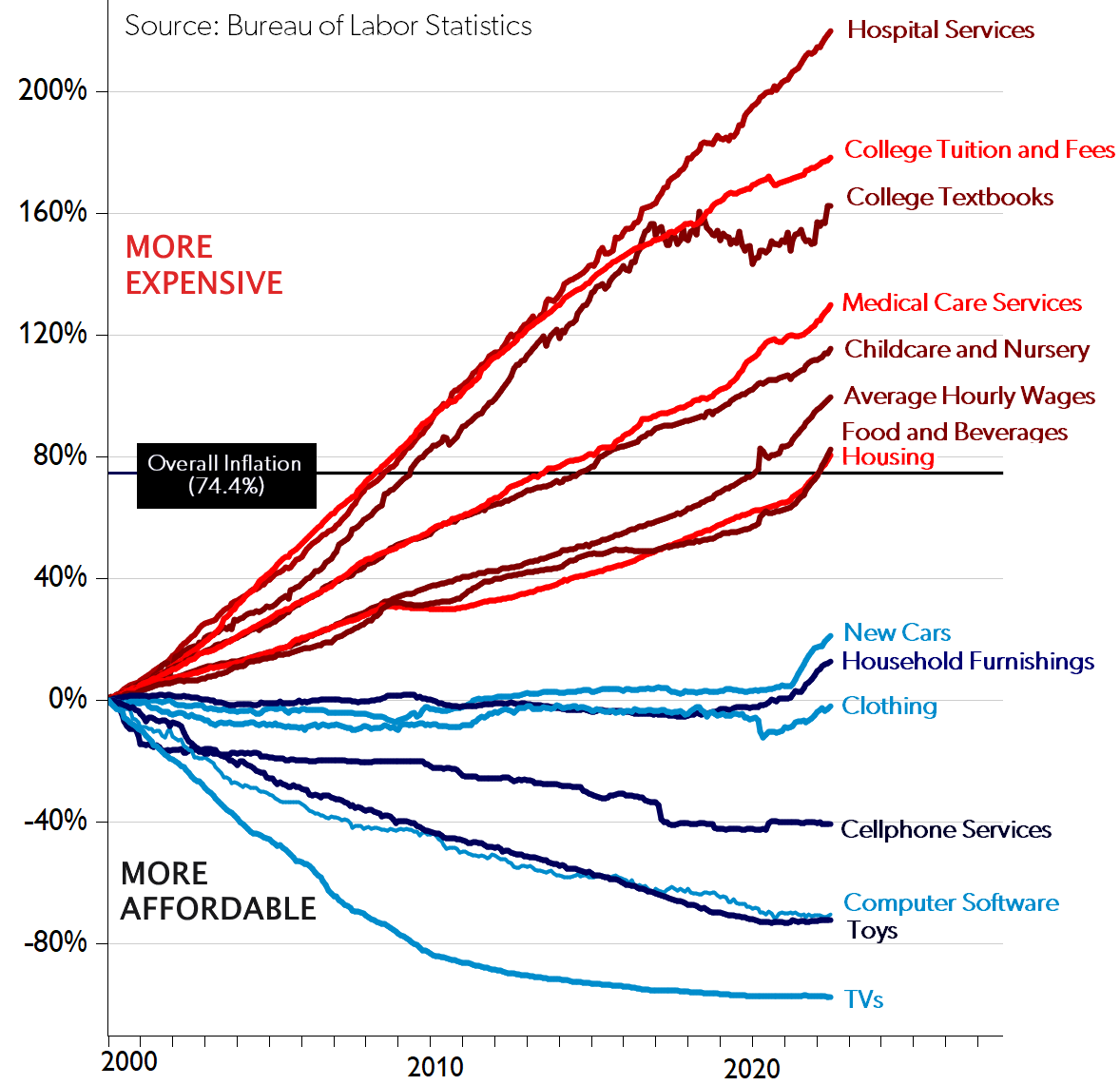
Atwood’s personal journey, while ultimately successful, highlighted the increasing difficulty for subsequent generations to achieve similar outcomes. He starkly notes the exponential rise in college tuition, citing that the annual cost at a state university has surged eightfold since 1992, from $3,000 to an alarming $23,000 today. This dramatic increase, coupled with soaring costs in healthcare and housing, represents a significant barrier to entry for many aspiring Americans. "These huge cost increases for healthcare, education, and housing are not compatible with the American Dream," Atwood asserts, pointing to a broader trend of economic pressures making upward mobility increasingly challenging.
Supporting data underscores this sentiment. According to EducationData.org, the average cost of college has indeed risen dramatically, far outpacing wage growth. Similarly, the American Enterprise Institute (AEI) has documented significant consumer price increases across essential sectors, particularly evident between 2020 and 2022, exacerbating financial strain on families. These economic shifts are contributing to a widening chasm of wealth inequality, which Atwood identifies as "unamerican."

Innovating for a Shared Future: Digital Democracy and Empathy
Atwood’s professional career provided him with a unique perspective on community building and democratic principles, albeit in a digital realm. In 2008, he co-founded Stack Overflow with Joel Spolsky, a Q&A website that quickly became an indispensable resource for programmers worldwide. Describing it as a "digital democracy," Atwood highlights its democratic governance through community-ranked questions and answers, and elections for moderators utilizing ranked-choice voting. This platform, built on a Creative Commons knowledge base, exemplified a collaborative, meritocratic system.
However, Atwood’s vision extended beyond mere functionality. With Spolsky’s guidance, he recognized the necessity of infusing empathy into digital interactions. This led to the creation of Discourse, a free, open-source tool designed for constructive and empathetic community discussions, also under Creative Commons licensing. Discourse empowers communities to establish and enforce agreed-upon boundaries, fostering environments where disagreement can occur within a framework of respect and moderation. "Digital democracy and empathy, for everyone," became the guiding principle, underscoring his belief that authentic human connection, even through screens, is vital for a functioning society. He laments the common online behavior that deviates from real-world kindness, emphasizing the need to extend empathy into the digital sphere.
Atwood views both Stack Overflow and Discourse as "projects for the public good that happen to be corporations," acknowledging that his success, a blend of "hard work and good luck," was a direct outcome of the American system. He initially perceived his financial reward as the culmination of the American Dream, but a deeper understanding emerged through an unexpected experience.

The "Stay Gold" Revelation: Sharing the Dream
A pivotal moment in Atwood’s evolving understanding of the American Dream occurred during a high school theater performance of S.E. Hinton’s "The Outsiders." The famous line, "stay gold," resonated with him beyond its popular cultural reference. He realized its true meaning lay not just in retaining innocence or idealism, but in "sharing the American Dream." The play’s director articulated this sentiment in the program, emphasizing that "strength lies not just in overcoming hardships but in staying true to ourselves and lifting up those around us," and encouraging connection with "enduring themes of resilience, empathy, and unity." This revelation solidified Atwood’s conviction that the American Dream, as enshrined in the Declaration of Independence – "Life, Liberty and the pursuit of Happiness" – must be accessible to all, not merely an individual aspiration.
He further contextualizes this ideal with historical and cultural references, noting Jimi Hendrix’s iconic, distorted rendition of "The Star-Spangled Banner" at Woodstock as a powerful reflection of the dream’s often-unfulfilled promise.
A Democracy in Question: The Aftermath of the 2024 Election
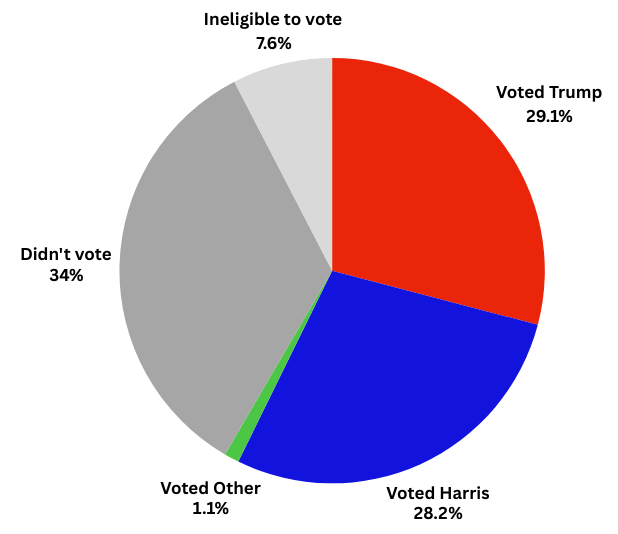
The urgency of Atwood’s pledge was heightened by the outcomes of the November 2024 United States presidential election. He expressed profound concern over the significant portion of the adult population that did not participate in the electoral process. With 34% of adults not exercising their right to vote, and an additional 7.6% being ineligible (largely non-citizens or felons), a staggering 42% of American adults had no voice in the election. This, Atwood argues, indicates a failure of the vote to "represent everyone."
He poses critical questions about the causes of this disengagement: "Is it voter suppression, gerrymandering causing indifference, or people who felt their vote didn’t matter?" Observers and political analysts widely agree that these factors contribute to diminished voter participation and a sense of disenfranchisement. The perception that the government is failing to "keep America fair for everyone" directly challenges the nation’s status as a leading global democracy, a concern echoed by various international democracy indices.
To address these systemic issues, Atwood advocates for concrete electoral reforms:
- Making Election Day a National Holiday: To remove barriers to participation for working individuals.
- Universal Mail-in Voting: To increase accessibility and convenience for all eligible voters.
- Adopting Ranked-Choice Voting: To ensure all votes carry more weight and better reflect voter preferences, fostering broader representation.
- Strengthening Election Institutions: Bolstering state and local election boards, alongside the Federal Election Commission, to safeguard the integrity and fairness of democratic processes.
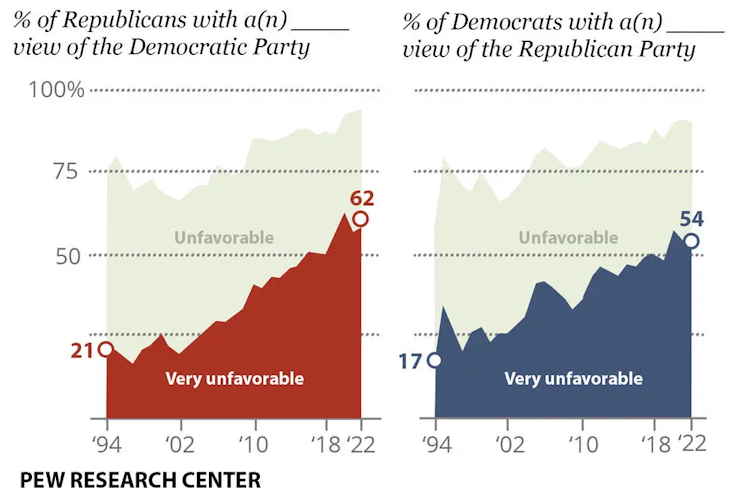
He points to the historical context of political polarization, noting its current "historically high levels" – a phenomenon that experts warn can render a two-party system counterproductive and even dangerous. The last meaningful constitutional amendment, the 26th, which lowered the voting age to 18 in 1971, highlights the difficulty in achieving significant governmental reform in recent decades.
A New Model of Philanthropy: Beyond Traditional Pledges
Atwood’s philanthropic approach also distinguishes itself from conventional models. While he acknowledges and admires Warren Buffett’s "Philanthropic Pledge" to give away over 99% of his wealth, Atwood found it "incomplete," particularly regarding the timing and allocation of the funds. Buffett’s recent amendment to transfer his wealth to a charitable trust run by his adult children, some in their 70s, raised questions about the immediate impact and potential alignment of interests.
In contrast, Atwood’s pledge is immediate and direct. While he plans to retain sufficient wealth to ensure his children can afford college and a home – recognizing "being a parent is the toughest job I’ve ever had" – the majority of his remaining fortune will be allocated within the next five years. This accelerated timeline reflects a deep sense of urgency, particularly in the wake of the 2024 election, to address current challenges rather than deferring action to future generations.
His philosophy aligns with W.E.B. Du Bois’s profound statement: "Work is service, not gain. The object of work is life, not income. The reward of production is plenty, not private fortune. We should measure the prosperity of a nation not by the number of millionaires, but by the absence of poverty, the prevalence of health, the efficiency of the public schools, and the number of people who can and do read worthwhile books." This perspective frames wealth not as an end in itself, but as a resource to be deployed for the collective good, emphasizing societal well-being over individual accumulation.
Atwood’s experiences with immense wealth have further solidified his conviction. He admits that such affluence can "unintentionally distance my family from other Americans," leading to a detachment from the daily financial struggles faced by many. This realization underscores his belief that extreme wealth concentration, where the top 1% globally holds nearly twice as much wealth as the rest of the world combined (Oxfam data), is fundamentally "unamerican" and unsustainable for a truly democratic society.
The Path of Love: A Call to Shared Action
Atwood concludes his powerful statement with a reflection on the dual nature of the American Dream, recognizing it contains both "the path of hate" and "the path of love," a struggle he sees mirrored throughout American history. Citing Martin Luther King Jr.’s teachings on loving one’s enemies, he unequivocally pledges his family’s half-wealth commitment toward "an American Dream founded on love."
He reiterates the completion of the eight initial $1 million donations to address immediate needs. The remaining half of his family’s wealth will be directed towards longer-term, systemic efforts over the next five years. Acknowledging that "there is no single solution," Atwood expresses his willingness to advise and "empower others working towards the same goal." This collaborative spirit is central to his vision, emphasizing collective responsibility in rebuilding and reimagining the American Dream.
Atwood invites all Americans to join him in "Sharing the American Dream," echoing the "Stay Gold" sentiment as a rallying cry for enduring ideals. He has scheduled a follow-up blog post, "Let’s Talk About The American Dream," and a public talk at Cooper Union on Thursday, March 20th, at 7 pm eastern time, co-presented with Alexander Vindman, to further discuss the chosen long-term efforts and foster broader engagement. His initiative represents a significant challenge to the status quo, urging a re-evaluation of national priorities and a renewed commitment to the principles of equality, empathy, and shared opportunity.
(Jeff Atwood extends his gratitude to his partner Betsy Burton and his family for their support, and acknowledges Steve McConnell for inspiring his blog. He also thanks the many individuals who provided feedback, stating, "We wrote it together.")
About the Author