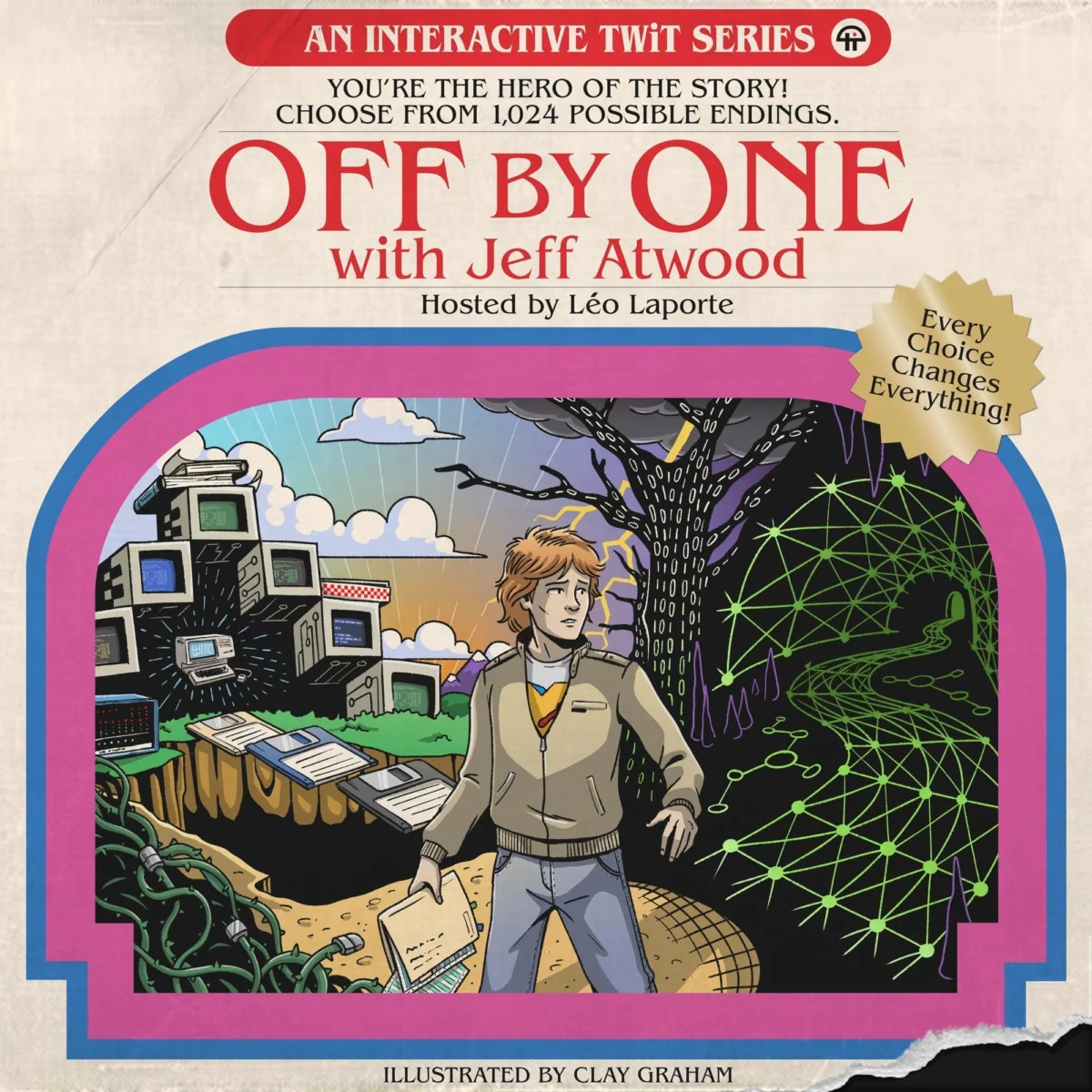
A significant new venture in tech media has launched, bringing together two influential figures: Jeff Atwood, co-founder of Stack Overflow and Discourse, and veteran tech broadcaster Leo Laporte. Their new monthly show, "Off By One with Jeff Atwood," premiered on the TWiT network, offering a distinctive blend of computing history, technical philosophy, and broader societal commentary, all delivered with an intentionally unconventional and engaging style. The show’s second episode, "From Stack Overflow to Stay Gold, America," recently became available for public viewing, signaling a fresh direction for both its hosts and the TWiT platform.
Genesis of a New Collaboration
The collaboration between Atwood and Laporte stems from an introduction facilitated by Wesley Faulkner, a prominent community and diversity advocate in the tech industry. This connection led to Atwood’s initial guest appearance on TWiT’s "Intelligent Machines #859" episode on February 25th. That appearance, which Atwood himself described as "chaotic good," showcased a dynamic that clearly resonated with Laporte and the TWiT production team. During this initial broadcast, Atwood’s unique perspective and engaging delivery, alongside fellow guests Paris Martineau and Jeff Jarvis, laid the groundwork for a more permanent role.
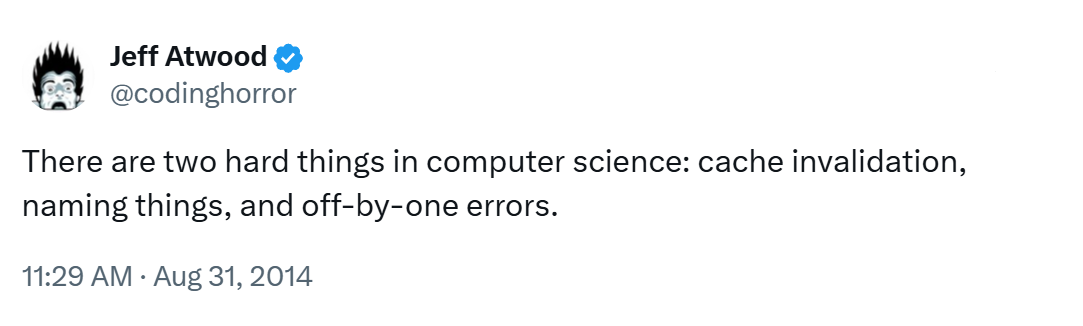
Following this successful pilot, the concept for a regular show quickly materialized. Within approximately three weeks of the "Intelligent Machines" episode, Atwood and Laporte recorded the inaugural episode of "Off By One." The naming process, often a notoriously challenging task in the tech world—as Atwood humorously noted, recalling the community-driven naming of Stack Overflow—culminated in "Off By One with Jeff Atwood." This title itself is a clever nod to a classic programmer joke, which playfully expands on Martin Fowler’s "Two Hard Things in Computer Science: Cache Invalidation, Naming Things" by adding "and off-by-one errors." This foundational humor sets the tone for a show that promises to be both insightful and light-hearted.
Understanding the "Off By One" Ethos
The term "off-by-one error" is deeply ingrained in the lexicon of computer programming. It refers to a common type of logical error involving the discrete counting of elements in a sequence, often resulting from miscounting by one at the boundaries of a loop or array. For instance, if a programmer intends to iterate through 10 items but starts counting from zero and stops at the 9th index, they might inadvertently process only nine items or attempt to access an eleventh, non-existent item. This seemingly minor discrepancy can lead to significant bugs, crashes, or security vulnerabilities in software. By choosing this name, Atwood and Laporte not only acknowledge a universal programmer experience but also subtly hint at a show that might deliberately stray from conventional topics by a small, yet impactful, margin, fostering conversations that are "off by one topic at all times, in the best possible way."
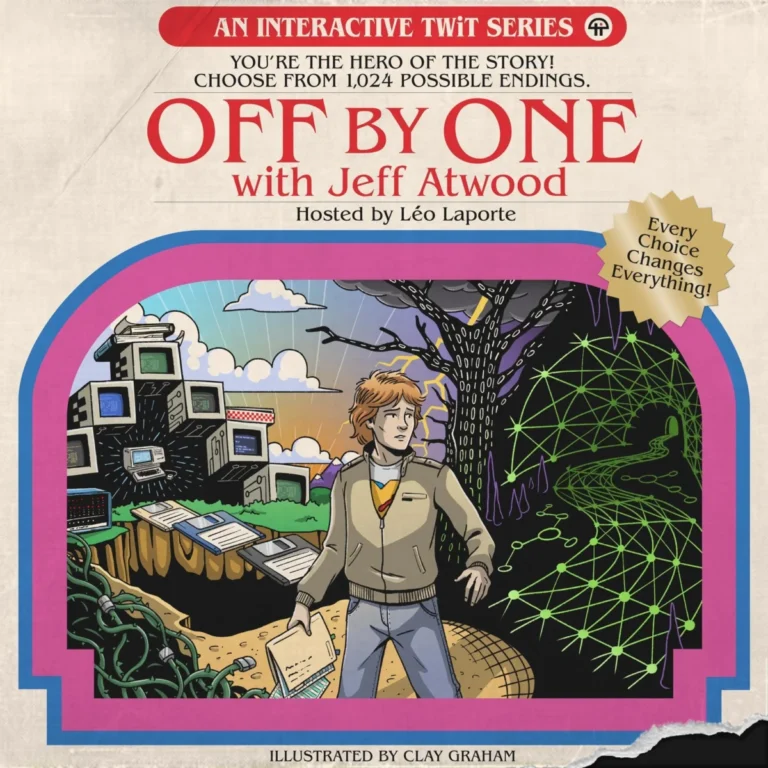
The show’s promotional material further reinforces this ethos, describing it as an interactive series where "every choice changes everything!" and "you’re the hero of the story!" This playful framing, accompanied by striking art from Clay Graham, suggests a narrative exploration rather than a rigid adherence to a script, aligning with Atwood’s known penchant for organic, community-driven discussions.
The Hosts: Pillars of Tech Discourse
The combined gravitas and unique perspectives of Jeff Atwood and Leo Laporte form the bedrock of "Off By One."
Jeff Atwood is a towering figure in the software development community. His blog, "Coding Horror," launched in 2004, became a seminal resource for developers, known for its pragmatic advice, philosophical reflections on programming, and often humorous takes on industry trends. In 2008, he co-founded Stack Overflow with Joel Spolsky, revolutionizing how developers find answers to their coding questions. Stack Overflow’s Q&A format, driven by community moderation and gamification, rapidly grew into one of the internet’s most visited sites for programmers, fundamentally changing technical support and knowledge sharing. Later, Atwood co-founded Discourse, an open-source forum software designed to foster civil, structured online discussions, reflecting his deep commitment to improving online communication. His career trajectory showcases a continuous effort to build platforms that empower and connect the tech community.
Atwood’s self-assessment on the show as "not an elite coder by any stretch of the imagination… I am very persistent" offers a humble yet powerful insight into his success. He clarifies his role as an "advocate for survivable code… good engineering. Good process. A process that recognizes that we’re human and we should do this together, and we should actually kinda like each other, even." This philosophy, emphasizing human-centric design, collaboration, and even the radical notion of "no code at all" (the best code, in his view), underscores a practical, empathetic approach to software development that prioritizes maintainability and simplicity over complexity.
Leo Laporte, the founder of the TWiT (This Week in Tech) network, is a broadcasting legend in the technology space. With a career spanning decades, Laporte has been a consistent voice in tech journalism, known for his ability to explain complex topics clearly and engage experts in lively discussions. TWiT.tv, launched in 2005, grew into a formidable podcast and video network, producing a wide array of shows covering various aspects of technology, from consumer gadgets to enterprise IT. Laporte’s network has cultivated a dedicated audience, often referred to as the "TWiT Army," through its commitment to informative, accessible, and often entertaining content. His experience as an interviewer and his deep understanding of the tech landscape make him an ideal counterpart for Atwood’s reflective and often provocative insights.
Exploring the Depths of Episode Two
The second episode of "Off By One," titled "From Stack Overflow to Stay Gold, America," runs for a substantial 1 hour and 47 minutes, promising "pure joy end to end. No negativity, just low-level insanity and of course, mandatory fun." This extended format allows for in-depth conversations, venturing into diverse topics that reflect the hosts’ eclectic interests.
A significant portion of the discussion revolves around Atwood’s unique perspective on technology and society. His reflections on his father’s passing, framed as "the last season of the John Atwood show," provided a poignant and unexpectedly uplifting narrative. Atwood recounts how his family "won capitalism, and then we went back and made it better for everyone," illustrating a personal journey that transcends mere financial success to embrace a broader commitment to positive societal impact. This sentiment forms a bridge to one of the episode’s most impactful segments: a direct challenge to the status quo regarding wealth inequality and poverty.

Atwood asserts, based on his research and public statements, that "if we simply collected a fair tax from Billionaires, we could literally eliminate all poverty in this country at the 100% FPL [Federal Poverty Level] level, which is $15,000 per year. All poverty. We would have zero poverty. We have the means to do it." Laporte’s simple yet profound response, "That’s really important," highlights the gravity of this claim. Atwood concludes, "We lack the will."
This assertion aligns with extensive economic research on wealth distribution and taxation. For example, analyses by organizations like the Congressional Budget Office and various economic think tanks have frequently highlighted the concentration of wealth at the top and the potential revenue generation from increased taxation on high-net-worth individuals and corporations. While the exact figures and methodologies vary, the underlying premise that significant resources exist to address societal challenges through fiscal policy is a recurring theme in public discourse. The discussion in "Off By One" brings this crucial debate to the forefront, framing it not just as a political issue but as a moral imperative within the tech community, where immense wealth has been generated.
Recalling the Catalyst: Intelligent Machines #859
For those interested in the "chaotic good" that spawned "Off By One," the first 45 minutes of "Intelligent Machines #859" provide essential viewing. In this episode, Atwood’s uninhibited commentary led to memorable exchanges, particularly his observations on Large Language Models (LLMs).
Atwood famously coined the term "JPEG for words" to describe LLMs, a highly insightful analogy. He explains that LLMs, while adept at summarization and pattern matching, "don’t know what it’s doing. It has no actual understanding. It’s playing a game of global brain statistics and copy paste." He praises their ability to generate "very good summaries," citing Discourse’s implementation of an LLM for summarizing complex discussions. He notes, "it captured the key points in the discussion. It could have captured more, but it got nothing wrong. And it basically was JPEG for that conversation, wasn’t it.. without much loss."
The "JPEG for words" analogy is particularly apt. JPEG (Joint Photographic Experts Group) is a widely used method of lossy compression for digital images. It reduces file size by selectively discarding visual information that is less perceptible to the human eye. Similarly, LLMs distill vast amounts of text into coherent summaries, capturing the essence while potentially omitting nuances or finer details. Atwood’s caveat, "Now does JPEG work on EVERY image? No. Garfield is a bad choice, for, yknow, JPEG," further emphasizes that while LLMs are powerful, their application has limitations and contexts where they may perform poorly, much like a heavily compressed JPEG might render certain images (like cartoons with sharp lines) with noticeable artifacts. This discussion provides a nuanced, practical perspective on AI, steering clear of both excessive hype and unwarranted fear.
The "Intelligent Machines" episode also touched upon the "second gilded age," a concept Jeff Atwood passionately discussed. He observed, "More money in the hands of fewer people than in any other period of time. In the first gilded age, that was basically the railroad barons. Guess who it is in the second gilded age? I’m in this picture and I don’t like it. So like, what are we gonna do about it?" This provocative statement links historical economic disparities to contemporary issues, implicitly challenging the tech industry to reflect on its role in wealth accumulation and distribution. The Gilded Age (roughly 1870-1900) in American history was characterized by rapid economic growth but also extreme wealth inequality, with industrial magnates like Rockefeller and Carnegie amassing fortunes while many lived in poverty. Atwood’s comparison suggests a cyclical pattern, prompting critical examination of modern economic structures and the responsibilities of those who benefit most from them.
Community Engagement and the Future of "Off By One"
"Off By One" is not merely a broadcast; it’s designed to foster interaction. New episodes are recorded monthly, with Club TWiT members gaining exclusive access to live streams of the recordings. This tiered access model is a cornerstone of TWiT’s sustainability, providing premium content and community access to subscribers. To encourage broader engagement and demonstrate the show’s value, Atwood has generously offered to cover a full year of Club TWiT membership for the first ten people who watch the entire second episode, enjoy it, and complete a specific form. This initiative not only promotes the show but also invites new members into the vibrant TWiT community.
The permanent show homepage, twit.tv/obo, serves as the central hub for episodes and information. Furthermore, Atwood encourages discussion on the TWiT community Discourse, a platform he co-founded, emphasizing the value of structured online conversation. He even playfully hinted at "a super cool little token of appreciation" from a user named "Junk" for regular contributors to the TWiT Discourse, further incentivizing participation and reinforcing the show’s commitment to community building.
Atwood’s motivation for this new endeavor is deeply personal and philosophical. He reiterates a long-held belief, articulated previously on his Coding Horror blog: "My happiness only becomes real when I share it with all of you." He sees "Off By One" as a new dimension for this sharing, leveraging video and audio to convey "all the feels, all the time. Well, once per month." This commitment to authentic expression and shared experience distinguishes the show, moving beyond mere information delivery to cultivate a sense of connection and collective exploration.
Broader Implications and Impact
The launch of "Off By One with Jeff Atwood" carries several significant implications for the tech media landscape and the public personas of its hosts. For the TWiT network, it represents a strategic addition, bringing in a highly respected figure whose audience and insights can broaden TWiT’s reach and intellectual depth. It also diversifies TWiT’s content, offering a more philosophical and reflective show alongside its traditional news and review programs.
For Jeff Atwood, this show marks an evolution. While he remains deeply rooted in software development, "Off By One" provides a platform for him to engage with a wider array of topics, from economic inequality to the societal impact of AI, moving beyond purely technical discussions. This showcases his growth as a commentator and thought leader, capable of connecting intricate technical details with broader human and social issues. His willingness to delve into controversial topics like wealth distribution, tempered with his characteristic humor and a call to collective action, positions him as a unique voice in tech media—one who isn’t afraid to ask "what are we gonna do about it?"
In an era often dominated by short-form content and superficial engagement, "Off By One" champions long-form, thoughtful discussion. Its blend of technical insights, historical context, personal anecdotes, and socio-economic commentary offers a refreshing alternative. The show promises to be a space where "low-level insanity" coexists with profound observations, demonstrating that serious topics can be explored with both rigor and enjoyment. By making happiness real through shared dialogue, Atwood and Laporte are not just producing a show; they are cultivating a community around a shared journey of understanding and advocacy.
About the Author