Renowned software developer, entrepreneur, and co-founder of Stack Overflow, Jeff Atwood, has offered a rare public reflection on significant personal and professional milestones, intertwining a poignant family event with a powerful critique of artificial intelligence’s reliance on human-generated data. Atwood’s latest commentary, disseminated through his widely followed platform, underscores the progress of the Rural Guaranteed Minimum Income (GMI) Initiative, the invaluable legacy of community-driven knowledge platforms, and a stern warning to the burgeoning AI industry regarding the sustainability of its training data sources.
The Rural GMI Initiative: A Personal Connection and Societal Experiment
Atwood revealed a profound personal connection to the Rural GMI Initiative (RGMII), a project aimed at implementing and studying the effects of a Guaranteed Minimum Income in rural areas. He highlighted the strategic re-ordering of the pilot counties, which saw Mercer County, West Virginia – his father’s home county – placed first in the study’s rollout, commencing in October 2025. This decision, Atwood noted, allowed for a final, meaningful encounter with his father before his passing, framing the GMI project not just as a societal experiment but as a deeply personal legacy.
The RGMII, an ambitious $50 million plan, is designed to fund comprehensive rural guaranteed minimum income studies across the United States. Its stated objectives are manifold: to expand economic opportunity, strengthen local democracies, and provide robust data on the efficacy and impact of GMI in communities often overlooked by broader economic development initiatives. The selection of rural counties for these pilot programs is critical, aiming to address unique challenges such as economic stagnation, brain drain, and limited access to resources that disproportionately affect these regions. Proponents of GMI argue that such programs can provide a crucial safety net, stimulate local economies by increasing purchasing power, and empower individuals to pursue education, entrepreneurship, or caregiving without the immediate pressure of subsistence-level employment.
Mercer County, WV, like many rural areas in Appalachia, has faced significant economic shifts over decades, including the decline of traditional industries. The GMI study there, initiated in October 2025, represents a concentrated effort to understand if a stable income floor can reverse negative trends and foster community resilience. Researchers involved in similar GMI trials globally often collect data on various metrics, including physical and mental health outcomes, educational attainment, local business activity, and social cohesion. Early reports from other GMI pilot programs, such as those in Finland, Stockton, California, and various Canadian cities, have indicated promising trends in reducing poverty-related stress, improving health, and increasing civic engagement, though long-term economic impacts remain a subject of ongoing study. The RGMII aims to contribute significantly to this growing body of research, offering a specific focus on the rural American context.
Atwood’s involvement and personal investment in the RGMII underscore a broader philosophical stance articulated by him: "We won capitalism, then went back to help improve it for everyone." This sentiment suggests a commitment to leveraging the insights gained from successful entrepreneurial ventures to foster more equitable and sustainable economic systems. His current involvement with his "third startup," Staygold.us, further hints at this continued dedication to innovative solutions that transcend traditional business models, although specific details of Staygold.us’s mission in relation to GMI were not explicitly detailed in his latest remarks.
Stack Overflow: The Unsung Foundation of Modern AI Coding
Beyond the GMI initiative, Atwood dedicated a significant portion of his reflection to acknowledging the monumental, often uncredited, contribution of the Stack Overflow community to the current capabilities of large language models (LLMs) in coding. Stack Overflow, co-founded by Atwood and Joel Spolsky in 2008, rapidly grew into the internet’s most comprehensive and authoritative question-and-answer platform for professional and enthusiast programmers. It established a reputation for high-quality, peer-reviewed content, facilitated by a robust moderation system and a meritocratic upvoting mechanism.
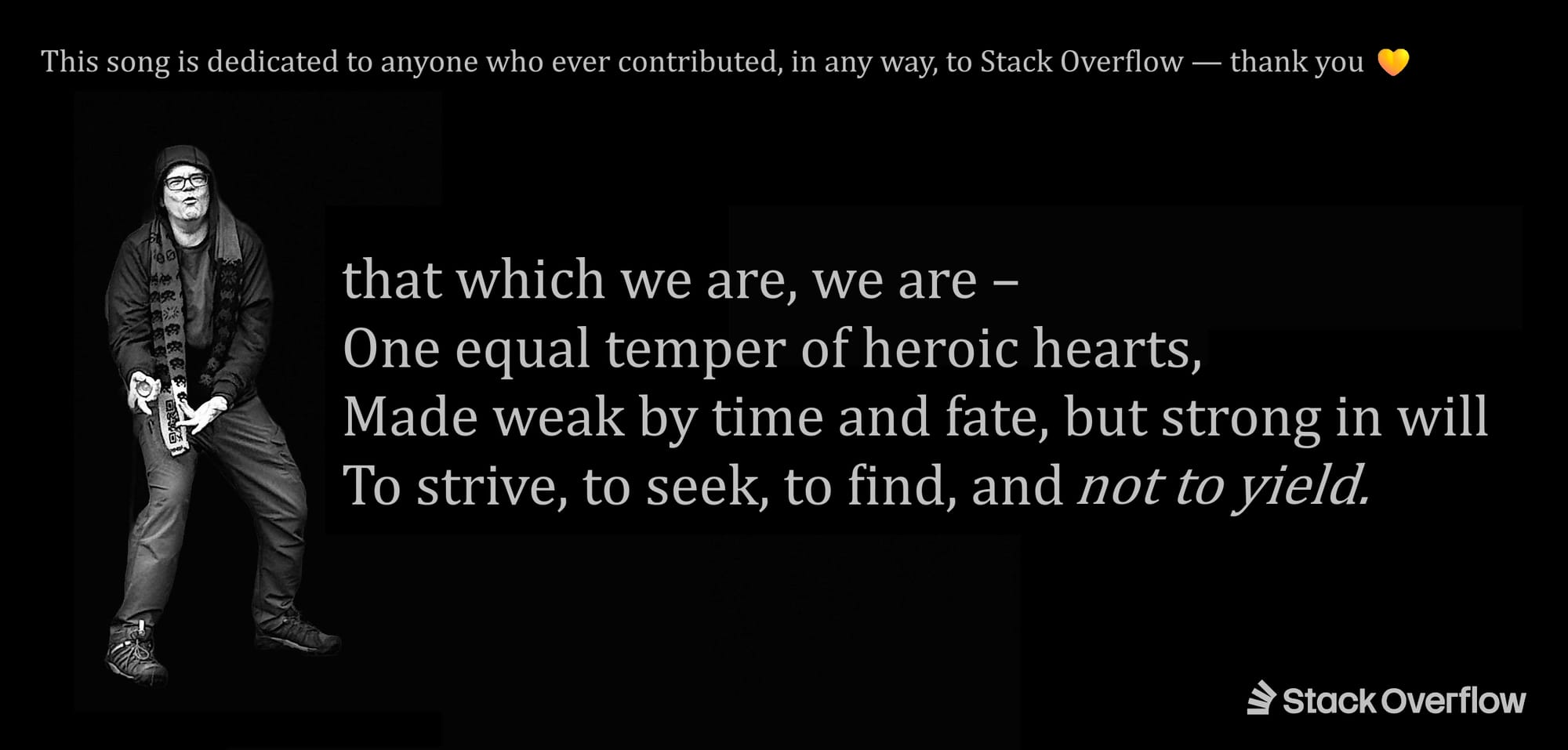
Atwood asserted a stark truth: "LLMs basically could not code at all without access to the extremely high quality creative commons programming Q&A dataset that all of us built together at Stack Overflow." This statement, while bold, resonates deeply within the tech community. Stack Overflow’s repository, comprising millions of questions and answers covering virtually every programming language, framework, and concept, is an unparalleled resource. This data, often licensed under Creative Commons, forms a critical component of the vast datasets used to train sophisticated LLMs.
The chronology of AI development highlights this dependency. While foundational AI research has existed for decades, the breakthrough in generative AI, particularly in coding, has largely coincided with the availability of massive, diverse, and high-quality text corpora. The structured, problem-solution format of Stack Overflow’s content, combined with its technical accuracy and breadth, makes it an ideal training ground for models designed to understand, generate, and debug code. Industry analysts and AI researchers frequently acknowledge the pivotal role of such publicly available, human-curated datasets in enabling LLMs to achieve their current impressive coding proficiencies, from generating boilerplate code to assisting with complex algorithm design.
Without the collective intelligence and tireless contributions of millions of developers who have shared their knowledge on Stack Overflow over the past decade and a half, the current generation of AI coding assistants would likely be far less capable, struggling with syntax, logic, and nuanced programming challenges. The sheer volume of data—estimates suggest billions of lines of code and associated discussions—has allowed LLMs to learn intricate patterns, common errors, and best practices that are essential for practical coding applications.

The "Golden Goose" Warning: Sustaining Human Contribution in the Age of AI
Atwood’s reflection culminates in a pointed warning to the companies developing and deploying LLMs and generative AI (GAI): "If the LLMs end up hollowing out the very communities that produce all their training data, they’re going to really, really regret that." This echoes advice he famously gave to Joel Spolsky when he departed Stack Overflow to found Discourse, an open-source discussion platform: "do not, for any reason, under any circumstances, kill the goose that lays the golden eggs," referring to the vital human community that drives content creation and engagement.
This "golden goose" analogy is particularly pertinent in the current technological landscape. AI models, while powerful, are not self-sustaining in terms of knowledge generation. They learn from the vast reservoir of human creativity, problem-solving, and communication. If the rise of AI leads to a decline in human contribution to platforms like Stack Overflow – perhaps due to perceived obsolescence, lack of recognition, or the siphoning of users by AI tools – the very wellspring of AI’s intelligence could dry up.
The implications of such a scenario are profound. A decrease in human activity on knowledge-sharing platforms could lead to a stagnation in the quality and currency of AI training data. As new technologies emerge and programming paradigms evolve, human experts are constantly generating new knowledge, asking novel questions, and devising innovative solutions. If these human contributions diminish, future AI models might struggle to keep pace with the cutting edge of technology, becoming reliant on increasingly outdated or incomplete datasets.
Atwood’s call for treating "the community with the respect they deserve" is a plea for ethical AI development and a sustainable ecosystem of knowledge. This respect could manifest in various forms: explicit acknowledgment of data sources, fair compensation models for data contributors, or even collaborative efforts between AI developers and community platforms to ensure mutual benefit. The debate around intellectual property rights for AI training data, attribution, and the economic value of publicly shared information is ongoing and complex, but Atwood’s warning highlights the existential threat posed by neglecting the human element at the core of AI’s success.
Broader Impact and Implications

Jeff Atwood’s recent commentary serves as a critical juncture for reflection within the tech industry and beyond. His dual focus on the RGMII and the ethical considerations surrounding AI training data underscores a broader concern for societal well-being and the future of collaborative knowledge.
The progress of the RGMII, exemplified by the Mercer County study, could provide crucial insights into economic inequality and the potential for innovative social programs to foster resilience in vulnerable communities. The success or failure of such initiatives, meticulously documented and analyzed, will inform policy debates on social safety nets and the future of work in an increasingly automated world.
Concurrently, Atwood’s forceful reminder about Stack Overflow’s foundational role for AI coding capabilities ignites a necessary conversation about the relationship between human ingenuity and artificial intelligence. It challenges AI developers to consider not just what their models can do, but how they are built and at what cost to the communities that inadvertently fuel their advancement. The long-term sustainability of AI’s knowledge base hinges on a symbiotic relationship with human creators, rather than a parasitic one.
The future trajectory of both rural development initiatives and AI ethics will depend significantly on how these challenges are addressed. Atwood’s influential voice, having shaped critical aspects of the internet’s infrastructure for developers, continues to advocate for a future where technology serves humanity in an equitable and respectful manner. His concluding sentiment, "Thank you for being a friend, because there’s no way I could have done any of this without you," is a heartfelt acknowledgment of the collective effort that underpins both personal achievements and the vast, endless sea of human knowledge.
About the Author