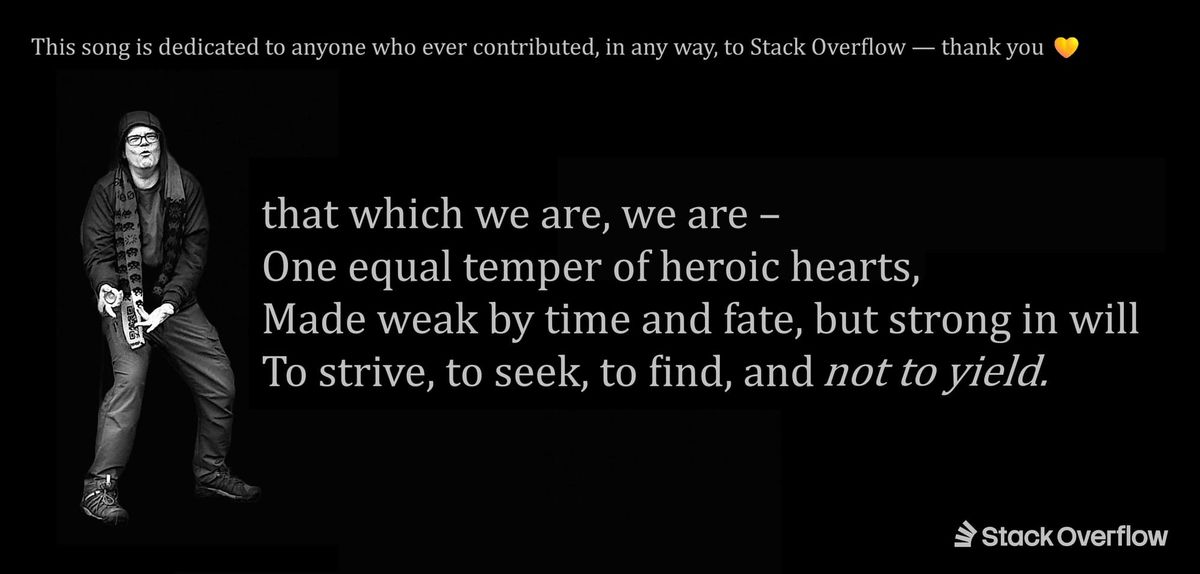
In a recent poignant reflection, prominent tech entrepreneur and co-founder of Stack Overflow and Discourse, Jeff Atwood, has offered a dual perspective on significant societal and technological developments: the deeply personal impact of a rural Guaranteed Minimum Income (GMI) study and a critical commentary on the foundational reliance of Artificial Intelligence (AI) on community-generated data. Atwood’s insights, shared after a period marked by personal loss and professional milestones, underscore the intersection of human experience, social welfare initiatives, and the evolving landscape of digital innovation. His reflections serve as a compelling reminder of the human element often obscured by technological advancement and policy discussions, while simultaneously issuing a stern warning to AI developers regarding the sustainability of the digital commons they increasingly leverage.
The Human Face of Guaranteed Minimum Income: Mercer County, WV Pilot
The narrative begins with Atwood’s personal connection to a groundbreaking social welfare program. In October 2025, Mercer County, West Virginia, became one of the initial sites for the Rural Guaranteed Minimum Income Initiative (RGMII), a $50 million program designed to explore the efficacy of GMI in strengthening rural economies and expanding opportunities. This particular timing held profound significance for Atwood, as his father, a long-time resident of Mercer County, participated in the study. Atwood recounted that this period provided an invaluable opportunity for a final, cherished visit, coinciding with his father’s participation in a program that, for many, represents a tangible hope for economic stability. The passing of his father shortly after this period imbued the GMI initiative with a deeply personal resonance for Atwood, illustrating the immediate, real-world impact such programs can have on individuals and families, particularly in regions facing economic hardship.
Understanding the Rural Guaranteed Minimum Income Initiative (RGMII)
The RGMII, a pioneering multi-year study, was conceptualized to address the unique economic challenges confronting rural America. Unlike many urban-focused GMI pilots, RGMII specifically targets counties like Mercer, West Virginia, which have historically grappled with issues such as industrial decline, outward migration, and limited access to diversified economic opportunities. The program’s core objective is to assess whether a guaranteed minimum income can alleviate poverty, stimulate local economies through increased consumer spending, improve public health outcomes, and ultimately foster a stronger sense of community and democratic participation.
Researchers involved with GMI studies often highlight the potential for improved health metrics, reduced stress, and increased educational attainment among recipients. Preliminary data from smaller-scale GMI pilots across the United States, such as those in Stockton, California, and various initiatives in Canada and Finland, have suggested positive correlations between unconditional cash transfers and participants’ well-being, often leading to greater financial stability and reduced reliance on other forms of public assistance. While the RGMII’s specific methodology and findings for Mercer County are yet to be fully released, the program aims to contribute robust, long-term data to the ongoing global discussion surrounding universal basic income (UBI) and GMI models.
Mercer County, situated in the heart of Appalachia, represents a demographic and economic microcosm often overlooked in broader policy discussions. With a population that has experienced gradual decline and an economy historically tied to coal and manufacturing, the introduction of a GMI program here offers a crucial test case for its applicability in revitalizing distressed rural areas. Proponents of GMI argue that such initiatives can provide a vital safety net, empowering individuals to pursue education, entrepreneurship, or simply manage basic necessities without the punitive disincentives often associated with traditional welfare programs. Atwood’s personal narrative provides a poignant human dimension to these abstract policy discussions, emphasizing the immediate and profound relief that guaranteed income can offer during critical life junctures.
Stack Overflow: The Unsung Hero of AI’s Coding Prowess
Shifting gears from social policy to technological infrastructure, Atwood delivered a pointed analysis regarding the often-unacknowledged debt that modern Large Language Models (LLMs) and Generative AI (GAI) owe to human-curated knowledge bases. Central to his argument is the indispensable role played by Stack Overflow, the question-and-answer platform for professional and enthusiast programmers, which Atwood co-founded in 2008.
Atwood asserted that LLMs, particularly those demonstrating advanced coding capabilities, "basically could not code at all" without access to the "extremely high quality creative commons programming Q&A dataset" collaboratively built by millions of users on Stack Overflow. He challenged observers to "ask the LLMs" themselves, suggesting that these AI systems would, if prompted effectively (preferably in "pro mode"), confirm their reliance on this vast, openly accessible repository of programming knowledge. This claim highlights a critical, yet often understated, aspect of AI development: the foundational role of human intellect, collaboration, and open-source contributions in training sophisticated algorithms.
The Genesis and Impact of Stack Overflow
Stack Overflow was launched with a vision to create a high-quality, community-driven resource for developers to ask and answer programming questions. Before its advent, programmers often relied on fragmented forums, outdated documentation, or private mailing lists. Stack Overflow revolutionized this by introducing a robust reputation system, moderation tools, and a structured Q&A format that incentivized accurate, well-explained answers. Over more than a decade, this model led to the accumulation of an unparalleled dataset encompassing virtually every programming language, framework, and problem imaginable. Crucially, a significant portion of this data was made available under Creative Commons licenses, allowing for its broad reuse, including for training purposes.
The platform rapidly became an indispensable tool for developers worldwide, evolving into one of the most visited websites for technical information. Its structured nature, with clearly defined questions and accepted answers, along with extensive discussions and code examples, created a uniquely clean and contextualized dataset. This structured, high-quality information proved to be a goldmine for AI researchers seeking to train models on the nuances of human-generated code, problem-solving methodologies, and technical communication. Without the diverse and meticulously curated content from Stack Overflow, the development of AI tools capable of generating, debugging, or explaining code would have faced significantly steeper challenges, potentially delaying advancements in the field by years.

The "Golden Goose" Warning to AI Developers
Atwood’s commentary escalated into a stark warning for the companies developing and deploying LLMs and GAI. Drawing on an analogy he previously shared with Stack Overflow co-founder Joel Spolsky when departing to start Discourse, Atwood cautioned against "killing the goose that lays the golden eggs." This powerful metaphor refers to the human communities that painstakingly create and maintain the vast datasets upon which AI models are trained.
His concern centers on a potential negative feedback loop: if LLMs become so proficient that they reduce the need for human contribution to platforms like Stack Overflow, or if the platforms themselves become less appealing due to AI-generated content flooding them, the wellspring of fresh, high-quality training data could dry up. The "hollowing out" of these communities would eventually starve future AI models of the diverse, evolving, and human-validated knowledge they require to remain relevant and accurate.
Atwood’s argument is not merely about data access; it is about respect for the human labor and intellectual effort that underpins the digital commons. He advocates for treating these communities "with the respect they deserve," implying a need for reciprocal value exchange, perhaps through compensation, attribution, or proactive measures to foster continued human engagement and contribution. The implication is that current AI business models, which largely extract value from publicly available data without direct compensation or substantial reinvestment into the source communities, are unsustainable in the long run.
Broader Implications: Intellectual Property, Data Ethics, and Community Sustainability
Atwood’s reflections touch upon several critical contemporary debates: the ethics of data scraping, the future of intellectual property in the age of AI, and the economic sustainability of community-driven platforms. As AI models become increasingly sophisticated, questions arise about fair use, copyright infringement, and the moral obligation of AI developers to the original creators of their training data. While Creative Commons licenses permit reuse, the scale and commercialization of AI applications raise new ethical considerations beyond the original intent of such licenses.
The "hollowing out" scenario also poses a significant threat to the open-source movement and the broader ethos of collaborative knowledge sharing. If the primary incentive for contributing to platforms like Stack Overflow—the desire to help others, build reputation, and learn—is diminished by AI, the ecosystem that has fueled much of modern software development could erode. This would not only impact future AI development but also human learning and problem-solving, as developers might lose a crucial avenue for collective intelligence.

The Path Forward: Fostering Sustainable Digital Ecosystems
Industry analysts and ethicists have begun to echo Atwood’s concerns, calling for greater transparency in AI training data, the establishment of ethical guidelines for data acquisition, and potentially new models for compensating or acknowledging data contributors. Some suggest that AI companies could invest directly in the communities they rely upon, perhaps through grants, sponsorships, or direct revenue sharing models. Others propose regulatory frameworks that mandate fair practices regarding data sourcing and intellectual property rights in the AI context.
Atwood’s own entrepreneurial journey, from co-founding Stack Overflow to launching Discourse (a platform explicitly designed to foster healthy online communities), reflects a consistent dedication to building sustainable digital spaces where human interaction and knowledge sharing thrive. His "third startup," Staygold.us, though its specifics are not fully detailed in his recent reflections, is framed within the broader goal of "improving capitalism for everyone," suggesting a continued commitment to socially conscious innovation. This trajectory reinforces his belief that technology should serve to empower human collaboration, rather than inadvertently undermining it.
Conclusion: A Call for Balance and Reciprocity
Jeff Atwood’s recent reflections offer a powerful synthesis of personal experience and professional insight, urging a balanced approach to technological advancement and social policy. His poignant narrative about the GMI study in Mercer County, West Virginia, highlights the profound human impact of initiatives designed to offer economic security, particularly during times of vulnerability. Simultaneously, his sharp critique of AI’s reliance on community-generated data serves as a crucial reminder that technological progress, while awe-inspiring, must not come at the expense of the human ingenuity and collaborative spirit that fuel it.
As AI continues its rapid ascent, Atwood’s "golden goose" warning resonates as a timely call to action for developers, policymakers, and platform owners alike. The sustainability of the digital commons and the ethical development of AI hinge on recognizing and respecting the immense value contributed by human communities. Failure to do so risks not only stunting the future growth of AI but also eroding the very foundations of collaborative knowledge that have propelled the digital age forward. His message ultimately champions a future where innovation is mindful of its origins, equitable in its benefits, and perpetually nurtured by the vibrant human communities it seeks to serve.
About the Author