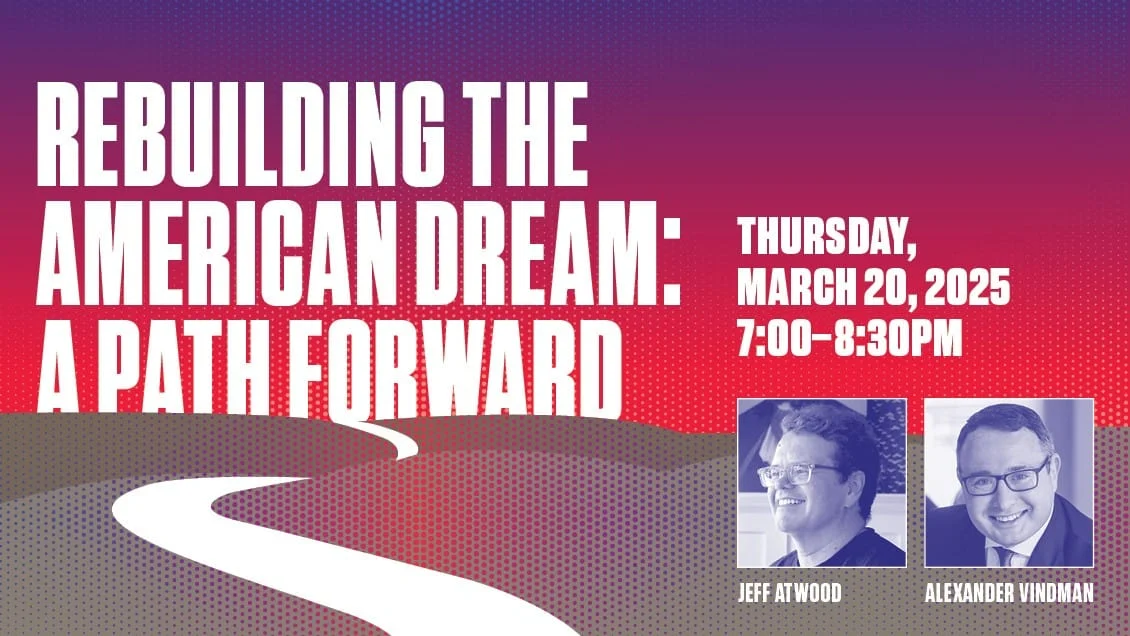
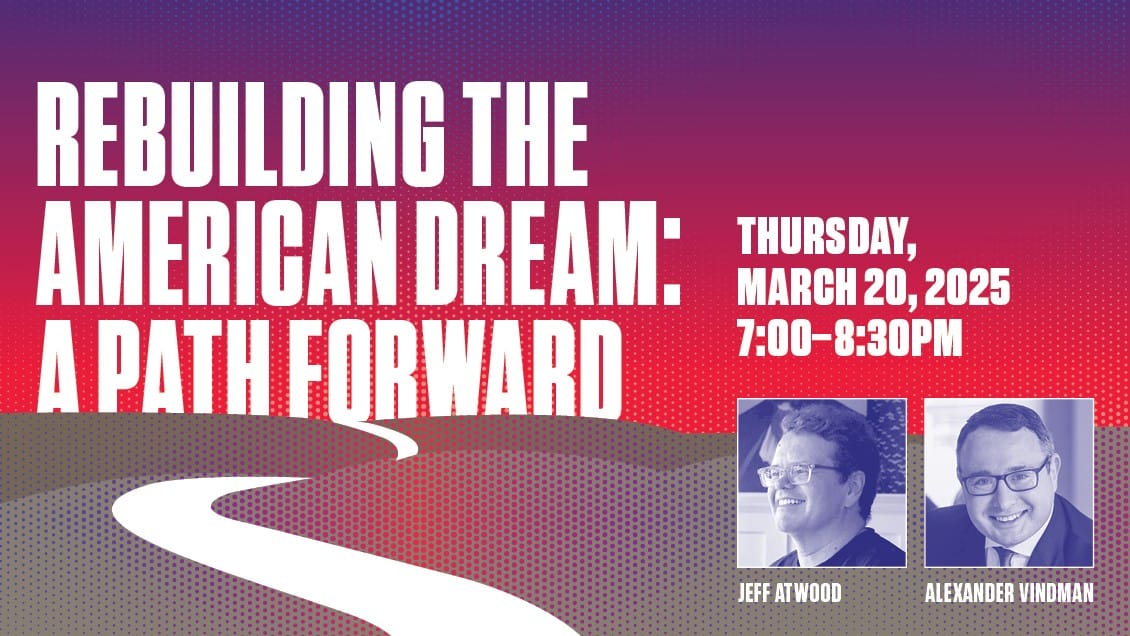
New York, NY – A significant public discourse unfolded at the historic Cooper Union Great Hall, bringing together renowned internet architect Jeff Atwood and decorated military veteran Colonel Alexander Vindman. The joint address, titled "Rebuilding The American Dream: A Path Forward," explored the critical themes of democracy, community, and economic mobility in contemporary America, challenging attendees to move beyond passive observation towards active participation in shaping the nation’s future. The event, held recently, marked a pivotal moment for cross-disciplinary dialogue on the foundational principles of American society.
A Call to Action: The "Stay Gold" Philosophy
The impetus for this collaborative discussion stems from Atwood’s earlier reflections on what it means to "stay gold"—a concept he elaborated upon in a previous essay. Drawing inspiration from S.E. Hinton’s classic novel The Outsiders, where the phrase signifies retaining one’s innocence and idealism, Atwood reframes "staying gold" as an active, continuous commitment to upholding the best aspects of oneself, one’s community, and the American Dream itself. This perspective posits that such preservation is not an inherent state but rather the result of deliberate effort, courageous action, and often difficult conversations that necessitate confronting the past, assessing the present, and collectively defining future aspirations. This philosophical groundwork set the stage for the Cooper Union event, which aimed to translate abstract ideals into concrete pathways for societal improvement.
The Venue: Cooper Union’s Legacy of Discourse
The choice of the Cooper Union Great Hall for this event was highly symbolic, imbuing the discussion with a rich historical context. Established in 1859 by industrialist Peter Cooper, the institution was founded on the radical principle that education should be "open and free to all," irrespective of race, religion, sex, or economic status. Its Great Hall quickly became a prominent forum for public debate and social reform, hosting some of America’s most influential voices. Abraham Lincoln delivered his pivotal "Might Makes Right" speech there in 1860, a discourse widely credited with propelling him to the presidency. Over the decades, figures ranging from Frederick Douglass and Susan B. Anthony to presidents Ulysses S. Grant, Theodore Roosevelt, and Bill Clinton have graced its stage. The hall has been a crucible for movements for abolition, women’s suffrage, civil rights, and labor reform, establishing it as a sacred space for the articulation of democratic ideals and the pursuit of social justice. This legacy provided a powerful backdrop for Atwood and Vindman’s exploration of the American Dream in 2025, connecting their contemporary concerns to a long tradition of national introspection and progress.
Profiles in Courage and Innovation
The joint appearance brought together two individuals from vastly different professional spheres, united by a shared commitment to civic duty and the principles of American democracy.
Colonel Alexander Vindman, a retired U.S. Army Lieutenant Colonel, embodies a profound sense of civic courage. Born in the Soviet Union and immigrating to the United States as a child, Vindman’s journey from a Brooklyn upbringing to a distinguished 21-year military career is a testament to the opportunities the American Dream can offer. His service included combat tours, earning a Purple Heart for injuries sustained in Iraq, and culminating in his role as Director for European Affairs for the National Security Council. Vindman gained national prominence for his principled stand during the 2019 impeachment inquiry, where he testified truthfully about events he witnessed, choosing to uphold his oath to the Constitution and the values he swore to protect, even at the cost of his military career. His actions underscored the often-personal sacrifice required to defend democratic institutions and the rule of law, making him a potent symbol of integrity in public service.
Jeff Atwood, an influential figure in the world of technology, approaches the challenges of democracy and community from a different vantage point. As the co-founder of Stack Overflow, a widely used resource for software developers, and Discourse, an open-source discussion platform, Atwood has spent years designing and fostering large-scale digital communities. His work involves grappling with the complexities of online interaction, community governance, and the creation of digital spaces that promote fairness, participation, and constructive dialogue. Atwood’s insights into building self-governing systems online, where clear expectations, fair rules, strong boundaries, and a shared sense of purpose are paramount, offer a unique perspective on the challenges facing broader societal structures. He posits that the principles governing successful digital communities—such as transparency, meritocracy, and dispute resolution—hold surprising relevance for the future of democracy itself.
The American Dream Under Scrutiny: 2025 Realities
The core of the discussion revolved around the state of the American Dream in 2025. Traditionally understood as the promise that hard work, individual initiative, and equal opportunity can lead to upward mobility and a better life, this promise has become increasingly elusive for many. Recent data underscores a growing skepticism about the Dream’s accessibility. A 2023 survey by the Pew Research Center indicated that only 49% of Americans believe the American Dream is within reach, a significant decline from previous decades. Economic mobility, a cornerstone of the Dream, has stagnated. According to a 2020 report by the Federal Reserve, 43% of Americans believe their financial situation is worse than their parents’ at the same age, marking a reversal of historical trends.
Factors contributing to this disillusionment include widening income inequality, rising costs of living (housing, education, healthcare), and a perceived decline in social cohesion. The Gini coefficient, a measure of income inequality, has steadily risen in the U.S. over the past four decades, indicating a growing disparity between the wealthiest and the rest of the population. Furthermore, the increasing polarization of political discourse and the fragmentation of communities, both online and offline, pose significant threats to the shared sense of purpose necessary for collective progress. These challenges elevate the urgency of the question posed by Atwood and Vindman: "How can we build on our dream so that it works for everyone?"
Bridging Divides: Democracy, Community, and Economic Mobility
Atwood and Vindman meticulously explored three interconnected pillars central to revitalizing the American Dream: democracy, community, and economic mobility.
- Democracy: The speakers emphasized that democracy is not a passive system but an active engagement. Vindman’s personal narrative served as a powerful reminder of the fragility of democratic institutions and the personal responsibility required to uphold them. The discussion touched upon the importance of civic education, informed participation, and the need to defend against disinformation and attempts to undermine electoral processes. The erosion of trust in institutions and the rise of political extremism highlight the urgent need for a renewed commitment to democratic norms and values.
- Community: Both speakers stressed the vital role of strong, inclusive communities. Atwood’s experience in fostering online communities provided a unique lens, arguing that the principles of clear rules, fair moderation, and shared goals are essential for any functioning group, whether digital or physical. The decline in participation in traditional civic organizations and the increasing isolation reported by many Americans point to a weakening of community bonds. The talk advocated for fostering spaces – both virtual and physical – where constructive dialogue can occur, diverse perspectives are valued, and collective action is encouraged.
- Economic Mobility: This pillar addressed the practical aspects of achieving the American Dream. The conversation moved beyond individual effort, delving into systemic barriers to opportunity. Discussions included the need for equitable access to quality education, affordable healthcare, living wages, and robust social safety nets. The speakers acknowledged that while individual hard work remains crucial, it must be supported by systems that provide genuine opportunity and prevent individuals from being trapped in cycles of poverty or disadvantage due to circumstances beyond their control. This segment emphasized the necessity of structural reforms to ensure that economic progress is broadly shared.
From Digital Forums to Democratic Foundations: Atwood’s Parallel
A particularly insightful aspect of the discussion was Atwood’s articulation of how lessons learned from building and managing large-scale digital communities can be applied to the challenges of civic governance. He posited that the underlying principles for successful community function—whether in a country or a forum—are remarkably similar:
- Clear Expectations: Just as online platforms require transparent guidelines for user behavior, societies need clearly articulated laws and social norms.
- Fair Systems: Impartial enforcement of rules and equitable processes are crucial to maintain trust and prevent resentment, both in digital moderation and legal systems.
- Strong Boundaries: Effective communities, whether online or offline, define what is acceptable and what is not, ensuring a safe and productive environment for all members.
- Shared Sense of Purpose: A common vision or goal, whether it’s collaborative problem-solving on Stack Overflow or the pursuit of collective well-being in a nation, binds a community together.
Atwood’s contention that the future of democracy might unexpectedly draw lessons from the dynamics of digital self-governance offered a novel perspective, suggesting that the challenges of scale and diversity encountered in online environments hold valuable insights for revitalizing civic engagement and democratic processes in the physical world.
Beyond Individual Acts: Towards Systemic Change
A central theme woven throughout the discussion was the imperative to move "beyond individual generosity and toward systems that create security, dignity, and possibility for all." This statement critiques the tendency to rely solely on individual acts of charity or personal striving to address systemic issues. Instead, it advocates for a focus on long-term, structural changes that institutionalize opportunity and resilience. This includes advocating for policies that promote social equity, strengthen public institutions, and establish robust frameworks for economic justice.
The speakers highlighted that while individual acts of kindness and hard work are commendable, they are insufficient to address deeply entrenched societal problems like wealth disparity, educational inequality, or healthcare access. The call was for a collective commitment to redesigning systems—educational, economic, legal—to ensure that the promise of the American Dream is not merely an aspiration for a select few but an attainable reality for every citizen. This involves a sustained effort to identify systemic barriers and implement reforms that create lasting positive impact, fostering an environment where dignity and possibility are inherent rights, not privileges.
Expert Perspectives and Public Anticipation
The event garnered considerable attention from political analysts, community organizers, and technology commentators. Dr. Eleanor Vance, a political science professor at Columbia University, commented, "The pairing of Colonel Vindman and Jeff Atwood is ingenious. It bridges the critical gap between upholding democratic ideals through personal sacrifice and building the functional, inclusive systems necessary for those ideals to thrive. This kind of interdisciplinary dialogue is precisely what’s needed to address our complex national challenges."
Similarly, Maria Rodriguez, a community development advocate, observed, "The emphasis on moving beyond individual generosity is crucial. For too long, we’ve relied on stop-gap measures. This discussion pushes us to think about how we can build resilient communities through policy and structural change, which is a far more sustainable path to the American Dream."
The public anticipation for the event was high, reflecting a widespread hunger for honest, unvarnished conversations about the nation’s future. The blend of Vindman’s firsthand experience defending democratic principles and Atwood’s expertise in designing functional communities resonated with many seeking tangible solutions.
A Path Forward: Implications for Civic Engagement
The Cooper Union event concluded not with easy answers, but with a powerful call for collective action and a promise of specific, actionable insights. Colonel Vindman offered the perspective of someone who embodied American ideals under immense pressure, providing a moral compass for civic duty. Atwood contributed the practical experience of building scalable, self-governing digital communities, demonstrating that the principles of fairness, participation, and shared purpose can indeed create functional, productive environments.
The implications of such a dialogue are far-reaching. It encourages a re-evaluation of how citizens engage with their democratic processes, how communities are built and sustained, and how economic systems can be made more equitable. By drawing parallels between the governance of online platforms and national governance, the speakers invited attendees to consider innovative approaches to civic engagement, leveraging lessons from the digital age to strengthen real-world democratic foundations. The ultimate message was one of hopeful possibility: that through concerted effort, interdisciplinary collaboration, and a renewed commitment to foundational American ideals, the nation can indeed move forward, securing dignity, security, and opportunity for all.
The full event, "Rebuilding The American Dream : A Path Forward," was streamed in real-time and remains accessible via the Cooper Union Great Hall YouTube channel, allowing a wider audience to engage with this significant discourse.
About the Author