In a significant presentation at the 2013 Game Developers Conference (GDC), Stone Librande, a veteran game designer, expanded upon his groundbreaking "One Page Designs" philosophy with a talk titled "Simulating a City, One Page at a Time." This sequel-of-sorts delved into his unique approach to game design documentation, specifically detailing its rigorous application during the development of SimCity (2013). Librande’s methodology, which champions the distillation of complex game systems into concise, visually driven, single-page documents, represented a deliberate challenge to conventional, often cumbersome, design processes. His experiment on SimCity aimed to test the absolute limits of this one-page paradigm, from the nascent stages of pre-production through to the final moments before the game’s release.
The Genesis of a Design Experiment
Stone Librande’s initial foray into "one-page designs" had already garnered considerable attention within the game development community. His prior GDC talk on the subject emphasized the critical role of clear, immediate communication in multidisciplinary teams. Traditional "design bibles," often sprawling documents that could run hundreds of pages, frequently became outdated, were difficult to navigate, and struggled to achieve widespread team comprehension or buy-in. Librande sought to replace this with a system of visual diagrams and succinct textual explanations, printed physically and displayed prominently, ensuring that a core idea was communicated clearly, concisely, and thoroughly.
With the SimCity (2013) project, Librande saw an unprecedented opportunity to push this methodology to its extreme. Commencing three and a half years before the game’s launch with a small, five-person team, he posed a fundamental question: "What if I only did one-page designs for the entire project, from pre-production all the way up to the day we ship? What would happen?" While he harbored suspicions that the approach might not sustain itself throughout the entire development cycle of such a complex simulation game, his primary motivation was not necessarily to prove its absolute infallibility. Instead, it was to systematically identify its breaking points, learn from those limitations, and understand precisely how far the concept could be stretched. This empirical curiosity underscored his commitment to refining game design practices.
Challenging Traditional Design Paradigms
The game development industry, particularly for titles of SimCity‘s scope, has historically relied on extensive documentation. These "design bibles" often served as the single source of truth for a project, detailing everything from core mechanics and narrative arcs to UI specifications and art direction. While comprehensive, their sheer volume often made them impractical for quick reference, difficult to keep synchronized across various departments, and prone to becoming obsolete as development progressed. Designers would spend countless hours drafting and updating these documents, often at the expense of more direct, iterative design work.
Librande’s one-page design methodology offered a radical departure. It wasn’t merely about brevity; it was about precision, visual clarity, and strategic communication. Each one-page document was conceived as a self-contained unit, capable of conveying a fundamental game concept, a specific system, or a crucial interaction pattern. The emphasis was on diagrams, flowcharts, and annotated visuals, minimizing text while maximizing impact. The intention was for these documents to be printed, displayed in team workspaces, and serve as readily accessible touchstones that could foster immediate understanding and alignment across programmers, artists, animators, and sound designers. This approach aimed to cut through the noise, facilitate rapid feedback cycles, and ensure that complex ideas were internalized by the entire team, thereby reducing misunderstandings and costly rework later in the production pipeline.
Real-World Application: SimCity (2013) Case Study

The SimCity (2013) project provided a fertile ground for Librande’s experiment. As a reboot of an iconic franchise, the game carried immense expectations and presented intricate design challenges, particularly concerning its simulation depth, economic models, and nascent multiplayer features. Applying the one-page methodology from the outset, Librande observed both remarkable successes and anticipated limitations.
Early in development, some of his one-page designs, such as initial city maps inspired by real-world locales, proved exceptionally resilient. These foundational visual documents, while taking artistic license with exact metrics (Librande humorously noted the abundance of parking lots in real American cities), successfully guided the environmental design all the way through production. This demonstrated the method’s efficacy in establishing core visual and spatial concepts early and maintaining consistency.
The methodology also proved invaluable in iterating on complex systems. When charting the multiplayer trading mechanics—a novel and crucial feature for the SimCity reboot—Librande’s one-page diagrams quickly exposed fundamental flaws and convoluted structures in early concepts. This clarity allowed the design team to identify and discard unworkable ideas swiftly, before significant resources were committed to their development. This ability to "fail fast" and pivot efficiently is a cornerstone of agile development principles, and Librande’s approach provided a robust framework for it. By visualizing the system’s inputs, outputs, and dependencies on a single page, designers could collectively pinpoint bottlenecks or logical inconsistencies that might have been obscured in lengthier text-based documentation. This early problem detection translated directly into saved development time and resources, underscoring the economic benefit of effective design communication.
A particularly telling anecdote from the GDC talk highlighted the success of Librande’s "training" of the development team. His penchant for producing clear, elegant, and succinct diagrams had become the expected standard. He recounted receiving an email from his producer that simultaneously assigned a visual designer to visual explorations and a UI artist to create mock-ups for game flow. Librande, however, was handed a significantly more daunting task: to create a "Matrix of Coal City, complete with the various levels of the manufacturing plants, the modules, the supporting toys needed to support the city, how it will influence the sim, the rewards, resource chains, in something that’s digestible." The producer had bolded the final phrase, leaving no doubt that a one-page diagram was the expected deliverable. Librande humorously recalled thinking, "what have I done?" as he realized he had effectively conditioned the team to demand high-quality, concise visual summaries, regardless of the underlying complexity. This incident, while a testament to the success of his method, also illustrated the heightened expectations it created.
Integrating Complexity: The Role of Spreadsheets
While the one-page approach offered undeniable benefits, Librande was candid about its limitations when faced with the sheer numerical complexity inherent in a game like SimCity. A simulation game demands intricate balancing of economic factors, resource generation, pollution levels, population dynamics, and countless other variables. Eventually, the project necessitated the robust analytical power of spreadsheets.
However, even in the realm of CSV files and numerical data, Librande’s one-page philosophy found a way to manifest. Recognizing that raw spreadsheets could still be overwhelming, he applied principles of visual design to consolidate information, incorporating color-coding, clear labeling, and other visual cues. He transformed dense data sets into hybrid chart/one-page designs that were then printed and distributed. These consolidated charts became ubiquitous, adorning colleagues’ offices and workstations, serving as readily accessible, well-organized references for complex game statistics and dependencies.
Librande’s commitment to proactive information dissemination even extended to a playful, yet highly effective, ritual. He would personally update these printed charts whenever a high-level update occurred, replacing old versions with new ones, often while team members were away from their desks. "It was kind of like the magic design fairy leaves you a present when you are away!" he quipped. This "design fairy" approach, while seemingly whimsical, underscored a serious principle: effective communication requires designers to actively push information to their team members, rather than passively expecting them to seek it out. In studios where a central, prominent display space isn’t feasible, this proactive distribution ensures that critical design information reaches everyone who needs it, fostering a shared understanding and minimizing information silos.
Scaling the Method: From Page to Wall
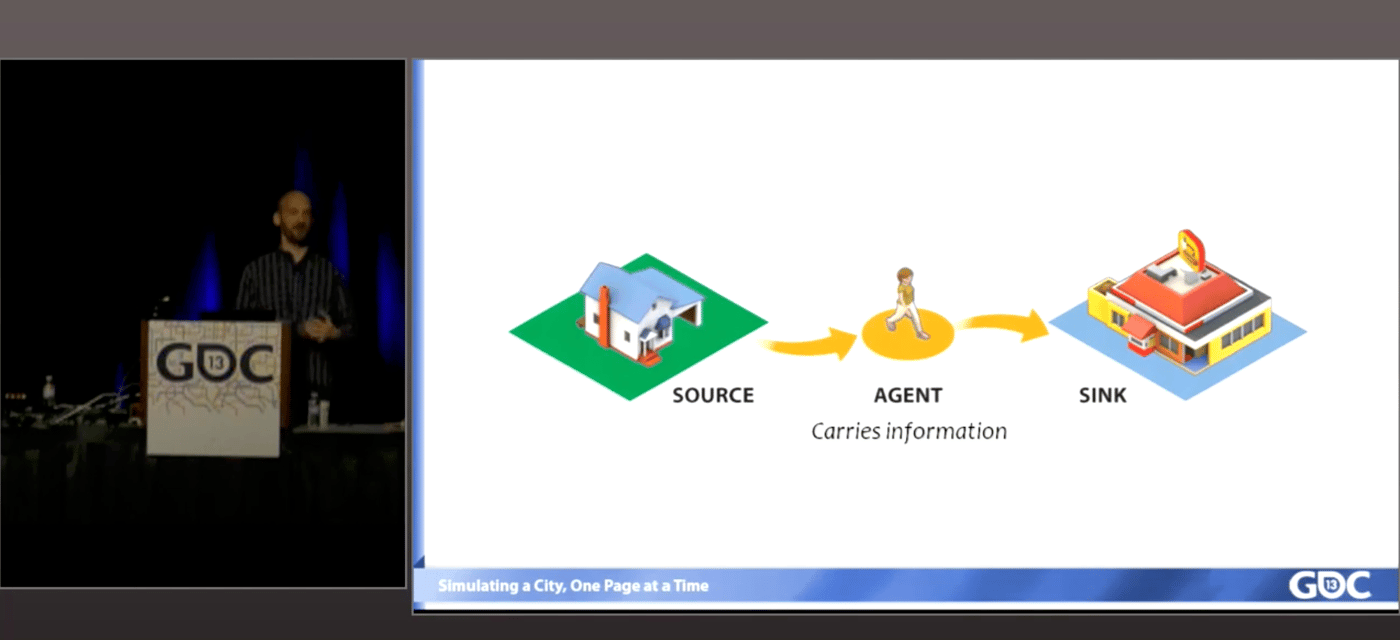
The experiment’s ultimate scope saw Librande’s "one-page" designs evolve to "one-wall" and even "one-room" designs. As the SimCity project matured and its complexity grew, the need to visualize interconnected systems expanded beyond what a single sheet of paper could contain. This natural progression demonstrated the adaptability of the core philosophy: the principle of distilling information into a clear, visually digestible format remained, even if the canvas grew larger. The challenge shifted from fitting everything onto a single page to organizing a larger visual narrative across multiple interconnected pages or an entire wall, maintaining clarity and conciseness at scale. This evolution also highlighted that "one-page" was less about a literal sheet of paper and more about a mindset of focused, efficient communication.
Librande acknowledged the journey was not without its missteps. Attempts at creating bespoke magnetic pieces for dynamic design iteration, while delightful, proved too time-intensive to scale. Similarly, a card game intended to simulate certain mechanics was deemed "too cute" to be truly effective as a design tool. These instances reinforced the notion that while experimentation is crucial, practical utility and efficiency must remain paramount. The underlying goal was always to find the best solution for communicating design problems and their resolutions, even if it meant recalibrating the specific tools or formats.
The Enduring Impact and Legacy
Despite the initial skepticism and the inevitable challenges of applying such a rigorous methodology to a project as vast as SimCity, Librande concluded his GDC talk by declaring the experiment a "huge win" for the team. Post-mortem analyses conducted years after the game’s release revealed that many of the original one-page diagrams, some three and a half years old, remained valid and were still actively referenced by team members. This longevity speaks volumes about the foundational strength and clarity these documents provided. The systematic organization, from the highest-level architectural concepts down to the smallest gameplay details, established a remarkably sound foundation for the game’s development.
The methodology’s relevance extends far beyond the confines of the SimCity (2013) project and the year 2013. The principles championed by Librande—clear communication, visual thinking, rapid iteration, and proactive information sharing—are timeless and universally applicable in game development. The article’s author, Danielle Riendeau, Editor-in-Chief of Game Developer and a lecturer in game design at the Berklee College of Music, attests to this enduring legacy. She incorporates elements of Librande’s talk into her own curriculum, with students frequently adopting one-page designs for their projects. This pedagogical application underscores the method’s effectiveness as a fundamental teaching tool for aspiring designers, helping them to articulate complex ideas with precision and clarity from the outset of their careers.
Broader Implications for Game Development
Librande’s experiment with one-page designs offers profound implications for the game development industry as a whole, irrespective of studio size or project scope.
- Enhanced Communication and Collaboration: By forcing designers to distill ideas into their most essential elements, the methodology inherently improves cross-disciplinary communication. Visual diagrams transcend linguistic barriers and departmental jargon, fostering a shared understanding among artists, programmers, producers, and QA testers. This reduces misinterpretations and aligns team efforts toward common goals.
- Increased Efficiency and Resource Management: The ability to quickly visualize and iterate on design concepts means that flawed ideas can be identified and discarded early, before significant development resources (time, money, personnel) are committed. This "fail fast, learn faster" approach minimizes wasted effort and optimizes the allocation of valuable resources, a critical concern in an industry often plagued by budget overruns and schedule delays.
- Agile Development Support: One-page designs naturally align with agile development methodologies, which emphasize iterative development, flexibility, and continuous feedback. They provide clear, actionable artifacts for sprint planning, stand-ups, and review meetings, facilitating dynamic adjustments and rapid prototyping.
- Empowerment of Designers: The process challenges designers to think critically about the core of their ideas, honing their ability to articulate complex systems succinctly. This fosters a deeper understanding of game mechanics and encourages a more strategic approach to problem-solving.
- Adaptability Across Scales: As demonstrated by the evolution from single pages to "one-wall" designs and the integration with spreadsheets, the core philosophy is highly adaptable. It can be scaled for independent developers sketching ideas on a whiteboard or for large, multidisciplinary teams managing vast, interconnected systems in a central office environment or distributed remotely using digital tools like Miro.
- Long-Term Design Integrity: The longevity of Librande’s diagrams, referenced years after project completion, highlights their value as robust foundational documents. They serve as a clear blueprint, aiding in post-launch support, expansions, or even future reboots by providing an unambiguous record of original design intent.
In conclusion, Stone Librande’s daring experiment with one-page designs during the development of SimCity (2013) transcended a mere anecdotal success. It solidified a powerful methodology for game design documentation that prioritizes clarity, conciseness, and proactive communication. His GDC 2013 talk not only chronicled the challenges and triumphs of this approach but also provided a blueprint for how designers can create a "sound foundation" for building games, ensuring that complex ideas are not just conceived, but truly understood and effectively implemented by every member of a development team. The continued relevance of his insights, nearly a decade later, underscores the timeless value of thoughtful and efficient design communication in the dynamic world of game development.
About the Author