The extended reality (XR) landscape has undergone a significant transformation this week with the official market entry of Valve’s long-anticipated Steam Frame, alongside major ecosystem updates from Snap, Meta, and Apple. These developments arrive at a critical juncture for the industry, as manufacturers attempt to balance high-end hardware specifications with the increasing consumer demand for privacy, standalone functionality, and enterprise-grade utility. While the industry prepares for the upcoming Meta Connect conference, the current product launches provide a comprehensive overview of the technical and strategic trajectories of the world’s leading technology firms.
Valve Enters the Standalone Market with Steam Frame
Valve Corporation has officially transitioned from its tethered PC-VR roots into the standalone hardware sector with the launch of the Steam Frame. The device is being offered in two distinct configurations: a 256GB model priced at $1,059 (€1,049) and a premium 1TB version retailing for $1,299 (€1,279). In a move to incentivize early adoption, Valve has bundled each unit with a specialized ARM-based port of the critically acclaimed title Half-Life: Alyx, marking the first time the game has been playable natively on a standalone mobile chipset without the requirement of a high-end PC.
The distribution of the Steam Frame follows a non-traditional "reservation and extraction" model. Prospective buyers were invited to join a waitlist, from which Valve randomly selected "winners" eligible to complete their purchase. This system, intended to mitigate the impact of automated scalping, has seen mixed results, as secondary market listings have already begun to appear at significant markups.

Technically, the Steam Frame represents a shift in Valve’s design philosophy. Historical data indicates that three to four years ago, Valve was prototyping bulky, high-performance PC-VR headsets similar to the form factors utilized by Pimax. However, the final Steam Frame reflects a pivot toward portability and a more streamlined aesthetic. Despite this, initial critical reception has highlighted a perceived performance gap. Industry analysts note that while the Steam Frame offers a robust, open-source ecosystem and superior data privacy compared to competitors, its hardware capabilities are frequently compared to the Meta Quest 3—a device released three years prior at a significantly lower price point.
Snap Inc. Unveils Enterprise-Focused SPECS AR Glasses
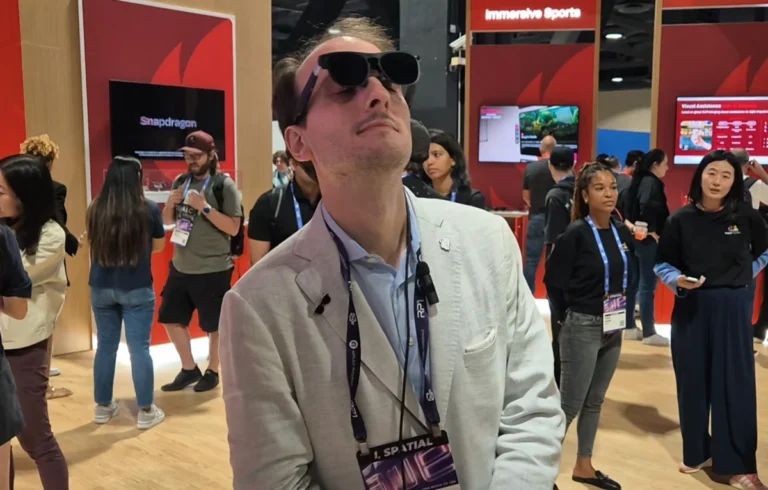
Parallel to Valve’s hardware launch, Snap Inc. has provided a comprehensive look at its latest augmented reality (AR) offering, the SPECS glasses. Following an initial reveal at the Augmented World Expo (AWE) that left some developers seeking more concrete details, Snap organized a dedicated launch event to demonstrate real-world use cases and provide hands-on opportunities for the press.
The SPECS glasses are positioned as a high-end developer and enterprise tool, carrying a substantial price tag of approximately $2,200. To justify this investment, Snap showcased a diverse array of software integrations, including:
- Collaborative Productivity: Direct integration with Google Docs, allowing users to view and edit documents in a spatial environment.
- Gaming and Interactive Media: Partnerships with Lego and Niantic to create persistent, world-scale AR experiences.
- Professional Training: An NBA-themed basketball training application designed to overlay real-time shooting analytics onto physical play.
Early hands-on reviews suggest that while the standalone AR functionality is technically impressive, the hardware still faces challenges regarding hologram transparency and occasional latency. However, Snap’s decision to focus on the enterprise and developer sectors is viewed by market observers as a strategic move to build a software library before eventually targeting a broader consumer demographic.

Meta’s Strategic Pivot: Privacy-Centric Hardware and Photorealistic Avatars
As the industry looks toward the Meta Connect conference, reports have surfaced regarding Meta’s internal development of a camera-free smart glasses project, codenamed "Luna." This initiative appears to be a direct response to mounting public concerns over "surveillance capitalism" and the social stigma associated with camera-equipped eyewear. By removing the camera, Meta aims to provide a device that prioritizes audio-based AI assistance and biometric tracking without the privacy complications of video capture.
Furthermore, leaks ahead of Meta Connect suggest the company may debut "Project Phoenix," a new hardware prototype designed to showcase the latest iterations of Codec Avatars. These avatars represent Meta’s long-term research into photorealistic digital representations, utilizing full-body tracking and advanced facial expression synthesis. If realized, Project Phoenix could redefine remote telepresence by moving away from stylized, cartoonish avatars toward indistinguishable digital twins.
Apple Releases VisionOS 27: Ecosystem Maturity for Vision Pro
Apple has continued to refine its spatial computing platform with the release of VisionOS 27 for the Apple Vision Pro. This update integrates the features first previewed at the Worldwide Developers Conference (WWDC) in June, focusing on environmental awareness and developer flexibility. Key enhancements include:
- Siri AI Integration: The deployment of advanced generative AI capabilities directly into the headset’s operating system to facilitate more natural voice-driven navigation.
- Advanced Object Tracking: Enhanced support for IR LED-tracked accessories, allowing the Vision Pro to interact with physical peripherals with sub-millimeter precision.
- RealityKit Improvements: Updated tools for creators that streamline the development of high-fidelity 3D assets and spatial audio environments.
While the software continues to evolve, market analysts suggest that Apple’s primary challenge remains the hardware’s weight and price. VisionOS 27 is seen as a foundational layer for future, more accessible iterations of Apple’s spatial computing hardware.

Broader Market Impact and Crowdfunding Success
The XR sector’s growth is not limited to established tech giants. The "URXR" lightweight headset project recently secured $1.2 million in funding via Kickstarter, signaling continued investor and consumer interest in niche, high-performance wearable displays. Additionally, the emergence of community-driven software projects—such as tools that allow Android-based VR games to run on Windows—suggests a growing demand for cross-platform interoperability.
The concurrent announcements from Valve, Snap, and Apple underscore a maturing market. While no single device has yet achieved the "iPhone moment" for augmented or virtual reality, the collective progress in standalone processing, spatial operating systems, and developer tools indicates a steady march toward mainstream adoption. The high price points of the Steam Frame and Snap SPECS reflect the current cost of cutting-edge optical and processing components, suggesting that the industry remains in a "prosumer" phase of development.
Chronology of Key XR Milestones: 2023–2026
- October 2023: Meta launches Quest 3, establishing the baseline for consumer-grade mixed reality.
- February 2024: Apple releases Vision Pro, introducing the concept of "Spatial Computing" to the high-end market.
- June 2026: Apple previews VisionOS 27 at WWDC, focusing on AI and object persistence.
- September 2026: Valve officially launches Steam Frame; Snap unveils full SPECS capabilities; Meta prepares for the Connect conference with rumored "Luna" and "Phoenix" projects.
As the week concludes, the XR industry appears more resilient than in previous years, characterized by a shift from experimental prototypes to functional, albeit expensive, hardware ecosystems. The upcoming Meta Connect is expected to provide the final piece of the 2026 industry puzzle, potentially revealing how the world’s largest VR platform holder intends to compete with Valve’s new open-system approach and Apple’s premium ecosystem.
About the Author