Jeff Atwood, the influential voice behind Coding Horror, recently unveiled his thoroughly updated personal computer, marking a significant refresh after an extended period of stability with his previous setup—a PC case dating back to 2011 and a last major component overhaul in 2015. This substantial five-year hiatus between serious upgrades underscores Atwood’s previous assertion that "the PC is over," largely due to what he describes as the increasingly "boring" nature of conventional PC upgrades. However, his new build, meticulously documented and spanning a 13-year legacy of personal PC chronicles, paradoxically signals a vibrant, albeit redefined, future for personal computing, one where the primary innovation lies not solely in raw speed but in the masterful art of miniaturization.
The Shifting Landscape of PC Upgrades: A Decade in Review
For decades, the personal computer industry thrived on a relentless cycle of performance enhancement, with each new generation of processors, graphics cards, and memory offering substantial, palpable improvements. Users routinely upgraded components every two to three years, driven by demanding software, evolving gaming standards, and the sheer excitement of technological advancement. This era, often dubbed the "Golden Age" of PC innovation, saw rapid leaps in clock speeds, core counts, and graphical fidelity.
Jeff Atwood, through his popular Coding Horror blog, has been a long-standing observer and participant in this technological journey. His earlier proclamation, "the PC is over," was not a declaration of obsolescence but rather a commentary on the plateauing of user-perceptible performance gains for everyday tasks. As general computing needs became less demanding and mobile devices absorbed a significant portion of casual use, the necessity for frequent, costly upgrades diminished for the average consumer. The "boring" aspect of modern upgrades stems from the fact that incremental performance boosts, while technically impressive, often translate to marginal real-world improvements for many users, particularly outside of specialized professional workloads or high-end gaming. Atwood’s own five-year delay in undertaking a full system upgrade serves as a personal testament to this industry trend, highlighting a period where the incentive for a complete overhaul was simply not compelling enough until recently.
A Personal History of PC Innovation: Atwood’s Build Chronology
Jeff Atwood’s journey through personal computing hardware is well-documented, with a history of build logs that now extends over 13 years. These chronicles provide a unique perspective on the evolution of PC components and the shifting priorities of a seasoned tech enthusiast. His long-standing commitment to a PC case from 2011 and a major component upgrade in 2015 reflects a broader trend of extended hardware lifecycles. For context, the 2015 upgrade would likely have involved components such as Intel’s Haswell or Broadwell architecture, or perhaps the then-emerging Skylake platform, coupled with a mid-to-high range graphics card of that era. At the time, such systems offered robust performance that, for many, remained perfectly adequate for several years.
The current 2025 refresh, therefore, represents a significant generational leap, not just in terms of raw specifications but also in its conceptual approach to PC design. This extended timeline between major overhauls underscores the maturity of PC hardware; while new generations of components still offer performance gains, the rate at which these gains translate into indispensable improvements for the average user has slowed. This latest build, therefore, is not merely an upgrade but a re-evaluation of what constitutes a cutting-edge personal computer in the current technological landscape.

The Rise of Small Form Factor Computing
The defining characteristic of Atwood’s latest build, and indeed a burgeoning trend in the enthusiast community, is the focus on Small Form Factor (SFF) computing. SFF PCs are defined by their compact physical dimensions, typically under 20 liters in volume, which allows them to occupy minimal desk space while still housing high-performance components. This movement has gained considerable traction among users who seek powerful systems without the imposing presence of traditional tower PCs. The allure of SFF lies in its blend of aesthetics, portability (to a degree), and the sheer engineering marvel of packing maximum computing power into a minimum footprint.
The shift towards SFF is driven by several factors:
- Aesthetics and Minimalism: Modern design trends favor clean, uncluttered workspaces. SFF PCs integrate seamlessly into contemporary home and office environments, often resembling high-end consumer electronics rather than bulky workstations.
- Space Efficiency: With living spaces becoming more compact, the ability to house a powerful machine without sacrificing valuable desk real estate is a significant advantage.
- Portability: While not truly mobile, SFF builds are considerably easier to transport to LAN parties, different rooms, or even between offices, offering a flexible computing solution.
- Technological Maturation: Advances in component miniaturization (e.g., M.2 SSDs, SFX power supplies), thermal management, and power efficiency have made it feasible to build high-performance SFF systems without prohibitive compromises.
The engineering challenges inherent in SFF design are considerable. Cramming heat-generating components like powerful CPUs and GPUs into confined spaces necessitates innovative cooling solutions, meticulous cable management, and careful component selection to ensure compatibility and optimal airflow. This has spurred a vibrant community of designers and manufacturers dedicated to creating specialized SFF cases, motherboards, and cooling apparatus.
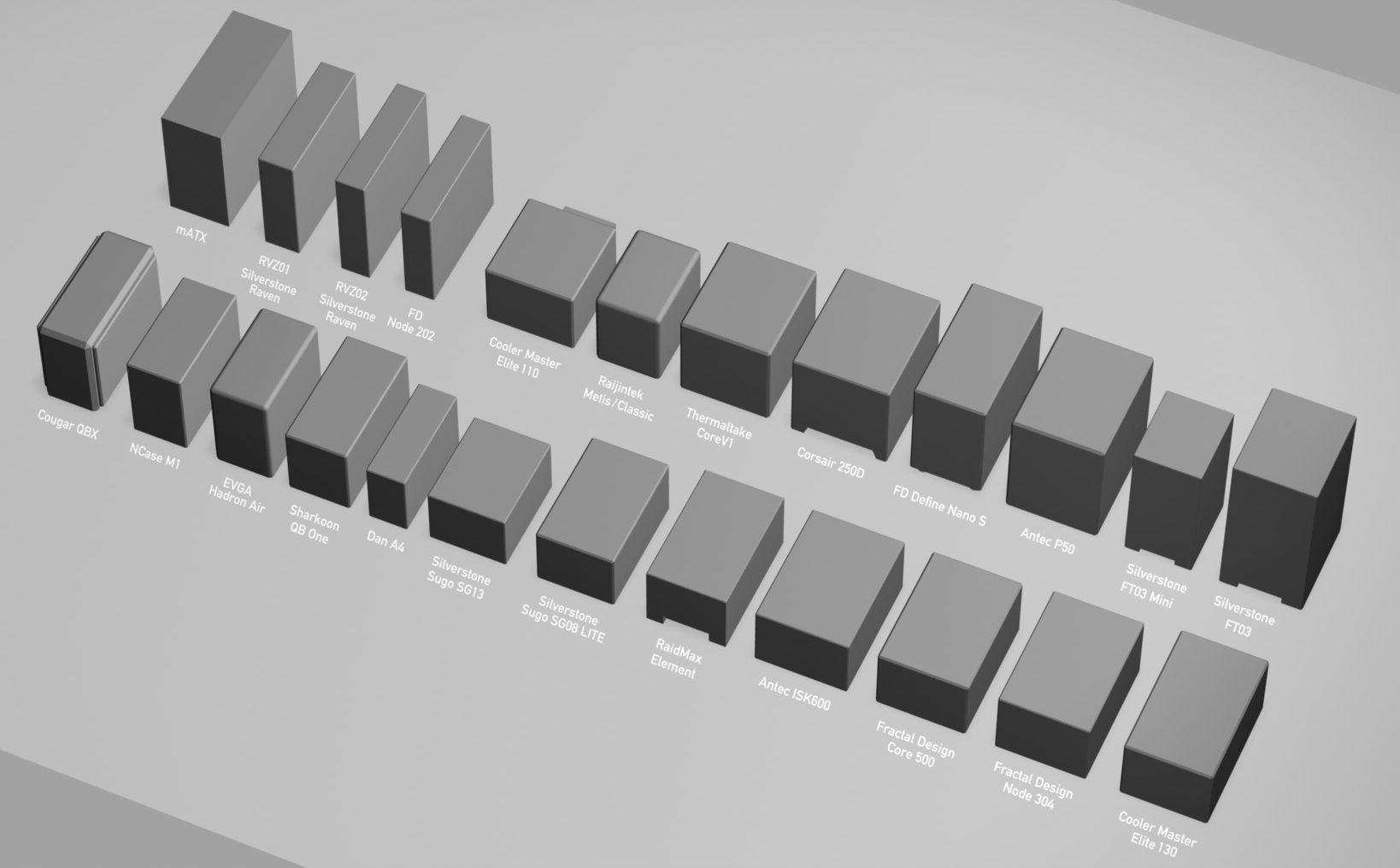
Spotlight on SFF Cases: Dan A4 SFX vs. Streacom DA2
Atwood’s exploration of SFF cases centered on two prominent examples that represent different philosophies within the compact PC movement: the Dan A4 SFX and the Streacom DA2. Both aim for compactness but offer distinct approaches to internal layout and thermal management.
The Ultra-Compact Champion: Dan A4 SFX
The Dan A4 SFX is renowned for being one of the smallest standard mini-ITX cases available, embodying the principle of maximum power in minimum size. With dimensions of 200mm × 115mm × 317mm, it achieves an incredibly tight volume of just 7.3 liters. This makes it a marvel of engineering, designed for enthusiasts who prioritize the absolute smallest footprint possible. Its design is spartan yet elegant, focusing on direct airflow paths for components. The A4 SFX is often chosen for its sleek appearance and its ability to house a high-end graphics card, usually via a PCIe riser cable, directly behind the motherboard, creating a dual-chamber layout. However, its extreme compactness often means compromises in CPU cooler height and overall thermal headroom, making component selection and cooling optimization critical.
The Versatile Powerhouse: Streacom DA2
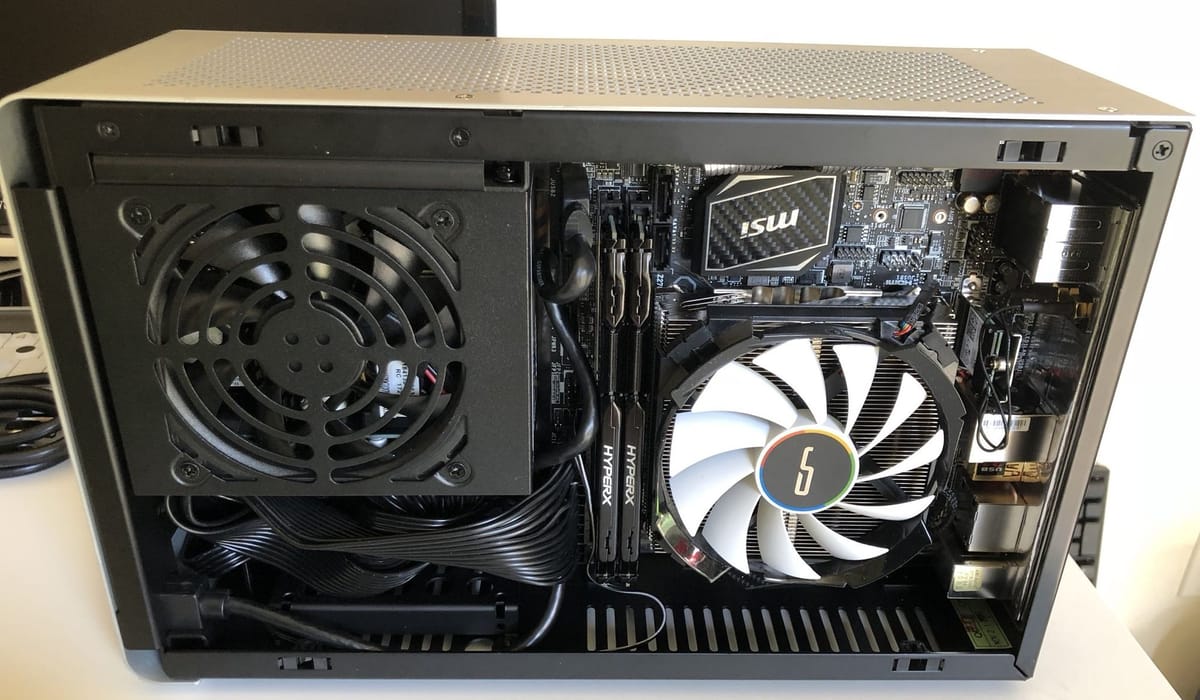
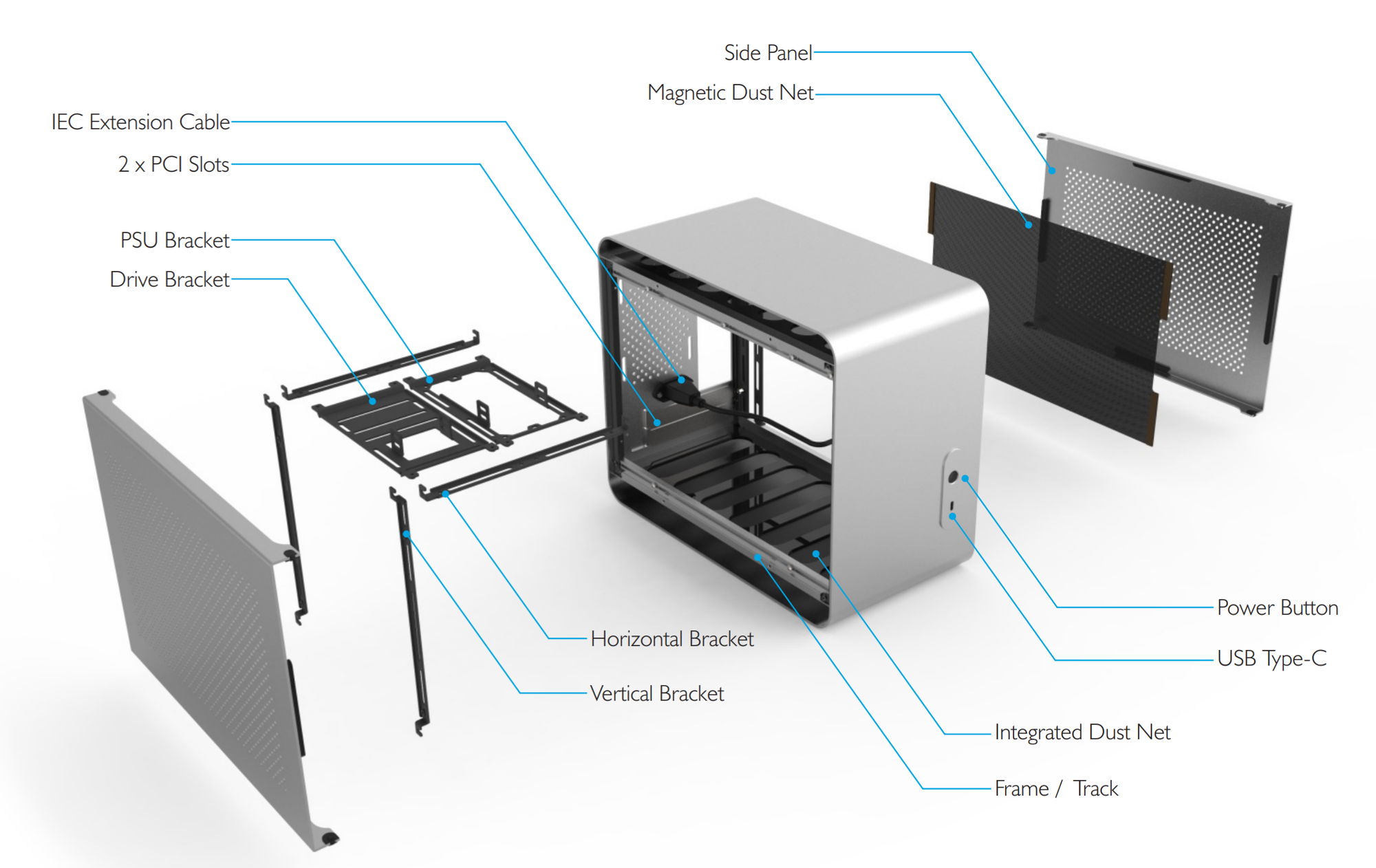
In contrast to the extreme minimalism of the Dan A4 SFX, the Streacom DA2, measuring 180mm × 286mm × 340mm, offers a more generous 17.5 liters of internal volume. This larger footprint, while still firmly within the SFF category, provides substantially more room for cooling solutions and greater flexibility in component choice. The DA2 distinguishes itself with a unique "hybrid open-air design" on its top and bottom panels, coupled with a highly versatile horizontal and vertical bracket system interior. This modular interior allows builders to customize the layout to suit specific components, such as larger CPU coolers, multiple fans, or even liquid cooling radiators. The DA2’s design philosophy prioritizes adaptability and thermal performance, making it a compelling option for those who want SFF but are unwilling to make significant compromises on cooling or component power.
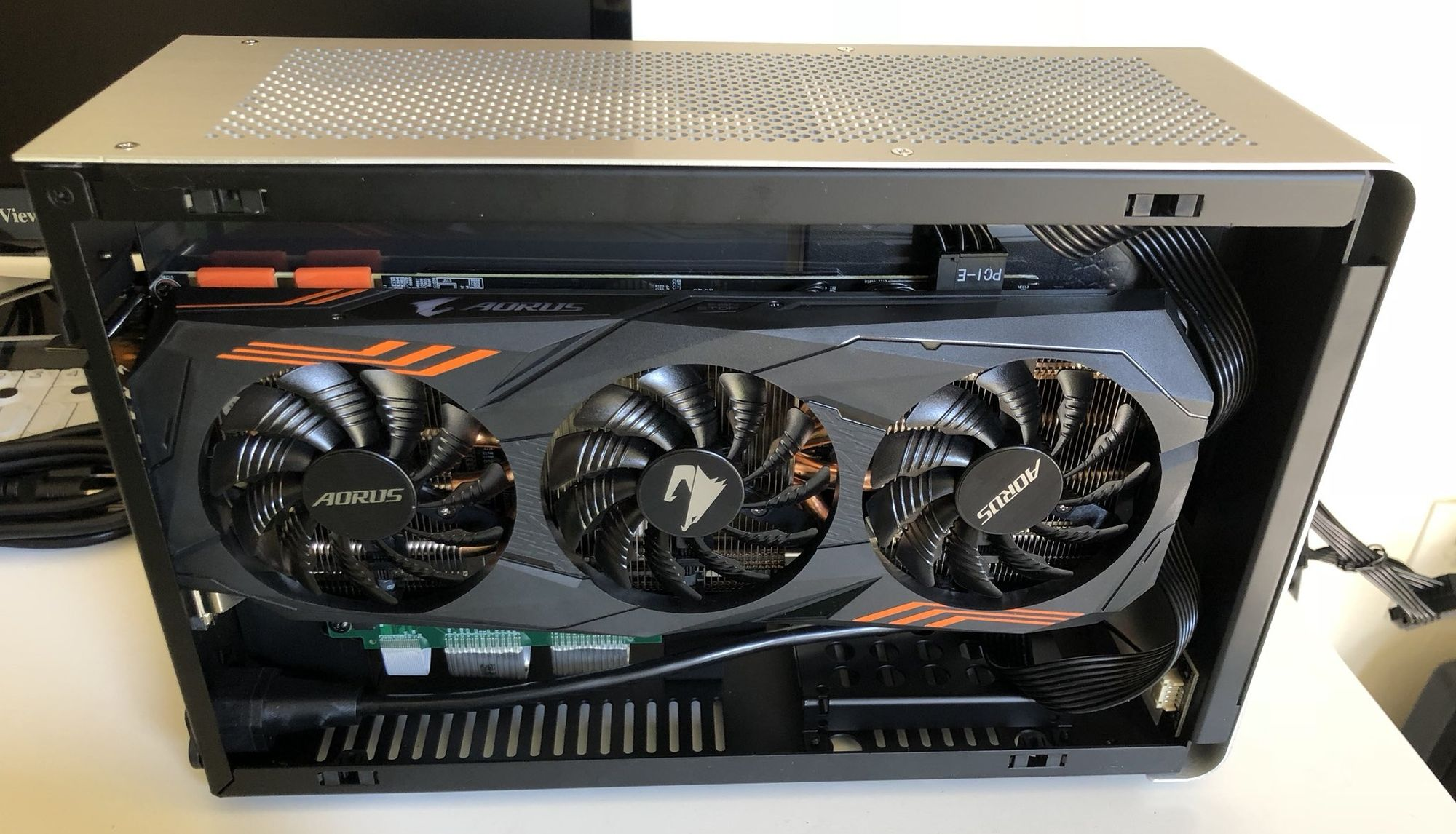
SFF PCs Against Consoles: A Performance-to-Volume Comparison
To put the compactness of these SFF PCs into perspective, Atwood draws a compelling comparison with current-generation gaming consoles. A PlayStation 4 Pro occupies approximately 5.3 liters, while an Xbox One S comes in at about 4.3 liters. When considering the 7.3-liter Dan A4 SFX or the 17.5-liter Streacom DA2, the volume difference is noteworthy but not astronomical.
What truly highlights the innovation in SFF PCs is the performance-to-volume ratio. As Atwood points out, achieving "considerably more than 2x the power" for only "about 50% more volume" (referring to the larger SFF cases compared to consoles) represents an exceptionally good deal for high-performance computing. While consoles are highly optimized, purpose-built machines, SFF PCs offer the unparalleled flexibility, upgradeability, and raw horsepower of a custom-built desktop in a form factor that rivals, or at least approaches, the sleekness of console designs. This comparison positions SFF PCs not just as niche enthusiast products, but as viable, high-performance alternatives for space-conscious users who demand the very best.
Jeff Atwood’s Personal Choice: The Streacom DA2 Deep Dive
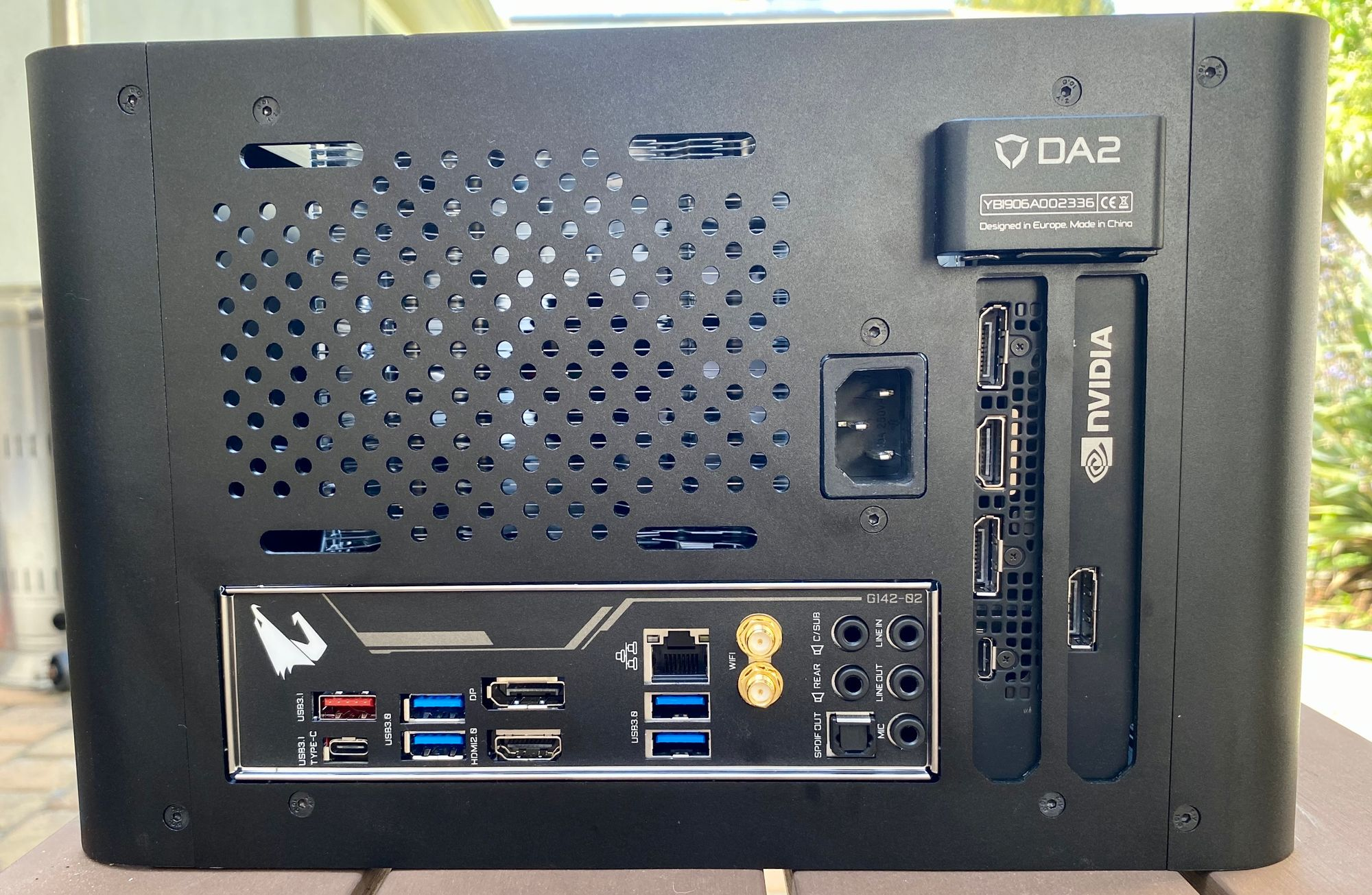
Jeff Atwood ultimately selected the Streacom DA2 for his personal build, a decision rooted in practical considerations for a truly powerful system. His extensive experimentation with the Dan A4 SFX led him to conclude that while incredibly compact, its ultra-minimalist design posed challenges when integrating "extremely powerful CPUs and GPUs" that require more robust cooling solutions. The DA2’s slightly larger volume and versatile internal architecture offered the necessary thermal headroom and flexibility without sacrificing the SFF aesthetic.
Component Integration and Performance Metrics
While specific component models for Atwood’s new build are not detailed, the article provides key performance indicators compared to his previous 2015-2017 system, which featured a "slightly overclocked i7-7700k." The new system boasts "2x the cores (and faster cores, both in clock rate and IPC), 2x the memory, and 2x the M.2 slots (two versus one)."
This implies a significant upgrade:
- CPU: Moving from an i7-7700k (4 cores, 8 threads) to "2x the cores" suggests a modern 8-core, 16-thread processor, likely from Intel’s latest Core i7/i9 series or AMD’s Ryzen 7/9 lineup. These contemporary CPUs offer substantial improvements in both raw clock speed and Instructions Per Cycle (IPC), leading to vastly superior multi-threaded performance essential for demanding applications and multitasking.
- Memory: Doubling the memory likely means a jump from 16GB to 32GB, or even 32GB to 64GB, utilizing faster DDR4 or DDR5 modules. This provides ample headroom for memory-intensive tasks, content creation, and future-proofing.
- Storage: The transition from one M.2 slot to two signifies enhanced storage flexibility, allowing for a primary boot drive and a secondary high-speed storage solution, both leveraging the NVMe protocol for blistering data transfer rates.
This configuration represents a substantial leap in computational capability, delivering a machine capable of handling intensive development work, high-resolution gaming, and complex data processing with ease, all within a compact enclosure.
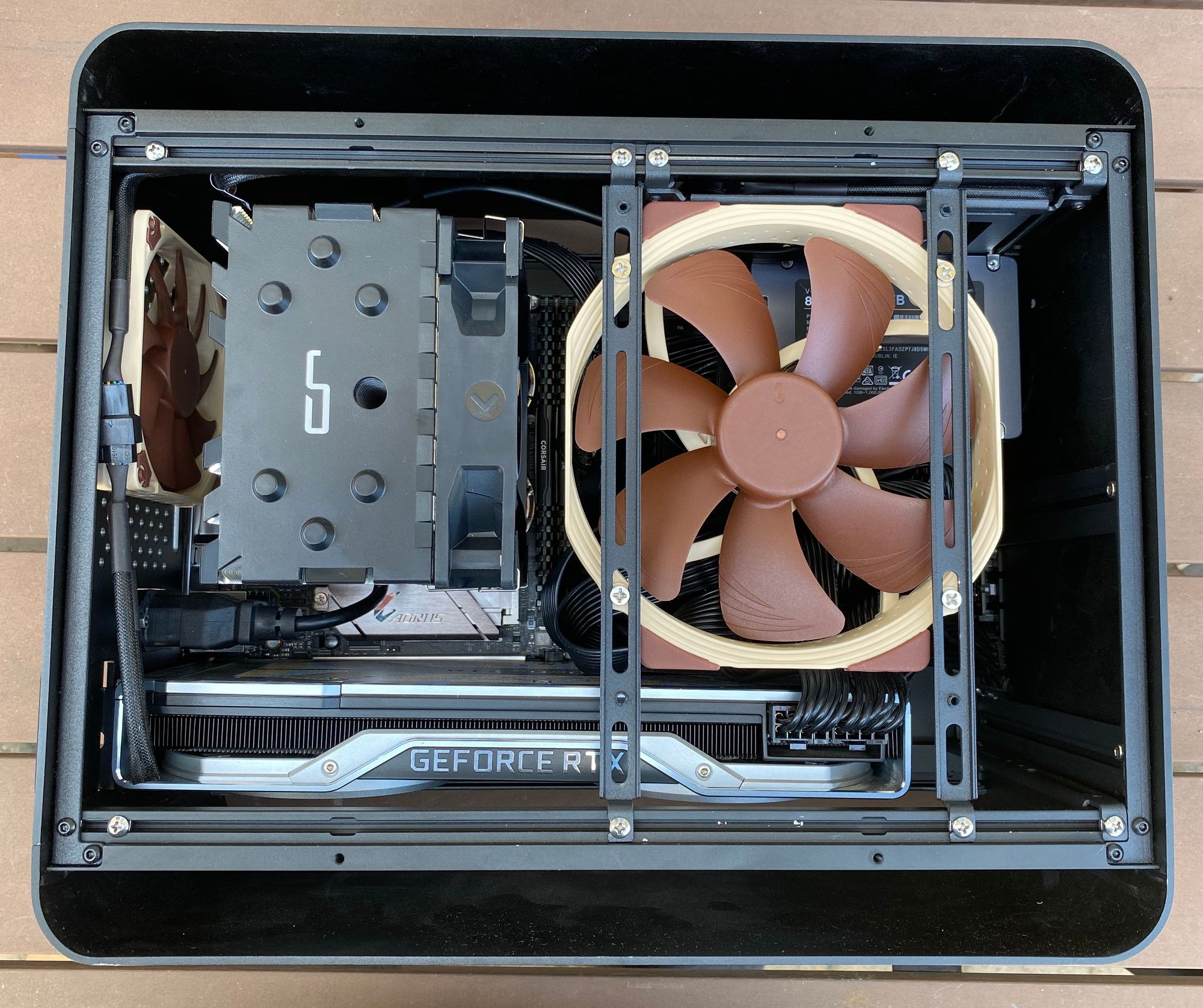
Optimizing Thermal Management in Compact Spaces
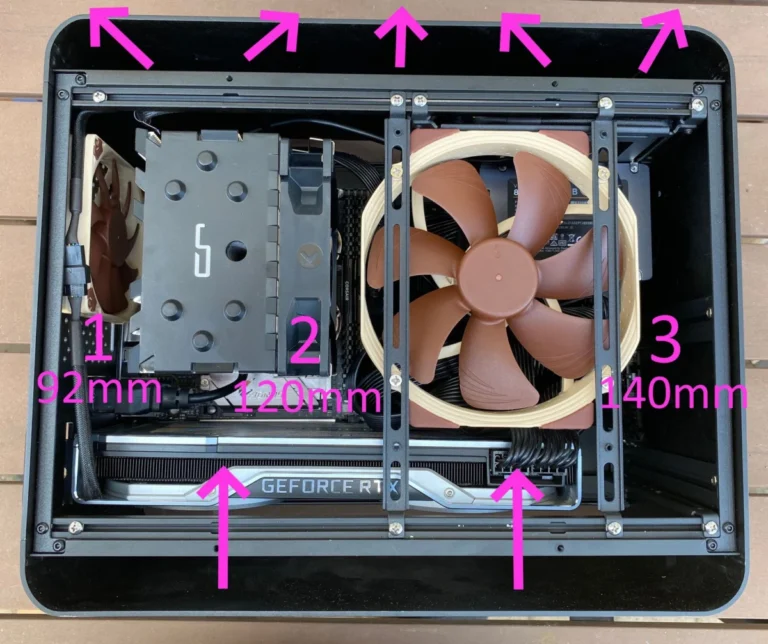
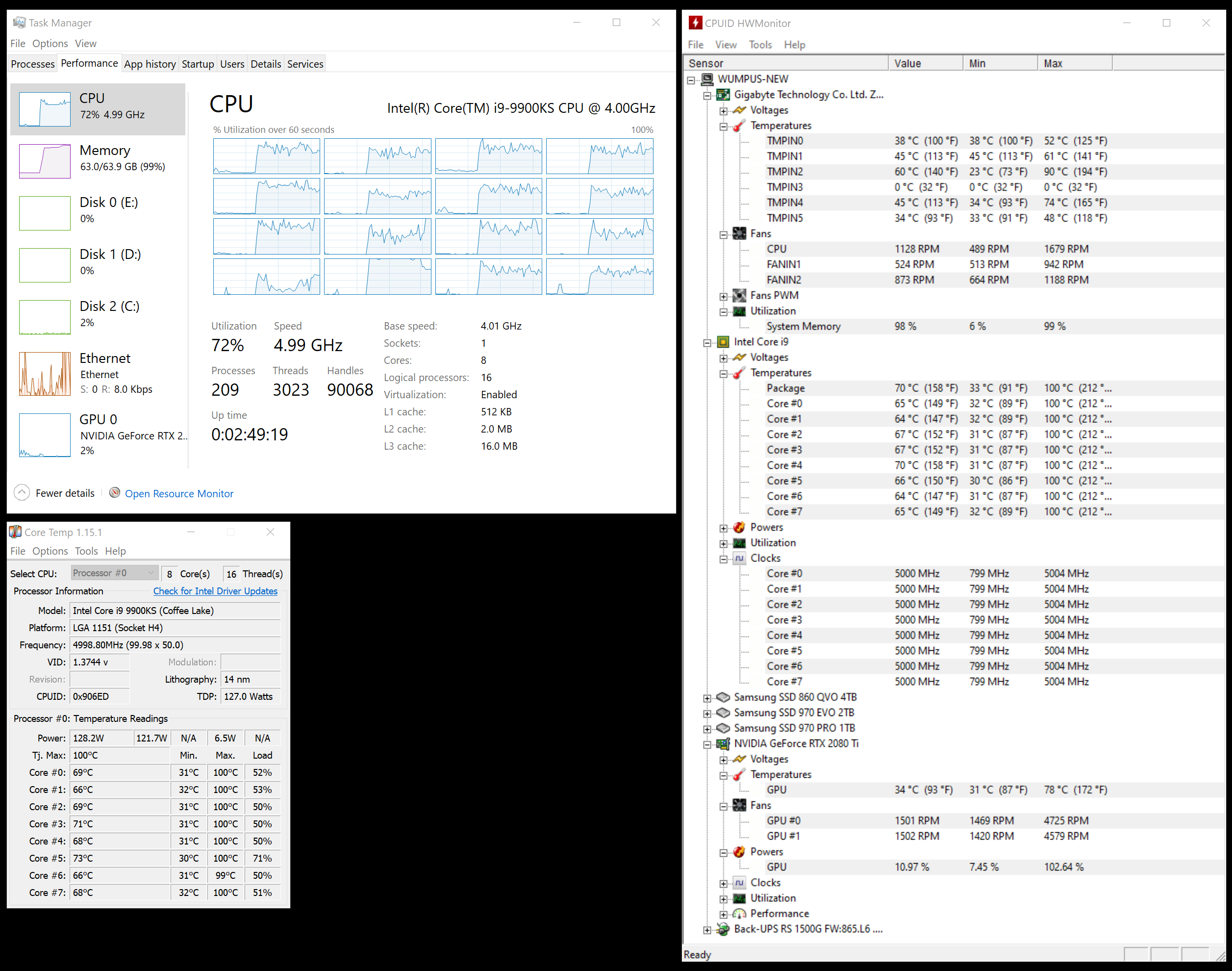
The critical challenge in SFF builds, particularly when housing high-performance components, is thermal management. Atwood highlights the DA2’s hybrid open-air design and flexible bracket system as key advantages. The case’s ability to "breathe" through the top and bottom, which are initially fitted with acrylic pieces and mesh dust nets, is crucial. Atwood explicitly recommends removing these acrylic pieces for "dramatically better temperatures" and easier assembly. This modification allows for unimpeded airflow, compensating for the solid front panel of the DA2.
His recommended configuration includes three fans:
- One 140mm fan at the bottom, configured for intake, drawing cool air directly into the system.
- Two 120mm fans at the top, configured for exhaust, expelling hot air out of the case.
This push-pull configuration creates an optimized vertical airflow path, efficiently moving heat away from critical components. Atwood also addresses the debate around water cooling. Despite the DA2’s capacity for a 140mm radiator, he states a clear preference for air cooling, citing negative experiences with liquid cooling leaks in the early 2000s. While air cooling has advanced considerably, his personal stance reflects a common sentiment among some enthusiasts who prioritize reliability and simplicity. He acknowledges, however, that for users expecting "full CPU and GPU loads for extended periods," water cooling or selecting "slightly less powerful components" might be necessary to maintain optimal temperatures within the confines of an SFF case. His rigorous "burn-in tested" approach, a standard practice for ensuring system stability under load, confirms the robustness of his air-cooled DA2 setup for his specific use cases.
Design and Usability: A Critical Assessment of the DA2
The Streacom DA2’s interior design is a testament to thoughtful engineering. Its "incredibly versatile" bracket mounting options, facilitated by a "captured nut and bolt design," allow for easy manipulation and customization of component placement. This flexibility is paramount in SFF builds where every millimeter counts, enabling builders to adapt the layout to various cooling solutions, power supply sizes, and storage configurations.
While Atwood praises the DA2’s versatility, he alludes to "a few criticisms." Common challenges in SFF cases, which could be inferred here, include:
- Cable Management: The compact nature inevitably leads to tight spaces for routing cables, which can impact airflow and aesthetics.
- Component Clearance: Despite its flexibility, there can still be limitations on the size of certain components, particularly large air coolers or lengthy graphics cards, requiring careful planning.
- Assembly Complexity: While the DA2’s design aims for ease of manipulation, SFF builds generally demand more patience and experience compared to building in larger cases.
- Noise Levels: Achieving optimal cooling in a small space often requires fans to spin at higher RPMs, potentially leading to increased noise compared to larger, more open systems.
These are typical trade-offs inherent in SFF design, and the DA2, while excelling in many areas, would naturally present some of these challenges to a builder striving for perfection.
The Future of PC Building: Innovation in Miniaturization
Atwood’s latest build serves as a powerful statement on the current trajectory of personal computing. He observes that "if you haven’t built a PC system recently, it’s easier than it has ever been." This simplification is largely due to advancements like the widespread adoption of M.2 drives, which eliminate bulky SATA cables, and increasingly modular and user-friendly component designs. Modern motherboards often come with pre-mounted I/O shields, and CPU coolers are designed for straightforward installation, streamlining the assembly process. The once daunting task of PC building has become more accessible, allowing a broader audience to engage with custom hardware.
The profound implication of Atwood’s experience, however, extends beyond ease of assembly. It highlights that the "primary innovation in PC building for 2020 and beyond" is no longer about simply making components faster, but about "packing all that power into less than 20 liters of space." This shift represents a mature industry optimizing for efficiency, form factor, and integration rather than raw, unrestrained performance growth that few users can fully utilize.
The market is increasingly seeing demand for compact yet powerful machines from professionals who require high computational power for tasks like video editing, 3D rendering, or software development, but who also value a tidy, space-efficient workstation. Similarly, gamers are gravitating towards SFF systems that can be discreetly placed in living rooms or transported to gaming events without compromise. The vibrant community surrounding SFF builds, constantly pushing the boundaries of what’s possible in compact designs, underscores this trend. Enthusiasts and manufacturers alike are collaborating to refine designs, develop specialized components, and share knowledge, fostering a culture of innovation centered on miniaturization.
Conclusion
Jeff Atwood’s latest PC build is more than just a personal hardware upgrade; it is a microcosm of the evolving landscape of personal computing. By embracing the Small Form Factor paradigm with his Streacom DA2 system, Atwood not only achieves a significant performance boost over his previous setup but also champions a trend that redefines the essence of a modern PC. His journey from a long-standing, traditional setup to a meticulously optimized SFF build underscores the industry’s pivot from sheer performance gains to intelligent integration, thermal efficiency, and aesthetic minimalism. The challenge of fitting "maximum power in minimum size" has become the new frontier of innovation, offering powerful, versatile, and elegant computing solutions that are both practical and aspirational. As the PC continues its evolution, the emphasis on compact, high-performance systems like Atwood’s DA2 suggests a future where powerful computing is no longer synonymous with bulky towers, but with sleek, efficient machines that seamlessly integrate into any environment.
About the Author