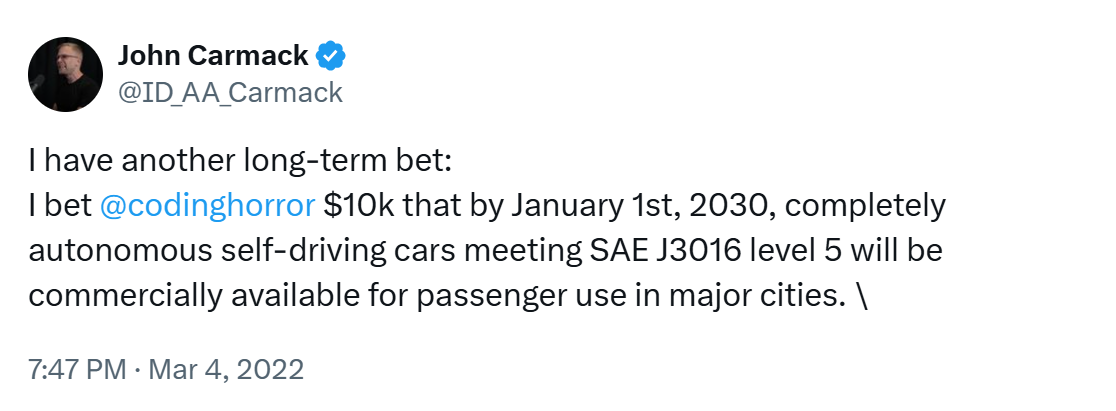
The technology world is abuzz with a high-stakes, friendly wager initiated by two of its most influential figures: Jeff Atwood, co-founder of Stack Overflow and author of Coding Horror, and John Carmack, legendary programmer behind Doom and Quake, and a pioneer in VR and AI. The bet, a substantial $10,000 destined for a 501(c)(3) charity of the winner’s choice, centers on a pivotal question for the future of transportation: Will completely autonomous, SAE J3016 Level 5 self-driving cars be commercially available for passenger use in major U.S. cities by January 1, 2030? Atwood is taking the skeptical position, betting against this ambitious timeline, while Carmack, known for his optimistic view on technological breakthroughs, is betting in favor. This public wager not only highlights a fascinating technological debate but also serves as a compelling real-world benchmark for the progress of artificial intelligence and robotics.
The Visionaries Behind the Wager: A Clash of Perspectives
The participants in this intellectual showdown bring formidable credentials and distinct perspectives to the table. Jeff Atwood is widely respected in the software development community for his candid insights into programming, user experience, and the practical challenges of building robust systems. Through his blog, Coding Horror, and his work on platforms like Stack Overflow and Discourse, Atwood has consistently advocated for pragmatic approaches to technology, often tempering grand visions with a dose of engineering reality. His skepticism regarding Level 5 autonomy by 2030 stems from a deep understanding of the immense complexity involved in software engineering, particularly when dealing with the unpredictable variables of the real world. He believes the industry is "underestimating how difficult fully autonomous driving really is," a sentiment echoed by many within the AI and robotics fields.
On the opposing side is John Carmack, a name synonymous with pushing the boundaries of computing. As a co-founder of id Software, his innovations in 3D graphics revolutionized video gaming. Later, as CTO of Oculus VR, he was instrumental in popularizing virtual reality, and his current work at Keen Technologies focuses on artificial general intelligence. Carmack’s career is marked by a relentless pursuit of cutting-edge solutions and a profound belief in the power of technology to overcome seemingly insurmountable challenges. His wager in favor of Level 5 autonomy by 2030 reflects an inherent optimism in the exponential progress of AI, machine learning, and computational power. For Carmack, difficult problems are simply problems waiting for the right innovation. The bet, as Atwood notes, was suggested by Carmack as "a fun way to generate STEM publicity," underscoring his commitment to inspiring technological advancement.
The convergence of these two brilliant minds on this particular topic underscores its significance. Their differing viewpoints represent a broader schism within the tech industry and public discourse regarding the timeline and feasibility of truly autonomous vehicles.
Defining the Stakes: What is SAE Level 5 Autonomy?
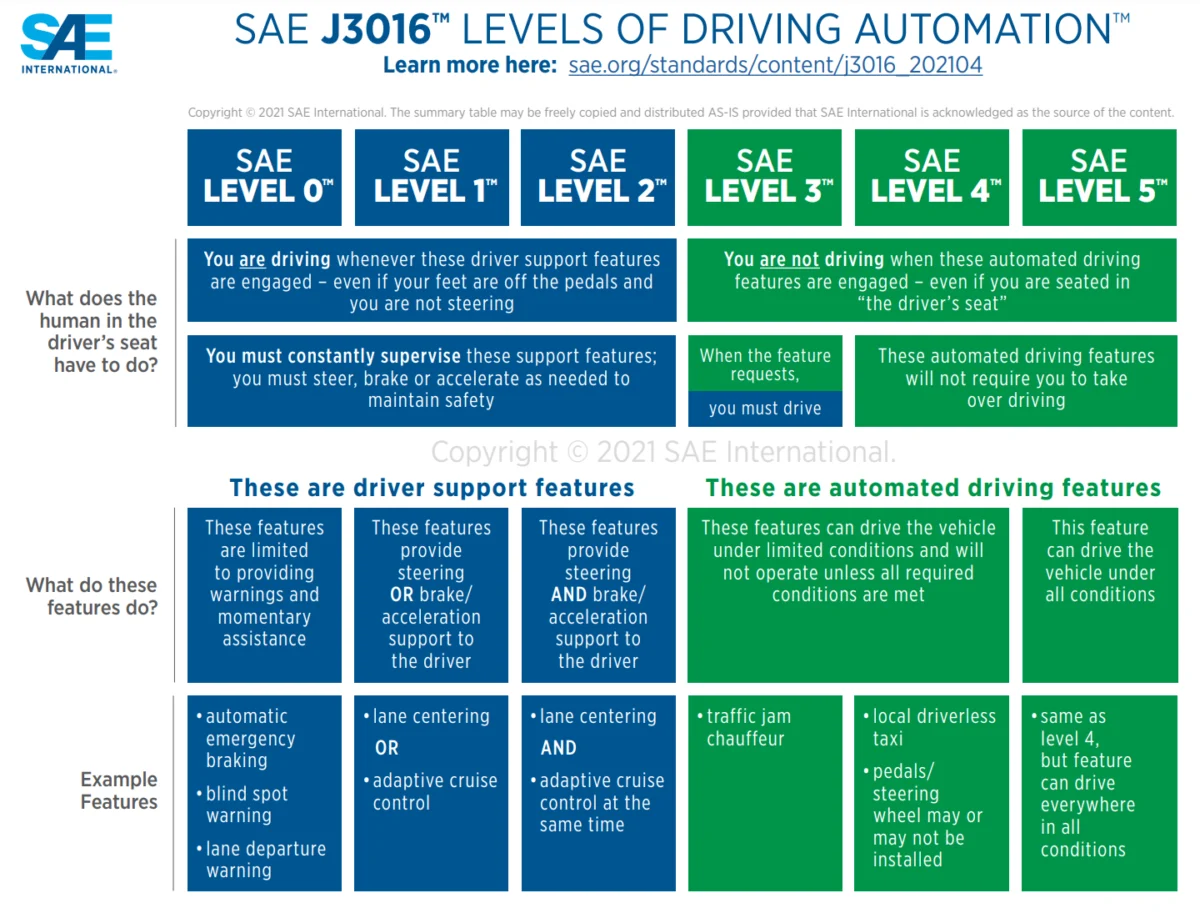
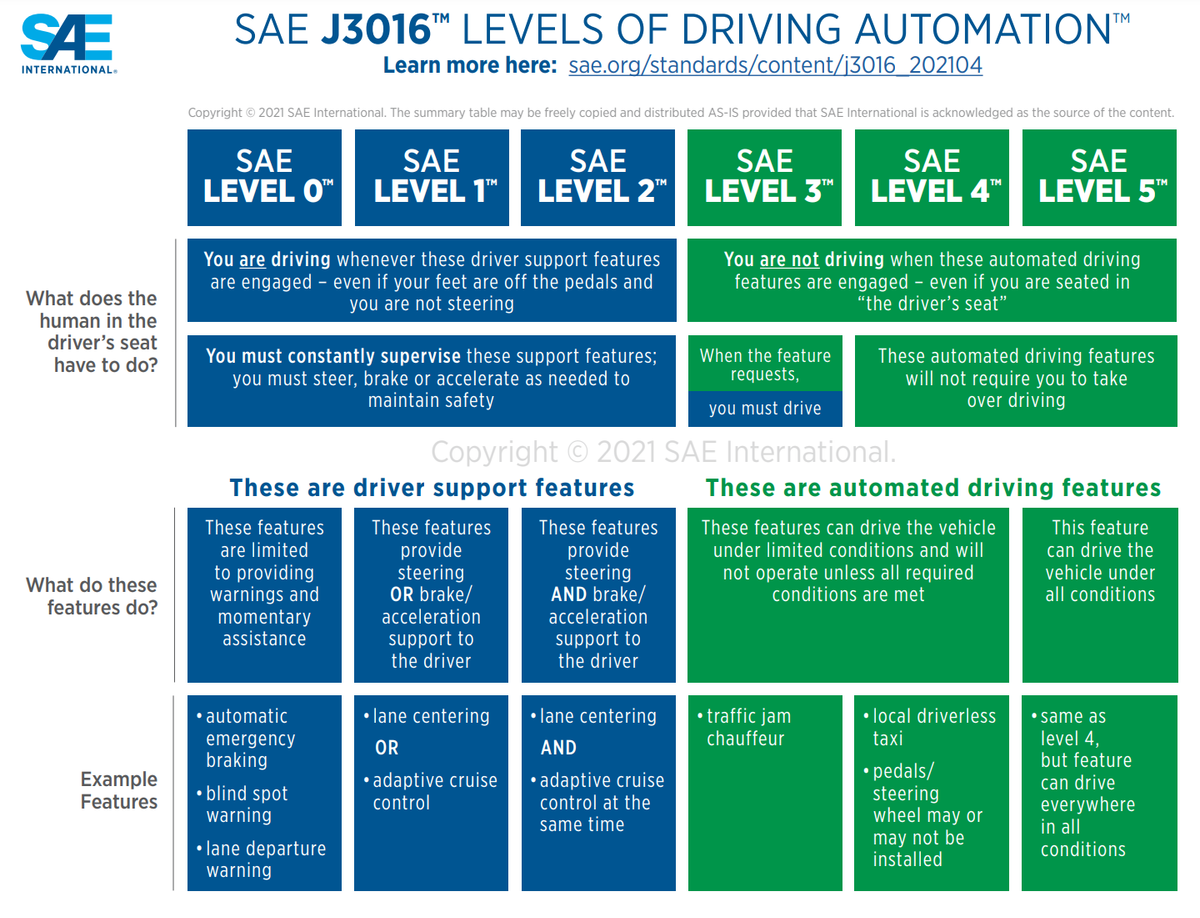
At the heart of the wager lies a precise technical definition: SAE J3016 Level 5 autonomy. To fully appreciate the magnitude of this bet, it’s crucial to understand what Level 5 entails, especially in contrast to the autonomous features currently available in consumer vehicles. The Society of Automotive Engineers (SAE) International standard J3016 defines six levels of driving automation, from Level 0 (no automation) to Level 5 (full automation).
- Level 0 (No Automation): The human driver does everything.
- Level 1 (Driver Assistance): Features like adaptive cruise control or lane keeping assistance. The human driver monitors the driving environment.
- Level 2 (Partial Automation): Combines multiple driver assistance features, like adaptive cruise control with lane centering. The human driver still supervises the system and must be ready to intervene. Examples include Tesla’s Autopilot and GM’s Super Cruise.
- Level 3 (Conditional Automation): The vehicle can perform all driving tasks under specific conditions, but the human driver must be prepared to take over when prompted. This is a critical psychological and technical challenge, as it requires drivers to remain attentive even when not actively driving.
- Level 4 (High Automation): The vehicle can perform all driving tasks and monitor the driving environment under specific conditions (e.g., geofenced areas, certain weather). If the system encounters a situation it cannot handle, it will safely pull over if the human driver doesn’t respond to a take-over request. Services like Waymo and Cruise operate at this level within defined operational design domains (ODDs).
- Level 5 (Full Automation): This is the ultimate goal: the vehicle performs all driving tasks under all conditions, equivalent to a human driver. It requires no human attention or interaction from start to finish, except in cases of natural disasters or emergencies that would also incapacitate a human driver. A passenger simply enters, selects a destination, and the car handles everything. There are no geofencing restrictions, no weather limitations (beyond what a human could drive in), and no need for steering wheels or pedals.
The bet specifically stipulates "commercially available for passenger use in major cities." By "major cities," the agreement refers to any of the top 10 most populous cities in the United States, which currently include New York City, Los Angeles, Chicago, Houston, Phoenix, Philadelphia, San Antonio, San Diego, Dallas, and Austin. Achieving Level 5 in even one of these dense, complex urban environments presents a monumental challenge, let alone making it commercially available across multiple.
The Current Landscape: Miles Logged, Mountains Remaining
Despite billions of dollars invested and millions of miles logged by autonomous test vehicles, the journey to Level 5 autonomy remains arduous. Companies like Waymo (Google’s self-driving unit) and Cruise (GM’s AV subsidiary) are leaders in the field, operating limited commercial services, primarily at Level 4, in select cities. Waymo, for instance, offers fully driverless rides in parts of Phoenix and San Francisco, while Cruise has operated similarly in San Francisco, Austin, and Dallas, though it faced significant operational challenges and temporary suspension in late 2023. These Level 4 systems are remarkable achievements, but they function within tightly defined operational design domains (ODDs) – specific geofenced areas, certain weather conditions, and often only during particular times of day. They are not Level 5.
Tesla, a high-profile player, employs a different strategy, focusing on camera-only systems and iterative updates to its "Full Self-Driving" (FSD) beta software. While impressive in its capabilities, FSD is currently considered a Level 2 system, requiring active driver supervision and intervention. Its name, in fact, has been a source of debate regarding its actual autonomy level.

The chasm between Level 4 (even a very advanced one) and Level 5 is vast. Level 4 systems still rely on predefined maps, extensive data on specific routes, and often struggle with "edge cases" – the infinitely varied, rare, and unpredictable scenarios that a human driver effortlessly navigates. These include unusual road construction, impromptu detours, complex interactions with pedestrians and cyclists, unexpected animal crossings, and extreme weather conditions like heavy snow or torrential rain that obscure sensors and road markings.
The Hurdles: Why Level 5 is So Difficult
Jeff Atwood’s skepticism is rooted in several critical technical and logistical challenges:
- The "Long Tail" of Edge Cases: While autonomous vehicles can handle common driving scenarios with increasing proficiency, the sheer number of unpredictable situations (the "long tail" of events) is astronomical. Programming for every conceivable scenario, or training an AI to reliably handle them, is an engineering Everest. This includes everything from a mattress falling off a truck to a child chasing a ball into the street, or nuanced human communication via gestures and eye contact.
- Sensor Limitations: Current sensor suites (Lidar, radar, cameras, ultrasonics) each have strengths and weaknesses. Lidar can be affected by heavy fog or snow, cameras by glare or darkness, radar by false positives from heavy rain. Robust Level 5 requires flawless perception in all conditions, demanding unprecedented sensor fusion and redundancy.
- Adverse Weather: Snow, ice, heavy rain, dense fog, and even bright sunlight can severely impair sensor performance and obscure lane markings or traffic signs, making reliable navigation exceptionally difficult.
- Human Behavior Prediction: Humans are notoriously unpredictable. Autonomous systems must not only observe but also predict the intentions and actions of other drivers, pedestrians, and cyclists, often with incomplete information and in fractions of a second. This requires sophisticated AI that goes beyond pattern recognition to true contextual understanding.
- Regulatory and Legal Frameworks: There is no standardized federal framework for Level 5 autonomous vehicles in the U.S., let alone globally. Each state currently has its own patchwork of regulations. For Level 5 vehicles to be "commercially available for passenger use" across major cities, a clear, unified, and universally accepted regulatory and liability framework is essential. Who is liable in a crash? How are these vehicles certified as safe for unsupervised operation?
- Public Acceptance and Trust: High-profile accidents involving autonomous test vehicles, even if rare, can significantly erode public trust. Widespread adoption of Level 5 vehicles will require not just technological capability but also a high degree of public confidence in their safety and reliability.
- Cost and Scalability: Developing Level 5 technology is incredibly expensive. Making it commercially viable and scalable for mass passenger use in multiple major cities by 2030 would require manufacturing at scale, robust maintenance infrastructure, and an economic model that makes it accessible.
A Historical Perspective on Overly Optimistic Predictions
The history of technology is replete with predictions that proved overly optimistic, especially concerning timelines for complex AI systems. From early promises of sentient AI to widespread domestic robots, the "five-year horizon" for revolutionary tech often stretches into decades. Self-driving cars themselves have been "just around the corner" for years, with various tech leaders and automotive executives making confident predictions for Level 4 or 5 by dates like 2020 or 2022. These past misses lend credence to Atwood’s cautious stance, highlighting the gap between theoretical potential and real-world implementation.
Atwood’s broader skepticism extends to other emerging technologies, notably Virtual Reality (VR), which he believes will not "change the world" in our lifetimes, advocating instead for the more immediate potential of Augmented Reality (AR) and projection. This consistent analytical lens suggests his Level 5 bet is not born of a general anti-technology stance, but rather a pragmatic assessment of specific engineering challenges.
The Broader Implications of the Bet
Beyond the $10,000 charitable donation, the Atwood-Carmack wager carries significant implications for the tech industry, public discourse, and the future of transportation:
- Public Awareness and Education: The bet brings heightened attention to the precise definition of autonomous driving levels, helping to clarify misconceptions often fueled by marketing hype. It educates the public on the monumental challenges still facing the industry.
- Industry Benchmark: It serves as a public, high-profile benchmark for the progress of autonomous vehicle technology. Whether Level 5 is achieved or not, the industry will undoubtedly reflect on this timeline.
- Investment and Research Focus: The pressure to achieve Level 5, or at least make significant strides towards it, could further stimulate investment and direct research efforts towards solving the remaining intractable problems.
- Societal Transformation (If Achieved): If Level 5 truly becomes commercially available, the societal impact would be profound. It could revolutionize urban planning, reduce traffic accidents (currently claiming over 40,000 lives annually in the U.S.), reshape logistics and delivery services, and free up countless hours currently spent driving. It would also raise new ethical dilemmas (e.g., algorithmic decision-making in unavoidable accident scenarios) and have significant economic consequences, particularly for professions dependent on human driving.
- The Power of AI: The outcome will be a testament to the current capabilities and future potential of artificial intelligence. Can AI truly master the chaos and nuance of human-centric environments within the next six years?
The Road to 2030: A Challenging Ascent
For Level 5 autonomy to be commercially available in major U.S. cities by January 1, 2030, several major breakthroughs and widespread adoptions would need to occur:
- Generalizable AI: Autonomous systems would need to move beyond highly specialized, data-driven learning to more generalizable AI that can reason, adapt, and learn from novel situations without explicit pre-programming.
- Unflappable Perception: Sensor technology would need to achieve near-perfect perception under all environmental conditions, overcoming challenges like blinding sun, heavy rain, and snow.
- Seamless Integration: The integration of hardware and software would need to reach an unprecedented level of robustness, redundancy, and reliability.
- Standardized Regulation: A harmonized federal regulatory framework for the deployment and certification of Level 5 vehicles would be crucial, allowing companies to scale across states.
- Overwhelming Public Trust: Extensive safety data and consistent, flawless performance would be necessary to earn the broad public trust required for mass adoption.
- Economic Viability: The cost of Level 5 technology would need to decrease significantly to make commercial deployment widespread and accessible.
The bet between Jeff Atwood and John Carmack is more than just a friendly wager; it’s a microcosm of the larger debate surrounding the pace and feasibility of technological progress. It encapsulates the tension between optimistic innovation and pragmatic engineering challenges. As the deadline of January 1, 2030, approaches, the world will be watching to see whether the vision of truly driverless mobility becomes a commercial reality, or if the complexities of the real world prove a more formidable opponent than even the most brilliant minds anticipated. Regardless of the outcome, the discussion it sparks will undoubtedly push the boundaries of what is possible in artificial intelligence and autonomous systems, challenging engineers and innovators worldwide to rise to the occasion.
About the Author