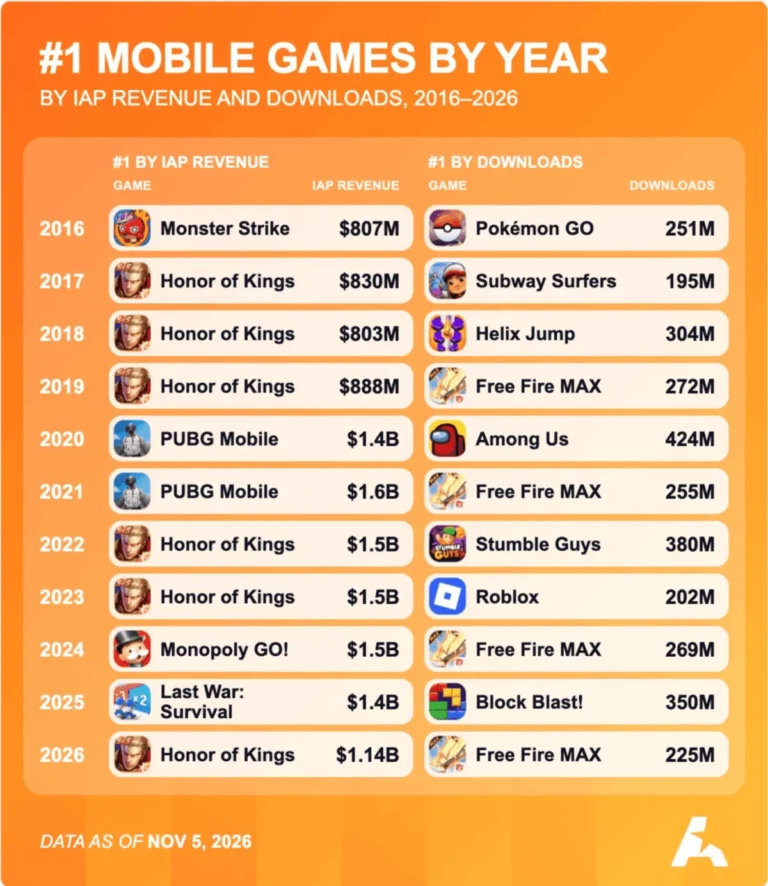
The mobile gaming industry, currently representing over 50% of the total global games market revenue, is undergoing a period of intense strategic recalibration as major publishers pivot toward long-term retention and diversified gameplay mechanics. In an environment characterized by rising user acquisition costs and shifting player preferences, the practice of "soft launching"—releasing a game in specific territories to test performance metrics—has become more critical than ever. This comprehensive report examines the current testing pipeline of the world’s most influential mobile developers, ranging from Blizzard and Electronic Arts to Supercell and Tencent, detailing the specific titles currently in development and the broader industry trends they represent.

The Strategic Importance of the Soft Launch Phase
A soft launch serves as a live-environment laboratory where developers can monitor Key Performance Indicators (KPIs) such as Day-1 to Day-30 retention, Average Revenue Per User (ARPU), and technical stability across various hardware configurations. Traditionally, regions such as Southeast Asia (specifically the Philippines, Malaysia, and Indonesia), the Nordic countries, and Canada are chosen due to their representative player demographics and lower cost-per-install (CPI) compared to the United States or Western Europe.

The current crop of games in testing reveals a significant industry-wide shift toward three primary areas: the refinement of "merge" mechanics, the expansion of established console and PC intellectual properties (IP) into the mobile space, and the integration of artificial intelligence (AI) in user-generated content (UGC).

Blizzard and Electronic Arts: Leveraging Global IP
Blizzard Entertainment has recently expanded its mobile footprint with Overwatch Rush, a hero shooter specifically designed for mobile interfaces. Currently in soft launch across the Philippines, Malaysia, and Indonesia, the title represents Blizzard’s attempt to capture the high-intensity competitive market dominated by titles like PUBG Mobile and Free Fire. Analysts suggest that Blizzard is prioritizing Southeast Asia to gauge the game’s performance in high-latency environments and on mid-range Android devices, which are prevalent in these territories.

Simultaneously, Electronic Arts (EA), through its subsidiary PopCap, is advancing toward the global release of Plants vs. Zombies 3: Evolved. The title has undergone significant internal restructuring, with Title Update 1.0.5 focusing on a complete overhaul of the player tutorial and reward balancing. Currently available on iOS and Android in the United Kingdom, Philippines, and Indonesia, the game utilizes merge-based mechanics—a departure from the classic tower defense roots of the franchise—reflecting a broader trend of "genre-blending" to appeal to casual audiences.

The Rise of Merge Mechanics: Century Games and Moon Active
The "Merge" genre has become a cornerstone of the casual mobile market. Century Games, the developer behind the high-grossing Whiteout Survival, is currently testing three distinct titles: Family Tales: Merge & Design, Frozen Manor: Merge Mystery, and Sizzleton: Merge & Cook. These games are being tested across disparate markets, including Australia, Malaysia, and various European territories. By testing three variations of the merge mechanic—focused on design, mystery, and cooking respectively—Century Games is likely employing a "fast-fail" strategy to determine which thematic wrapper resonates most effectively with modern audiences before committing to a global marketing spend.

Moon Active, the creator of the multi-billion-dollar hit Coin Master, is following a similar trajectory. Their project Dream Bay is a renovation-themed merge game currently live on Google Play in over ten European markets, including the UK, France, and Spain. Additionally, the company is testing Reef Busters and Splash Kingdom: Tower Blast, indicating a concerted effort to diversify their portfolio beyond the "social casino" mechanics that defined their early success.

Supercell: The Evolution of the "Kill Culture"
Supercell, a developer famous for its "kill culture"—where games are canceled if they do not show potential to become top-ten global hits—is currently managing two high-profile projects: Mo.co and Project Rise. Mo.co, a monster-hunting RPG, has returned to a beta state following an invite-only phase in 2025. The development team has been candid regarding the game’s performance, stating that it requires "big changes to achieve mass appeal." In a rare move for the Finnish developer, they have confirmed the game will remain in a "low maintenance" testing mode rather than being canceled outright, suggesting a new willingness to iterate over longer periods.

Project Rise, formerly known as Clash Heroes, represents an action-RPG spin-off of the Clash of Clans universe. After being rebooted and renamed in 2024, the title recently concluded a significant beta test in September. The game is a key pillar in Supercell’s strategy to expand the Clash IP into new genres, moving beyond strategy and into real-time cooperative combat.

Meta and the AI-Powered UGC Frontier
One of the most notable entries in the current testing landscape is Pocket, an AI-powered minigame platform from Meta. Unlike traditional games, Pocket functions as a TikTok-like feed of "gizmos"—brief interactive experiences created by users via AI prompts using text, photos, and sound. After an initial soft launch in Brazil, the app has recently rolled out to players in the United States.

The launch of Pocket signals Meta’s intent to compete in the burgeoning "instant gaming" and UGC space, currently led by Roblox and Fortnite. By removing the barrier of coding and allowing AI to generate game logic, Meta is positioning itself at the intersection of social media and interactive entertainment.

Take-Two and Zynga: A Multi-Pronged Approach
Following its acquisition by Take-Two Interactive, Zynga has utilized its various sub-studios to test a wide array of genres. NaturalMotion is currently handling the development of CSR 3, the next iteration of the popular drag-racing series, with active testing in Italy, Malaysia, and Indonesia. More interestingly, the studio briefly tested a Borderlands Mobile title in the US before removing it from sale, indicating a highly secretive or early-stage evaluation of the looter-shooter IP for mobile audiences.

Rollic, a Zynga-owned studio specializing in hypercasual and hybrid-casual titles, is testing UFC Manager, Paws Out, and Farm Rush Fever. The UFC Manager title is particularly significant, as it represents a shift toward licensed sports management, leveraging the global brand of the Ultimate Fighting Championship to attract a core demographic that traditionally avoids casual puzzle games.

Chronology and Market Implications
The timeline for these titles varies significantly. While games like Hill Climb Racing 3 (Fingersoft) and Ludo Go (Easybrain) are in advanced stages of soft launch with nearly a million downloads, others like Hoyoverse’s Honkai: Nexus Anima are looking at much longer development cycles. Hoyoverse has announced a final closed beta for Nexus Anima in November 2025, with a projected global launch in the spring of 2027. This five-year development cycle, once reserved for AAA console titles, is becoming the new standard for high-fidelity mobile RPGs.

The broader implications of this testing data suggest a market that is both saturated and highly competitive. Publishers are no longer satisfied with simple clones; they are seeking "hybrid-casual" models that combine the accessibility of puzzle games with the deep monetization and retention hooks of mid-core RPGs.

Regional Analysis: Why the Philippines and Malaysia?
The prevalence of the Philippines and Malaysia in these soft launch lists is not accidental. These markets offer:

- English Proficiency: High levels of English literacy allow developers to test localized versions of games without the immediate need for multi-language support.
- Device Diversity: These regions have a broad spectrum of hardware, from low-end budget phones to high-end flagship devices, providing essential data on technical optimization.
- Monetization Behavior: Players in these regions have shown a growing willingness to engage with In-App Purchases (IAP) and rewarded video ads, providing a microcosm of global consumer behavior.
Conclusion: The Future of the Mobile Ecosystem
The current state of mobile game testing reflects an industry in transition. The move away from "stealth" launches toward more transparent, community-focused betas—as seen with Supercell’s Mo.co—indicates that developers are prioritizing player feedback earlier in the cycle. Furthermore, the entry of major tech players like Meta into the gaming space via AI tools suggests that the definition of a "mobile game" is expanding to include modular, social-first experiences.

As these titles move through the soft launch pipeline, the data gathered will determine the global gaming trends of 2026 and 2027. For players, this period represents an era of unprecedented variety; for developers, it is a high-stakes race to find the next "forever game" in an increasingly crowded digital storefront.
About the Author