The extended reality (XR) industry, encompassing virtual, augmented, and mixed reality, is currently facing a period of critical introspection as long-term stakeholders observe a phenomenon described as the "Groundhog Day" effect. This sentiment, prevalent among developers and industry veterans who have been active since the early 2010s, suggests that despite significant hardware advancements, the sector frequently cycles through the same use cases, marketing narratives, and technological hurdles without achieving the definitive mainstream breakthrough long predicted by analysts. While the technology has matured from experimental prototypes to consumer-grade devices, the underlying discourse regarding its utility and adoption remains strikingly similar to that of a decade ago.
The Evolution of XR Use Cases and Market Fatigue
In the early stages of the modern VR renaissance, circa 2014 to 2016, the industry was characterized by high-velocity experimentation. Small-scale success stories, such as marginal productivity gains in niche industrial training programs, were hailed as definitive proof of the technology’s imminent dominance. However, as the industry enters its second decade of the "modern era," a sense of "use case fatigue" has emerged. Enterprise training, once the vanguard of VR utility, is now viewed as a standardized, if not repetitive, application.

Industry observers note that while virtual training has proven effective for high-risk or high-cost environments, the narrative surrounding its implementation has stagnated. The market is saturated with reports of "VR training success," yet these milestones often fail to excite the broader investment community or the general public in the way they did during the initial hype cycle. This stagnation is further exacerbated by the "stereoscope paradox"—the historical observation that many "novel" VR concepts were actually explored in rudimentary forms as early as the late 19th and mid-20th centuries, suggesting a cyclical rather than linear path of innovation.
Chronology of the XR Hype Cycle
To understand the current state of stagnation, it is essential to review the timeline of the industry’s development over the last twelve years:
- 2012–2014: The Renaissance. The Oculus Rift Kickstarter and subsequent $2 billion acquisition by Facebook (now Meta) ignited global interest.
- 2016: The Year of VR. The launch of the consumer-grade Oculus Rift, HTC Vive, and PlayStation VR created an expectation of immediate mainstream adoption.
- 2019: The Standalone Shift. The release of the Oculus Quest shifted the focus from PC-tethered high-end experiences to accessible, all-in-one hardware.
- 2021: The Metaverse Pivot. Facebook’s rebranding to Meta redirected industry focus toward persistent social virtual worlds, leading to a massive surge in land-grab investments that later cooled.
- 2023–2024: The Spatial Computing Era. Apple’s entry with the Vision Pro introduced the term "spatial computing," prompting a shift in hardware design toward high-fidelity pass-through and gesture-based interaction.
Despite these milestones, the core debate remains focused on the same variables: price, comfort, and the "killer app."

Content Saturation and the Replication of Genres
The software landscape within the XR ecosystem has faced similar criticisms regarding a lack of originality. After the initial wave of "tech demos," the market saw a proliferation of specific genres, such as rhythm games, wave shooters, and puzzle-based escape rooms. More recently, the industry has been flooded with "roguelike" mechanics and physics-based social simulators.
A notable trend in the consumer market, particularly on platforms like the Meta Quest Store, is the rise of "simian-style" locomotion games and animal-themed simulators aimed at younger demographics. While these titles often achieve viral success, they are frequently criticized for replicating existing mechanics rather than pushing the boundaries of the medium.
Conversely, when original or high-execution content does emerge, the commercial outcomes have been inconsistent. For example, the closure of prominent studios like Ready at Dawn—developers of the critically acclaimed Echo Arena and Lone Echo—despite their technical achievements, has sent a chilling message to the development community. This creates a "safe-bet" culture where developers favor proven, repetitive genres over risky, innovative concepts.

Vitillo’s Law and the "Five to Ten Year" Prediction
One of the most persistent tropes in the XR industry is the moving target of mainstream adoption. Industry veterans have identified what is colloquially known as "Vitillo’s Law of Technology," which posits that any truly transformative XR milestone is perpetually "five to ten years away."
This time frame is strategically significant in corporate and academic communication. It is long enough to allow for the significant R&D required to solve complex optical and haptic challenges, yet short enough to maintain the interest of venture capitalists and early adopters. However, as this cycle repeats, the credibility of such predictions wanes. The industry has frequently sought an "iPhone moment"—a singular product launch that fundamentally alters human-computer interaction—only to find that adoption is a slow, incremental grind rather than a sudden revolution.
Hardware Mimicry and the "Vision Pro" Pivot
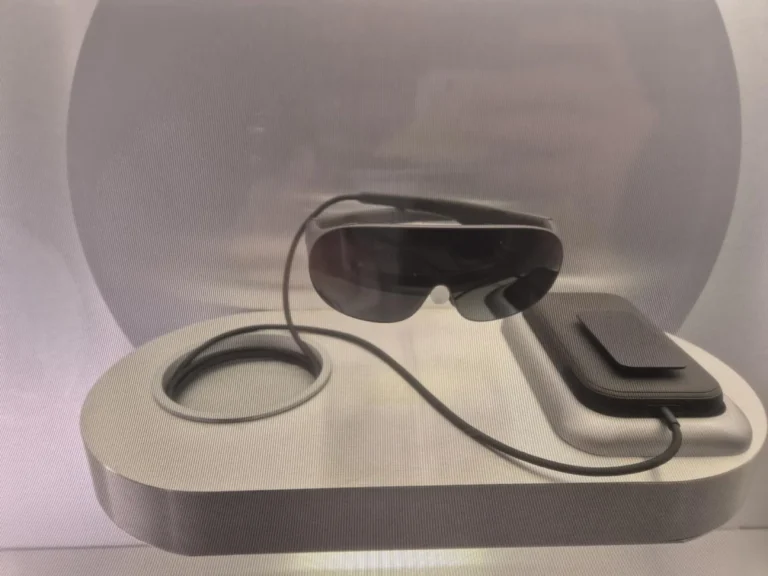
The hardware sector has recently entered a new phase of duplication. Following the success of the Meta Quest, the market was inundated with "Quest clones"—standalone headsets featuring similar form factors and tracking capabilities. With the launch of the Apple Vision Pro, the industry is currently pivoting toward "Vision Pro clones."

This shift is characterized by:
- Interaction Standards: A transition from physical controllers to "gaze and pinch" (eye and hand tracking) interfaces.
- Pass-through Priority: A focus on high-resolution Mixed Reality (MR) over isolated Virtual Reality (VR).
- Pricing Strategy: A trend toward high-cost "Pro" devices that target enterprise users or enthusiasts, often pricing out the average consumer.
This mimicry suggests a lack of divergent thinking in hardware design, as manufacturers converge on a singular "correct" way to build a spatial computer, potentially stifling alternative approaches to immersion.
Broader Implications and the Role of Generative AI
The emergence of Generative AI presents a dual-edged sword for the XR industry. On one hand, AI tools can drastically reduce the cost of creating 3D assets and environments, potentially lowering the barrier to entry for innovative indie developers. On the other hand, there is a significant risk that AI will accelerate the "Groundhog Day" effect. Because Large Language Models (LLMs) and generative tools are trained on existing data, they are prone to outputting "low-effort" content that parrots existing ideas, leading to a further homogenization of articles, tutorials, and game designs.

Technological Breakthroughs as a Path Forward
Despite the prevailing sense of repetition, genuine innovation continues to occur in the periphery of the mainstream market. One such area is the development of Galvanic Vestibular Stimulation (GVS). By using small electrical currents to stimulate the inner ear, researchers have demonstrated the ability to virtually eliminate motion sickness—a physiological barrier that has plagued VR since its inception.
Technologies like GVS, along with advancements in neural interfaces and haptic feedback, represent the "new" frontier that many veterans believe is necessary to break the cycle of stagnation. For the industry to move beyond its current plateau, it must prioritize these fundamental technological breakthroughs over the mere refinement of existing hardware.
In conclusion, the XR industry stands at a crossroads. While the "Groundhog Day" effect is a byproduct of a maturing market and the inherent difficulty of the medium, it serves as a warning against complacency. For XR to move from a niche enthusiast tool to a ubiquitous computing platform, the industry must move past the repetitive narratives of the last decade and focus on delivering experiences that are not just "the same but different," but fundamentally transformative.
About the Author