The relentless march of artificial intelligence (AI) has ushered in an era of unprecedented technological advancement, fundamentally reshaping how businesses operate and individuals interact with digital tools. In 2023, a select group of AI-powered applications stands at the forefront of this transformation, offering sophisticated solutions to automate complex tasks, streamline workflows, and unlock new levels of productivity and creativity across diverse industries. This comprehensive analysis delves into the ten most impactful AI tools that are not only making our lives easier but are also driving significant innovation, from enhancing communication and content creation to optimizing code and digital marketing strategies.
The current landscape of AI development is characterized by rapid iteration and increasing accessibility. What was once the domain of specialized research labs is now readily available through user-friendly interfaces, empowering a broader spectrum of users to leverage the power of intelligent automation. These tools represent a significant leap forward, moving beyond simple automation to encompass advanced capabilities like natural language understanding, creative content generation, and intelligent data analysis. The implications for businesses range from cost savings and increased efficiency to the development of entirely new products and services.
Pioneering Natural Language Processing: ChatGPT and Grammarly
At the vanguard of AI’s impact on communication are advanced language models. ChatGPT, developed by OpenAI, has emerged as a dominant force in natural language processing (NLP). Its ability to generate human-like text in response to a vast array of prompts makes it an invaluable asset for tasks ranging from drafting emails and reports to creative writing and complex problem-solving. The underlying GPT-3.5 architecture, and its subsequent iterations, has been trained on an enormous corpus of text data, allowing it to grasp nuances in language, context, and tone with remarkable accuracy.
- Background Context: The development of large language models like ChatGPT is the culmination of decades of research in AI and NLP. The transformer architecture, a key innovation, revolutionized how sequential data, like text, could be processed, leading to significant improvements in understanding and generation capabilities.
- Supporting Data: Reports indicate that ChatGPT has seen an exponential rise in user adoption since its public release, with millions of daily active users. Its widespread integration into various platforms and workflows underscores its utility.
- Analysis of Implications: ChatGPT’s ability to democratize content creation and information retrieval has profound implications. It can lower the barrier to entry for individuals and small businesses needing to produce professional-quality written content, while also serving as a powerful research and brainstorming tool for experts. However, concerns regarding potential misuse, the spread of misinformation, and the ethical considerations of AI-generated content remain critical areas for ongoing discussion and regulation.
Complementing ChatGPT’s generative power is Grammarly, an AI-driven writing assistant that goes far beyond basic spell-checking. Grammarly employs sophisticated algorithms to analyze text for grammatical errors, punctuation mistakes, and stylistic inconsistencies. It offers contextual suggestions to enhance clarity, conciseness, and overall readability, making it an indispensable tool for students, professionals, and anyone who communicates in writing.
- Key Features: Grammarly’s advanced features include real-time error detection, vocabulary enhancement suggestions, tone detection, and even plagiarism checking. Its integration across various platforms, from web browsers to word processors, ensures seamless usability.
- Broader Impact: By improving the quality of written communication, Grammarly contributes to more effective information exchange and clearer professional interactions. Its ability to adapt to different writing styles and contexts makes it a versatile aid for a global user base.
Revolutionizing Visual Content Creation: DALL-E and Lumen5
The realm of visual media has also been significantly impacted by AI, with tools like DALL-E and Lumen5 pushing the boundaries of creativity and efficiency. DALL-E, another groundbreaking AI model from OpenAI, is a testament to the advancements in generative AI for image creation. It can produce unique and often astonishing images based on textual descriptions, opening up new avenues for artists, designers, and marketers.
- Timeline/Chronology: OpenAI first unveiled DALL-E in early 2021, demonstrating its capacity to generate images from natural language. Subsequent iterations have improved resolution, detail, and the ability to generate more coherent and contextually relevant visuals.
- Supporting Data: The platform has showcased an impressive ability to generate a wide range of artistic styles, from photorealistic renderings to abstract interpretations, often surprising users with its creative output.
- Analysis of Implications: DALL-E has the potential to democratize visual content creation, allowing individuals without specialized artistic skills to bring their ideas to life. This could lead to a surge in personalized marketing materials, innovative product designs, and entirely new forms of digital art. However, discussions surrounding copyright, ownership of AI-generated art, and the potential displacement of human artists are vital considerations.
Lumen5 leverages AI to simplify the video creation process, transforming text-based content into engaging video narratives. This is particularly valuable for businesses and content creators looking to enhance their social media presence and marketing efforts with dynamic visual content.
- Features: Lumen5’s AI analyzes articles, blog posts, or any provided text and automatically identifies key sentences and themes. It then suggests relevant stock footage, images, and music, allowing users to quickly assemble professional-looking videos.
- Broader Impact: In an increasingly video-centric digital landscape, Lumen5 empowers users to produce a higher volume of video content with less technical expertise and time investment, thereby increasing engagement and reach.
Enhancing Code Development and Optimization: OpenAI Codex, Tabnine, Jasper AI, and Surfer SEO
The technical domains of software development and digital marketing are also experiencing significant AI-driven transformations. OpenAI Codex acts as a powerful AI pair programmer, capable of translating natural language instructions into code across multiple programming languages. This significantly lowers the barrier to entry for coding and accelerates development cycles.
- Background Context: Codex is built upon the foundation of GPT models, demonstrating the versatility of large language models in understanding and generating not just human language, but also structured programming languages.
- Supporting Data: Beta testing and early adoption have shown Codex’s ability to generate functional code snippets, suggest bug fixes, and even explain existing code, significantly boosting developer productivity.
- Analysis of Implications: Codex has the potential to accelerate software development, making coding more accessible to a wider audience and enabling faster innovation. However, it is crucial to emphasize that Codex is an assistive tool; human oversight and rigorous testing remain paramount to ensure code quality, security, and adherence to best practices.
Tabnine functions as an intelligent code completion tool. Utilizing AI, it predicts and suggests code snippets as developers type, drastically reducing the time spent on repetitive coding tasks and minimizing syntax errors.
- Features: Tabnine supports a wide array of programming languages and integrates seamlessly with popular Integrated Development Environments (IDEs), offering context-aware suggestions that learn from the user’s coding patterns.
- Broader Impact: By speeding up the coding process, Tabnine contributes to faster project delivery and allows developers to focus more on complex problem-solving and architectural design rather than tedious syntax.
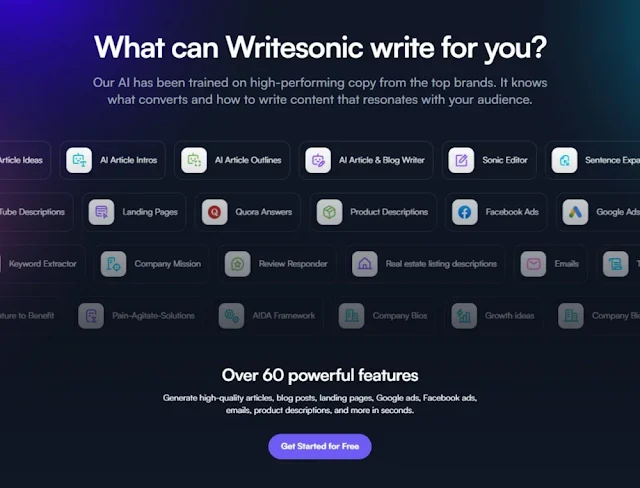
In the realm of content creation and marketing, Jasper AI stands out as a comprehensive AI writing assistant. It helps users generate marketing copy, blog posts, social media updates, and more, by analyzing writing styles and efficiently producing relevant and engaging content.
- Features: Jasper AI offers a wide range of templates for different content types, allows for customization of brand voice, and can generate content in multiple languages.
- Analysis of Implications: Jasper AI democratizes high-quality content creation for businesses of all sizes, enabling them to maintain a consistent and effective online presence without extensive writing teams. This can lead to improved customer engagement and brand recognition.
Surfer SEO is an advanced tool designed to optimize website content for search engines. It employs AI to analyze top-ranking content for specific keywords, providing data-driven recommendations on content structure, keyword density, and other on-page SEO factors.
- Key Features: Surfer SEO’s features include content analysis, keyword research, SERP (Search Engine Results Page) tracking, and on-page optimization suggestions.
- Broader Impact: By providing actionable insights into SEO best practices, Surfer SEO empowers website owners and digital marketers to improve their search engine rankings, drive organic traffic, and ultimately achieve better business outcomes.
Streamlining Workflows and Automating Processes: Zapier and Compose AI
Beyond content and code, AI is revolutionizing operational efficiency through workflow automation. Zapier is a powerful web automation platform that connects disparate web applications, enabling users to automate repetitive tasks without requiring extensive coding knowledge.
- Features: Zapier allows users to create "Zaps"—automated workflows that link different apps. For example, a Zap can automatically save email attachments to a cloud storage service or post social media updates to multiple platforms simultaneously.
- Supporting Data: Zapier supports thousands of app integrations, highlighting its broad utility across various business functions.
- Analysis of Implications: Zapier significantly boosts productivity by eliminating manual data transfer and task execution between applications. This frees up valuable human resources to focus on more strategic initiatives, leading to increased efficiency and reduced operational costs.
Compose AI focuses on Natural Language Generation (NLG), enabling the automatic creation of written or spoken text from structured data. This is particularly useful for generating reports, personalized communications, and data-driven narratives.
- Features: Compose AI’s software can ingest data from spreadsheets, databases, or APIs and transform it into coherent and contextually relevant text, adapting to different writing styles and formats.
- Broader Impact: Compose AI automates the often time-consuming process of data interpretation and report generation, allowing businesses to derive insights from their data more rapidly and communicate them effectively. This has significant applications in finance, marketing, and customer service.
The Future Landscape of AI Integration
The ten AI tools highlighted represent a fraction of the rapidly expanding ecosystem of intelligent applications. Their collective impact is undeniable, driving efficiency, fostering creativity, and democratizing access to powerful technological capabilities. As AI technology continues to mature, we can anticipate even more sophisticated and integrated solutions that will further blur the lines between human and artificial intelligence in problem-solving and innovation.
The trend towards AI integration is not merely about adopting new software; it represents a fundamental shift in how we approach work and creativity. The ability of these tools to handle repetitive tasks, analyze vast datasets, and generate novel content empowers individuals and organizations to achieve more with fewer resources. However, this rapid advancement also necessitates a continuous dialogue around ethical considerations, data privacy, and the evolving nature of the workforce. As businesses and individuals navigate this transformative period, understanding and strategically leveraging these AI tools will be paramount to staying competitive and driving progress in the years to come. The continued evolution of these technologies promises a future where AI is not just a tool, but an indispensable partner in innovation and daily life.
About the Author