The digital content creation landscape is undergoing a profound transformation, driven by the rapid advancements and increasing accessibility of artificial intelligence (AI) tools. As we navigate through 2025, a select group of AI-powered platforms are emerging as indispensable assets for creators across various disciplines, promising to enhance efficiency, unlock new creative avenues, and ultimately elevate the quality and impact of digital content. This analysis delves into ten of the most significant AI tools that are poised to redefine content creation in the coming year, examining their unique capabilities, underlying technologies, and the implications for creators, businesses, and the broader digital ecosystem.
The escalating demand for fresh, engaging, and consistently produced content across social media, marketing campaigns, educational platforms, and entertainment has placed immense pressure on creators. Traditional workflows, often characterized by time-consuming manual processes, are increasingly becoming bottlenecks in this high-paced digital environment. AI tools, therefore, are not merely technological novelties; they represent a strategic imperative for those seeking to maintain a competitive edge, optimize resource allocation, and amplify their creative output.
The AI Revolution in Content Creation: A 2025 Outlook
The integration of AI into content creation workflows is accelerating at an unprecedented rate. This shift is driven by several key factors: the maturation of natural language processing (NLP) and generative AI models, the increasing availability of large datasets for training these models, and a growing recognition by businesses and individuals of the tangible benefits AI offers in terms of speed, cost-effectiveness, and enhanced creative possibilities. The tools highlighted below exemplify this trend, offering specialized solutions that address critical pain points in the content creation process.
1. ChatGPT: Revolutionizing Textual Content Generation and Optimization
At the forefront of this AI-driven content revolution is OpenAI’s ChatGPT. While initially recognized for its conversational capabilities, ChatGPT has evolved significantly, transforming into a comprehensive content creation assistant. Its advanced language understanding, coupled with sophisticated content optimization features, allows for the generation, refinement, and strategic enhancement of written material. The platform’s capacity to adapt to specific brand voices and maintain industry-specific expertise makes it an invaluable asset for producing high-quality written content at scale.
- Key Capabilities: ChatGPT excels in ideation, drafting articles, blog posts, marketing copy, scripts, and even code snippets. Its ability to rephrase, summarize, and expand upon existing text ensures content versatility. Furthermore, its capacity to analyze and incorporate specific keywords and stylistic requirements aids in SEO optimization and brand consistency.
- Underlying Technology: Based on large language models (LLMs), ChatGPT leverages deep learning architectures to process and generate human-like text. Continuous training on vast amounts of textual data allows it to understand context, nuance, and a wide range of writing styles.
- Implications: For content writers, marketers, and businesses, ChatGPT significantly reduces the time and effort required for initial drafts and ideation. It democratizes content creation by making sophisticated writing assistance accessible to a broader audience, enabling faster iteration and higher output. However, the ethical considerations surrounding AI-generated content, including originality and potential bias, remain a subject of ongoing discussion and require careful oversight.
- Pricing: OpenAI offers various tiers, including a free version with access to older models, and paid subscriptions like ChatGPT Plus, Team, and Enterprise, providing access to the latest models (e.g., GPT-4), faster response times, and advanced features. Specific pricing varies based on the chosen plan and usage.
2. Canva Magic Studio: Democratizing Visual Design with AI
Canva has long been a dominant force in user-friendly graphic design, and its integration of AI through Magic Studio has further cemented its position. This platform seamlessly blends an intuitive interface with powerful AI capabilities, making professional-grade visual content creation accessible to a wider audience. Magic Studio’s ability to understand design principles, generate on-brand visuals, and automate design tasks empowers users to produce polished graphics, social media posts, presentations, and more with remarkable ease.
- Key Capabilities: Magic Studio offers features like Magic Design, which generates design templates based on user prompts; Magic Write, for AI-powered text generation within designs; and Magic Eraser, for effortless object removal from images. It can also generate presentations, edit videos, and even translate designs.
- Underlying Technology: Canva leverages a combination of proprietary AI algorithms and integrations with leading AI models to power its Magic Studio features. These systems are trained on vast datasets of design elements, styles, and user interactions to understand aesthetic principles and user intent.
- Implications: Small businesses, social media managers, and individuals without formal design training can now create visually appealing content that rivals professionally designed materials. This lowers the barrier to entry for effective visual communication and allows for rapid campaign iteration. The potential for AI to generate an endless stream of visually consistent content raises questions about artistic originality and the future role of human graphic designers.
- Pricing: Canva offers a free tier with basic features. Canva Pro provides advanced tools, premium templates, and enhanced AI capabilities. Canva for Teams offers collaborative features and advanced brand management. Pricing is subscription-based, with different plans catering to individual and team needs.
3. RunwayML: Pioneering AI-Powered Video Generation and Editing
RunwayML has emerged as a leading platform for AI-driven video creation, merging professional-grade effects with an accessible user interface. Its groundbreaking ability to manipulate video content through simple text prompts, alter environmental conditions, and perform seamless object removal in real-time makes it an indispensable tool for video creators. This technology significantly reduces the technical complexities traditionally associated with high-quality video production.
- Key Capabilities: RunwayML’s suite includes text-to-video generation, video-to-video transformations, inpainting for object removal and replacement, motion tracking, and advanced editing tools. Its AI models can generate novel video sequences, alter existing footage, and enhance visual effects with unprecedented ease.
- Underlying Technology: The platform is built on sophisticated generative AI models, including diffusion models and recurrent neural networks, trained on extensive video datasets. This allows it to understand visual semantics, motion dynamics, and stylistic elements to produce realistic and creative video outputs.
- Implications: Video creators, YouTubers, and social media managers can now produce professional-quality videos more rapidly and cost-effectively. This democratizes advanced video editing and special effects, enabling more ambitious creative projects. The ethical considerations around AI-generated video, particularly concerning deepfakes and misinformation, necessitate robust detection mechanisms and responsible usage guidelines.
- Pricing: RunwayML offers a free tier with limited credits and features. Paid plans, such as Standard, Pro, and Unlimited, provide increased credits, access to higher-resolution outputs, more advanced models, and collaborative features.
4. Midjourney: Redefining AI Art Generation for Brand Visuals
Midjourney, particularly with its V6 iteration, has set a new standard in AI image generation, demonstrating a profound understanding of photographic principles and artistic styles. Its ability to interpret and execute complex creative directions, including specific lighting scenarios and branded visual aesthetics, while consistently delivering high-quality results, positions it as a premier tool for creators requiring stunning and brand-aligned visuals.
- Key Capabilities: Midjourney excels at generating highly detailed and aesthetically pleasing images from text prompts. It allows for fine-grained control over artistic style, composition, and mood. Users can iterate on designs, upscale resolutions, and create variations to achieve their desired visual outcome.
- Underlying Technology: Midjourney utilizes advanced diffusion models, a type of generative AI that excels at creating realistic and novel images. These models are trained on massive datasets of images and their corresponding textual descriptions, enabling them to translate textual concepts into visual art.
- Implications: Social media managers, digital marketers, and designers can generate unique, professional-quality visuals that are perfectly tailored to their brand identity. This drastically reduces reliance on stock imagery and the costs associated with custom photography or illustration. The increasing sophistication of AI art also prompts discussions about copyright, intellectual property, and the definition of authorship in creative works.
- Pricing: Midjourney operates on a subscription model with various tiers (e.g., Basic, Standard, Pro). These plans differ in the number of GPU hours available for image generation, allowing users to generate a specified number of images per month.
5. Synthesia: AI Avatar-Based Video Creation for Scalable Communication
Synthesia has revolutionized video production by enabling the creation of professional-looking AI avatar videos in a matter of minutes. Its capacity to generate natural-sounding presentations in multiple languages, complete with synchronized lip movements and gestures, makes it an invaluable tool for organizations needing to produce video content at scale without the logistical challenges of traditional filming.
- Key Capabilities: Synthesia allows users to select from a diverse range of AI avatars and voices, input text scripts, and generate videos that appear as if a real person is speaking. It supports numerous languages and accents, making it ideal for global communication and localization.
- Underlying Technology: The platform combines advanced text-to-speech (TTS) technology with sophisticated animation and lip-sync algorithms. AI models are trained on vast datasets of human speech and facial movements to create realistic and convincing avatar performances.
- Implications: Businesses and educational institutions can produce training videos, marketing materials, and internal communications more efficiently and cost-effectively. The ability to rapidly generate multilingual content breaks down language barriers and enhances global outreach. Concerns may arise regarding the authenticity of AI-generated presenters and the potential for misuse in creating deceptive content.
- Pricing: Synthesia offers tiered subscription plans, typically including Personal, Enterprise, and Custom solutions. These plans vary in the number of videos that can be created per month, access to advanced features, and customization options.
6. Descript: Streamlining Audio and Video Editing with Transcription
Descript has fundamentally changed how audio and video editing are approached by making the process as intuitive as editing a text document. Its innovative AI-driven features, such as automatic transcription and filler word removal, democratize professional-quality editing, making it accessible to creators of all skill levels. This approach significantly accelerates post-production workflows.
- Key Capabilities: Descript automatically transcribes audio and video recordings, allowing users to edit the media by simply editing the text. It can remove filler words ("um," "uh"), add studio sound effects, overdub audio with AI voices, and record screen content.
- Underlying Technology: The platform utilizes advanced speech recognition technology for accurate transcription and NLP for identifying and manipulating spoken content. AI models are trained to recognize speech patterns, pauses, and common linguistic redundancies.
- Implications: Podcasters, video creators, and teams can achieve faster turnaround times for their projects. The ability to edit audio and video as easily as text reduces the learning curve for editing software and empowers more creators to produce polished content. This efficiency gain can be particularly impactful for news organizations and content production houses.
- Pricing: Descript offers a free tier with limited transcription hours and features. Paid plans (e.g., Creator, Pro) provide more transcription hours, advanced editing tools, and increased cloud storage.
7. ElevenLabs: Advancing AI Voice Generation for Natural and Expressive Audio
ElevenLabs has made significant strides in voice synthesis, achieving unparalleled levels of natural speech quality and emotional expressiveness. Its ability to accurately clone voices and generate content in multiple languages with authentic accents and inflections makes it a premier tool for creators seeking professional-quality voiceovers without the constraints of traditional recording processes or the limitations of human voice actors.
- Key Capabilities: ElevenLabs allows users to clone their own voice or generate new synthetic voices with remarkable realism. It supports a wide range of languages and emotional tones, enabling dynamic and engaging audio content. The platform also offers tools for speech-to-speech transformation and audio cleanup.
- Underlying Technology: The core of ElevenLabs’ technology lies in its advanced deep learning models, particularly generative adversarial networks (GANs) and diffusion models, trained on vast datasets of human speech. These models are capable of capturing subtle nuances in prosody, pitch, and intonation.
- Implications: Podcasters, audiobook producers, and video creators can produce high-quality voiceovers efficiently and affordably. The ability to generate voiceovers in multiple languages opens up new markets and audiences. Ethical considerations around voice cloning, including potential misuse for impersonation and misinformation, are paramount and require robust safeguards.
- Pricing: ElevenLabs offers a free tier for experimentation, with paid plans (e.g., Starter, Creator, Professional) providing increased usage limits, access to more advanced features like voice cloning, and commercial licensing.
8. Tribescaler: Leveraging AI for Viral Content and Headline Optimization
Tribescaler applies a data-driven, scientific approach to viral content creation by integrating trend analysis with content optimization. Its powerful AI engine analyzes successful content patterns across various platforms, providing actionable insights to help creators craft content that is more likely to achieve widespread engagement and virality, while maintaining authenticity.
- Key Capabilities: Tribescaler identifies trending topics and content formats, suggests optimized headlines and hooks, and analyzes existing content for engagement potential. It helps creators understand what resonates with audiences on different platforms, from TikTok to LinkedIn.
- Underlying Technology: The platform employs machine learning algorithms to analyze vast amounts of social media data, identifying correlations between content characteristics and engagement metrics. It also utilizes NLP to understand sentiment and predict content performance.
- Implications: Content creators and social media managers focused on maximizing reach and engagement can significantly improve their content strategy. By understanding the underlying mechanics of viral content, creators can produce more impactful and shareable material, leading to increased brand visibility and audience growth. The reliance on AI for virality raises questions about the organic nature of trends and the potential for manipulation.
- Pricing: Tribescaler typically operates on a subscription model, with different tiers offering varying levels of access to analytics, content suggestions, and platform integrations.
9. Clickable: Automating Ad Creation and Optimization for Scalable Campaigns
Clickable revolutionizes digital advertising by seamlessly integrating data-driven insights with automated creative processes. Its ability to analyze brand assets and automatically generate platform-optimized ad variations, while consistently maintaining brand voice, transforms the often-tedious task of ad creation into a streamlined, results-oriented workflow designed for high performance.
- Key Capabilities: Clickable allows users to upload brand assets (logos, images, copy), and its AI generates numerous ad variations tailored for platforms like Facebook, Instagram, and Google. It continuously optimizes these ads based on performance data to maximize return on investment.
- Underlying Technology: The platform utilizes AI and machine learning to analyze creative elements, audience demographics, and campaign performance data. It employs predictive modeling to identify which ad creatives are likely to perform best and automates the testing and optimization process.
- Implications: Digital marketers and businesses seeking to scale their advertising efforts can significantly reduce the time and resources spent on ad creation and management. This allows for more agile campaign adjustments and a greater focus on strategic planning. The automation of ad creation raises questions about the role of human creativity in advertising and the potential for AI to influence consumer behavior at scale.
- Pricing: Clickable typically offers tiered subscription plans, with pricing based on the number of ad campaigns, ad spend managed, and the level of features and support provided.
10. CopyAI: Enhancing Marketing Copywriting with AI Precision
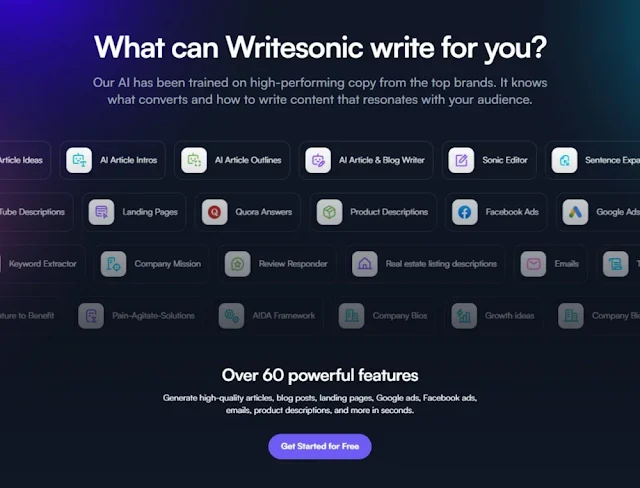
CopyAI has established itself as a leading provider of AI-powered copywriting solutions, offering specialized content generation for a wide array of marketing formats. Its sophisticated understanding of marketing psychology and brand voice, coupled with its ability to produce compelling copy across diverse formats and industries, makes it an invaluable resource for marketers and content creators aiming to produce engaging, conversion-focused content at scale.
- Key Capabilities: CopyAI can generate website copy, social media posts, email subject lines, product descriptions, blog post outlines, and much more. It offers various templates and tools designed to meet specific marketing objectives, such as increasing engagement or driving sales.
- Underlying Technology: The platform is powered by advanced LLMs that have been fine-tuned for marketing and sales copy. These models are trained on vast datasets of successful marketing materials, enabling them to generate persuasive and effective language.
- Implications: Marketing teams, copywriters, and businesses can accelerate their content production cycles and improve the quality of their marketing messages. This leads to more effective campaigns and better customer engagement. The widespread use of AI for copywriting prompts discussions about the evolution of creative roles and the importance of human oversight to ensure authenticity and ethical communication.
- Pricing: CopyAI offers a free tier with limited word generation. Paid plans, such as Pro and Enterprise, provide unlimited word generation, access to premium templates, and advanced features for team collaboration and brand voice customization.
Broader Impact and Implications
The collective impact of these AI tools on the content creation ecosystem is multifaceted and profound. They are not only streamlining existing processes but also democratizing sophisticated creative capabilities, lowering the barrier to entry for individuals and small businesses. The ability to generate high-quality text, visuals, audio, and video more efficiently and affordably means that more creators can compete in the digital space, fostering greater diversity of content and perspectives.
However, this technological advancement also brings critical challenges. The ethical considerations surrounding AI-generated content – including issues of authenticity, copyright, bias, and the potential for misuse – require ongoing attention and the development of robust regulatory frameworks and best practices. Furthermore, the evolving nature of these tools necessitates continuous learning and adaptation for creators to leverage them effectively and responsibly.
Conclusion: Amplifying Creativity, Not Replacing It
The AI tools highlighted for 2025 represent a significant leap forward in content creation capabilities. They are powerful enablers, designed to augment human creativity, not to replace it. By automating repetitive tasks, providing creative inspiration, and enhancing the quality and reach of content, these technologies empower creators to focus on their unique vision, storytelling, and strategic thinking.
As the digital landscape continues its rapid evolution, embracing these AI-powered tools will be crucial for staying competitive and innovative. The future of content creation is one where human ingenuity is amplified by artificial intelligence, leading to richer, more engaging, and more impactful digital experiences. The potential for innovation is vast, and creators who strategically integrate these tools into their workflows are poised to unlock new levels of success and redefine the boundaries of digital expression. The journey ahead is one of exploration, experimentation, and a collaborative future between human creativity and artificial intelligence.
Note: Features and pricing information are subject to change by the respective platforms. It is advisable to verify current details directly with the providers. This article may contain affiliate links, through which a small commission may be earned if premium plans are purchased via these links.
Pricing updated as of February 1, 2025.
About the Author