The dramatic acquisition and subsequent transformation of Twitter into X under Elon Musk’s ownership have not only reshaped one of the world’s most prominent social media platforms but have also ignited a profound debate about the future of online communication, platform governance, and the very structure of digital public squares. This pivotal shift has prompted long-time observers and participants in the digital sphere, including prominent software developer Jeff Atwood, to declare the effective "destruction" of the original platform and advocate strenuously for a move towards decentralized alternatives, emphasizing user empowerment and community control.
The Genesis of a Shift: Twitter’s Acquisition and Rebranding
Elon Musk’s tumultuous acquisition of Twitter began in April 2022, culminating in a $44 billion takeover by October of the same year. His stated intentions were ambitious: to transform Twitter into an "everything app" named X, a vision encompassing not just social networking but also payments, e-commerce, and more, all while championing "free speech absolutism." This philosophy quickly collided with the complexities of content moderation, platform safety, and the expectations of a global user base and advertising market.

Upon assuming control, Musk initiated a series of radical changes. These included mass layoffs, reducing the company’s workforce by an estimated 80%, impacting critical teams responsible for content moderation, engineering, and trust and safety. The verification system was overhauled, replacing the long-standing blue checkmark for notable figures with a paid subscription model (Twitter Blue, later X Premium), leading to widespread impersonation and confusion. The platform’s name and iconic bird logo were controversially rebranded to X in July 2023, symbolizing Musk’s broader vision but alienating many loyal users and eroding years of brand equity.
These actions sparked immediate and intense reactions. Advertisers, concerned about brand safety amidst reports of rising hate speech and misinformation, significantly reduced their spending. According to reports from various advertising analytics firms and public statements from X itself, advertising revenue plummeted by an estimated 50-70% within the first year of Musk’s ownership. Civil society organizations, including the Anti-Defamation League (ADL) and the Center for Countering Digital Hate (CCDH), published reports documenting a substantial increase in hate speech, antisemitism, and other harmful content on the platform, directly correlating with the changes in moderation policies and staffing.
A Call to Disavow: Jeff Atwood’s Perspective
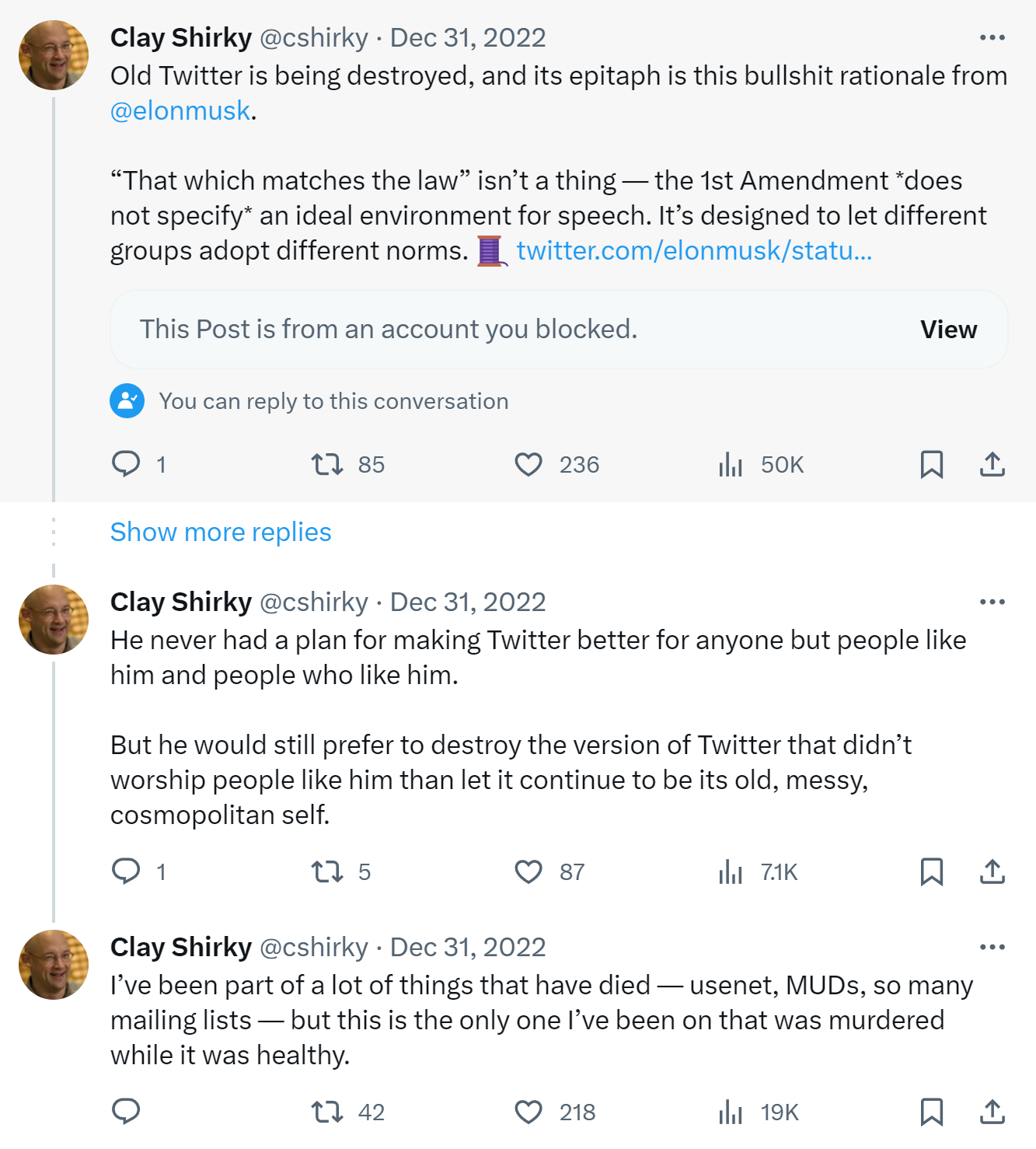
Jeff Atwood, co-founder of Stack Overflow and Discourse, and author of the "Coding Horror" blog, has been an outspoken critic of these developments. From his perspective, the changes under Musk’s leadership represent a fundamental betrayal of what made Twitter valuable. Atwood, who had been a user since 2007, expressed profound disappointment, citing the platform’s rapid deterioration. He articulated a sentiment shared by many long-term users, lamenting that "Twitter was murdered… while it was (mostly) healthy," attributing its demise to the "whims of a billionaire."

Atwood’s critique extends beyond mere nostalgia. He argues that the centralized control exercised by a single individual, particularly one prone to erratic decision-making, poses an inherent danger to any public discourse platform. He highlights the inherent vulnerability of users’ content and communities when they are beholden to a "king, a dictator, a tyrant, a despot, an autocrat," where "your content [can be] rug-pulled out from under you at any time." This perspective echoes broader concerns within the tech community about the concentration of power in the hands of a few tech giants.
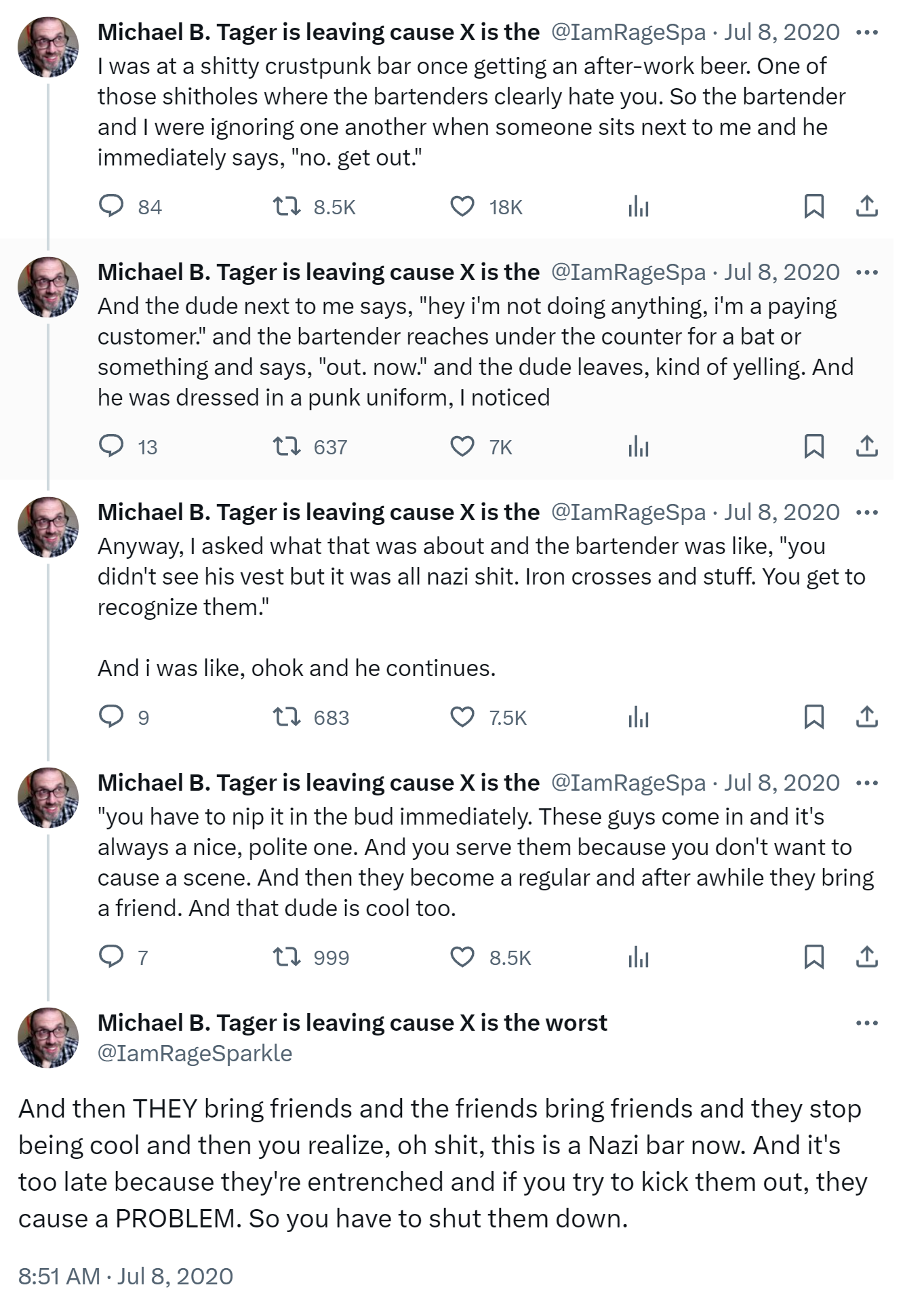
He strongly advocates for users to "disavow Twitter and never look at it again," urging them to cease feeding the platform attention and instead seek alternatives. This call to action is rooted in the belief that continuing to engage with X implicitly legitimizes a model he views as detrimental to mental health and societal well-being, particularly in light of what he describes as the platform’s transformation into a "Nazi bar" – a metaphor illustrating how unchecked problematic content can rapidly corrupt a community space.
The Imperative of Decentralization: A New Paradigm
At the heart of Atwood’s argument, and a growing consensus among digital rights advocates, is the concept of decentralization. For years, critics have warned against the "digital sharecropper" model, where users generate valuable content and data for platforms they do not own or control, effectively enriching the platform owners while having limited rights over their digital creations. Atwood, through his work with Discourse, a platform designed for community-owned forums, has long championed collective ownership and user empowerment.
He posits that while "sane centralized services" have their place, it is "imperative that we also build decentralized services which empower users and give them control." This philosophy stands in stark contrast to the "jam a million people in a colosseum and let them fight it out with free speech" approach that characterized early social media, an approach now widely seen as having failed to foster healthy discourse.
Decentralized platforms, often built on open-source protocols, aim to distribute power away from a single corporate entity. They allow users to choose their own servers (instances), set their own moderation policies, and often retain greater control over their data. This model is often compared to email, where users can interact across different providers (Gmail, Outlook, etc.) without being locked into a single ecosystem.
Emerging Alternatives: The Fediverse and Beyond
The disruption at X has indeed accelerated interest and migration towards decentralized and federated alternatives, collectively often referred to as the "Fediverse."
-
Mastodon: Perhaps the most prominent example, Mastodon is an open-source, federated social network built on the ActivityPub protocol. It operates as a network of independent servers (instances), each with its own rules and community, but capable of communicating with each other. This allows users to choose an instance that aligns with their values and interests while still being part of a broader network. Following Musk’s takeover, Mastodon experienced a significant surge in user registrations, with its user base growing from approximately 300,000 active users in October 2022 to over 2 million by late 2022, demonstrating a clear appetite for alternative models. Atwood himself has migrated to Mastodon, actively participating on the
infosec.exchangeinstance. -
Bluesky: Founded by former Twitter CEO Jack Dorsey, Bluesky is another decentralized social networking protocol, built on the AT Protocol. It aims to offer a more flexible and customizable user experience, allowing developers to build various applications on top of its underlying protocol. While still in its early stages and primarily invite-only for much of its initial growth, Bluesky has attracted significant interest as a potential "Twitter killer" for those seeking a decentralized yet familiar experience.
-
Threads: Launched by Meta in July 2023, Threads is a text-based social media app that directly competes with X. While currently centralized, Meta has publicly stated its intention to integrate Threads with the ActivityPub protocol, making it interoperable with the Fediverse. This move, if fully realized, could represent a massive shift, bringing a vast user base into the decentralized ecosystem and potentially accelerating its mainstream adoption.
These alternatives, while offering greater user control and community-centric governance, are not without their challenges. They often require a steeper learning curve for new users, and the fragmented nature of moderation across multiple instances can sometimes lead to inconsistencies. However, proponents like Atwood argue that this "messiness" is a necessary trade-off for the resilience and democratic nature of such systems. "It’s worth the work, because it’s the only survivable long term path forward," he asserts, echoing the adage that "anything worth doing is never easy."
Broader Implications: The Future of Digital Public Squares
The saga of Twitter’s transformation and the subsequent push for decentralization carries profound implications for the future of digital public squares.
-
Platform Governance and Ownership: The events have starkly highlighted the risks associated with single-point-of-failure governance models. It underscores the argument that platforms critical for public discourse should not be solely subject to the whims of a single owner or corporation. The debate over content moderation, free speech, and platform safety is now inextricably linked to questions of ownership and control.
-
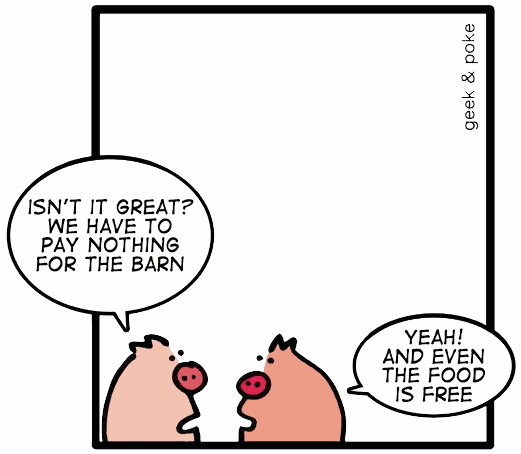
Economic Models: The decline in X’s advertising revenue has forced a re-evaluation of the "free" social media model. Atwood and others contend that "free" services are never truly free, as users implicitly pay with their data, attention, and vulnerability to platform changes. Decentralized alternatives often explore diverse funding models, including subscriptions, donations, or community-funded development, challenging the ad-hoc nature of existing platforms.
-
User Mental Health and Well-being: The original article implicitly, and many public health experts explicitly, link the design and governance of social media platforms to user mental health. The rise of toxicity, misinformation, and targeted harassment on centralized platforms has been a growing concern. Decentralized models, with their emphasis on smaller, more manageable communities and customizable moderation, offer a potential path towards healthier online interactions.
-
Resilience of Digital Infrastructure: The mass exodus of talent and the technical instabilities reported at X have raised questions about the resilience of critical digital infrastructure when subjected to drastic, unilateral changes. Decentralized networks, by their very nature, are designed to be more resilient, as no single point of failure can bring down the entire system.
A Tangible Legacy: Commemorating a Digital Era
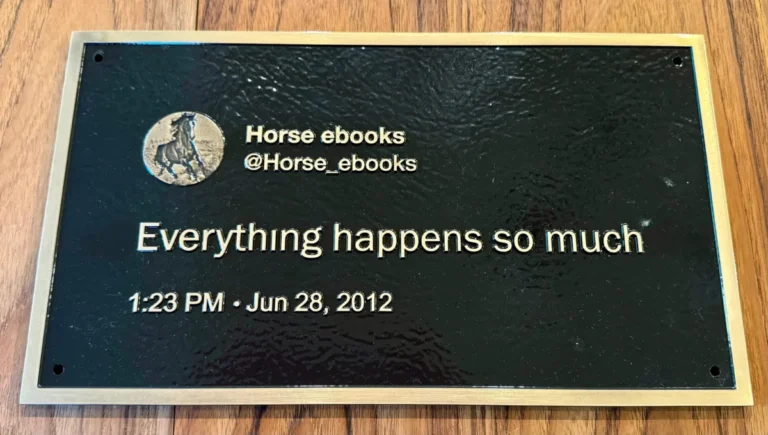
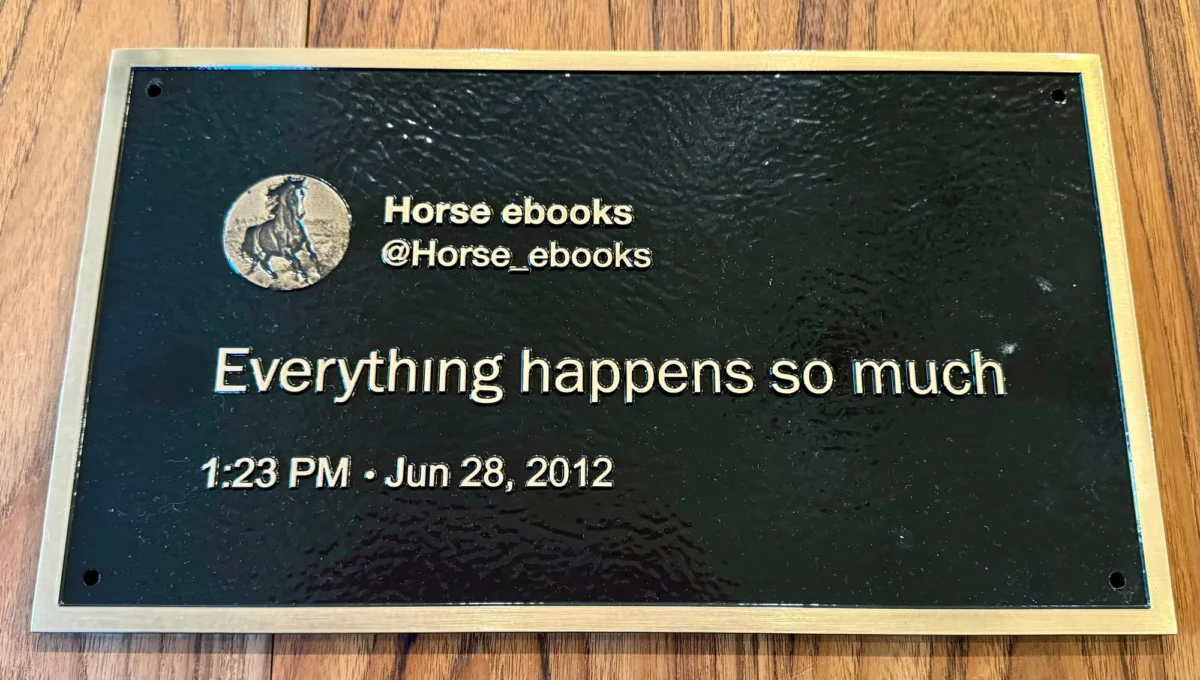
As a symbolic act marking the end of an era and inspiring a move towards new beginnings, Jeff Atwood has undertaken an initiative to auction off museum-quality brass plaques featuring what he considers "the best tweet of all time." The tweet, "everything happens so much," originally posted by the enigmatic @horse_ebooks account, encapsulates a form of surreal, algorithmic poetry that resonated deeply with early Twitter users. This unique auction aims to benefit The Trevor Project, an organization providing crisis intervention and suicide prevention services to LGBTQ youth, further emphasizing the humanitarian and community-focused aspects of Atwood’s advocacy. The gesture serves not only as a nostalgic nod to a bygone era of Twitter but also as a powerful statement against the platform’s current trajectory, with Atwood personally guaranteeing that the plaques "will easily outlive what’s left of Twitter."

The tumultuous journey of Twitter to X serves as a stark case study in the power dynamics of digital platforms and the urgent need for more robust, equitable, and user-centric models. It has catalyzed a broader re-evaluation of how we build, govern, and participate in our online communities, propelling the conversation towards a decentralized future where collective ownership and user empowerment might yet define the next generation of social media.
About the Author