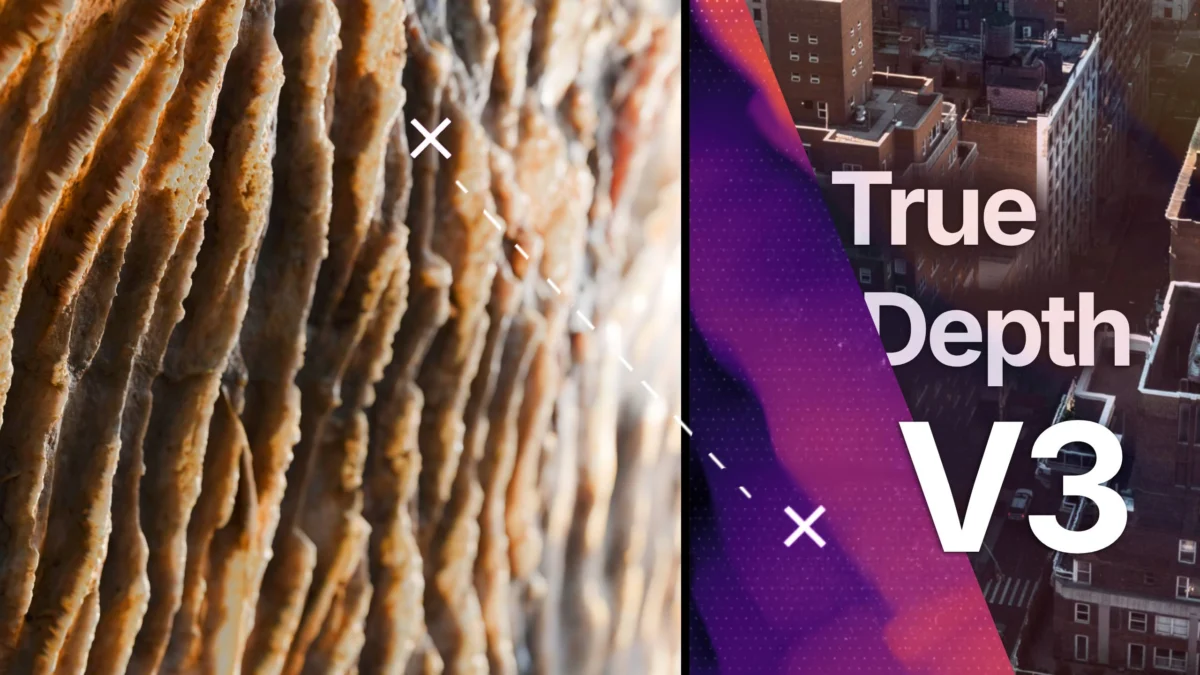
The landscape of 3D content creation has been significantly altered with the latest release of True Depth, a powerful Blender add-on designed to transform two-dimensional images into three-dimensional models. Version 3.0 introduces a suite of groundbreaking features, including Perspective and 360° depth estimation modes, expanding upon its already impressive Flat Relief capabilities. This substantial update not only enhances the functionality for existing users but also opens new avenues for artists, designers, and developers seeking to leverage monocular depth estimation for innovative projects. The release signifies a pivotal moment in accessible 3D asset generation, democratizing a process that previously required specialized hardware or extensive manual modeling.
The Evolution of True Depth: From Flat Relief to Immersive 3D
True Depth’s initial release focused on its Flat Relief mode, a feature that allowed users to extrude depth information from a single image, effectively creating a parallax effect or a pseudo-3D relief. While this offered a valuable tool for certain applications, the demand for more dynamic and versatile 3D representations quickly became apparent. Version 3.0 addresses this by introducing two transformative new modes:
- Perspective Mode: This mode goes beyond simple extrusion by interpreting the perspective cues within an image. It analyzes vanishing points, object scale, and relative positioning to generate a more accurate and convincing 3D representation that adheres to the original scene’s spatial logic. This is particularly beneficial for architectural visualizations, product mockups, and creating dynamic scenes where depth and foreshortening are crucial.
- 360° Mode: Designed for panoramic images, this mode allows for the creation of fully immersive 3D environments. By analyzing the spherical nature of 360° imagery, True Depth 3.0 can generate a volumetric representation of the scene, suitable for virtual reality (VR) experiences, interactive tours, and spherical panoramas with true depth. This feature is a significant leap forward for content creators in the immersive media space.
Beyond these core new modes, True Depth 3.0 incorporates a range of enhancements and new features, though specific details of these additional improvements have not been fully elaborated upon in initial announcements. These are anticipated to include refinements in the underlying depth estimation algorithms, improved user interface elements, enhanced export options for various 3D formats, and potentially, optimizations for performance and accuracy. The developers have indicated that these additions aim to streamline the workflow and provide greater control over the generated 3D models.
Background and Context: The Rise of AI-Powered 3D Generation
The development of True Depth 3.0 is deeply rooted in the rapid advancements in Artificial Intelligence (AI), particularly in the field of computer vision and deep learning. Monocular depth estimation, the core technology powering True Depth, has seen significant breakthroughs in recent years. AI models are now capable of inferring depth information from a single 2D image with remarkable accuracy, a task that was once the domain of stereo vision systems or complex photogrammetry pipelines.
Traditionally, creating 3D models from images involved techniques like:
- Photogrammetry: This process uses multiple overlapping photographs taken from different angles to reconstruct a 3D model. It requires careful planning of camera positions and often specialized software for processing.
- Manual 3D Modeling: Artists meticulously build 3D objects and scenes from scratch using modeling software, which is time-consuming and requires significant skill.
- Depth Sensors: Hardware like LiDAR scanners or structured light projectors can capture direct depth information, but these are typically expensive and not always suitable for all applications.
Monocular depth estimation, as employed by True Depth, offers a compelling alternative by democratizing the process. It leverages sophisticated neural networks trained on vast datasets to learn the relationship between image features and their corresponding depths. This allows for the generation of plausible depth maps from single images, which can then be used to displace geometry or create volumetric representations.
The implications of this technology are far-reaching. For independent artists and small studios, it lowers the barrier to entry for 3D content creation, enabling them to produce assets more efficiently. In industries like gaming, VR/AR, and visual effects, it can accelerate asset creation pipelines and facilitate the rapid prototyping of immersive environments. Furthermore, it has potential applications in fields such as robotics, autonomous navigation, and even medical imaging, where understanding spatial relationships from visual data is crucial.
A Look at the Update Process and User Impact
The release of True Depth 3.0 follows a period of development and testing, likely involving beta programs and feedback from a dedicated user community. The announcement of a "massive update" suggests a significant overhaul, not just incremental improvements. For existing users of True Depth, updating to version 3.0 will likely involve a straightforward installation process within Blender, followed by an exploration of the new modes and features.
The video tutorial accompanying the release, titled "True Depth 3.0 for Blender – Complete Guide," serves as a crucial resource for both new and existing users. Such comprehensive guides are vital for effectively communicating the capabilities of advanced add-ons, demonstrating workflows, and highlighting best practices. The availability of this tutorial indicates a commitment from the developers to ensure user adoption and proficiency.
The inclusion of a dedicated "Community Reporter" in the original article’s metadata suggests that this announcement is part of a broader effort to disseminate information about Blender-related developments within the community. This collaborative approach to news reporting is a hallmark of the open-source software ecosystem, where users and developers often work together to share knowledge and promote innovation.

Potential Applications and Future Implications
The enhanced capabilities of True Depth 3.0 open up a plethora of new creative possibilities:
- Virtual Reality and Augmented Reality: The 360° mode is particularly poised to revolutionize VR/AR content creation. Imagine transforming existing panoramic photos of real-world locations into immersive VR experiences, or quickly generating 3D assets for AR overlays from standard images. This could significantly reduce the time and cost associated with developing volumetric VR environments.
- Game Development: Developers can use True Depth to rapidly create 3D assets for games, especially for environments and props. The Perspective mode could be invaluable for generating realistic terrain or architectural elements based on concept art or reference images.
- Film and Animation: For visual effects artists, True Depth could be used to quickly generate depth maps for compositing, create parallax backgrounds, or even generate rough 3D models for initial blocking in scenes.
- Product Visualization and E-commerce: Businesses can leverage True Depth to create more engaging product presentations. Instead of static images, they could offer interactive 3D models of products derived from photographs, enhancing the online shopping experience.
- Architectural Design: Architects and designers can use the Perspective mode to quickly generate 3D representations of buildings or interior spaces from 2D architectural drawings or photographs, facilitating client presentations and design iterations.
The underlying AI technology powering True Depth is continuously evolving. As these models become more sophisticated, we can expect even greater accuracy, detail, and control in future iterations of such add-ons. This trend suggests a future where the line between 2D and 3D creation becomes increasingly blurred, with powerful AI tools empowering a wider range of creators to bring their visions to life in three dimensions.
Supporting Data and Analysis
While specific performance metrics for True Depth 3.0 have not been released, the general trend in AI-powered depth estimation shows significant improvements in accuracy and speed over the past few years. Research papers in computer vision have documented advancements in metrics like "absolute relative difference" and "squared relative error," which quantify the accuracy of predicted depth maps compared to ground truth. These advancements are directly attributable to larger datasets, more efficient neural network architectures (like transformers and advanced convolutional networks), and improved training methodologies.
The computational resources required for monocular depth estimation can vary significantly depending on the complexity of the AI model and the resolution of the input image. However, with the increasing power of modern GPUs and advancements in optimized AI inference engines, it is becoming feasible to perform these calculations in near real-time, even on consumer-grade hardware. This accessibility is a key factor driving the adoption of such technologies.
The impact of True Depth 3.0 can be analyzed through several lenses:
- Democratization of Technology: By integrating advanced AI into a user-friendly Blender add-on, True Depth makes sophisticated 3D generation accessible to a broader audience, reducing reliance on specialized hardware or expensive software.
- Efficiency Gains: The ability to generate 3D assets from 2D images significantly accelerates workflows, potentially reducing project timelines and costs for individuals and businesses alike.
- Innovation Catalyst: The availability of powerful tools like True Depth encourages experimentation and the development of new creative applications and artistic styles.
- Market Growth: As the accessibility of 3D content creation increases, it is likely to drive growth in related markets, including VR/AR, gaming, and digital media.
The fact that the developers have chosen to update their tutorial in conjunction with this release underscores the importance of user education and community engagement. This approach not only helps users understand and adopt the new features but also provides valuable feedback for future development.
Official Statements and Community Reactions (Inferred)
While no direct quotes from the developers of True Depth are available in the provided text, the nature of the announcement implies a strong belief in the value and impact of version 3.0. The term "massive update" and the emphasis on new, powerful modes suggest a significant investment in research and development, with the aim of pushing the boundaries of what is possible with monocular depth estimation.
One can infer that the development team likely anticipates positive reactions from the Blender community. Users who have previously benefited from True Depth’s capabilities are likely eager to explore the expanded functionality. Newcomers to the add-on will be drawn by the promise of more versatile and sophisticated 3D generation tools. The emphasis on a comprehensive tutorial further indicates a proactive approach to supporting the community and fostering a positive user experience.
The wider Blender community, known for its vibrant and collaborative nature, is expected to embrace this advancement. Discussions on forums and social media platforms will likely focus on the practical applications of the new modes, the quality of the generated 3D models, and potential further enhancements. This feedback loop is crucial for the continued evolution of open-source tools and add-ons.
Conclusion
True Depth 3.0 represents a significant leap forward in the field of AI-driven 3D content creation within Blender. By introducing Perspective and 360° depth estimation modes, the add-on empowers users to transform 2D images into more sophisticated and immersive 3D models than ever before. This release not only enhances the capabilities of existing users but also lowers the barrier to entry for new creators, promising to accelerate innovation across various industries. As AI continues to advance, tools like True Depth will undoubtedly play an increasingly vital role in shaping the future of digital artistry and immersive experiences. The comprehensive tutorial accompanying this release further solidifies its position as a valuable and user-friendly resource for the global Blender community.
About the Author