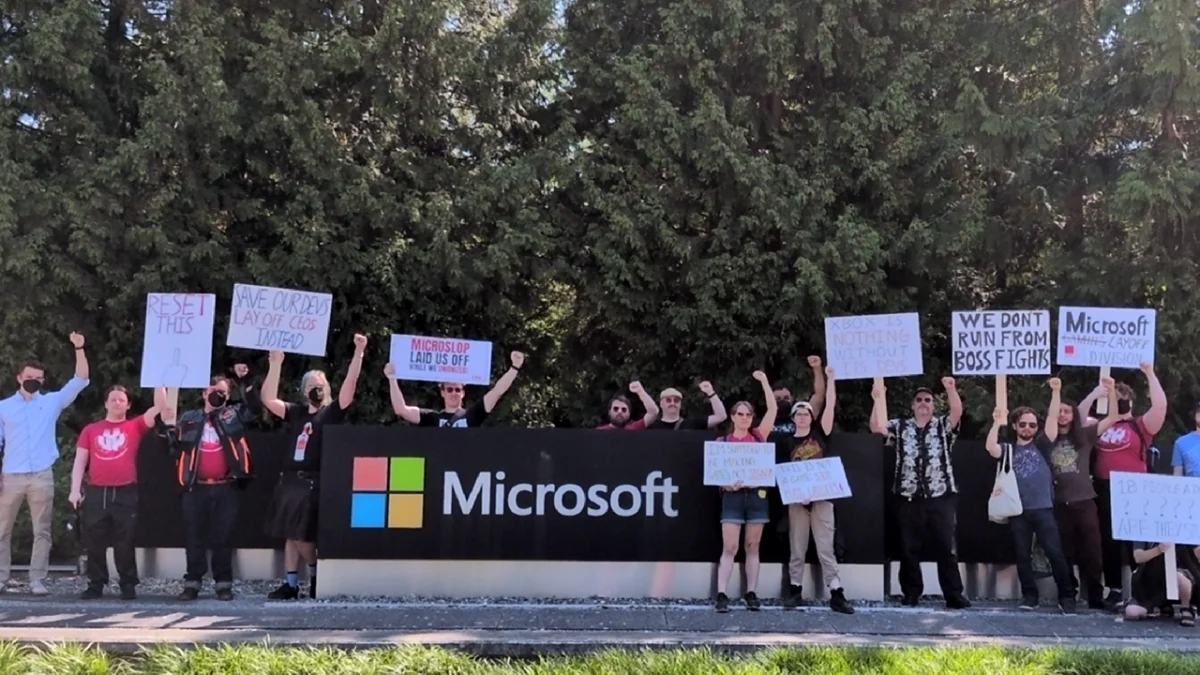
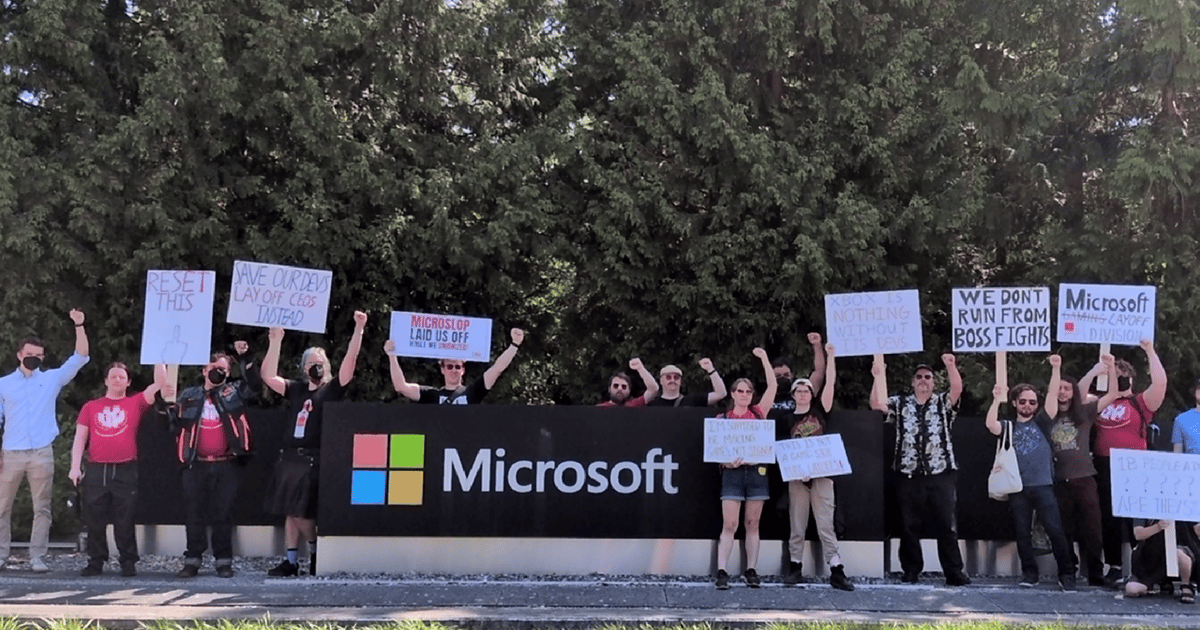
Hundreds of unionized video game workers, alongside their allies, converged outside Xbox studios across the United States and Canada this week, marking an escalated phase in their protest against the relentless wave of mass layoffs impacting Microsoft’s video game division. The demonstrations, orchestrated by the Communications Workers of America (CWA) and local labor organizations, took place on August 19, 2026, in key development hubs including Austin, Dallas, Seattle, Rockville, Hunt Valley, Montreal, and Minneapolis. These actions represent a significant intensification of the "Save Our Devs" rallies, which first began in July, underscoring a growing collective frustration with corporate restructuring practices within the highly profitable tech sector.
The CWA has articulated that these gatherings are a direct response to "layoffs and corporate greed across the industry," while also serving as a powerful demand for fair first contracts across Microsoft’s extensive portfolio of video game studios. This latest round of cuts marks the fifth instance of mass layoffs within the Xbox division in just three years, painting a grim picture for employees navigating an increasingly unstable landscape despite the industry’s booming revenues. The protests highlight a fundamental tension between corporate financial strategies and the human cost borne by development teams.
A History of Acquisitions and Subsequent Instability
To fully grasp the current unrest, it is crucial to examine the trajectory of Microsoft’s expansion into the gaming industry and the subsequent impact on its workforce. Over the past decade, Microsoft has aggressively pursued a strategy of acquiring major game development studios, consolidating its position as a dominant force in the global entertainment market. Key acquisitions include ZeniMax Media (parent company of Bethesda Softworks, id Software, Arkane Studios, ZeniMax Online Studios, and MachineGames) for $7.5 billion in 2021, and the colossal $69 billion acquisition of Activision Blizzard King, finalized in 2023 after extensive regulatory scrutiny. These moves were heralded by Microsoft as strategic investments aimed at bolstering its Xbox Game Pass subscription service, expanding its intellectual property library, and enhancing its competitive edge against rivals like Sony and Nintendo.
Initially, these acquisitions were often accompanied by assurances of stability and growth for the acquired studios, promising access to greater resources and wider audiences. However, the reality for many employees has proven to be starkly different. The integration of new studios into the vast Microsoft ecosystem has frequently been followed by "restructuring" phases, which have consistently led to job losses. These layoffs are often justified by companies as necessary for achieving "synergies," streamlining operations, or pivoting to new strategic directions, yet they rarely account for the immense disruption and emotional toll on the affected individuals and their remaining colleagues.
The current wave of layoffs specifically follows an announcement in July 2026 by Xbox CEO Asha Sharma, who stated that the division must "reset" to find a viable path forward. This "reset" involves the elimination of 3,200 jobs before the end of the current fiscal year, with an immediate impact of 1,600 layoffs. Notable subsidiaries affected in this initial wave include Obsidian Entertainment, known for critically acclaimed RPGs; id Software, pioneers of the first-person shooter genre; and ZeniMax Online Studios, developers of the popular Elder Scrolls Online. These cuts, as confirmed by the CWA, have directly impacted hundreds of unionized workers, many of whom had joined unions precisely to gain greater job security and a voice in corporate decisions.
Adding to the upheaval, several other studios—Double Fine Productions, Undead Labs, Ninja Theory, and Compulsion Games—have been divested by the Xbox maker. This divestment strategy, often involving spinning off studios or selling them, has also resulted in significant job losses, with Double Fine, for example, confirming layoffs shortly after being jettisoned from the Xbox portfolio. Such moves not only eliminate jobs but also fragment established teams and disrupt ongoing projects, contributing to a sense of instability across the industry.
The Rising Tide of Game Worker Unionization
The backdrop to these protests is a burgeoning labor movement within the video game industry. Historically, game development has been characterized by intense "crunch" periods, precarious contract work, and a lack of formalized worker protections. However, in recent years, spurred by highly publicized reports of poor working conditions, harassment, and mass layoffs, game developers have increasingly turned to unionization as a means of collective empowerment. The Communications Workers of America has been at the forefront of this movement, successfully organizing workers at various studios, including the quality assurance (QA) teams at ZeniMax Media in 2023, making them the first unionized workers at a major U.S. video game publisher.
The "Save Our Devs" movement is a direct manifestation of this growing union strength and solidarity. The rallies, held in multiple cities, serve as a visible and vocal demand for Microsoft to engage in good-faith negotiations for fair first contracts with its unionized workforce. These contracts typically seek to establish clear guidelines for wages, benefits, working conditions, and, crucially, layoff procedures, including severance packages and advance notice requirements. The CWA’s active stance underscores its commitment to protecting its members from what it views as arbitrary and exploitative corporate practices.
Industry-Wide Context: A Troubling Trend
The situation at Xbox is not an isolated incident but rather symptomatic of a broader, troubling trend sweeping across the tech and video game industries. The years 2023-2026 have witnessed an unprecedented wave of layoffs, with tens of thousands of jobs eliminated globally. Major companies, many reporting record profits, have engaged in extensive workforce reductions, often citing over-hiring during the COVID-19 pandemic boom, economic uncertainties, or the need for "strategic realignment." While some of these claims may hold partial truth, critics, including the CWA, argue that these layoffs frequently occur even as executive compensation reaches new heights and company stock prices remain robust, leading to accusations of "corporate greed."
For instance, Microsoft as a whole has continued to report strong financial performance, driven primarily by its cloud computing division, Azure, and its aggressive investments in artificial intelligence. This juxtaposition—company-wide financial health versus targeted job cuts in specific divisions—fuels the narrative that these layoffs are less about economic necessity and more about optimizing profit margins and satisfying investor demands, often at the expense of long-term talent retention and employee morale. The video game industry, despite its consistent growth in market size and revenue, appears particularly susceptible to these cycles of boom, bust, and restructuring.
Legal Challenges and Official Responses
In response to the alleged mishandling of the recent cuts, the CWA and CWA Canada have initiated legal action against Microsoft. While the specifics of the legal claims are still unfolding, such actions typically involve allegations of violations of labor laws, such as inadequate notice periods under the Worker Adjustment and Retraining Notification (WARN) Act in the U.S., or similar provincial statutes in Canada, which mandate advance notice for mass layoffs. Additionally, unions often contend that companies fail to engage in proper "effects bargaining," a legal obligation to negotiate the impact of layoffs on union members.
Microsoft, for its part, has publicly stated that it has "reached out to the union to begin effects bargaining and remains committed to that process." Effects bargaining is a critical component of labor law, requiring employers to negotiate with unions over the consequences of management decisions that affect employees, even if the decision itself (like a layoff) is not subject to negotiation. However, the CWA’s legal action suggests a breakdown or dissatisfaction with the progress and sincerity of these bargaining efforts, indicating a significant divergence in how both parties perceive their legal and ethical obligations.
Voices from the Front Lines: The Human Cost
The human toll of these repeated layoffs is profound, extending far beyond mere numbers on a balance sheet. Workers who have been laid off, as well as those who remain, paint a grim picture of anxiety, disillusionment, and a perceived disregard for experience and loyalty.
John Roberts, a Principal Engine Programmer at id Software and a CWA Local 6215 member, who was himself laid off in July, powerfully articulated the pervasive fear: "Each of the 1,600 people from July’s layoffs have their own unique tale, and every developer still employed at an Xbox studio lives in anxious fear, waiting to discover if they are one of the next 1600 stories." His statement underscores the psychological burden placed on remaining staff, who operate under a constant threat of job insecurity, which can severely impact productivity, creativity, and overall well-being. Roberts further emphasized the critical need for accountability: "We cannot allow Microsoft to set a precedent of ignoring federal labor law, leaving so many union workers discarded."
Stephanie Zachariadis, a Bethesda Game Studios quest designer and CWA Local 2108 member, also laid off in July, reflected on the drastic decline in veteran talent at Bethesda. Her words resonate with a deep sense of loss for the studio’s legacy: "When I first started working [at Bethesda Game Studios], I was in awe. I wanted nothing more than to contribute to the legacy created by the developers here: the people who forever changed my perception of what a video game could be like when I first played Fallout 3 at eight years old." She continued, her voice heavy with disillusionment, "Now? The legends who filled those trophy cases are, for the most part, gone, laid off, or driven away." This sentiment highlights not just the loss of individuals, but the erosion of institutional knowledge, mentorship opportunities, and the very creative spirit that defines a studio.
These testimonies are echoed by candid conversations held with Game Developer shortly after the July layoffs, where multiple Xbox workers, who wished to remain anonymous to avoid professional repercussions, claimed the video game division is "on the brink of falling apart." They lamented the loss of "thousands of workers—representing centuries of production experience—in recent years," suggesting that the cumulative impact of these cuts is severely undermining the division’s capacity for innovation and its ability to deliver high-quality titles. The fear is that "good work is not going to save your job at this company," fostering an environment where dedication and talent are no longer perceived as guarantees of employment.
Broader Implications for the Industry and Xbox’s Future
The ongoing protests and the underlying instability within Microsoft’s Xbox division carry significant implications for the broader video game industry. The consistent shedding of experienced talent poses a substantial risk to the quality and innovation of future game titles. The loss of veteran developers means the loss of invaluable institutional knowledge, refined development pipelines, and the creative vision that often underpins groundbreaking games. This could lead to a ‘brain drain,’ potentially impacting the competitive landscape and driving experienced professionals out of the AAA sector into independent ventures or entirely different industries. The recent announcements of new studios founded by former Arkane Austin veterans (Black Pony Immersive) and other triple-A vets (Raze and Rebuild Studio) underscore this trend of displaced talent seeking new, often more worker-centric, creative outlets.
For Microsoft’s Xbox division specifically, these "resets" and layoffs raise questions about its long-term strategy and sustainability. While the immediate goal may be cost-cutting and efficiency, the erosion of internal development capabilities could make Xbox more reliant on third-party publishers for Game Pass content, potentially diluting its unique offerings. The perception of Xbox as an employer is also at stake; a reputation for frequent layoffs could deter top talent from joining its studios, further exacerbating its challenges. The very promise of Game Pass as a diverse library of first-party titles could be jeopardized if the creative engines behind those titles are continually disrupted.
Furthermore, the heightened activism and legal challenges from the CWA signal a growing power dynamic in labor relations within tech. These events could galvanize further unionization efforts across the gaming industry, setting a precedent for collective action against corporate practices deemed unjust. As workers become more organized and vocal, companies like Microsoft may face increasing pressure from unions, consumers, and potentially even regulatory bodies to adopt more humane and transparent employment practices. The battle being waged by the "Save Our Devs" movement is not just about specific jobs at Xbox; it is about defining the future of labor in one of the world’s most dynamic and profitable industries.
In conclusion, the August 2026 protests by unionized Xbox workers represent a critical juncture in the ongoing struggle between corporate restructuring imperatives and the fundamental demands for worker stability and fair treatment. As Microsoft navigates its "reset," the long-term ramifications for its Xbox division, the wider video game industry, and the evolving landscape of labor relations will be closely watched. The voices of the laid-off and the anxious cries of those who remain serve as a potent reminder that behind every financial decision are individuals whose livelihoods and passions are profoundly affected. The "Save Our Devs" movement is poised to continue advocating for a future where corporate success does not come at the expense of its most valuable asset: its people.
About the Author