A long-standing independent game developer, Keith, has publicly articulated a period of profound demotivation and disillusionment with the commercial landscape of indie game development, a sentiment he describes as the most significant downturn since he embarked on his career around 2006. This candid reflection comes in the wake of two recent game launches, "Spellstorm" and "Scary World," which, despite the developer’s pride in their quality, failed to gain significant traction in a highly saturated market. His experience highlights the escalating challenges faced by truly independent creators, often operating without the substantial financial backing and marketing resources available to larger studios or publisher-funded "indie" entities.
Keith’s journey, which began with considerable enthusiasm in the mid-1990s, mirrors a broader narrative within the gaming industry: an increasingly competitive environment where visibility and commercial success are exceptionally difficult to achieve. Even a decade ago, discussions revolved around an "indie dev apocalypse," a phenomenon that, from his perspective, has only intensified. The developer posits that this struggle is not confined to independents but reflects a systemic issue within the massive global industry, where significant capital exists but is disproportionately concentrated, leading to a tiny percentage of creators realizing financial returns from their work. This observation resonates with wider economic discussions concerning resource allocation and wealth concentration.
The Evolving Landscape of Indie Game Development
The independent game development scene has undergone a dramatic transformation since its early resurgence in the mid-2000s. Initially characterized by a lower barrier to entry and direct access to players via digital distribution platforms like Steam and various app stores, the market has since become oversaturated. Industry reports frequently cite the exponential increase in new game releases annually. For instance, Steam, a dominant PC gaming platform, saw thousands of new titles added each year in the past decade, making it exceedingly difficult for any single game to stand out without substantial marketing budgets or pre-existing brand recognition. This "long tail" phenomenon means that while many games are published, only a small fraction capture significant player attention or revenue.
This market dynamic creates a stark contrast between developers who operate with external funding – often from publishers or venture capital, allowing for larger teams, higher production values, and extensive marketing campaigns – and those, like Keith, who embody the traditional definition of an independent developer: self-funded, self-published, and often working solo or with minimal external support. The latter group faces the Sisyphean task of competing for visibility against titles with multi-million dollar promotional budgets.
Recent Projects: Commercial Disappointment Amidst Creative Pride
Keith’s recent experiences with "Scary World" and "Spellstorm" serve as case studies for these market realities.
Scary World, a project described as a rapid, almost "game jam" like endeavor completed in approximately six weeks, represents a lighter, more accessible game in the developer’s portfolio. Despite Keith’s belief in its fun and palatable nature, and its potential for a wider audience, the game’s commercial performance was negligible. He attributes this outcome, in part, to the "rush-y" appearance of its assets and a complete absence of dedicated marketing efforts. This highlights a critical lesson in modern game development: even a quality product can vanish into obscurity without a robust strategy to connect with its target audience. The market is no longer a meritocracy where quality alone guarantees success; discoverability is paramount.
Spellstorm, a card game, represents a far more significant investment of time, resources, and emotional labor. Its development spanned three years, characterized by considerable "heavy lifting" across all aspects. Keith invested significantly in high-quality art, which he praises as "beautiful," and the final product is a source of immense pride. Crucially, he also allocated a substantial amount of money – "more than most indies would," he notes – towards promoting the game and building momentum for its Kickstarter campaign.
The Kickstarter campaign for Spellstorm, initially targeting a goal of $20,000, ultimately had its target reduced to $10,000 at the developer’s eleventh-hour intuition. Despite collaborators, experienced in board game Kickstarters, expressing confidence in reaching the higher figure based on mailing list benchmarks and planned engagement, Keith’s "feeling" led to the reduction. This decision, driven by a desire for the game to "exist" even at a personal financial loss, resulted in the campaign "barely squeak[ing] by on the 10k line." After Kickstarter fees and associated costs, the funds raised were significantly less than required. This financial shortfall necessitated changes in production partners, as many printers and shipping companies are unwilling to undertake print runs as small as 250 copies, driving the project "deeper into the negative" financially.
Despite these commercial and logistical hurdles, Keith maintains unwavering confidence in Spellstorm’s quality, describing it as "a strong, interesting, original, fun game." The game has garnered mostly positive ratings on BoardGameGeek, a prominent online database for board games, but has not received enough total ratings to achieve a formal aggregated score, indicating low player engagement post-launch. Of approximately 170 copies shipped, developer feedback from players has been minimal.
This experience stands in stark contrast to an earlier project, "Dragon Bridge," which Keith developed in less than a year with lower production values, doing the art himself, and without external artists. Despite its simpler origins, Dragon Bridge has seen "a ton more players and interaction over the years," leading to greater overall satisfaction for the developer. This paradox—where improved skill and increased investment lead to diminished commercial returns—underscores the "better I get the worse I do" sentiment articulated by Keith and reflects a common frustration among experienced indie developers grappling with an increasingly unpredictable market.
A Philosophical Shift: Art as Self-Healing and Societal Reflection
Amidst these professional challenges, Keith reports a profound shift in his artistic motivation. His upcoming project, "Through Broken Land," has taken on an unprecedented personal and creative significance. He states that he feels it is "so artistically and creatively important to me, that I feel like… I don’t even care that no one is going to play it. I just need it to exist." This statement marks a pivot from commercial aspiration to a deep-seated need for artistic expression.
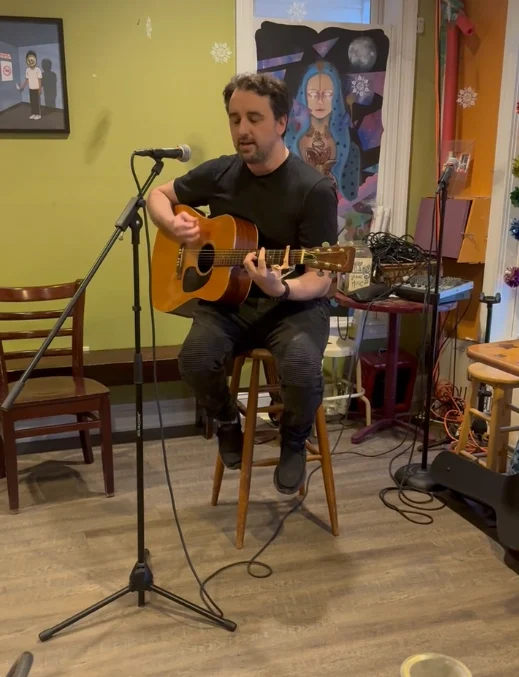
This new orientation is intrinsically linked to his recent foray into songwriting, which he describes as a form of therapy. Through this process, he has found profound personal truths, crafting songs that are among the "most ‘true’ and ‘me’ things that I’ve ever made." He views art-making as a pathway to deeper self-knowledge, a process that enables greater self-humanization. This, in turn, he believes, fosters the ability to see and acknowledge the humanity in others, addressing what he perceives as a fundamental societal failure to recognize shared humanity.
Keith critically observes that many societal problems stem from this failure, manifested in arbitrary hierarchies based on superficial traits. He connects this dynamic to broader issues such as economic inequality (e.g., the existence of billionaires alongside homelessness) and human rights concerns (e.g., the concept of "concentration camps"). While acknowledging the limited impact of an individual, he champions self-healing as a "revolutionary act," creating a "tiny beacon" that positively influences one’s environment. This philosophy, he suggests, is the inverse of the "hurt people hurt people" adage: "healed people heal people."
"Through Broken Land" is being developed as a story that, like his songs, aims to express deep personal truths. Keith has been working on the script for over a year, and he reports that reading certain scenes evokes a profound emotional response in him, not due to perceived literary excellence, but because of their deep resonance with his personal experience. His hope is that this authenticity will connect with others in a similar, impactful way.
Future Outlook and Broader Implications
Despite the commercial setbacks and personal demotivation, Keith remains committed to his craft. He affirms his resolve to complete "Through Broken Land," with collaborators like "Blake" working on components that are expected to reignite his direct involvement in the fall. He also plans to develop other games, including a small card game prototype, for which he intends to seek playtesters soon. His concluding remark, "I will be back!" underscores his enduring passion for creation, even as his definition of success continues to evolve.
Keith’s journey exemplifies the complex challenges and evolving motivations within the contemporary independent game development sector. It underscores the difficulty of achieving commercial success in a hyper-competitive market without significant funding for marketing and distribution. Furthermore, it highlights a growing trend among some independent creators to prioritize artistic integrity, personal expression, and philosophical engagement over purely commercial viability. This shift suggests that for some developers, the value of creation lies increasingly in its capacity for self-discovery and its potential to foster deeper human connection, even if the audience reach remains limited. The experience of developers like Keith contributes to an ongoing industry dialogue about sustainable practices, the definition of "indie," and the fundamental purpose of game creation in a rapidly changing world.
About the Author