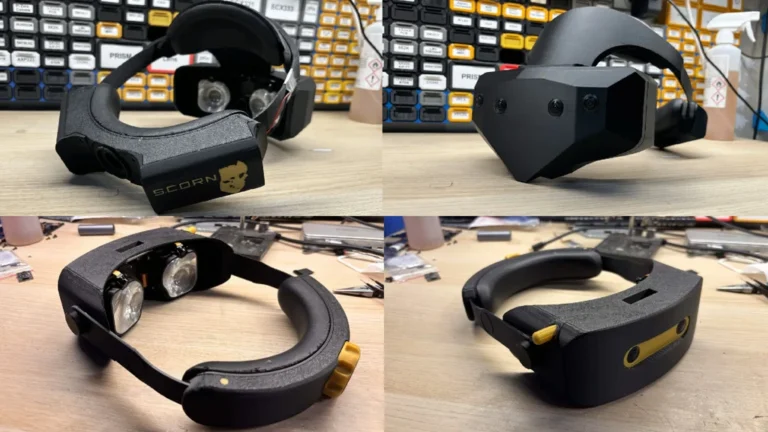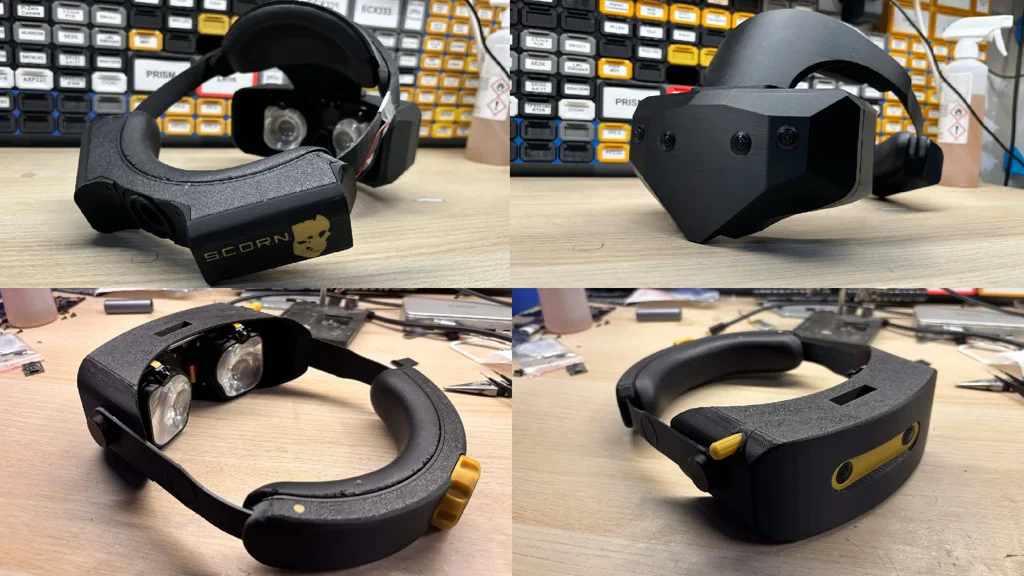
Walker Industries, a specialized technology firm based in Japan, has officially initiated a Kickstarter campaign to fund the production of its highly anticipated open-source virtual reality (VR) hardware suite. The project, which has garnered significant attention within the developer and enthusiast communities over several months of public updates, introduces two primary hardware lines: the flagship Vector Gear, a versatile standalone and PC VR hybrid, and the Andromeda, a dedicated PC VR series. This initiative represents a strategic shift in the XR (Extended Reality) industry, moving away from the "walled garden" ecosystems favored by major corporations toward a modular, transparent, and user-modifiable hardware architecture.
The core philosophy driving Walker Industries is the democratization of high-end VR technology. Led by a team of engineers and XR veterans who cite early science fiction and the community-driven development of social VR worlds as their primary inspirations, the company aims to provide a platform that is entirely transparent at both the hardware and software levels. Unlike contemporary competitors such as Meta or Apple, Walker Industries plans to release all schematics and source code, allowing users to modify, repair, or completely overhaul their devices.
Technical Specifications and Hardware Architecture
The flagship Vector Gear is positioned as a mid-to-high-range device designed to compete with established hardware in the 2026-2027 market cycle. It utilizes the Qualcomm Snapdragon XR2 Gen 2 chipset, which has become the industry standard for high-performance standalone headsets. The visual system features dual 2.5K LCD panels paired with pancake lenses, a configuration that offers a significant reduction in form factor weight while maintaining a wide field of view and high optical clarity.

A distinguishing feature of the Vector Gear is its integrated biometric tracking suite. The headset includes internal sensors for eye tracking and a proprietary face-tracking system known as "Shinra Meisin." This system is designed to facilitate high-fidelity social presence in applications like VRChat or Resonite by streaming facial expressions via Open Sound Control (OSC) protocols. Furthermore, the headset features an automatic Interpupillary Distance (IPD) adjustment mechanism, ensuring optimal visual alignment for a broad range of users without manual calibration.
The Andromeda line offers two distinct tiers for users who prioritize tethered PC VR performance. The Andromeda 2160 serves as an entry-level professional device with a resolution of 2160×2160 per eye, while the Andromeda 2560 targets the high-end enthusiast market with 2560×2560 per eye. Both Andromeda models utilize DisplayPort 1.4 for lossless video transmission, a feature often omitted in modern consumer headsets that rely on compressed USB-C or wireless streaming.
In-House Software and the XRUIOS Ecosystem
In an ambitious move for a small-scale manufacturer, Walker Industries has developed its own operating system, XRUIOS. Built upon the Arch Linux distribution, XRUIOS is tailored specifically for spatial computing. The company describes the environment as a "spatial runtime" that functions similarly to a modular sandbox, where users can manipulate 3D widgets and applications within a persistent home environment.
To bridge the gap between different processor architectures, XRUIOS integrates FEX, an emulation layer that allows X86 applications (standard PC software) to run on the headset’s ARM64 hardware. This capability is augmented by the "Yuuko Protocol," a cross-platform synchronization tool developed in-house. The Yuuko Protocol aims to create a continuous user experience across multiple devices; for instance, a user could pause a media file on their VR headset and resume it from the exact same timestamp on a mobile phone or desktop PC. This protocol treats all of a user’s hardware as a single, cohesive system, breaking down the traditional barriers of data silos between devices.

Advanced Tracking and Controller Innovation
Walker Industries has also developed "AstroSLAM," a proprietary simultaneous localization and mapping (SLAM) algorithm. This system powers the inside-out tracking for both the headsets and the controllers. Notably, the controllers are equipped with onboard cameras, allowing them to track their own position independently of the headset’s sensors. This "inside-out-in" approach solves common occlusion issues found in other systems, such as when a user’s hands move behind their head or out of the headset’s direct line of sight.
The AstroSLAM system is fully compatible with the SteamVR ecosystem, ensuring that the hardware can be used with the existing library of PC VR titles. Additionally, the company has expressed interest in developing a modular faceplate to support SteamVR Lighthouse tracking, catering to users who already own Valve Index or HTC Vive base stations.
Project Chronology and Development Timeline
The Vector Gear project has undergone an extensive public development phase prior to its Kickstarter launch. The team at Walker Industries has maintained a transparent presence on platforms like Reddit for several months, providing regular technical updates and responding to community feedback. This iterative process led to the inclusion of features like the automatic IPD adjustment and the decision to offer "devkit" versions of the hardware.
The current timeline for the project is as follows:

- Late 2025 – Mid 2026: Prototype development and community feedback phase.
- Late 2026: Launch of the Kickstarter campaign to secure manufacturing capital.
- Early 2027: Finalization of hardware revisions and supply chain logistics.
- May 2027: Scheduled worldwide delivery of the first production units.
While the May 2027 delivery target is ambitious, the company has emphasized that the open-source nature of the project allows for a more flexible development cycle than traditional corporate product launches.
Market Positioning and Comparative Analysis
The Vector Gear enters a competitive landscape that includes the "Steam Frame," a rumored or recently released device from Valve (contextualized within the article’s 2026/2027 timeframe). While the Steam Frame offers similar core specifications—such as the XR2 Gen 2 chipset and comparable resolution—Walker Industries distinguishes itself through total hardware modularity.
Industry analysts suggest that the Vector Gear is not intended to be a mass-market "Quest-killer," but rather a specialized tool for three specific demographics:
- Makers and Enthusiasts: Individuals who wish to customize their hardware or avoid the data-privacy concerns associated with large tech conglomerates.
- Researchers and Universities: Institutions that require fully open systems for data collection and experimental software implementation.
- Privacy-Conscious Users: Those seeking a VR solution that does not require a mandatory link to a social media account or cloud-based telemetry.
Pricing and Financial Outlook
The Kickstarter campaign offers several backing tiers:

- Vector Gear (Flagship): $980
- Andromeda 2160: $650
- Andromeda 2560: $1,250
- Devkit Versions: Offered at a slight discount for users willing to perform final assembly themselves.
As with all hardware crowdfunding projects, there are inherent risks. Previous industry examples, such as the Lynx-R1 or Tilt Five, have faced significant delays or financial hurdles during the transition from prototype to mass production. However, Walker Industries’ strategy of using established components (like the XR2 chipset) and focusing on a niche, high-value market may mitigate some of the traditional pitfalls of hardware startups.
Broader Implications for the XR Industry
The success of the Vector Gear and Andromeda project could signal a shift in consumer expectations. If a small, independent team can successfully deliver a feature-rich, open-source headset, it may pressure larger manufacturers to adopt more transparent data practices and modular hardware designs. Furthermore, the development of XRUIOS and the Yuuko Protocol provides a potential blueprint for a future where spatial computing is built on open standards rather than proprietary platforms.
By providing a headset that is "made to be disassembled," Walker Industries is directly challenging the electronics industry’s trend toward non-repairable devices. Whether the project achieves its full manufacturing goals or remains a niche tool for the developer community, its influence on the conversation surrounding digital sovereignty and hardware ownership in the XR space is already evident.
About the Author