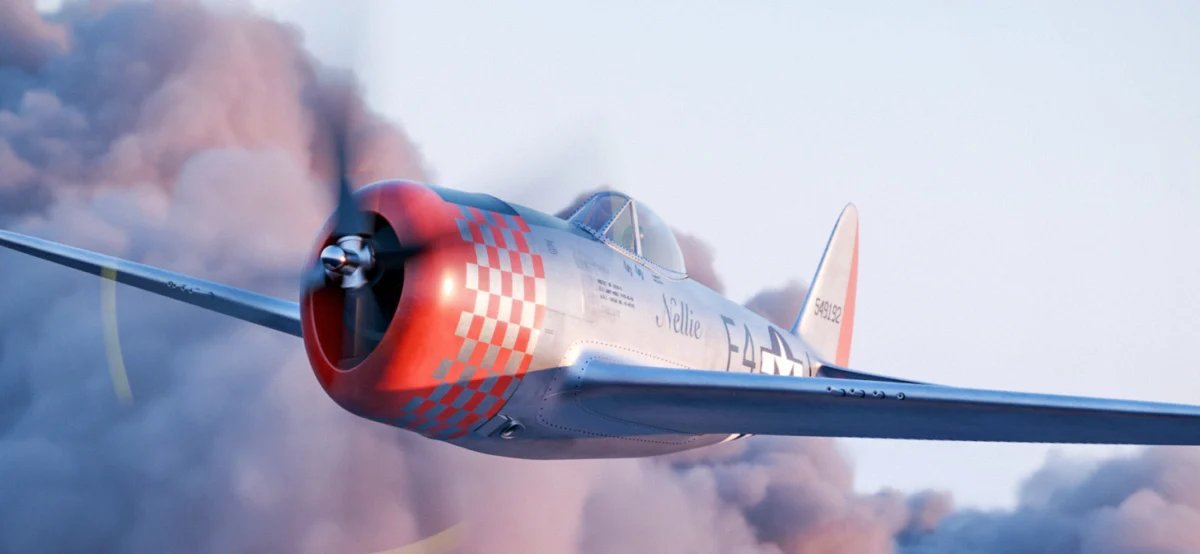
Richard Yot, the creator of the course, emphasizes a core philosophy that underpins the learning experience: the inherent problem-solving nature of ambitious projects. In his own words, "Any ambitious project is, at its most fundamental level, a series of small steps. And each one of those steps is a problem, waiting to be solved." This perspective frames the entire course, positioning each stage of the 3D creation process not as a daunting task, but as a series of manageable challenges to be systematically addressed. "So what lies at the heart of our ability to complete challenging projects, whether at work or for personal pleasure, is our ability to solve problems, both big and small," Yot elaborates.
The "WARBIRD P47 Thunderbolt – From Model to Render" course is designed to be a practical, hands-on educational experience. Over its 5.5-hour duration, it delves into a single, complete project, allowing learners to witness and replicate the journey from the initial stages of modeling a complex aircraft to the final, photorealistic rendering. The emphasis is on breaking down this intricate process into discrete, understandable problems. "Each video in the training will show you how I tackle every specific problem, step-by-step," Yot states, "so that over the length of the course you can see how problem-solving is the beating heart of working in 3D." This approach aims to equip students with not just technical skills in Blender, but also a robust methodology for tackling future creative endeavors.
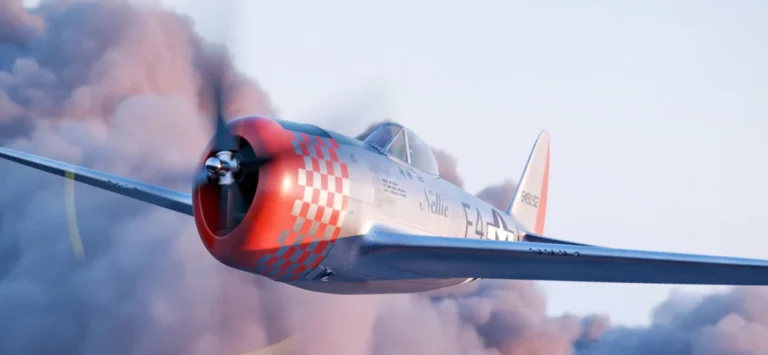
The release of this course by Richard Yot positions it within a growing landscape of specialized 3D art and visualization training. As digital content creation continues to expand across various industries, from film and gaming to architectural visualization and product design, the demand for high-quality, project-based tutorials that demystify complex workflows remains strong. Yot’s focus on a historical subject matter, the iconic P-47 Thunderbolt, also taps into a niche interest for many 3D artists who are passionate about aviation and historical accuracy. The inclusion of volumetric clouds in the final render further elevates the course’s scope, addressing advanced rendering techniques that contribute significantly to atmospheric realism.
The P-47 Thunderbolt: A Historical Context
The P-47 Thunderbolt, often nicknamed "The Jug," was a formidable American fighter-bomber aircraft used by the United States Army Air Forces (USAAF) during World War II. Introduced in 1942, it was one of the most significant American fighter planes of the war, renowned for its ruggedness, speed, and heavy armament. Developed by Republic Aviation, the P-47 was designed as a high-altitude interceptor but proved exceptionally versatile, excelling in ground attack missions as well.
Its robust construction, powered by a Pratt & Whitney R-2800 Double Wasp radial engine, allowed it to withstand significant battle damage and still return to base. This resilience, combined with its eight .50 caliber machine guns, made it a feared adversary for Axis forces. The P-47 saw extensive service in all major theaters of World War II, including the European, Pacific, and China-Burma-India theaters. Its role evolved from air superiority to providing crucial close air support for ground troops, effectively bombing and strafing enemy positions. By the end of the war, the P-47 had flown over 500,000 combat sorties and was credited with destroying over 12,000 enemy aircraft.
The choice of the P-47 Thunderbolt for a 3D modeling and rendering course is fitting. Its complex form, with the distinctive bubble canopy, powerful engine cowling, and extensive wing and fuselage details, presents a substantial modeling challenge. The aircraft’s historical significance also adds a layer of appeal for enthusiasts and artists alike. Recreating such an iconic piece of aviation history in a photorealistic manner requires a deep understanding of form, texture, lighting, and atmospheric effects, all of which are addressed in Yot’s comprehensive training.
Course Structure and Pedagogical Approach
Richard Yot’s "WARBIRD P47 Thunderbolt – From Model to Render" course is structured around the principle of problem-based learning, a pedagogical approach that emphasizes active learning and critical thinking. Instead of presenting a broad overview of Blender’s features, the course focuses on the specific challenges encountered during the creation of a single, complex asset. This allows students to see how various tools and techniques are applied in a practical, integrated workflow.
The 5.5-hour duration suggests a focused and detailed exploration of each phase of the 3D production pipeline. This likely includes:
- Modeling: Beginning with the foundational geometry of the aircraft. This would involve understanding blueprints, reference images, and techniques for creating detailed and accurate shapes, from the fuselage and wings to the engine and landing gear. Yot’s emphasis on "one problem at a time" suggests a systematic approach to breaking down the aircraft into manageable components and tackling their construction sequentially. This might involve techniques for hard-surface modeling, subdivision surface modeling, and potentially sculpting for finer details.
- Texturing and UV Unwrapping: Once the model is complete, the next crucial step is creating realistic surface materials. This phase would involve UV unwrapping, a process of flattening the 3D model’s surface into a 2D representation to apply textures. Following this, students would learn about creating diffuse maps, roughness maps, metallic maps, and normal maps to simulate the look of painted metal, weathered surfaces, rivets, and panel lines. The historical accuracy of the P-47’s paint schemes and markings would likely be a significant consideration.
- Lighting and Scene Setup: To achieve a photorealistic render, effective lighting is paramount. The course would likely cover setting up a virtual studio environment, utilizing different types of lights (e.g., HDRI, area lights, sun lamps) to mimic natural illumination, and understanding how light interacts with different materials. The inclusion of volumetric clouds implies advanced techniques for creating atmospheric scattering and depth, which are critical for an outdoor aerial scene.
- Rendering and Compositing: The final stages involve rendering the scene using Blender’s rendering engines (likely Cycles for photorealism) and potentially post-processing in Blender’s compositor or external software to enhance the final image. This could include color correction, adding bloom effects, lens flares, and integrating the aircraft into the volumetric cloud environment to create a cohesive and believable final render.
The trailer for the course, which specifically mentions "Part 2 Texturing and Rendering," indicates that the content is substantial and likely divided into distinct modules covering these key areas. This phased approach allows learners to master each aspect before moving on to the next, reinforcing the problem-solving methodology Yot espouses.
Supporting Data and Industry Relevance
The demand for skilled 3D artists continues to grow across a multitude of industries. According to reports from industry analysis firms such as Statista and Grand View Research, the global 3D rendering software market is projected to experience significant expansion in the coming years. For instance, the global 3D rendering software market size was valued at USD 1.8 billion in 2022 and is expected to grow at a compound annual growth rate (CAGR) of 13.5% from 2023 to 2030. This growth is driven by the increasing adoption of 3D visualization in sectors like entertainment (film, animation, gaming), architecture, engineering, and product design.
Blender, as a free and open-source 3D creation suite, has seen a substantial surge in its user base and capabilities. Its comprehensive feature set, which includes modeling, sculpting, texturing, rigging, animation, simulation, rendering, and compositing, makes it a powerful and accessible tool for both hobbyists and professionals. The availability of high-quality training resources, like Richard Yot’s course, is crucial for empowering users to leverage Blender’s full potential.
Courses that focus on specific, complex projects like the P-47 Thunderbolt offer several advantages:
- Portfolio Building: Completing such a project provides a strong piece for a 3D artist’s portfolio, demonstrating a range of skills and the ability to manage a complete workflow.
- Skill Specialization: While the course covers a broad pipeline, the detailed focus on aircraft modeling and realistic rendering can appeal to those looking to specialize in hard-surface modeling or aviation-themed art.
- Industry-Standard Workflows: By emulating professional production pipelines, these courses prepare students for real-world challenges in studios or as freelancers.
- Problem-Solving Acumen: The explicit emphasis on problem-solving equips learners with a transferable skill that extends beyond the specific software or project.
The historical accuracy and detailed modeling of a P-47 Thunderbolt can also find applications in historical documentaries, virtual museums, educational simulations, or even as assets for historically themed video games. The ability to render such assets with photorealistic quality is a key requirement for these applications.
Broader Impact and Implications for 3D Education
The release of "WARBIRD P47 Thunderbolt – From Model to Render" by Richard Yot contributes to the ongoing evolution of 3D art education. The trend towards project-based learning, as opposed to purely feature-based tutorials, is becoming increasingly dominant. This approach allows students to contextualize their learning, understanding how individual tools and techniques contribute to a larger, cohesive outcome.
Yot’s philosophical underpinning—that ambition is built on problem-solving—is particularly relevant in the context of 3D art. The field often presents complex technical hurdles, from intricate modeling challenges to the nuances of rendering light and materials. By framing these as solvable problems, Yot’s course aims to empower learners and build their confidence.
The implications for the broader 3D community are significant:
- Accessibility of Advanced Techniques: By demystifying the creation of a detailed aircraft and photorealistic render, Yot’s course makes these advanced skills more accessible to a wider audience. This can lead to an increase in the quality and complexity of user-generated 3D content.
- Inspiration for Future Projects: The success of such a project can inspire other artists to tackle similarly ambitious endeavors, fostering a culture of creativity and continuous improvement within the Blender community.
- Reinforcement of Blender’s Capabilities: High-quality training that showcases Blender’s ability to produce professional-grade results further solidifies its position as a leading 3D software solution.
- Focus on Methodology: The emphasis on a problem-solving methodology provides students with a transferable skill that can be applied to any 3D project, regardless of its specific subject matter.
In essence, Richard Yot’s "WARBIRD P47 Thunderbolt – From Model to Render" is more than just a tutorial; it is a structured approach to mastering complex 3D creation through the lens of practical problem-solving. As the digital art landscape continues to evolve, such comprehensive, project-driven courses will remain invaluable resources for aspiring and established artists alike. The ability to meticulously recreate iconic historical objects like the P-47 Thunderbolt, complete with atmospheric realism, demonstrates the ever-increasing power and accessibility of 3D creation tools like Blender.
About the Author