The mobile gaming landscape is currently undergoing a significant transformation, characterized by a shift toward cross-platform integration, the adaptation of high-fidelity console franchises for handheld devices, and a renewed focus on accessibility for emerging markets. This week’s developments, highlighted by major reveals at Gamescom and strategic announcements from industry giants such as Tencent, NetEase, and Hoyoverse, underscore a long-term roadmap that extends as far as 2027. These updates reflect a broader industry trend where the boundaries between mobile, PC, and console gaming continue to blur, driven by technological advancements in hardware and a growing consumer demand for seamless, high-quality experiences across all platforms.
Strategic Expansions and Major Franchise Adaptations
The most prominent announcements this week involve established intellectual properties (IP) being tailored for the mobile audience. Leading this charge is the collaboration between Timi Studio Group and Capcom for Monster Hunter Outlanders. Scheduled for a 2026 release on iOS and Android, this title represents a strategic effort by Capcom to expand its footprint in the mobile sector beyond its current location-based offering, Monster Hunter Now. By leveraging Timi’s expertise—the studio behind the massive success of Call of Duty: Mobile—Capcom aims to deliver a more traditional open-world hunting experience that mirrors the depth of its console counterparts. Pre-registration is currently open, signaling an early push to build a community ahead of its multi-year development cycle.
Parallel to this, Tencent and Krafton have officially opened pre-registration for PUBG Mobile Light. This streamlined version of the global battle royale phenomenon is designed specifically for lower-end hardware, a move that targets significant growth in regions like Southeast Asia, Latin America, and parts of Africa. With a download size under 1GB on Android and 2GB on iOS, the game maintains accessibility without sacrificing the core gameplay loop. Crucially, the developers have confirmed cross-play support with the main PUBG Mobile title, ensuring that the player base remains unified despite differences in hardware capabilities. The official launch is slated for November, following a series of closed beta tests in select territories.
The Rise of Life Simulations and Creature Collectors
The influence of successful titles like Pokémon, Animal Crossing, and Palworld is evident in the upcoming pipeline of games from major Chinese developers. Hoyoverse, the studio that revolutionized the mobile market with Genshin Impact, has unveiled Petit Planet. Diverging from the high-octane action of its previous hits, Petit Planet is a life simulation game scheduled for a winter 2026 release. Industry analysts suggest this move is intended to capture the "cozy gaming" demographic, a segment that has seen exponential growth since 2020. The game will support cross-platform play between mobile and PC, adhering to Hoyoverse’s established ecosystem strategy.
In the creature-collecting genre, FunPlus and Pawprint are preparing for the imminent launch of Aniimo. The title is scheduled to debut on PC and consoles on September 16, with a mobile release following shortly after on September 23. Furthermore, Tencent’s Morefun Studios is developing Roco Kingdom, a title that has drawn comparisons to the "Pokémon-with-guns" sensation, Palworld. Roco Kingdom is an ambitious multi-platform project (Mobile, PC, PS5, Xbox) with a full launch planned for late 2027. A closed beta is set to begin on October 27, 2024, focusing on the core mechanics of creature interaction and world-building.
NetEase and the Long-Term Development Pipeline
NetEase Games has solidified its commitment to high-budget, open-world RPGs with the announcement of Sea of Remnants and Ananta. Sea of Remnants is positioned as an open-world roguelike RPG, a hybrid genre that seeks to combine the exploration of massive environments with the replayability of procedural generation. The game is slated for a 2027 release across mobile, PC, and current-generation consoles (PS5 and Xbox). A global closed beta is scheduled for December 2024, providing the first hands-on opportunity for players to test the title’s ambitious scope.
Similarly, Ananta represents NetEase’s foray into the "anime-style" open-world action RPG market, a genre currently dominated by Hoyoverse. With a confirmed release date of January 15, 2027, Ananta is being built for mobile and next-gen consoles. These long lead times—frequently exceeding three years from announcement to launch—highlight the increasing complexity and cost of mobile game development, which now rivals that of traditional "AAA" console titles.

Recent Releases and Immediate Launch Windows
While many major announcements focus on the distant future, several titles have recently entered the market or are approaching their launch dates. RubberBandGames’ Wobbly Life, a chaotic open-world sandbox, launched globally on iOS and Android on August 20. Notably, the mobile version mirrors the content of the Steam version and adopts a premium model with no ads or subscriptions, a rarity in the current mobile landscape.
Other notable upcoming and recent releases include:
- Heroic Legends (SonOfBoo): A hand-painted mobile MMO launching free on September 5. This project is a community-driven "reborn" version of a 2011 title, rebuilt by a small independent team with the blessing of the original creators.
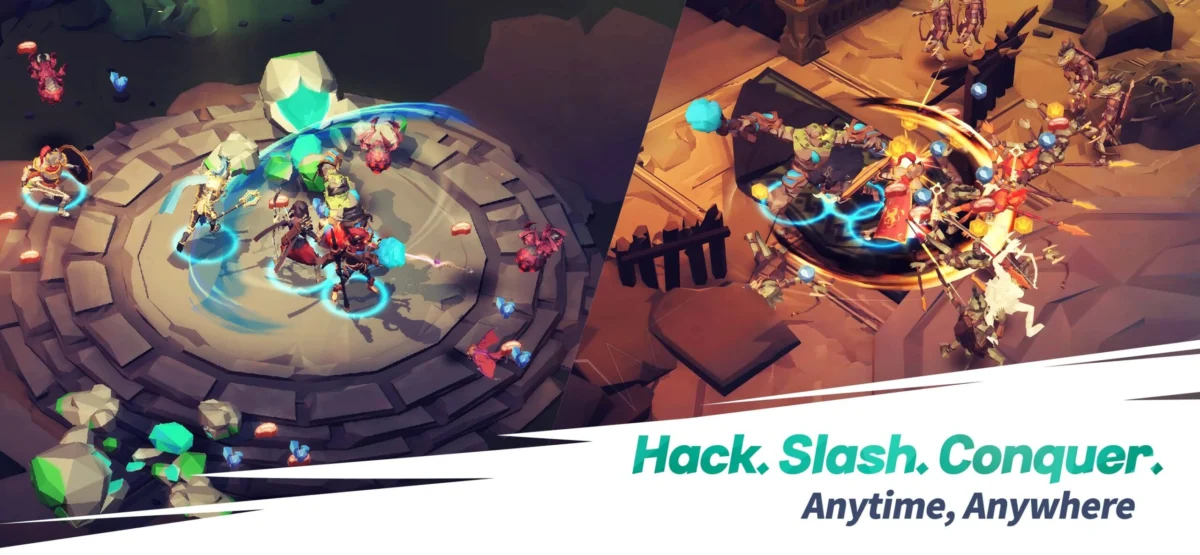
- Dungeons Arise (Kakao/Tiny Fun): A voxel-art hack-and-slash RPG entering closed beta in September. The test is restricted to the United States and Taiwan, indicating a localized strategy for balancing gameplay before a wider rollout.
- Sand Blocks: Drop Puzzle (Rollic): A physics-based puzzle game that launched on Android on August 21, catering to the hyper-casual market.
- Dogpile (Foot Games): An innovative title built around real-world activity (dog walking), now available on iOS, Android, and Nintendo Switch.
Chronology of Upcoming Milestones
The following timeline outlines the key dates for the titles mentioned, providing a roadmap for players and industry stakeholders:
- August 2024: Global launch of Wobbly Life and Sand Blocks: Drop Puzzle.
- September 5, 2024: Launch of Heroic Legends.
- September 16–23, 2024: Staggered launch of Aniimo (PC/Console first, then Mobile).
- October 27, 2024: Closed Beta begins for Roco Kingdom.
- November 2024: Global launch of PUBG Mobile Light.
- December 2024: Global Closed Beta for Sea of Remnants.
- Winter 2026: Expected launch of Petit Planet.
- January 15, 2027: Scheduled launch of Ananta.
- Late 2027: Targeted full release for Roco Kingdom and Sea of Remnants.
Industry Implications and Market Analysis
The data presented by these upcoming releases suggests three primary shifts in the mobile gaming economy. First, the move toward 2026 and 2027 release dates indicates that "mobile-first" developers are adopting the longer development cycles typical of the console industry. This is a direct response to the increasing hardware capabilities of modern smartphones, which can now support sophisticated engines like Unreal Engine 5.
Second, the prevalence of cross-platform play (PC, Mobile, and Console) is no longer an optional feature but a standard requirement for major releases. Games like Aniimo and Roco Kingdom are being developed simultaneously for all platforms to ensure a unified player base and maximized revenue streams through cross-progression.
Third, the strategy of "Light" or "Lite" versions remains a vital tool for global dominance. By offering PUBG Mobile Light, Tencent ensures that it can maintain its market share in regions where high-end smartphones are not yet the norm. This dual-track approach—developing high-fidelity titles for flagship devices while optimizing "Light" versions for the mass market—allows developers to capture the widest possible audience.
Official Responses and Community Outlook
While official statements from Tencent and NetEase emphasize "innovation" and "player-centric design," the community reaction has been cautiously optimistic. Players have praised the decision by RubberBandGames to keep Wobbly Life ad-free, seeing it as a positive step toward more ethical monetization in the mobile space. Conversely, the long wait times for titles like Monster Hunter Outlanders and Petit Planet have sparked discussions regarding the sustainability of announcing games years in advance in an industry where trends can shift rapidly.
As these titles move through their respective beta phases and toward their eventual launches, the mobile gaming sector will likely see increased competition between Chinese tech giants and traditional Western publishers. The success of these upcoming projects will depend not only on their technical execution but also on their ability to maintain player engagement across a multi-year development and live-service lifecycle.
About the Author