Gamescom 2026 has once again transformed the Koelnmesse in Cologne, Germany, into the global epicenter of the interactive entertainment industry, attracting hundreds of thousands of visitors and thousands of exhibitors from across the globe. As the world’s largest gaming event by both floor space and attendance, the scale of the exhibition has reached unprecedented heights, with major publishers and hardware manufacturers competing for the attention of a diverse international audience. Beyond the announcements of new titles and hardware specifications, a perennial question emerges among industry analysts and attendees alike: which organizations have committed the largest financial outlays to secure their physical presence on the show floor?

The cost of participating in Gamescom at a premier level involves more than just the price per square meter of floor space. For "AAA" exhibitors, the budget encompasses elaborate multi-story architectural designs, high-fidelity LED arrays, professional staffing, logistics for international equipment transport, and the procurement of high-end PC and console hardware for thousands of demo stations. In 2026, the trend of high-budget booth construction has shifted noticeably toward cross-platform developers and tech giants, with traditional Western publishers often finding themselves outspent by the massive marketing budgets of Asian conglomerates such as Tencent, NetEase, and Hoyoverse.
The Strategic Significance of Hall 6: Hoyoverse and the Rise of Cross-Platform Dominance
Hall 6 has traditionally served as a primary hub for high-traffic exhibitors, and in 2026, the presence of Hoyoverse dominated the southern half of the hall. Following a significant presence during the Opening Night Live (ONL) showcase hosted by Geoff Keighley, the Shanghai-based developer utilized its booth space to showcase a comprehensive portfolio of titles. The booth featured dedicated zones for established live-service hits Genshin Impact, Honkai: Star Rail, and Zenless Zone Zero, while allocating substantial square footage to newer ventures like Petit Planet and Honkai Nexus Anima.

Market analysts note that Hoyoverse’s strategy involves creating "immersive environments" rather than simple demo kiosks. By incorporating large-scale statues, professional cosplayers, and high-production-value stage shows, the company aims to solidify brand loyalty. Notably absent from the playable floor, however, was Nodus Fall, the company’s recently revealed title drawing comparisons to Elden Ring. Industry speculation suggests that the decision to keep Nodus Fall behind closed doors or limited to trailer reveals is a calculated move to manage expectations for a game that represents a significant departure from their established "gacha" mechanics.
Adjacent to Hoyoverse, the Silver Palace booth represented another high-capital investment from a Chinese developer. The RPG, which gained significant traction during the ONL broadcast, featured a booth characterized by "over-the-top" architectural elements intended to mimic the game’s aesthetic. This highlights a broader industry trend where emerging Chinese studios are utilizing Gamescom as a launchpad for global expansion, often outspending established European and American firms to ensure a memorable first impression on Western audiences.

Corporate Synergy and Market Positioning: Ubisoft, EA, and FunPlus
Ubisoft’s presence in Hall 6 was particularly noteworthy given the company’s recent period of organizational restructuring and financial volatility. The French publisher’s booth was elaborate and strategically positioned at the hall entrance. Observers have pointed to Ubisoft’s deepening business relationship with Tencent as a likely catalyst for the scale of this year’s display. The partnership has allowed Ubisoft to maintain a "AAA" physical presence despite broader cost-cutting measures elsewhere in the company.
Directly opposite Ubisoft, Electronic Arts (EA) focused its resources on EA Sports FC. While the staging was modern and sleek, analysts described it as "less impactful" compared to the sheer verticality and lighting complexity of its neighbors. This suggests a shift in EA’s marketing philosophy, perhaps favoring digital engagement and influencer-led activations over traditional, massive physical installations.

In the same hall, FunPlus, through its creature-collector title Aniimo, demonstrated the financial might of the mobile gaming sector. The booth was characterized by intense, bright lighting and high-density demo stations. As the maker of State of Survival, FunPlus is leveraging the cross-platform potential of Aniimo to bridge the gap between casual mobile players and core PC/console gamers, a move that requires a massive physical footprint to demonstrate the game’s graphical fidelity across different devices.
The Return of the Tech Giants: Google and Huawei in Hall 7
Hall 7 marked a significant turning point in the history of Gamescom with the return of major platform holders. Google Play established its largest regional consumer presence in over a decade. This move is interpreted as a direct response to the changing regulatory landscape in the European Union, specifically the Digital Markets Act (DMA), which has forced a more competitive environment for app stores. By securing a "meaty" stand near industry veterans Konami and Sega, Google is signaling its commitment to the "PC-to-mobile" ecosystem, promoting the ability to play Android games seamlessly on Windows hardware.

Directly competing for this developer and consumer mindshare, Huawei’s AppGallery and Game Center occupied a similarly large and luminous space. The competition between these two tech giants in a traditionally "hardcore" gaming environment like Gamescom underscores the increasing importance of mobile distribution platforms in the global gaming economy.
Hall 7 also housed Epic Games, which utilized its space to promote Fortnite’s "Override" season. In a move that blurred the lines between digital entertainment and luxury branding, the booth featured a collaboration with Mercedes-Benz. Such partnerships are becoming more common as Gamescom evolves from a trade show into a lifestyle event, attracting non-endemic brands looking to tap into the high-spending "Gen Z" and "Millennial" demographics.

The Industry Stalwarts: Xbox and NetEase
Occupying the entire back wall of Hall 7, Xbox maintained its status as one of the show’s largest exhibitors. However, the 2026 activation was strictly focused on its core console and PC franchises, including Halo, Call of Duty, Gears of War, Fable, and Forza. Despite Microsoft’s acquisition of Activision Blizzard King, there was a noticeable absence of mobile-centric titles like Candy Crush or Diablo Immortal on the main floor. This separation of "mobile" and "core" brands suggests that Microsoft is still navigating the integration of its mobile portfolio into the traditional Xbox consumer experience.
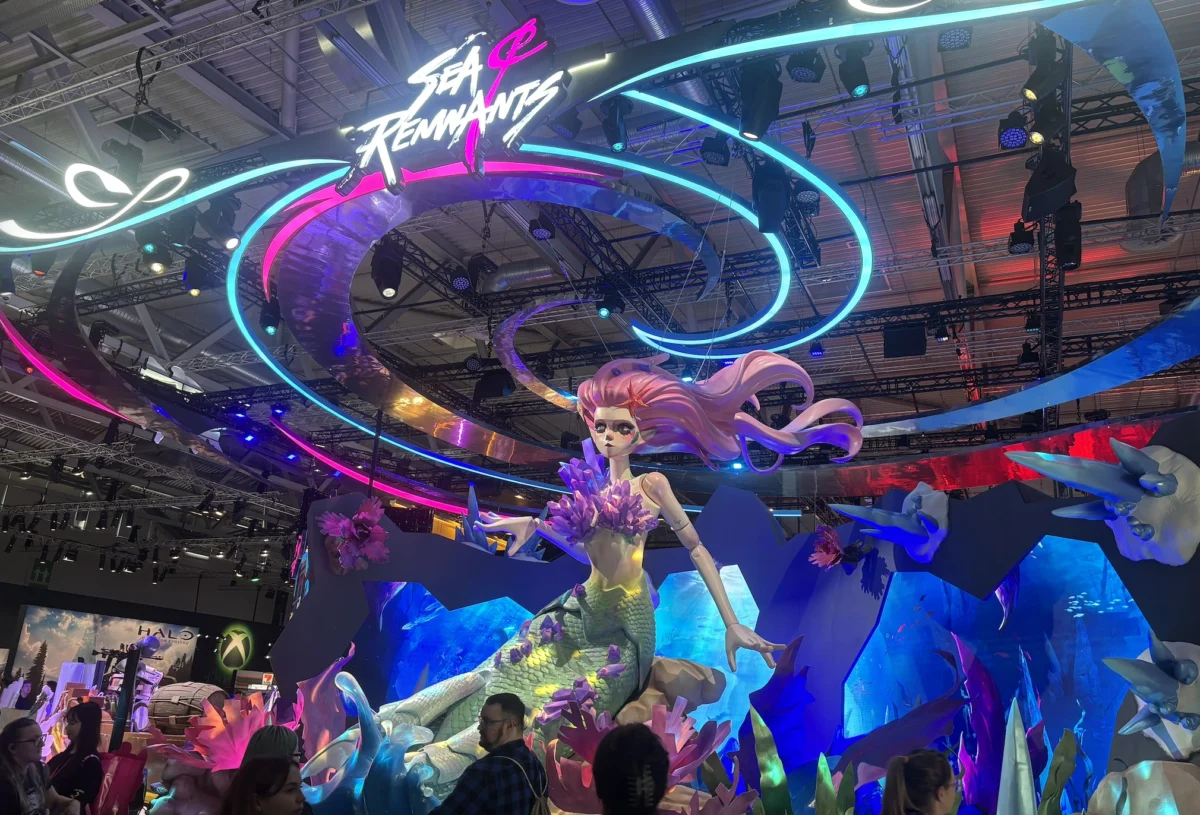
NetEase, meanwhile, opted for a visually striking display for Sea of Remnants, alongside playable builds of Where Winds Meet and Marvel Rivals. NetEase’s strategy at Gamescom 2026 has been one of "prestige positioning," choosing high-quality, aesthetically unique booth designs to differentiate itself from the more "industrial" feel of traditional Western booths.

Hall 8 and the Spectacle of Gryphline
For many attendees, Hall 8 represented the pinnacle of booth production value. Gryphline’s Arknights: Endfield booth was described by many as "truly enormous," focusing on spectacle rather than high-density demo kiosks. The booth centered around a massive stage designed for high-profile cosplayers and life-sized, expensive-looking character models.
This approach emphasizes brand "vibe" and social media shareability over hands-on gameplay time. While the back of the booth did provide PC stations for testing the game, the primary investment was clearly in the visual and atmospheric elements of the stand. Gryphline’s willingness to dedicate such a large budget to a single franchise highlights the high lifetime value (LTV) of the Arknights audience and the company’s confidence in its global appeal.

Tencent Games, operating under its mobile-focused label, also occupied a significant portion of Hall 8. The booth showcased Honor of Kings World, alongside Arena of Valor and the mobile adaptation of Rust. Tencent’s presence was a mix of "fun, bright staging" and technical showcases, reinforcing its position as the world’s largest game publisher by revenue.
Hall 9: Hardware Innovation and Lifestyle Integration
Hall 9 served as the primary destination for hardware enthusiasts and lifestyle gaming brands. Samsung occupied a massive booth at the entrance, focusing on its Odyssey line of gaming monitors and its integrated Gaming Hub. The scale of Samsung’s investment reflects the growing market for premium gaming peripherals, as players increasingly prioritize high-refresh-rate displays and cloud-integrated hardware.

Nintendo, positioned opposite Samsung, took a different approach. Rather than focusing on raw power, the Japanese giant dedicated a large area to Switch Sports Resort, emphasizing local multiplayer and family-friendly engagement. In a surprising move for many purists, Nintendo also featured Call of Duty on its stand, a result of the long-term licensing agreements signed following Microsoft’s acquisition of the franchise.
The hall was rounded out by Infold Games, whose "lavish" stand was split between Love and Deepspace and Infinity Nikki. The booth attracted significant crowds, particularly for its "fan experiences" which included interactive photo opportunities and immersive sets. The success and scale of the Infold booth indicate the massive growth of the "cozy gaming" and "otome" genres, which were once considered niche but now command marketing budgets equivalent to major action franchises.

Financial Implications and Market Outlook
The sheer scale of the booths at Gamescom 2026 suggests that the industry’s largest players see physical events as essential for maintaining brand dominance in an increasingly crowded digital market. While the exact figures remain confidential, industry experts estimate that the top-tier exhibitors in Halls 6, 7, and 8 likely spent between €2 million and €5 million each on their presence, including space rental, construction, and staffing for the duration of the event.
The dominance of Asian firms like Tencent, NetEase, and Hoyoverse in terms of floor space and "spectacle" spending indicates a shift in the global balance of power. These companies are no longer just mobile developers; they are the new "AAA" giants, capable of outspending traditional Western publishers to capture the attention of the European market.

As Gamescom 2026 concludes, the trend is clear: the "winner" of the booth spending competition is rarely a single company, but rather a collective of high-growth publishers from the East and tech platform holders from the West. This financial arms race in booth construction serves as a physical manifestation of the intense competition for player time and disposable income in the modern gaming era. The obligatory "Giant Tractor" at the Farming Simulator booth remains a quirky reminder of the show’s roots, but in 2026, it is surrounded by a multi-million-euro landscape of digital ambition and corporate might.
About the Author