The digital storefront for video games, Steam, functions less as a static catalog and more as a dynamic algorithmic gateway, according to Thomas Reisenegger of Future Friends Games. Speaking at the GDC Festival of Gaming, Reisenegger delivered a talk titled "Your Steam Page Needs a Soul: How to Get Your Game’s Magic Across on Steam," where he underscored two critical tenets for developers: understanding Steam’s underlying algorithmic priorities and leveraging strategic visibility. This perspective reframes the conventional understanding of a store page, positioning it as a pivotal testbed for algorithmic favorability rather than a mere display shelf.
GDC Festival of Gaming: A Hub for Industry Insights
The Game Developers Conference (GDC) and its associated Festival of Gaming serve as premier annual gatherings for professionals in the video game industry, offering a vital platform for sharing knowledge, networking, and exploring the latest innovations and challenges. Held virtually or in hybrid formats, these events bring together developers, publishers, educators, and technology providers from around the globe. Sessions like Reisenegger’s are particularly crucial for independent and mid-tier studios, who often operate with limited marketing budgets and must contend with an increasingly saturated market. With thousands of new titles launching on Steam annually—a figure that has consistently exceeded 10,000 games in recent years—the battle for visibility and player attention has intensified dramatically. Expert advice on platform-specific optimization becomes invaluable for developers striving to cut through the noise and connect their creations with their target audience. Reisenegger’s insights, grounded in practical experience, offer a strategic roadmap for navigating this competitive landscape.
Unpacking Steam’s Algorithmic Focus: Revenue Per Impression
Reisenegger’s primary revelation centered on Steam’s core business driver: maximizing revenue. He articulated that while this might seem self-evident for a commercial platform, the specific metric Steam prioritizes is "revenue per impression" or "revenue per visit." This means that every time a game’s capsule image or store page is shown to a user, Steam is essentially evaluating its potential to generate income. The platform’s algorithms are designed to identify and promote content that demonstrates a higher conversion rate from impression to purchase, or from visit to wishlist addition, ultimately contributing more to Steam’s bottom line. "They really look at ‘what makes me, Steam, the most money per second?’ and this is how you get judged," Reisenegger explained, emphasizing that this fundamental principle dictates a game’s visibility and algorithmic ranking across the platform.
This algorithmic imperative has profound implications for game developers. It suggests that a beautifully crafted game with a poorly optimized Steam page might struggle for discovery, while a game that effectively communicates its appeal and converts impressions into engagement will be favored by the system. The algorithm acts as a gatekeeper, constantly testing and re-evaluating each game’s commercial viability. This understanding shifts the developer’s focus from merely presenting their game to actively engineering their store page for algorithmic success, a process that requires a deep understanding of marketing psychology and data analysis.
The "Ski Jump" Analogy: Building Momentum for Launch Success
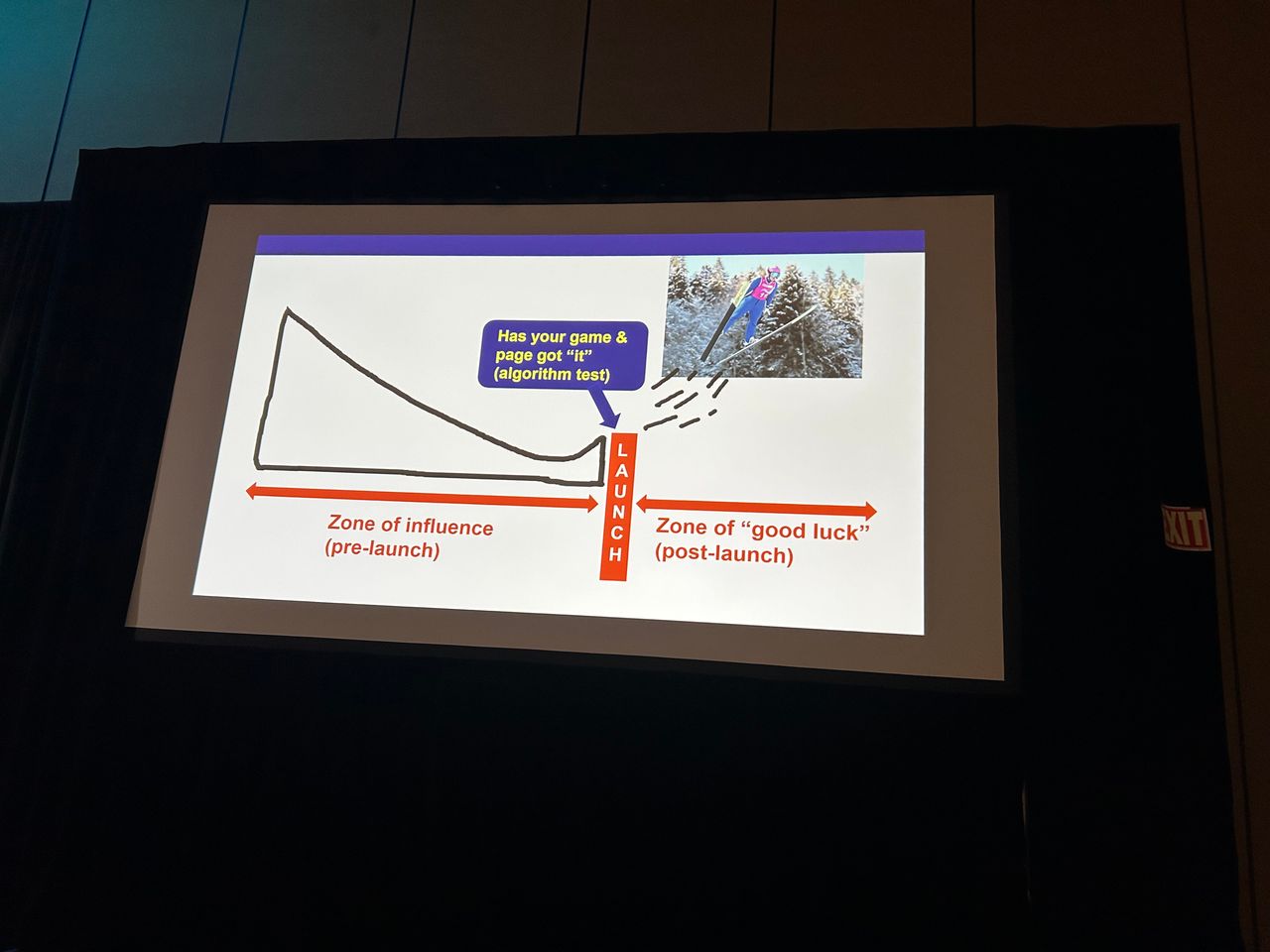
To illustrate the journey of a game through the Steam ecosystem, Reisenegger employed a vivid winter sports metaphor: ski jumping. "It’s pretty much like ski jumping," he stated, explaining the process: "You go down this… beautifully drawn ramp, you get momentum, you jump, and then you fly. And when you fly, the further you fly the better!" This analogy encapsulates the lifecycle of a game’s visibility on Steam, from pre-launch preparation to post-launch sustained engagement.

The "ramp" phase represents the crucial pre-launch period, where developers must meticulously optimize every element of their Steam page. This includes crafting compelling capsule images, engaging trailers, informative descriptions, and strategic tagging. During this phase, the goal is to generate "momentum" – primarily in the form of wishlists. A robust wishlist count before launch signals strong player interest to Steam’s algorithms, acting as a critical indicator of potential revenue per impression. Industry data consistently shows that a significant number of wishlists can correlate directly with higher sales during the initial launch window, giving the game the algorithmic push it needs.
The "jump" signifies the game’s launch day, a pivotal moment where all the accumulated momentum is unleashed. This is when the game’s store page goes live for purchase, and the algorithmic testing intensifies. If the game performs well—meaning it achieves a good conversion rate from impressions to sales—it gains initial algorithmic favor. This initial success is critical because, as Reisenegger pointed out, a substantial portion of Steam traffic is internal, originating from within the platform itself. This internal traffic, often driven by algorithmic recommendations, wishlists, and curated lists, becomes even more pronounced after launch.
The "flight" represents the post-launch period, where sustained visibility and sales are directly proportional to the game’s ongoing algorithmic performance. The further a game "flies," the longer it maintains algorithmic favor, leading to continuous discovery by new players. This requires ongoing engagement, potential updates, and community management, all of which feed back into the algorithm’s assessment of a game’s long-term value and revenue generation potential. Reisenegger stressed the importance of utilizing "every tool in Steam’s store page toolbox" to maximize visibility and marketing impact throughout these phases.
The Critical Role of the Capsule Image: Your Game’s First Impression
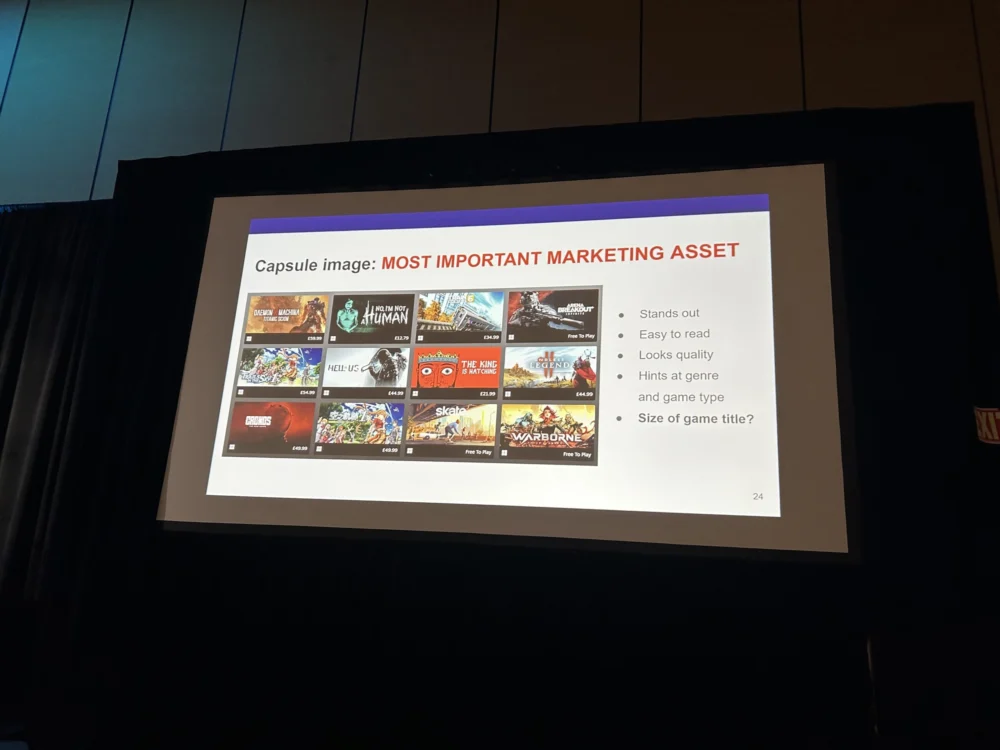
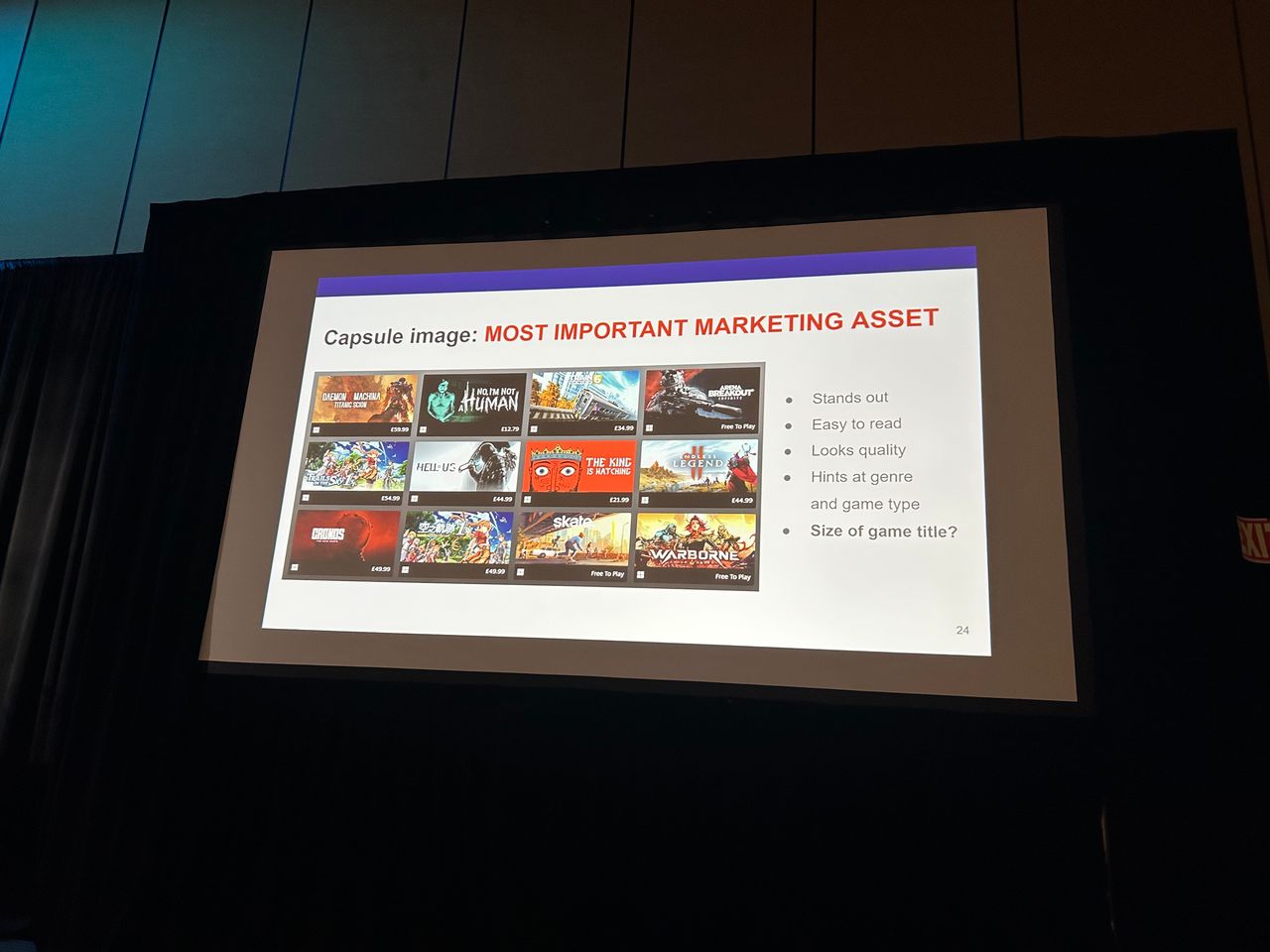
Among the myriad tools available, Reisenegger singled out the capsule image as arguably the most important marketing asset on Steam. This small but mighty visual is often the first, and sometimes only, impression a potential player gets of a game while browsing lists, recommendations, or search results. A developer has mere seconds to capture attention, convey genre, and pique curiosity.
An effective capsule image, according to Reisenegger, must possess several key attributes:
- Stands Out: In a sea of thousands of games, the image needs to be visually distinctive, employing unique color palettes, compositions, or stylistic choices that grab the eye.
- Easy to Read: If text is included, it must be legible at small sizes. The overall message or core concept should be immediately understandable without requiring close inspection.
- High-Quality Look: Professional polish is non-negotiable. A low-resolution, poorly designed, or uninspired capsule image can instantly undermine a game’s perceived quality, regardless of the actual game’s merit.
- Strongly Hints at Genre/Game Type: Players often browse with specific genres or experiences in mind. The capsule image should clearly communicate what kind of game it is—be it a horror title, a simulation, an RPG, or a puzzle game—to attract the right audience and avoid misdirection.
Reisenegger provided contrasting examples to illustrate how developers approach text and imagery. For the horror title No I’m Not A Human, the game’s intriguing, thought-provoking name is prominent in the capsule, immediately setting a tone of mystery and unease. In this context, the title itself is a marketing hook. Conversely, for Train Sim World 6, the primary visual is a dramatic, high-quality shot of a train, with only the word "train" prominently visible. Here, the visual directly communicates the core gameplay experience, appealing to a niche audience that explicitly seeks train simulations. This highlights that there is no universal template; the best approach depends entirely on the game’s identity, its name, and its target audience. The key is intentionality and clarity in communicating the game’s essence at a glance.
Crafting an Authentic Store Page: Beyond Visuals
While the capsule image is the hook, the entire Steam page serves as the narrative. Reisenegger guided attendees through the "layers of information" that make up a compelling Steam page, emphasizing that each element—from trailers and screenshots to descriptions, tags, and localization—must work in concert to create an accurate and appealing impression. The overarching goal is not just to attract players, but to attract the right players, thereby mitigating the risk of expectation mismatch.
This focus on authenticity is crucial for long-term success and positive player sentiment. Reisenegger referenced an old tweet highlighting common reasons for negative Steam reviews, one of which is a significant divergence between player expectations (set by the store page) and the actual game experience. If a store page oversells a game, misrepresents its genre, or fails to communicate its core mechanics, players are likely to feel disappointed, leading to negative reviews that can harm algorithmic standing and future sales.
Therefore, developers must view their Steam page as an honest, yet compelling, representation of their game’s "soul." This means:
- High-Quality Trailers: A short, impactful trailer that accurately showcases gameplay, unique features, and the overall mood of the game.
- Curated Screenshots: A selection of diverse screenshots that highlight different aspects of the game, from gameplay mechanics to environmental art and character design.
- Clear Descriptions: A concise yet comprehensive description that articulates the game’s premise, features, and unique selling points.
- Strategic Tagging: Utilizing relevant Steam tags to improve discoverability for specific genres and sub-genres.
- Localization: Translating the store page into multiple languages to reach a global audience, particularly for games with broader appeal.
- Community Engagement: Actively responding to comments, questions, and feedback on the Steam community hub, demonstrating developer responsiveness and building a loyal player base.
The absence of a "correct formula" that works for every project underscores the need for bespoke strategies. Each game is unique, and its Steam page must reflect that individuality while adhering to best practices for clear communication and algorithmic optimization.
"Beta Testing Your Magic": Iterative Marketing in Practice
Perhaps one of the most actionable pieces of advice from Reisenegger was the concept of "beta testing your magic." This refers to the iterative process of testing marketing angles and core appeals outside of the Steam page, typically on social media platforms, to discover what truly resonates with potential players before committing to a final store page strategy.
He provided an illuminating example from the co-working game/app On-Together: Virtual Co-Working. The marketing team behind this project created over 70 different TikTok videos, experimenting with various angles, hooks, and messaging until they identified a specific approach that generated significant engagement and viral traction. Once they "struck gold" with a particular video or concept, they then leveraged elements from that successful social media content—be it a specific tagline, a visual motif, or a narrative framing—and integrated them into their revamped Steam page.
This strategy is powerful because it allows developers to validate their marketing hypotheses with real audience data, rather than relying on internal assumptions. Social media platforms, with their rapid feedback loops and diverse user bases, serve as excellent testing grounds for identifying a game’s most compelling "magic." Once that magic is found, Reisenegger urged developers to "bite into it like a little dog that just got its favorite toy and don’t let it go! You keep trying that angle and if it works, you know it’s good." This emphasizes the importance of doubling down on proven strategies, refining them, and consistently applying them across all marketing channels, including the Steam page. This iterative, data-driven approach to marketing reduces risk and maximizes the chances of a game’s unique appeal shining through in a crowded market.
Broader Implications for Game Developers in a Crowded Market
Reisenegger’s talk highlights a fundamental shift in game development: marketing is no longer an afterthought but an integral part of the development process, demanding attention from the earliest stages. In an era where thousands of games compete for attention, a compelling game alone is insufficient; it must also be discoverable and effectively presented. This necessitates a "marketing-first" mindset, where developers consider how their game will be positioned and sold even as they design it.
The implications for indie developers are particularly significant. With limited budgets, they must be exceptionally shrewd in their marketing efforts. "Beta testing your magic" on free or low-cost social media platforms offers an accessible way to refine messaging without significant financial outlay. This approach democratizes market research, allowing smaller teams to compete more effectively with larger studios that have dedicated marketing departments.
The Evolving Landscape of Game Discovery
The insights shared by Reisenegger also speak to the ongoing evolution of digital storefronts and game discovery. As platforms like Steam continue to grow and mature, their algorithms become more sophisticated, constantly seeking to optimize for revenue and user engagement. This means that developers must remain agile, adapting their strategies to the changing algorithmic landscape. The emphasis on revenue per impression underscores a broader trend in digital commerce, where platforms are increasingly prioritizing content that demonstrably converts.
Furthermore, the "soul" aspect of the talk’s title is not merely poetic; it refers to the authentic, unique essence of a game. In a market where generic titles struggle, a game that clearly communicates its distinct identity, its "magic," stands a much better chance of forging a connection with players. This reinforces the idea that while algorithms dictate visibility, genuine player engagement ultimately drives long-term success.
Conclusion: Navigating Steam with Strategy and Soul
Thomas Reisenegger’s GDC Festival of Gaming presentation served as a timely reminder that succeeding on Steam requires a dual approach: a strategic understanding of its revenue-driven algorithms and an authentic presentation of a game’s unique appeal. By treating the Steam page as an algorithmic test, meticulously optimizing the capsule image, crafting an honest and compelling store presence, and iteratively testing marketing "magic" on external platforms, developers can significantly enhance their game’s visibility and conversion rates. In a fiercely competitive industry, mastering these principles is not just a marketing advantage—it is increasingly a prerequisite for a game to truly fly. The journey from a game concept to a successful launch on Steam is akin to a ski jump: with careful preparation on the ramp, a well-executed jump, and sustained flight through algorithmic favor, a game can achieve the widespread recognition it deserves.
About the Author