NVIDIA has officially released a series of driver updates designed to resolve a persistent freezing issue that has plagued Meta Quest Link users for nearly ten months. The technical glitch, which first emerged in early 2024, caused the Meta Quest Link software to experience sudden frame freezes and visual artifacts during PCVR (PC-powered Virtual Reality) sessions. This resolution marks a significant milestone for the VR community, particularly for power users and professional developers who rely on the Meta Quest ecosystem for high-fidelity simulation and application design.
Technical Overview of the Meta Quest Link Instability
The conflict between NVIDIA’s graphics drivers and the Meta Horizon Link software—formerly known as Oculus Link—was characterized by unpredictable performance degradation. Users reported that while the software would initially function correctly, the visual stream would eventually lock into a static frame. This was often accompanied by "tearing" or digital artifacts, rendering the headset unusable until the Meta Quest background services were manually restarted.
Technically, the issue was localized to the way NVIDIA drivers handled the video encoding stream required for Link. Unlike dedicated PCVR headsets that use a direct DisplayPort or HDMI connection, the Meta Quest 2, 3, and Pro utilize a compressed video stream sent over USB or Wi-Fi (Air Link). This process relies heavily on the graphics card’s onboard encoder (NVENC). The driver conflict disrupted this encoding pipeline, leading to a buffer overflow or a synchronization failure that caused the stream to hang while the underlying PC application continued to run.
Chronology of the Ten-Month Conflict
The timeline of the issue suggests a complex troubleshooting period involving both Meta’s engineering teams and NVIDIA’s driver department.

- January – February 2024: Following the release of a new branch of NVIDIA Game Ready Drivers, reports began to surface on the Meta Community Forums and Reddit regarding "random freezing" on RTX-series GPUs.
- Spring 2024: Meta engineers acknowledged the problem, clarifying through official support channels that the root cause resided within the NVIDIA driver architecture rather than the Meta Quest firmware.
- Mid-2024: Users were forced to adopt various workarounds, such as rolling back to drivers released in late 2023. This created a dilemma for users who required the latest drivers for modern non-VR titles or professional software compatibility.
- October 2024: NVIDIA identified the specific bug under internal tracking ID 6292679. Preliminary fixes were integrated into beta versions of the driver.
- November 2024: The formal rollout of the fix commenced. NVIDIA released Game Ready Driver v621.01, which explicitly listed a fix for the Meta Horizon Link stream freeze. This was followed shortly by the release of Enterprise Driver v621.14, extending the fix to professional-grade GPUs.
The Impact on Professional VR Development Pipelines
While casual gamers were able to bypass the issue by using third-party alternatives such as Virtual Desktop or Steam Link, the professional development community remained uniquely affected. The official Meta Quest Link remains a critical tool for developers working within the Unity or Unreal Engine environments.
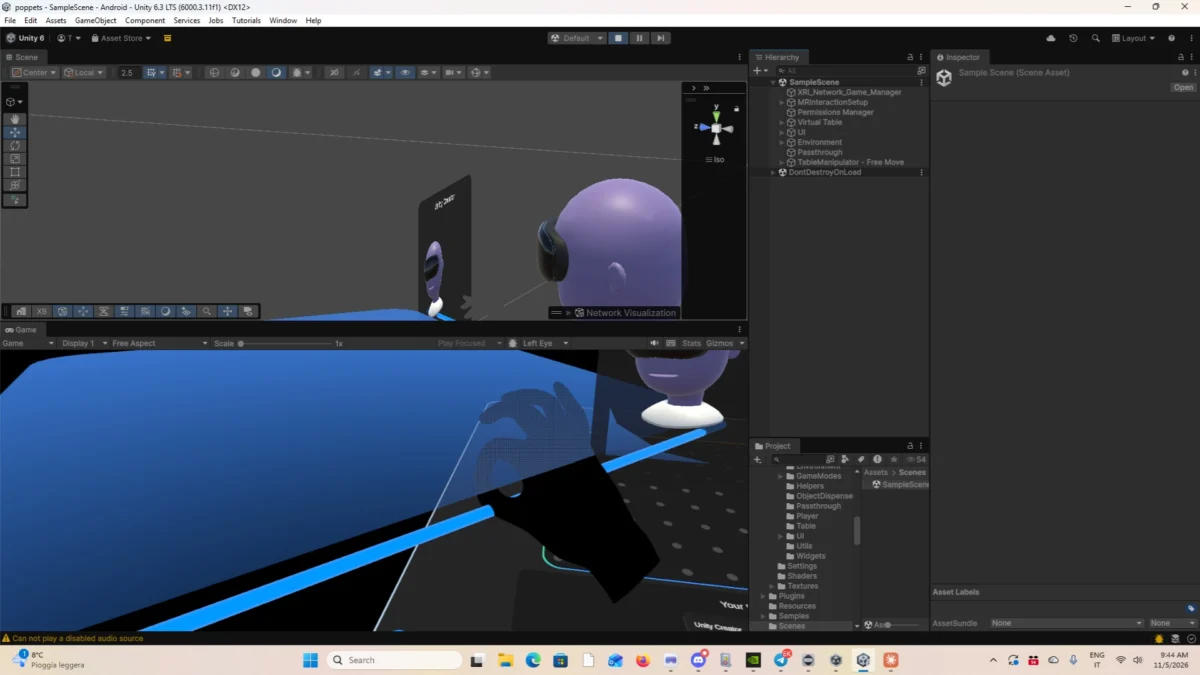
Unlike third-party streaming solutions, the official Link software allows for the transmission of "Meta-specific" data layers. This includes real-time streaming of passthrough video, eye-tracking data, and hand-tracking telemetry from the headset back to the development PC. For developers creating Mixed Reality (MR) applications, this functionality is essential. It allows them to use the "Play" mode within their game engine to see exactly how hand interactions and environmental passthrough will behave without the time-consuming process of building and deploying an APK (Android package) to the headset. The driver instability essentially throttled the development speed of XR (Extended Reality) projects, as developers were forced to choose between a stable driver and the ability to test advanced Meta Quest features.
Comparative Analysis of PCVR Streaming Solutions
The ten-month outage of a stable Link driver highlighted the competitive landscape of the PCVR streaming market. During the period of instability, two primary alternatives gained significant market share:
- Virtual Desktop: A long-standing third-party solution known for its robust networking stack and high degree of customization. It remained unaffected by the NVIDIA driver bug, serving as the primary refuge for Quest users.
- Steam Link: Valve’s native solution for connecting Quest headsets to the SteamVR ecosystem. While efficient for gaming, it lacks the deep integration required for Meta-specific SDK development features.
Despite the efficiency of these alternatives, the official Meta Quest Link remains the only solution that provides a direct, wired connection with high-bitrate throughput (up to 500-900 Mbps on some configurations), which is preferred for reducing latency and visual compression in professional simulations.
Technical Specifications of the v621.xx Driver Release
The recent driver update specifically targets the USB-connected stream. According to the NVIDIA release notes for version 621.01 and the enterprise-specific 621.14, the fix addresses "General Bug [6292679]," which caused the Meta Horizon Link stream to freeze when connected over USB.

Internal testing by industry analysts suggests that the fix also stabilizes Air Link (wireless) connections, as both methods share the same underlying encoding logic. Reports from the field indicate that the fix is robust across various hardware configurations, including the high-end RTX 40-series and the workstation-class RTX Ada Generation GPUs. However, some users on enterprise systems have noted that while the VR freeze is resolved, secondary software conflicts with specific proprietary development tools may still necessitate careful version management.
Broader Implications for the PCVR Ecosystem
This incident underscores the fragility of the PCVR ecosystem, which relies on a complex chain of hardware, firmware, and software drivers. The delay in resolving the issue—spanning nearly a year—indicates that VR-specific driver optimization may currently hold a lower priority compared to AI-driven features and general gaming performance for major hardware manufacturers.
Furthermore, the situation highlights the dependency of the Meta Quest hardware on third-party vendors. As Meta continues to pivot toward standalone "Spatial Computing," the maintenance of the PC-tethered Link software remains a vital but challenging bridge for the high-end enthusiast market. The resolution of this bug is expected to restore confidence in the Quest as a professional-grade PCVR tool.
Conclusion and Recommendations for End-Users
With the release of the v621.xx series drivers, users experiencing the "Link Freeze" are advised to update their systems immediately. The update can be accessed via the NVIDIA App, GeForce Experience, or through manual download from the NVIDIA official website.
For developers and enterprise users, it is recommended to perform a "Clean Install" of the driver to ensure that legacy cache files from previous, unstable versions do not interfere with the new encoding logic. While the fix appears to be definitive for the freezing bug, users should remain vigilant for potential conflicts with other specialized software, as the intersection of VR drivers and enterprise applications remains a highly complex technical environment. For now, the return of a stable, high-bitrate connection via Meta Quest Link provides much-needed relief to a community that has spent the better part of a year navigating workarounds.
About the Author