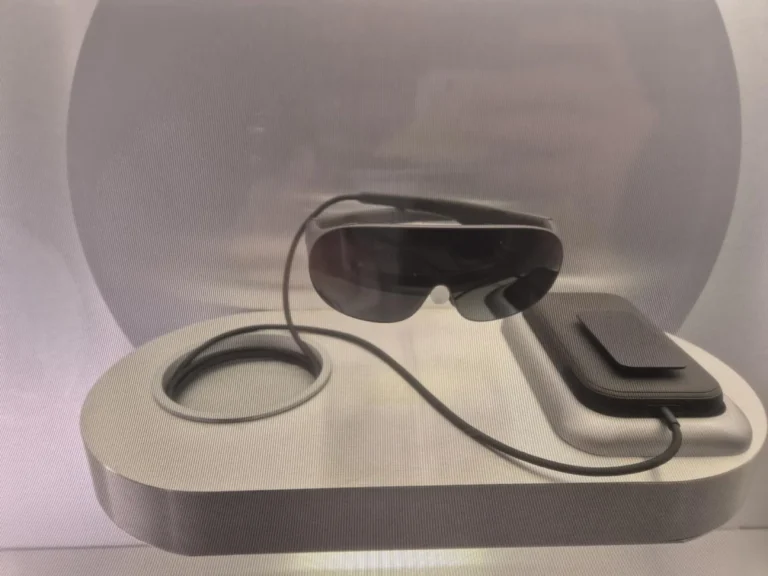
Pico, the immersive technology subsidiary of ByteDance, has officially provided a preliminary look at its next-generation hardware and software ecosystem, signaling a strategic shift toward high-end spatial computing. During a recent digital premiere, the company unveiled "Project Swan," a codenamed headset scheduled for a 2026 release, alongside its redesigned operating system, Pico OS 6. This announcement comes at a pivotal moment for the Extended Reality (XR) industry, as manufacturers pivot from traditional Virtual Reality (VR) gaming toward multi-functional spatial workstations intended for productivity and prosumer use.
The technical architecture of Project Swan represents a significant departure from previous Pico iterations. The device will utilize a dual-chip configuration, a design philosophy similar to that of the Apple Vision Pro. According to technical specifications shared by Pico, the headset will feature a proprietary "Pico Silicon" chip dedicated to low-latency environmental tracking and spatial understanding. This will be paired with a primary "Flagship SoC" intended for application processing. Pico claims this primary processor will deliver double the computational performance of the Qualcomm Snapdragon XR2 Gen 2, the current industry standard found in the Meta Quest 3. This performance leap suggests the integration of a next-generation chipset, potentially a Snapdragon XR2 Gen 3 or a customized high-performance variant.
Visual fidelity is a central pillar of the Project Swan value proposition. The headset is equipped with dual 4K displays, achieving an average angular resolution of 40 pixels per degree (PPD) and a peak resolution of 45 PPD. For context, industry analysts note that high PPD is critical for "retina-grade" clarity, which is essential for reading text and performing detailed professional tasks within a virtual environment. The accompanying Pico OS 6 is designed to leverage this hardware by supporting advanced multitasking capabilities, allowing users to run 2D and 3D applications simultaneously. Interaction models for the new OS will support both controller-based inputs and a multimodal gaze-and-pinch system, further aligning Pico’s user experience with the burgeoning standards of the spatial computing market.

Privacy Concerns in the Era of AI-Integrated Wearables
While hardware innovation continues to accelerate, a recent investigative report has cast a spotlight on the significant privacy risks associated with AI-powered smartglasses. An investigation by the Swedish publication Svenska Dagbladet revealed that images and videos captured by Ray-Ban Meta smartglasses are, in certain instances, being reviewed by human contractors in low-wage regions, including Kenya. These reviewers are tasked with labeling data to improve the accuracy of Meta’s artificial intelligence systems.
The report highlights that the media files sent for review often contain highly sensitive personal information, ranging from private moments in domestic settings to visible financial documents and banking details. While Meta’s privacy policy does state that "human review" may be used to improve AI performance, the investigation suggests a gap between consumer expectations of privacy and the operational realities of AI training. This disclosure follows historical precedents in the technology sector, where similar manual review processes were discovered in the development of Amazon’s Alexa and iRobot’s Roomba systems.
Industry analysts emphasize that while human-in-the-loop (HITL) processing is a standard requirement for refining machine learning models, the always-on nature of wearable cameras presents a unique set of ethical and security challenges. As smartglasses become more ubiquitous, the industry faces increasing pressure to implement more robust on-device processing to mitigate the need for cloud-based human intervention.
The Open-Source Pivot of The8thWall
In a significant development for the WebXR community, Niantic-owned The8thWall has announced the open-sourcing of its widely utilized WebAR engine. This move follows previous industry rumors regarding the potential sunsetting of the platform. By releasing the engine framework under an MIT license, Niantic is allowing the developer community to maintain and evolve the technology independently.

The open-source release includes the core architecture and several major augmented reality (AR) modules, such as Face Effects, Image Targets, and Sky Effects. However, the Simultaneous Localization and Mapping (SLAM) components will remain within closed-source binaries for the time being. The transition to an open-source model is expected to foster innovation in browser-based AR, providing developers with a professional-grade foundation to build custom engines without the overhead of starting from scratch. Niantic has indicated that further components, including Model Context Protocol (MCP) servers and additional developer samples, will be released in the coming months.
Meta Hardware Leaks and Firmware Discoveries
Meta’s future hardware roadmap has also come into clearer focus following recent data-mining efforts. Researchers investigating the Horizon OS firmware discovered low-resolution graphical assets depicting a new, lightweight headset. This device, internally associated with codenames such as "Puffin," "Loma," or "Phoenix," appears to prioritize a slim form factor, potentially targeting the media consumption and "wearable display" segment of the market.
The firmware data suggests that this upcoming headset will feature integrated eye-tracking technology, which would enable foveated rendering and a gaze-pinch interaction model similar to the high-end Apple Vision Pro and the newly announced Pico Project Swan. These leaks reinforce the narrative that Meta is seeking to diversify its hardware portfolio, offering a lighter alternative to the Quest series that may appeal to users seeking a more portable spatial computing experience.
Advancements in AR Design and Prototyping
Google has contributed to the standardizing of AR user interfaces with the introduction of "Glimmer," a dedicated design language for head-up display (HUD) interfaces. Glimmer is specifically tailored for the upcoming Gemini-integrated AR glasses, addressing the unique constraints of transparent displays, such as limited field of view (FOV) and variable lighting conditions. The guidelines emphasize legibility and minimal spatial footprint, ensuring that digital overlays do not obstruct the user’s view of the physical world.

Simultaneously, Google is expanding the utility of its Gemini AI for XR development. Subscribers to Gemini Pro with access to Galaxy XR hardware can now utilize "XR Blocks" to prototype WebXR experiences via natural language prompts. While the system is currently positioned as a prototyping tool rather than a production-ready development environment, it represents a significant step toward the democratization of XR content creation, allowing non-technical users to generate interactive 3D environments.
Infrastructure and Content Ecosystem Updates
The broader XR ecosystem saw several other notable updates this week:
- Meta Air Link 2.0: Reports indicate that Meta is preparing to launch an overhauled version of its PCVR streaming system. Air Link 2.0 aims to improve stability and visual quality, likely in response to increased competition from third-party solutions like SteamLink and Virtual Desktop.
- Canon’s Specialized Hardware: At the CP+ 2026 trade show, Canon demonstrated a miniature, handheld VR headset. Designed for quick demonstrations in public spaces, the device features a handle rather than a head strap, allowing users to quickly view 3D content without the friction of a traditional "fitting" process.
- Steam Next Fest: The February 2026 edition of Steam’s developer showcase featured several high-profile VR demos, including Teenage Mutant Ninja Turtles: Empire City and Birdseed VR. These events continue to serve as a vital pipeline for bringing independent VR titles to the attention of the global PC gaming audience.
Industry Implications and Future Outlook
The developments of this week underscore a period of intense architectural and philosophical transition within the XR industry. Pico’s Project Swan suggests that the "prosumer" market—users who require high-resolution displays and significant processing power for work—is becoming the primary battleground for hardware manufacturers. However, the revelation of human review processes for smartglasses media serves as a stark reminder that the integration of AI into wearables remains a contentious issue regarding data sovereignty.
As we move toward 2026, the convergence of high-performance mobile chipsets, open-source software frameworks like The8thWall, and AI-driven design tools will likely accelerate the adoption of spatial computing. Nevertheless, the success of these platforms will depend as much on their ability to protect user privacy as on their technical specifications. The industry’s trajectory suggests a future where the boundary between physical and digital workspaces continues to blur, provided that hardware manufacturers can maintain the trust of their global user base.
About the Author