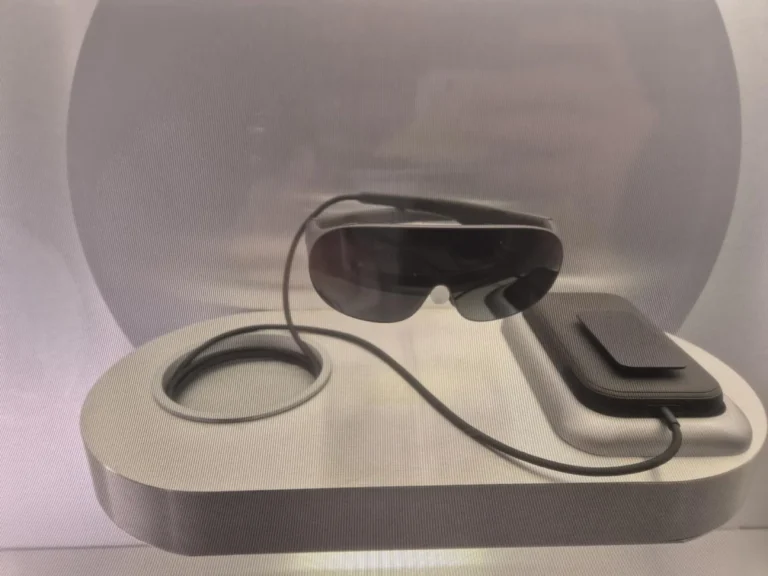
Pico, the extended reality (XR) subsidiary of ByteDance, has provided a comprehensive preview of its next-generation hardware and software ecosystem, signaling a strategic shift toward high-end spatial computing. During a recent digital premiere, the company introduced Project Swan, a high-performance headset codenamed to represent its upcoming flagship offering, alongside Pico OS 6, a redesigned operating system built to facilitate advanced multitasking and spatial interactions. This announcement comes at a pivotal moment for the XR industry, as competitors such as Meta and Apple continue to define the boundaries between immersive gaming and professional productivity tools.
Technical Specifications and the Dual-Chip Architecture
Project Swan represents a significant leap in computational strategy for Pico, moving toward a dual-chip architecture similar to the framework utilized by the Apple Vision Pro. According to technical details shared during the preview, the headset will utilize a proprietary Pico Silicon chip dedicated exclusively to sensor fusion, environment understanding, and low-latency tracking. This dedicated processor offloads the heavy computational requirements of spatial mapping from the primary System-on-a-Chip (SoC).
The primary processor is described as a "Flagship SoC" with performance metrics reportedly doubling the computational power of the current Qualcomm Snapdragon XR2 Gen 2. Industry analysts suggest this may indicate the integration of a next-generation Snapdragon XR2 Gen 3 or a highly customized variant designed for high-throughput spatial applications. This increase in power is essential for driving the headset’s dual 4K displays. The optical system is engineered to deliver an average angular resolution of 40 pixels per degree (PPD), with a peak resolution of 45 PPD. This level of pixel density is a critical benchmark for enterprise applications, as it allows for the clear rendering of fine text, a historical bottleneck for using VR headsets as monitors or productivity hubs.

Pico OS 6 and the Transition to Spatial Computing
The accompanying Pico OS 6 reflects a fundamental redesign of the user interface, moving away from a traditional tiled launcher toward a persistent spatial environment. The new operating system supports simultaneous 2D and 3D application windows, allowing users to arrange multiple digital workspaces within their physical surroundings. Interaction paradigms have also been expanded; while the headset remains compatible with traditional controllers, Pico OS 6 prioritizes gaze-and-pinch mechanics, aligning with the industry trend toward more natural, controller-free input.
To support this transition, Pico has introduced a suite of new developer tools designed to lower the barrier to entry for spatial app creation. By providing compatibility with standard development environments like Android Studio and Kotlin, Pico aims to attract traditional mobile and web developers who may have previously been deterred by the complexities of specialized XR engines. The headset is currently slated for a 2026 release, though pricing and specific regional availability have not yet been disclosed.
Competitive Developments: Meta’s Lightweight Prototypes
As Pico prepares its high-end offering, evidence has surfaced regarding Meta’s internal development of a competing lightweight device. Dataminers investigating the latest Horizon OS firmware discovered low-resolution graphical assets depicting a thin, visor-style headset, internally referred to by various codenames including Puffin, Loma, or Phoenix.
The leaked imagery and associated code suggest that Meta is pursuing a design focused on portability and "all-day" wearability. The firmware confirms the inclusion of eye-tracking sensors, which strongly indicates that Meta’s upcoming device will also lean heavily into gaze-based interaction. This development suggests a broadening of the market, where "Pro" devices like Project Swan and the Vision Pro coexist with more streamlined, media-centric wearables designed for casual spatial computing.

Privacy Risks and Human Oversight in Wearable AI
The advancement of hardware is being met with increased scrutiny regarding data privacy, particularly concerning smartglasses equipped with cameras and integrated artificial intelligence. A recent investigative report by the Swedish publication Svenska Dagbladet has raised concerns regarding the Ray-Ban Meta smartglasses and the handling of captured media. The investigation revealed that images and videos captured by these devices are sometimes reviewed by human contractors in regions such as Kenya to improve AI performance.
The report highlights a significant discrepancy between user expectations and corporate data practices. While Meta’s privacy policy states that interactions with AI may undergo manual review to ensure accuracy and safety, many users remain unaware that private moments—including sensitive financial information or images of individuals in private settings—may be viewed by third-party operators. This "human-in-the-loop" requirement is a standard industry practice for training machine learning models, similar to methods previously employed by Amazon for Alexa and iRobot for Roomba. However, the always-on, first-person perspective of smartglasses introduces a new tier of privacy risk that regulatory bodies are only beginning to address.
Open-Source Shifts in the WebAR Ecosystem
In a move that has surprised the developer community, The8thWall, a leader in Web-based Augmented Reality (WebAR), has announced the open-sourcing of its core engine. Following its acquisition by Niantic and subsequent rumors of a potential shutdown, the decision to release the framework under an MIT license provides a vital lifeline for WebXR development.
The open-source release includes the core architecture and major feature modules such as Face Effects, Image Targets, and Sky Effects. While the Simultaneous Localization and Mapping (SLAM) component remains in a closed-source binary, the availability of the broader framework allows developers to build, customize, and maintain WebAR experiences without being tethered to a proprietary, subscription-based platform. This transition is expected to foster innovation in browser-based AR, where accessibility and cross-platform compatibility are paramount.

Innovations in Design and User Interface
As the hardware landscape diversifies, companies are establishing new design languages to accommodate the unique constraints of AR and "Heads-Up" Displays (HUDs). Google has detailed "Glimmer," its new UI design language specifically tailored for upcoming Gemini-powered glasses. Unlike VR interfaces, AR UIs must contend with transparent backgrounds, varying light conditions, and limited fields of view. Glimmer emphasizes high-contrast, minimalist elements that occupy minimal visual real-estate while remaining legible in outdoor environments.
In tandem with software design, hardware manufacturers are experimenting with non-traditional form factors. At the CP+ 2026 exhibition in Japan, Canon showcased a miniature, tethered VR headset featuring a handheld grip rather than a traditional head strap. This design is intended for short-duration use in public demonstrations or retail environments, allowing users to quickly view 3D content or 180-degree videos without the friction of a full hardware setup.
Market Implications and Future Outlook
The XR industry in 2026 is characterized by a distinct bifurcation. On one side, companies like Pico and Apple are pushing toward "Pro" spatial computers that aim to replace traditional desktop workflows. On the other, Meta and Google are focusing on the refinement of lightweight, AI-integrated wearables that enhance the user’s daily environment.
The convergence of generative AI and XR is also accelerating, as evidenced by new tools from Google Gemini that allow users to generate WebXR prototypes via natural language prompts. While these tools are currently in the experimental phase, they represent a shift toward democratizing 3D content creation. As the 2026 release cycle approaches, the success of these platforms will likely depend not only on technical specifications but also on the industry’s ability to resolve ongoing privacy concerns and establish a robust ecosystem of spatial applications.
About the Author