Nick Kaman, studio head of Aggro Crab, the acclaimed developer recognized for its pivotal role in creating the impossibly popular cooperative climbing game Peak, shared profound insights at the GDC Festival of Gaming on March 10, 2026, outlining the "golden rules" that propelled their title to the forefront of the burgeoning "friendslop" genre. Kaman’s presentation delved into the intentional design philosophy that prioritized social interaction, player interdependence, and community building, revealing how a commitment to fostering genuine collaboration, even through friction, proved instrumental in Peak‘s widespread success and enduring appeal. The talk underscored a growing industry trend towards experiences that deeply embed social dynamics, challenging traditional notions of player autonomy in favor of shared triumph and collective challenge.
GDC Festival of Gaming: A Hub for Innovation and Insights
The Game Developers Conference (GDC) Festival of Gaming, an integral component of the larger GDC event, serves as a premier global platform for game developers to exchange ideas, showcase innovations, and dissect the methodologies behind successful titles. Held annually, GDC brings together programmers, artists, producers, game designers, audio professionals, and business leaders from across the industry. The Festival of Gaming specifically highlights unique gameplay experiences, emerging genres, and community-driven design philosophies, making it an ideal venue for Kaman to articulate the nuanced development journey of Peak. Attendees often seek actionable takeaways from these sessions, and Kaman’s discussion provided a compelling case study in leveraging social mechanics and even technical limitations to create a truly memorable and impactful game. His address resonated deeply with a developer community increasingly interested in understanding the intangible elements that foster strong player communities and long-term engagement, particularly in the ever-evolving landscape of online multiplayer experiences.
The Genesis of Peak: A Collaborative Vision and the Rise of "Friendslop"
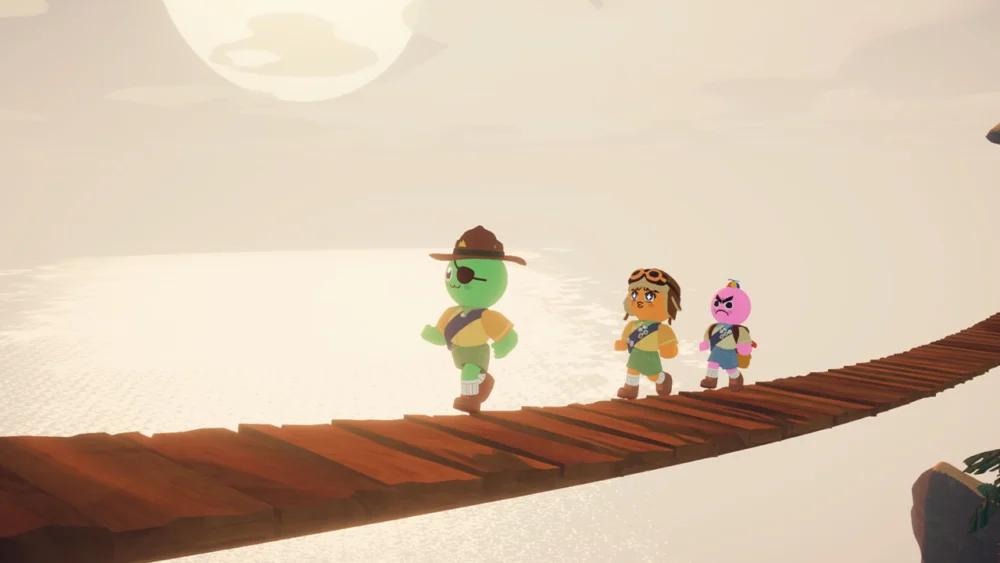
Peak, a collaborative effort between Aggro Crab and Landfall Games, emerged onto the gaming scene in late 2024, quickly distinguishing itself with its unique blend of physics-based climbing, chaotic cooperative gameplay, and a relentless emphasis on communication. The term "friendslop," while often used colloquially to describe games that thrive on player-induced mayhem and mutual reliance, finds its formal definition and a compelling exemplar in Peak. This genre, characterized by emergent narratives born from player interaction, often eschews direct competition in favor of shared goals, where failure is as much a collective experience as success. Kaman emphasized that from its inception, Peak was conceived as a "social-first game," a deliberate departure from titles where cooperative elements might feel tacked on. The development teams at Aggro Crab and Landfall Games, known for their innovative and often quirky approaches to game design, identified a clear gap in the market for games that not only allowed but actively demanded intimate player cooperation and communication, often under immense pressure. This foundational design principle guided every subsequent decision, from core mechanics to player progression, ensuring that social interaction was not merely an option but the very essence of the Peak experience.
Kaman’s Golden Rules: Engineering Social Interaction
Kaman meticulously detailed several core design decisions that underpinned Peak‘s success in fostering deep social engagement. These "golden rules" provide a blueprint for developers aiming to cultivate similar collaborative environments.
1. Intentional Friction: Forcing Interdependence
A cornerstone of Peak‘s design philosophy, as highlighted by Kaman, is the deliberate introduction of friction that necessitates player interaction. He explained that while solo play is technically possible, the true emotional reward comes from collective achievement. "First and foremost—and I mean you can play alone—but the feeling you get when you get to the peak, and you only did it because your friends helped you along the way, is a pretty beautiful feeling," Kaman stated. A prime example of this design is the backpack mechanic: players cannot access items from their own backpacks without the assistance of a friend. This seemingly minor constraint transforms a solitary inventory management task into a mini-cooperative puzzle, forcing players to communicate their needs and rely on their teammates. This constant, low-level need for interaction serves as a fundamental building block for stronger social bonds within the game, preventing players from becoming self-sufficient and isolating themselves from the group. The success of this mechanic is evidenced by Peak‘s player data, which consistently shows a significantly higher retention rate for players engaging in co-op sessions compared to those attempting solo climbs, underscoring the power of engineered interdependence.
2. The Guidebook: Orchestrating Communication and Roleplay
Recognizing the potential for highly skilled players to abandon less experienced friends, Kaman and his team implemented the "guidebook" – a brilliant stroke of design that simultaneously encourages communication, introduces emergent roleplay, and provides a natural mechanism for group leadership. Only one player can read the guidebook, which contains critical information for navigating the treacherous mountain paths. This player is then tasked with orally relaying instructions to their companions. Kaman noted the inherent hilarity and strategic depth this creates, as the "guide" might truthfully impart information or, mischievously, "sprinkle in a few white lies," adding another layer of unpredictable social dynamics.
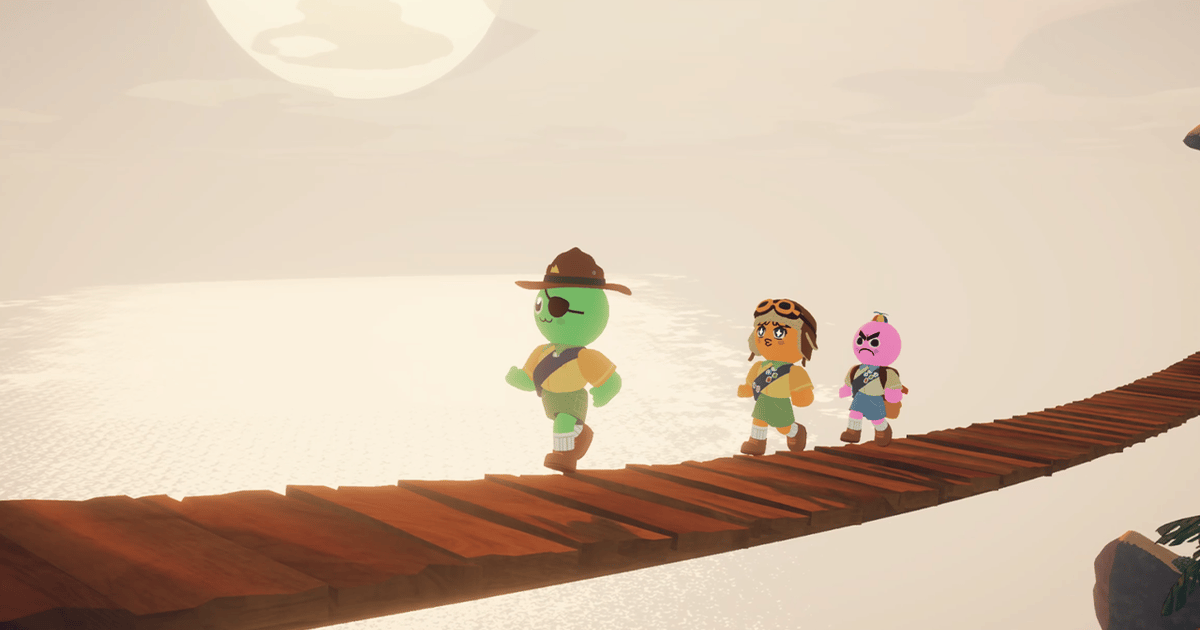
Crucially, the guidebook also enshrines a fundamental "Rule Zero: ‘Never abandon a friend in need.’" This unwritten, yet enforced, social contract has become a defining characteristic of the Peak community. "People just listen to this and role play out as their character, because that’s the kind of game it is. And they would tell their friends ‘Never abandon a friend in need, remember rule zero!’ and it kind of just works," Kaman observed. This organic adoption of a core principle by the player base speaks volumes about the power of well-crafted narrative and mechanical incentives. To reinforce Rule Zero, the game includes a unique safeguard: a five percent chance that a "zombie scoutmaster" will appear and "murder" players detected violating this cardinal rule, adding a layer of darkly comedic consequence to antisocial behavior. This mechanic not only provides a deterrent but also generates memorable, shareable moments of chaotic justice that further solidify the game’s identity.
3. First-Person Immersion and Proximity Chat: Enhancing Presence
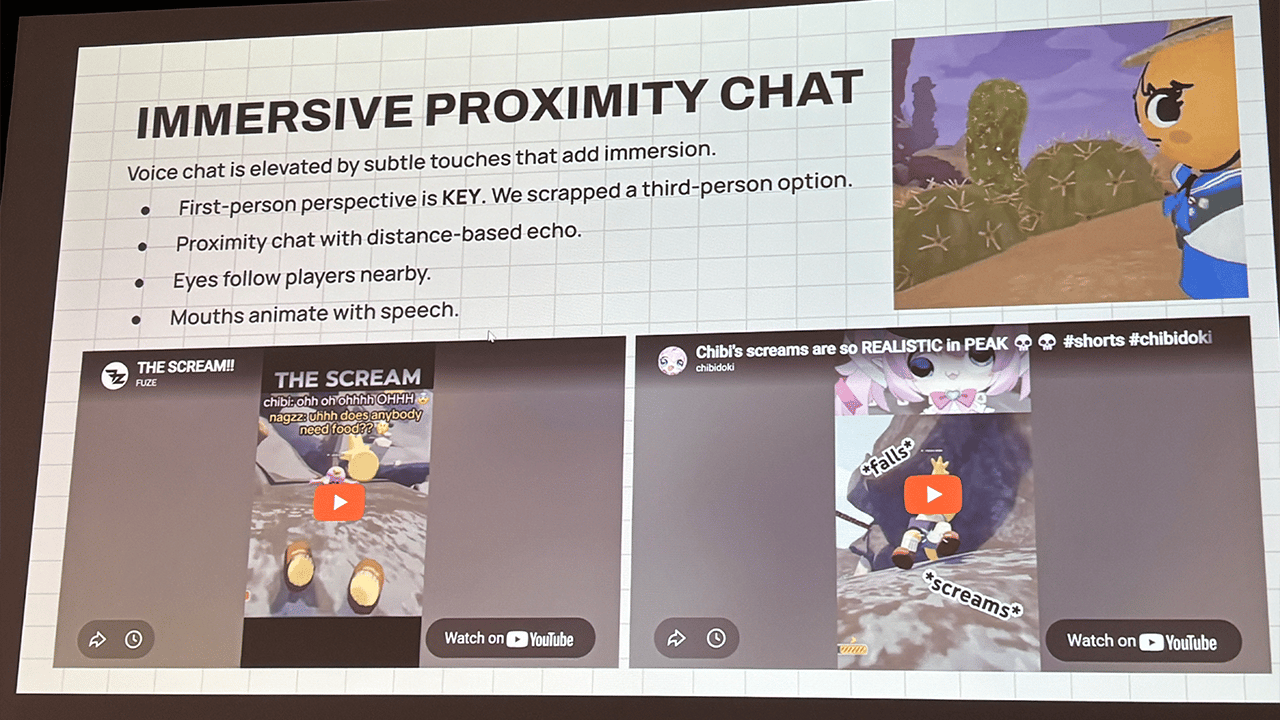
Kaman firmly believes that first-person cameras are "integral to friendslop experiences," as they significantly enhance player immersion and encourage roleplay. By placing players directly into their character’s shoes, the game fosters a stronger sense of presence and vulnerability. This perspective, he argued, also crucially amplifies the impact of proximity chat – a feature that has become synonymous with Peak‘s most intense and often hilarious moments. With character eyes following players and mouths animating with speech, the auditory experience is visually reinforced, making interactions feel more immediate and personal.
To illustrate this point, Kaman played a viral clip famously dubbed ‘THE SCREAM’. The video, which depicts a harrowing incident of miscommunication and panic during a climb, perfectly encapsulates the game’s ability to generate both genuine terror and uproarious laughter. This clip, viewed millions of times across various platforms, became a testament to Peak‘s capacity for emergent storytelling driven by player interaction. The visceral reaction in the clip, born from a desperate need for communication and the subsequent comedic failure, powerfully demonstrates how Peak transforms simple mechanics into unforgettable social experiences. Industry analysts have pointed to Peak‘s mastery of proximity chat as a benchmark, noting how it leverages spatial audio to create realistic social pressure and emotional resonance, differentiating it from games with more generic voice communication systems.
4. Strategic Communication and the Empowered Ghost
The design of Peak inherently necessitates constant communication for strategic progression. "You have to talk about your best way up the mountain. This was a natural evolution of the design. You need to look around and see which path looked easier, discuss it, and agree on something to move up," Kaman explained. This collaborative problem-solving extends beyond immediate navigation. Knowledge, such as identifying poisonous mushrooms, is passed down organically from player to player, fostering a shared lore and collective learning experience.
A significant departure from many other cooperative games, particularly those in the horror genre, is Peak‘s unique ghost mechanic. While death in many "friendslop" games often means removal from voice comms, Peak allows deceased players to remain as ghosts, retaining full communication capabilities and gaining a bird’s-eye view of the situation. "But here, the ghost actually gets to keep interacting with people. You can talk to your friends and you have this bird’s eye view of the situation so you can be uniquely helpful," Kaman stated. This ingenious design choice transforms death from a frustrating endpoint into a strategic asset, maintaining player engagement and adding a unique layer of meta-gameplay. Ghosts can scout ahead, warn living players of hazards, or even provide comedic commentary, further enriching the social fabric of the game. This innovative approach to player elimination ensures that even fallen comrades contribute to the ongoing narrative and objective, reinforcing the collective nature of the ascent.
Innovation Through Constraint: The Daily Map System
One of Peak‘s most compelling and community-engaging features, the "daily map," ironically originated from a significant technical constraint. Kaman revealed that the team "actually couldn’t generate these maps on the player’s end at runtime the way you would with any procedural generation of roguelike game." This limitation forced a manual approach: maps are "baked into Unity Editor fourteen at a time," requiring a game patch every two weeks to update them. This arduous process, which the team "still ha[s] to do," initially seemed like a burden.
However, this constraint unexpectedly birthed a powerful community feature. "We really didn’t have a lot of foresight here, but the players loved it," Kaman admitted. The daily map system provides players with multiple attempts at the same mountain layout, allowing for learning and refinement of strategies within a 24-hour cycle before a fresh challenge arrives. This creates a unique rhythm of play that fosters both individual skill development and collective knowledge sharing. More profoundly, it became a significant source of community interaction. Players congregate on platforms like Reddit and Discord to discuss the day’s challenge, sharing tips, lamenting particularly difficult routes, or celebrating collective triumphs. "’The map is fucking bullshit today, right guys?’ and have that shared experience of what the mountain is," Kaman recounted, highlighting the communal bond forged through shared adversity.
Intriguingly, Kaman also confessed to the seemingly chaotic method of map design: "People always wonder how we generate the mountain and design it to be climbable. We don’t. We throw rocks at the wall and pray, just like in real life. That’s what God does, and people climb it. We found that was way more compelling than any level design we do by hand." This philosophy of embracing emergent gameplay and player ingenuity over meticulously crafted paths further aligns with the game’s social-first ethos, allowing players to discover and conquer challenges together, rather than follow a prescribed route. The technical constraint, stemming from the limitations of runtime generation, ultimately proved to be a catalyst for a unique and beloved feature, showcasing how adversity can sometimes lead to the most creative and impactful design solutions. The specific technical hurdle, Kaman quickly noted, was related to the immense complexity of generating climbable, physics-driven terrain with dynamic environmental elements on player-side hardware without incurring prohibitive processing demands or compromising stability across diverse system configurations.
Broader Industry Impact and Future Implications
The success of Peak and Nick Kaman’s candid insights at the GDC Festival of Gaming carry significant implications for the broader game development industry. The game stands as a powerful testament to the commercial viability and critical acclaim achievable through a radical commitment to social-first design. In an era often dominated by single-player narratives or competitive multiplayer experiences, Peak champions cooperative play, demonstrating that intentional friction and forced interdependence can lead to profoundly rewarding player experiences and robust communities.
Industry analysts suggest that Peak‘s influence may inspire a new wave of "friendslop" titles, prompting developers to re-evaluate their approaches to multiplayer design. The emphasis on emergent storytelling through player interaction, rather than scripted narratives, offers a blueprint for creating games with infinite replayability and organic community engagement. The innovative ghost mechanic, which keeps deceased players involved, could also become a new standard in cooperative games, solving the long-standing problem of player disengagement after early elimination. Furthermore, Peak‘s daily map system, born from constraint, serves as a compelling case study for how technical limitations, when creatively embraced, can lead to unique and highly valued features, fostering community cohesion and long-term player retention. As the industry continues to explore new avenues for player connection and shared experience, Peak‘s design principles will undoubtedly serve as a guiding light for future innovations in cooperative gaming.
Aggro Crab and Landfall Games: A Collaborative Success Story
Aggro Crab, known for its distinctive art style and inventive gameplay, along with Landfall Games, celebrated for its quirky and often humorous titles, have together forged a formidable partnership in Peak. This collaboration highlights the power of combining unique creative visions to produce a game that pushes boundaries and captures the zeitgeist of cooperative gaming. Both studios have built reputations for developing games that are not afraid to experiment with mechanics and themes, and Peak is a culmination of their shared ethos of playful innovation. Their success with Peak not only solidifies their positions as leading indie developers but also offers a powerful example of how creative synergy can lead to groundbreaking and beloved game experiences.
In conclusion, Nick Kaman’s address at the GDC Festival of Gaming offered a masterclass in designing for social interaction. Peak‘s phenomenal success is not merely a stroke of luck but the direct result of a meticulously crafted design philosophy that prioritizes cooperation, communication, and community. By embracing intentional friction, fostering emergent roleplay, leveraging immersive technologies, and even transforming technical constraints into unique features, Aggro Crab and Landfall Games have not only delivered an "impossibly popular climber" but have also provided a compelling roadmap for the future of social-first game development. Their insights confirm that in the world of game design, sometimes the most profound connections are forged when players are compelled to rely on one another, truly ascending together.
About the Author