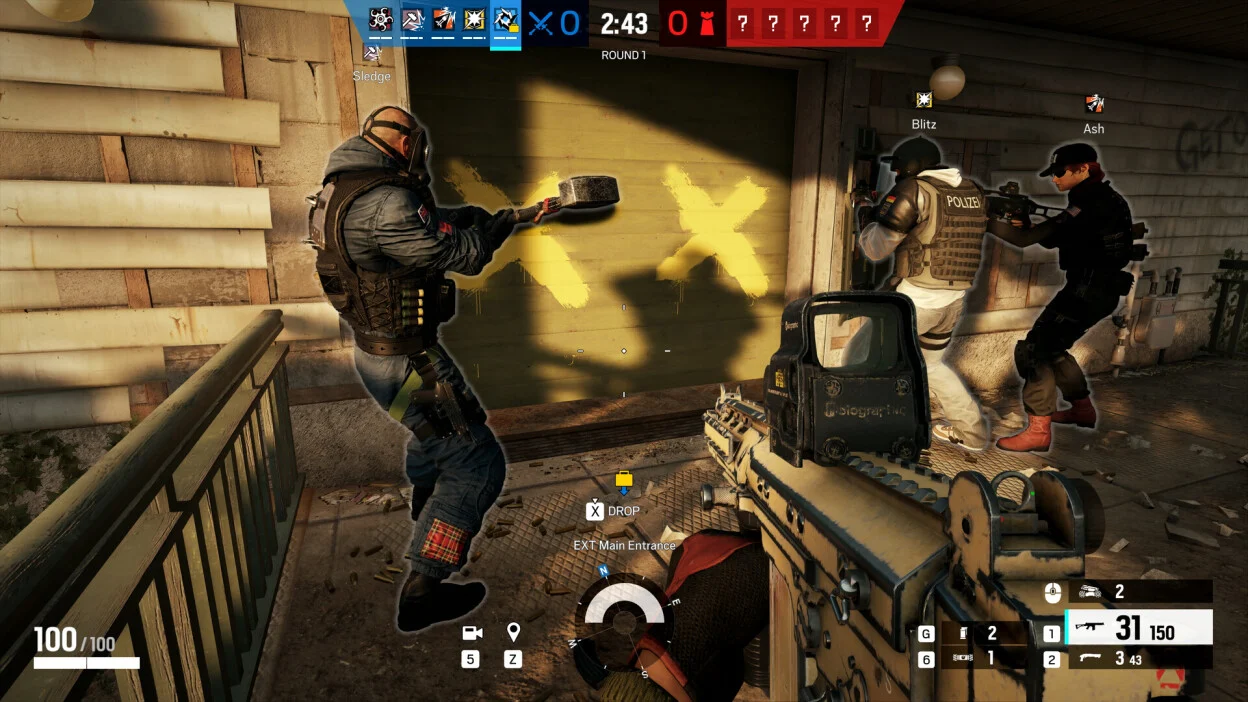
Ubisoft’s Rainbow Six Siege has solidified its position as a cornerstone in the tactical shooter genre, revered for its meticulous gameplay, highly destructible environments, and an unwavering emphasis on strategic teamwork. Distinguishing itself from the rapid-fire reflexes often demanded by traditional shooters, success in Siege is intrinsically linked to a nuanced understanding of operator abilities, comprehensive map knowledge, and impeccable team coordination. Complementing these intricate gameplay systems, Ubisoft has meticulously constructed a sophisticated progression economy, primarily revolving around the systematic unlocking of operators and cosmetic items. From a game design perspective, Siege stands as a compelling exemplar of how in-game currencies can be strategically leveraged to cultivate long-term player engagement while rigorously upholding competitive balance. This intricate system empowers players to personalize their experience without compromising the core gameplay’s fairness, ensuring an even playing field for all participants.
The Foundational Pillars: Operator Design and Strategic Depth
At the very heart of Rainbow Six Siege’s appeal and its sustained competitive relevance lies its diverse and ever-expanding roster of operators. Each new operator introduces a unique set of gadgets and tactical capabilities, fundamentally altering the strategic landscape of a round. From breaching charges that redefine map geometry to sophisticated surveillance tools that offer unprecedented intel, these abilities directly dictate player roles, team compositions, and counter-strategies. Consequently, the gradual unlocking of these operators becomes a pivotal element of the game’s progression. New players typically begin their journey with a curated selection of base operators, designed to introduce core mechanics and roles. As they dedicate more time to playing matches, completing challenges, and participating in seasonal events, they accrue in-game resources that facilitate the expansion of their operator pool.
This deliberate design choice fosters a structured and gradual learning curve. Instead of overwhelming new recruits with an immediate deluge of dozens of specialized options, the game incrementally introduces operators over time. This phased approach allows players to methodically comprehend the intricacies of each gadget, master counter-strategies, and integrate new tactical possibilities into their repertoire. This method not only reduces the initial barrier to entry but also ensures that the meta-game remains dynamic and continually evolving, driven by the strategic implications of newly introduced characters. Since its launch in December 2015, Ubisoft has consistently introduced new operators, typically two per season, alongside new maps or map reworks, maintaining a predictable cadence that keeps the player base engaged and the competitive scene fresh. This consistent content pipeline is a testament to the operator-driven progression system’s success.
Evolution of Progression: Renown and the Gameplay Loop
Rainbow Six Siege incorporates a multi-tiered currency system designed to support its expansive progression. Renown, the primary in-game currency, is earned organically through gameplay. Players accumulate Renown by completing matches, fulfilling daily and weekly challenges, and participating in limited-time seasonal events. This currency serves as the backbone for unlocking new operators, purchasing standard cosmetic items, and acquiring Alpha Packs, which contain random cosmetic rewards. The Renown system is meticulously crafted to reward consistent play and active participation, directly incentivizing players to engage with the game’s core loop, experiment with different operators, and explore various game modes.
The integration of Renown is crucial for long-term player retention. By making fundamental progression – the acquisition of new operators – achievable solely through gameplay, Ubisoft ensures that players feel their time investment is valued. This commitment to a play-to-unlock model for core gameplay elements contrasts sharply with "pay-to-win" models that have historically plagued other titles. While specific player retention data is proprietary, industry observations suggest that games with robust, gameplay-driven progression systems like Siege tend to exhibit higher daily active user counts and lower churn rates over extended periods. The consistent availability of new challenges and seasonal battle passes, often offering Renown boosters or direct Renown rewards, further reinforces this engagement loop, encouraging players to log in regularly and contribute to the game’s vibrant community.
The Dual Currency Model: R6 Credits and Premium Content
Alongside the gameplay-driven Renown system, Rainbow Six Siege also features a premium currency known as R6 Credits. These credits are acquired through real-world money transactions and serve a distinct purpose within the game’s economy. In community discussions regarding premium bundles, exclusive cosmetic skins, or limited-time seasonal items, players frequently reference R6 Credits as the primary currency for these purchases. This dual-currency model is a ubiquitous design choice in modern multiplayer "games as a service" (GaaS) titles, serving a critical function: it effectively segregates core gameplay progression from optional cosmetic purchases.
This strategic separation is fundamental to maintaining competitive fairness. While R6 Credits can be used to accelerate the unlocking of operators (bypassing the Renown grind), they do not confer any inherent gameplay advantage. A player who purchases all operators with R6 Credits will still need to invest time in learning their abilities and strategies, just like a player who grinds for Renown. This structure allows Ubisoft to generate substantial revenue to fund ongoing development, including new operators, maps, server maintenance, and anti-cheat measures, without disrupting the delicate competitive balance that defines Siege. Developer insights from Ubisoft often highlight their commitment to this "pay-for-convenience" or "pay-for-cosmetics" model, explicitly distancing themselves from any "pay-to-win" mechanics. This approach has been instrumental in fostering trust within the competitive community and ensuring the game’s longevity as a viable esport. The market for R6 Credits and other in-game digital assets is part of a broader digital gaming economy, where platforms such as Eldorado are sometimes mentioned in community conversations about obtaining such currencies, reflecting the dynamic nature of digital marketplaces.
Cosmetic Customization: Player Identity and Revenue Generation
While operator abilities fundamentally dictate gameplay strategy, cosmetic customization plays an equally vital, albeit non-gameplay affecting, role in player identity and engagement within Rainbow Six Siege. The game offers an extensive array of visual customization options, encompassing:
- Weapon Skins: Allowing players to personalize the appearance of their firearms.
- Headgear and Uniforms: Enabling unique character aesthetics for individual operators.
- Charms: Small decorative trinkets that can be attached to weapon barrels.
- Elite Sets: Premium bundles that offer highly detailed, themed uniforms, headgear, weapon skins, and unique victory animations for specific operators.
- Battle Pass Tiers: Offering a structured progression path with exclusive cosmetic rewards.
These cosmetic items, by design, do not confer any gameplay performance advantages. Their sole purpose is to allow players to express their personality, showcase their achievements, or simply distinguish themselves visually within the game’s tactical environment. For game designers and developers, cosmetics represent a safe and highly effective avenue to expand the in-game economy without ever encroaching upon or disrupting the competitive balance. The psychological appeal of personalization is a powerful driver of engagement and monetization. Players invest in cosmetics not only to look unique but also to signal their dedication to the game, their mastery of a particular operator, or their participation in specific seasonal events.
Seasonal events and the introduction of new themed bundles are strategically timed throughout the year to encourage players to return regularly. The Battle Pass system, introduced in Year 5, further solidified this model, offering a tiered progression system with both free and premium reward tracks. This system not only provides a consistent stream of new cosmetic content but also gamifies player engagement, offering tangible rewards for sustained play. The revenue generated from cosmetic sales is a crucial component of Siege’s financial model, directly contributing to the game’s ability to receive continuous updates and maintain a thriving live service for years post-launch.
Maintaining Competitive Integrity: The Cornerstone of Siege’s Economy
Designing a progression and monetization system for a tactical, competitive shooter presents unique and formidable challenges. Any system that bestows tangible gameplay advantages through real-money purchases would fundamentally undermine the competitive nature of the game, alienate its player base, and ultimately erode its viability as an esport. Rainbow Six Siege has masterfully navigated this treacherous landscape by adhering to a core principle: ensuring that access to all gameplay-affecting operators can be earned through diligent gameplay, while cosmetic enhancements remain entirely optional and separate.
This unwavering commitment to competitive integrity is the bedrock upon which Siege’s enduring success is built. The game’s economy is meticulously structured to support long-term player engagement without coercing players into spending money in order to remain competitive. A new player, through consistent play, can eventually unlock every operator available, placing them on an equal strategic footing with a player who chooses to purchase operators with R6 Credits. This distinction is paramount in the realm of esports, where fairness and skill-based competition are non-negotiable. The integrity of the competitive ladder, the pro leagues, and even casual matches relies entirely on the absence of "pay-to-win" elements.
Discussions about digital marketplaces and the economics of in-game purchases occasionally arise within gaming communities, particularly concerning cosmetic items or the perceived value of in-game currencies. However, the core progression loop in Siege remains steadfastly centered around playing matches, meticulously learning the nuances of each operator, and continuously refining tactical coordination. This focus ensures that skill, strategy, and teamwork, rather than wallet size, are the ultimate determinants of success.
Long-Term Design Lessons from Rainbow Six Siege
Rainbow Six Siege has not only remained relevant but has actively flourished for nearly a decade since its launch, a remarkable feat in the volatile live-service gaming market. This sustained success is directly attributable to how its intricate systems seamlessly combine deep, rewarding gameplay with a sustainable and equitable progression model. The game’s consistent cadence of introducing new operators, fresh maps, and engaging seasonal content, all while rigorously maintaining a stable and fair competitive environment, sets a high bar for the industry.
For aspiring game designers and developers, Rainbow Six Siege offers invaluable lessons in crafting a successful GaaS title. It demonstrates with clarity how diverse currencies, an expansive catalog of cosmetics, and a strategic operator progression system can harmoniously coexist without ever compromising the fundamental principle of competitive fairness. The delicate balance achieved between rewarding gameplay for core progression and offering optional cosmetic purchases allows the game to continuously evolve, innovate, and generate revenue, all while keeping its tactical core intact and its player base invested.
As the multiplayer shooter genre continues its rapid expansion and diversification, Siege stands out as one of the clearest and most compelling examples of how thoughtful economy design, underpinned by a steadfast commitment to competitive integrity, can effectively support both robust player engagement and long-term viability. Its model proves that commercial success and a truly fair, skill-based competitive experience are not mutually exclusive but, when meticulously designed, can be profoundly synergistic.
About the Author