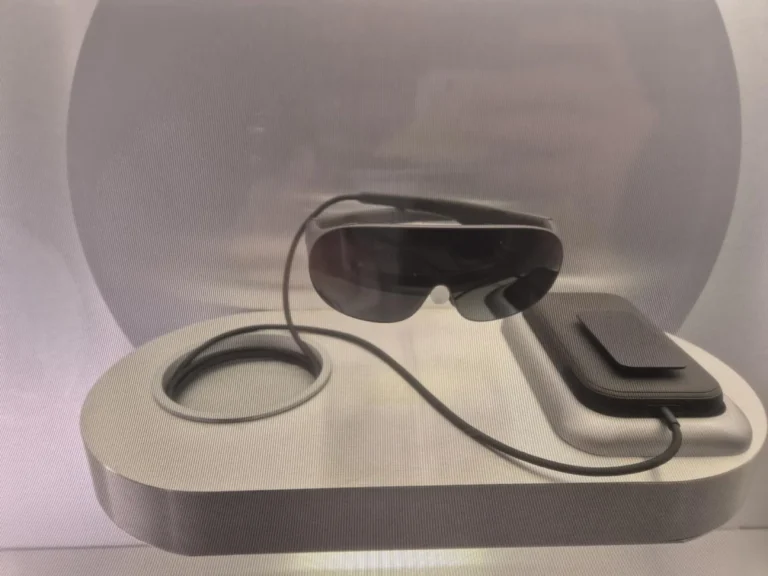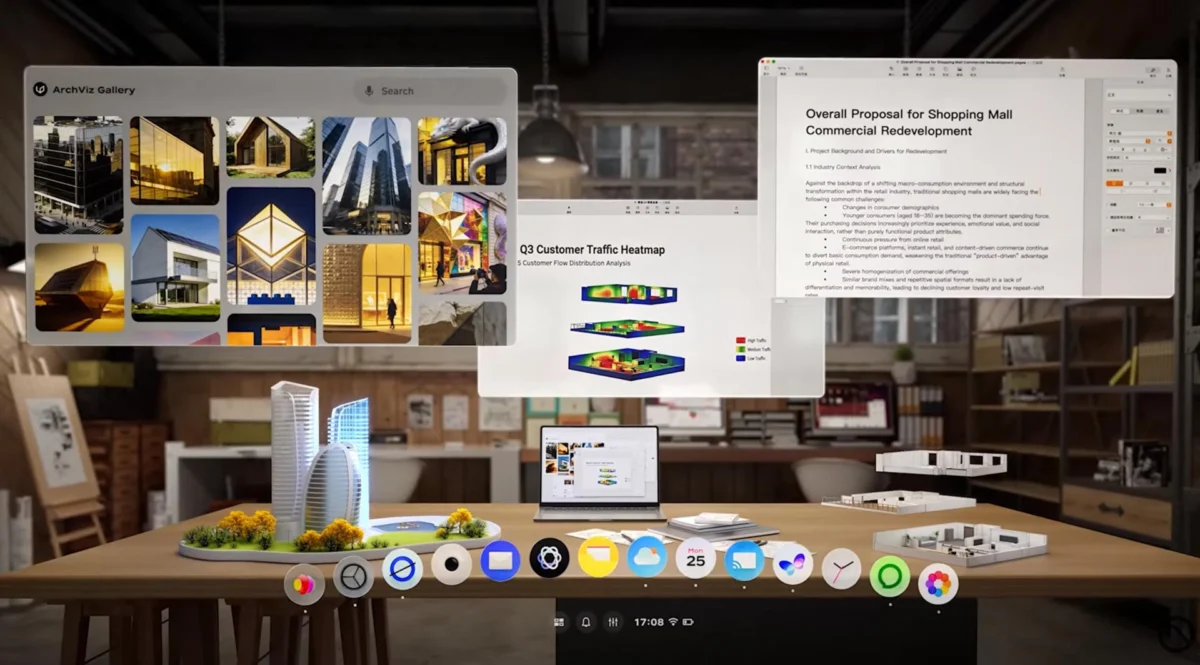
Pico, the extended reality (XR) subsidiary of ByteDance, has officially teased its next-generation hardware and software ecosystem during a dedicated developer event, signaling a significant shift in its product strategy. The event, which took place via a global digital premiere, introduced the industry to "Project Swan," a flagship headset designed to compete in the high-end spatial computing market, alongside the debut of Pico OS 6. This new operating system represents a fundamental redesign of the company’s software architecture, moving away from a primarily gaming-centric interface toward a versatile, multi-tasking environment tailored for both productivity and enterprise applications.

The 15-minute presentation, though brief, provided a comprehensive look at the technical roadmap Pico intends to follow over the coming year. By emphasizing "spatial computing"—a term popularized by Apple’s entry into the market—Pico is positioning Project Swan not merely as a successor to the Pico 4, but as a high-fidelity alternative to the Apple Vision Pro and Meta’s high-end Quest Pro line. The announcement comes at a critical juncture for the company as it seeks to solidify its presence in the European and Asian markets while expanding its developer outreach globally.
The Strategic Framework of Pico OS 6
At the heart of the announcement was Pico OS 6, a major software overhaul that has reportedly been in development for two years. The new operating system is built upon three core pillars: Efficiency, Intuition, and Openness. These principles are designed to address the limitations of current VR interfaces, which often struggle with complex multitasking and seamless transitions between 2D and 3D content.

Efficiency and the Pico Spatial Engine
To facilitate a more productive user experience, Pico introduced the Pico Spatial Engine. This system-level architecture offloads rendering burdens from individual applications to the operating system itself. This allows for a persistent home space where users can interact with multiple windows simultaneously. During the demonstration, Pico showcased the ability to run 2D productivity apps, such as web browsers and document editors, alongside active 3D tabletop simulations. This multitasking capability is intended to transform the headset from a media consumption device into a "spatial workstation."
Intuition through Cloud Crystal Design
Pico OS 6 introduces a new design language titled "Cloud Crystal." The aesthetic focuses on translucent UI elements that adapt to the lighting conditions of the user’s physical environment. This visual style is intended to make digital interfaces feel more integrated into the real world during mixed reality (MR) use. Furthermore, the OS supports a hybrid interaction model, allowing users to switch seamlessly between dedicated controllers, hand tracking, and eye tracking. By maintaining controller support while enhancing gesture-based navigation, Pico aims to offer a level of precision that caters to both gamers and professional users.

Openness and Developer Flexibility
In an effort to rapidly expand its app library, Pico has emphasized compatibility with a wide range of development standards. Pico OS 6 supports Progressive Web Apps (PWAs), standard Android applications, and experiences built on OpenXR. For developers, the company is providing a suite of tools compatible with Unity, Unreal Engine, and WebXR. Critically, Pico confirmed that all applications built for previous-generation headsets will remain compatible with Project Swan, ensuring that existing users and developers do not lose their current investments in the ecosystem.
Project Swan: Technical Specifications and Hardware Architecture
While the event stopped short of a full physical reveal, the technical specifications shared for Project Swan indicate a substantial leap in hardware capabilities. The device is being positioned as a "Pro" grade headset with a focus on visual clarity and low-latency passthrough.

Visual Fidelity and Display Performance
A primary challenge in spatial computing is the legibility of text, which is essential for productivity. To combat "screen door effect" and blurring, Project Swan features a dual-chip display architecture capable of delivering 40 pixels per degree (PPD) on average, with a peak of 45 PPD at the center of the user’s vision. This is a significant improvement over the sub-20 PPD found in many consumer-grade headsets currently on the market. The headset will utilize dual 4K displays, which Pico claims will offer "unparalleled quality" for professional design and media editing.
Dual-Chip Design and Custom Silicon
In a move that mirrors the architecture of the Apple Vision Pro, Project Swan utilizes a dual-chip configuration. The primary processing is handled by a "Flagship SoC," which Pico claims offers double the CPU and GPU performance of the current Qualcomm Snapdragon XR2 Gen 2. While the specific model was not named, industry analysts suggest this could be an early implementation of the next-generation Snapdragon XR2 Gen 3.

Complementing the main processor is "Pico Silicon," a custom-designed secondary chip dedicated exclusively to sensor fusion and tracking. By offloading eye tracking, hand tracking, and environment understanding to this specialized silicon, the main SoC is left entirely free to run demanding applications. This architecture is credited with achieving a total mixed reality latency of less than 12 milliseconds, a critical threshold for preventing motion sickness and ensuring digital objects appear stable in the physical world.
Market Context and Industry Implications
The announcement of Project Swan marks a clear departure from Pico’s previous strategy of competing directly with Meta on price in the consumer gaming segment. Instead, Pico appears to be carving out a niche in the enterprise and "prosumer" sectors.

Comparison with Industry Rivals
Project Swan’s emphasis on high-resolution passthrough and spatial multitasking places it in direct competition with the Apple Vision Pro and the upcoming Samsung/Google XR collaboration. However, Pico holds a distinct advantage in the enterprise sector, where it has already established a robust distribution network and support system for B2B clients in Europe and Asia. By offering a high-performance Android-based alternative to Apple’s closed ecosystem, Pico may find significant traction among corporations that require customized software solutions.
Chronology and Availability
The developer event served as the official kickoff for the "Global Early Access Program." Pico is currently inviting experienced development teams to apply for early hardware units to provide feedback and optimize their software before the consumer launch.

- Current Phase: Developer Tools and Emulator available via the Pico Developer Portal.
- Q2-Q3 2024: Distribution of Early Access hardware to selected partners.
- Late 2024: Anticipated commercial release of Project Swan and the public rollout of Pico OS 6.
Conclusion and Future Outlook
Pico’s latest presentation suggests a company that is no longer content to follow the lead of its competitors. By investing in custom silicon and a ground-up redesign of its operating system, Pico is attempting to establish itself as a leader in the next era of computing. The success of Project Swan will likely depend on two factors: the final retail price and the ability of Pico to convince developers that its spatial engine offers a superior platform for the next generation of 3D applications.
While the consumer market for $1,000+ headsets remains unproven, the technical foundations laid out in Project Swan provide a compelling roadmap for the future of mixed reality. As the industry moves toward the Game Developers Conference (GDC) and other major tech summits later this year, all eyes will be on Pico to see if the physical hardware can live up to the ambitious promises of its "Swan" project.
About the Author