The Foundational Role of AI in Modern Gaming

The evolution of artificial intelligence in video games represents a pivotal journey from rudimentary, script-driven routines to highly adaptive and emergent behaviors. Early game AI often relied on predefined paths or simple state machines, leading to predictable and sometimes immersion-breaking interactions. However, as computational power and development tools advanced, the demand for more believable and challenging in-game entities surged. Today, AI characters that intelligently chase, follow, or evade players are not just a common feature but an expectation, significantly enhancing game immersion, providing dynamic challenges, and contributing to rich narrative experiences. This basic "follow" behavior forms the bedrock for far more complex AI systems, dictating how non-player characters (NPCs) navigate environments, react to player actions, and contribute to the overall game world’s believability. Industry analysts consistently highlight the significance of sophisticated AI in distinguishing modern titles, with market reports frequently correlating advanced AI features with higher player engagement and critical acclaim.
Unreal Engine 5 and the Blueprint Revolution
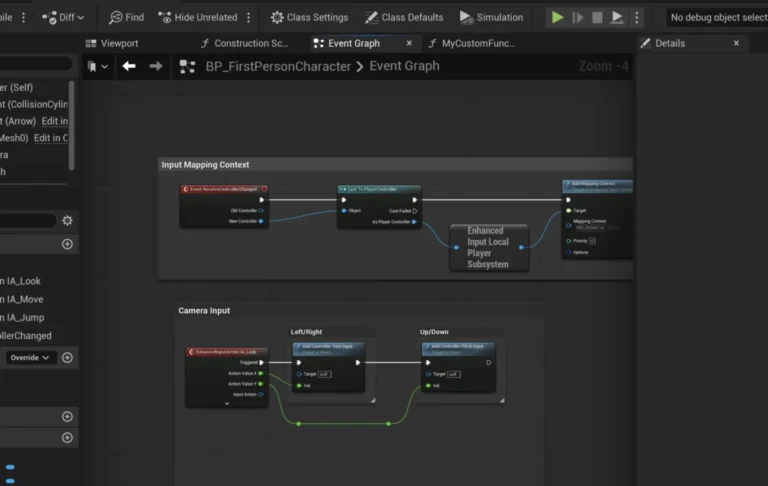
Unreal Engine 5 stands at the forefront of game development technology, offering a robust suite of tools that cater to both seasoned professionals and aspiring indie developers. Central to its widespread adoption and acclaimed accessibility is the Blueprint visual scripting system. Blueprints abstract the complexities of traditional coding languages like C++, allowing developers to create intricate game logic through a graphical interface of nodes and connections. This paradigm shift has dramatically lowered the barrier to entry for implementing advanced features, including AI behaviors. For tasks such as enabling an AI character to follow a player, what might traditionally require lines of complex code can now be achieved with a few drag-and-drop actions and connections within the Blueprint editor. This efficiency gain is not merely about simplifying the process; it accelerates iteration cycles, fosters collaboration among diverse development teams (artists, designers, programmers), and ultimately empowers creators to focus more on creative design rather than intricate syntax. The impact of visual scripting on development timelines and resource allocation is profound, with many studios reporting significant reductions in development time for core gameplay mechanics.
Prerequisites for Intelligent Movement: The NavMesh

Before any AI character can intelligently navigate a game environment, a foundational element known as a NavMesh (Navigation Mesh) must be established. The NavMesh acts as a navigable surface for AI agents, outlining all areas where they can physically move. Without a properly configured NavMesh, AI characters would lack the spatial awareness necessary to traverse complex terrains, avoid obstacles, or follow designated paths, leading to them getting stuck or moving erratically. In Unreal Engine 5, setting up a NavMesh involves placing a "Nav Mesh Bounds Volume" actor within the level, which then automatically generates a navigable surface based on the level’s geometry. This process is highly optimized and dynamic, meaning the NavMesh can adapt in real-time to changes in the environment, such as opening doors or collapsing structures. The accuracy and efficiency of the AI’s pathfinding, including its ability to chase a player, are directly dependent on the quality and coverage of this underlying navigation mesh. Developers must ensure the NavMesh accurately reflects all traversable areas to prevent AI characters from attempting to move through walls or falling off ledges, thereby ensuring a seamless and believable player experience.
Deconstructing the AI Following Mechanism in Unreal Engine 5
The implementation of an AI following behavior in Unreal Engine 5, while powerful, is surprisingly straightforward when utilizing the Blueprint system. The core of this functionality relies on the AI MoveTo node, a robust command that instructs an AI controller to navigate a specified character to a target location or actor.
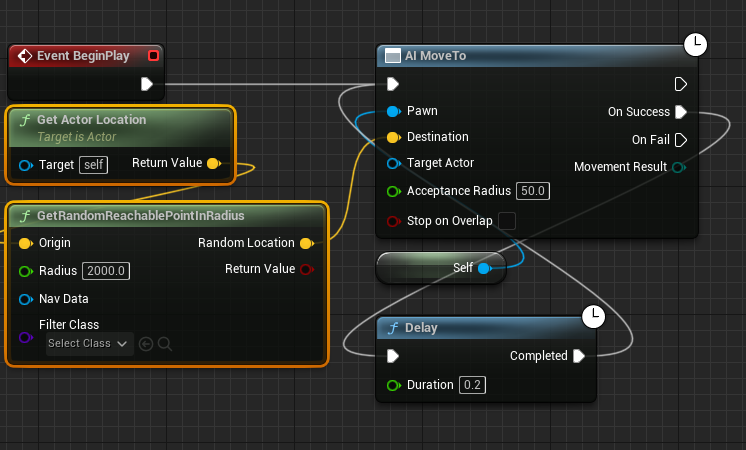
The process typically begins by modifying an existing AI movement script. In many setups, an AI might initially be programmed to patrol randomly or move to arbitrary points within its vicinity. This usually involves nodes like Get Actor Location (to find the AI’s current position) and GetRandomReachablePointInRadius (to determine a random destination). To transition from this random movement to player-following, these random-destination-generating nodes are typically removed from the Blueprint graph. The rationale is simple: the AI no longer needs to calculate a random point; its new target is consistently the player.
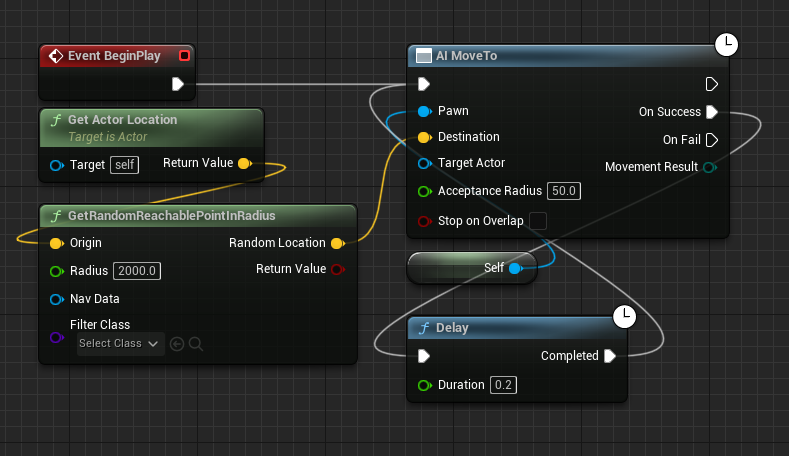
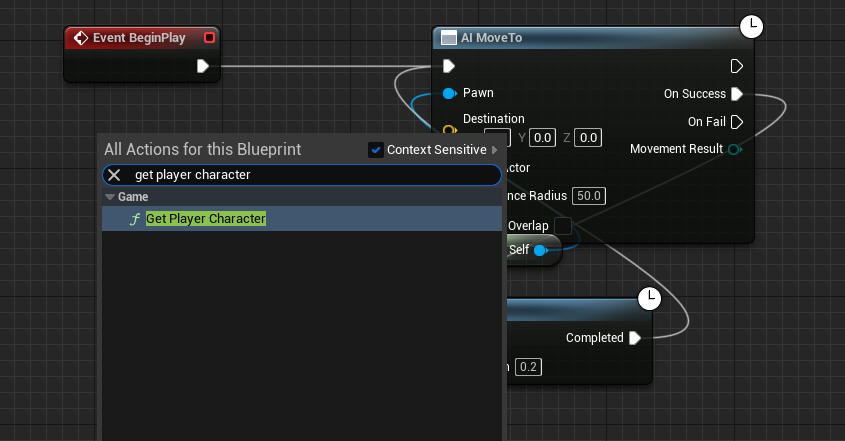
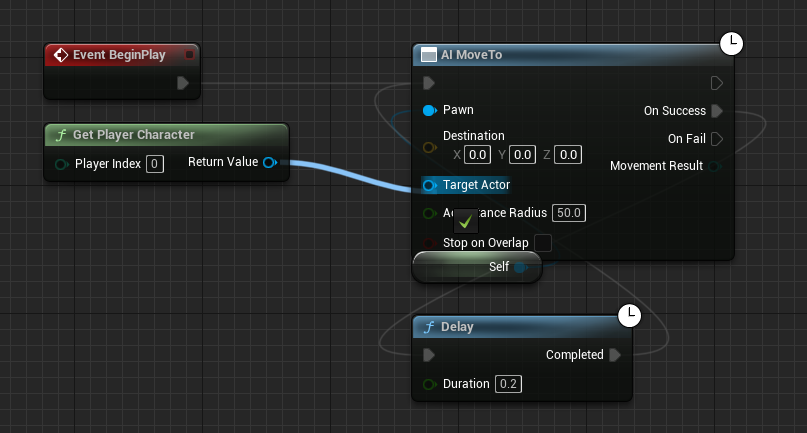
The next critical step involves identifying the player character. This is achieved by introducing the Get Player Character node into the Blueprint graph. This node provides a reference to the active player character in the game world, acting as the dynamic target for the AI. The output of the Get Player Character node, specifically its "Return Value" pin (which represents the player character actor), is then connected directly to the "Target Actor" input pin of the AI MoveTo node. This connection establishes the fundamental link: the AI MoveTo node now continuously receives the player’s current location as its destination, instructing the AI character to pursue them.
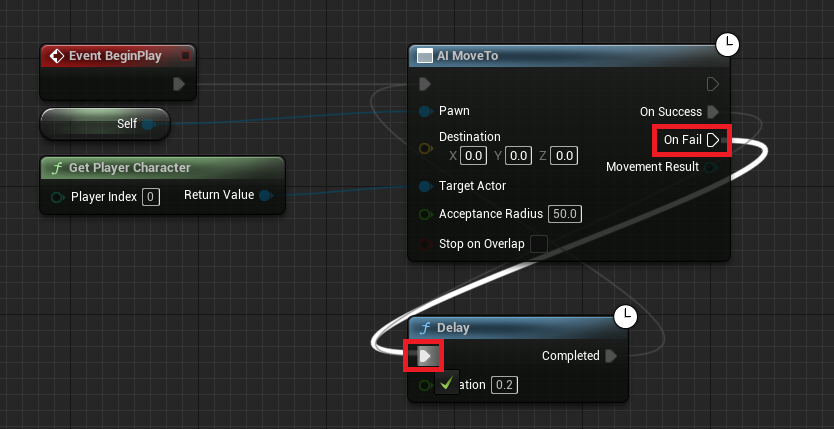
A crucial aspect of robust AI design is error handling and persistence. In dynamic game environments, it’s possible for the AI to temporarily fail its movement command. This could occur if the player moves into an area unreachable by the NavMesh (e.g., through a door that closes suddenly), if there’s a temporary obstruction, or if the pathfinding calculation encounters an issue. To ensure the AI’s pursuit remains relentless, the "On Fail" execution pin of the AI MoveTo node is connected back to a "Delay" node, which then loops back to the initiation of the AI MoveTo command after a brief pause. This retry mechanism ensures that if the AI initially fails to reach its target, it will simply wait for a moment and then attempt the movement again, effectively keeping it locked onto the player’s position regardless of minor obstacles or temporary pathfinding issues. This iterative approach guarantees continuous engagement and prevents the AI from becoming static or "stuck."
Once these Blueprint modifications are complete, the developer must compile and save the AI’s Blueprint asset. This action applies all the changes, making the new AI behavior active within the game environment. Upon execution, the AI character will now actively and persistently chase the player, leveraging the NavMesh for intelligent pathfinding and the On Fail retry logic for unwavering pursuit.
Strategic Applications: Beyond Simple Pursuit
The fundamental AI following mechanic, while seemingly simple, serves as a versatile building block for a myriad of complex game interactions across diverse genres. Its applications extend far beyond mere enemy pursuit, impacting narrative, player support, and environmental dynamics.
In the context of enemies, this core behavior allows for dynamic threats that actively hunt the player, increasing tension and requiring strategic evasion. This can range from a relentless horror game antagonist that constantly stalks the player through a maze-like environment to a fast-moving enemy in an action game that attempts to close the distance for a melee attack. Developers can further refine this by adding parameters such as awareness range, line-of-sight checks, and speed variations, creating nuanced chase mechanics where enemies might temporarily lose track of the player or employ different pursuit tactics.
For companions or allied NPCs, the following mechanic is equally critical. A loyal dog in an adventure game, a tactical squad member in a shooter, or a quest-giver guiding the player through a level all rely on this system to stay close, offer support, or lead the way. This fosters a sense of partnership and immersion, making the player feel accompanied rather than isolated. Companion AI can be enhanced with additional logic, such as defensive maneuvers, healing abilities, or contextual dialogue triggered by proximity.
Non-player characters (NPCs) can also utilize this behavior for various purposes, enriching the game world. An NPC might follow the player to deliver a crucial piece of information, guide them to a specific location for a quest, or simply contribute to the bustling atmosphere of a crowded city by having citizens react to and follow events. This contributes to a more dynamic and believable game environment where characters respond logically to the player’s presence.
Even environmental elements can leverage a modified form of this AI. Imagine a dynamic hazard, like a sentient moving wall or a magically animated trap, that pursues the player through a level, adding an interactive and unpredictable layer to environmental puzzles or challenges. The versatility of this simple AI behavior demonstrates its foundational importance in crafting rich and engaging player experiences.
Industry Perspectives and Development Impact
The accessibility of advanced game development features within engines like Unreal Engine 5 is profoundly impacting the industry landscape. Game developers frequently commend Unreal Engine’s Blueprint system for its efficiency, noting that the ability to visually script complex behaviors like AI following significantly reduces development bottlenecks. Indie studios, in particular, benefit immensely from these tools, as they can achieve high-quality results without requiring large teams of specialized programmers. This empowerment has led to an explosion of innovative titles from smaller teams, pushing creative boundaries and diversifying the market.
According to various developer surveys, the ease of implementing core mechanics directly contributes to faster prototyping and iteration, allowing teams to test gameplay ideas rapidly and refine them based on feedback. This agile approach is critical in a competitive industry where speed to market and responsiveness to player expectations are paramount. The ability to quickly integrate and modify AI behaviors means that designers can experiment with different enemy types, companion roles, and NPC interactions without incurring substantial development costs or delays, fostering a more experimental and creative development cycle. This trend is further supported by the growing educational infrastructure around Unreal Engine, which equips new developers with the skills to leverage these powerful visual scripting capabilities from the outset.
The Broader Implications: Elevating Player Experience
The integration of sophisticated AI following mechanics has profound implications for the overall player experience, elevating it from passive interaction to dynamic engagement. The presence of AI that can intelligently pursue, react, and adapt creates a more immersive and believable world. Players are challenged to think strategically about their movements, to outmaneuver pursuers, or to coordinate with companions, thereby deepening their connection to the game narrative and mechanics.
Furthermore, this type of AI contributes significantly to game replayability. Dynamic AI ensures that encounters rarely play out the same way twice, as AI characters will react differently based on player choices, environmental factors, and their own adaptive logic. This unpredictability keeps the gameplay fresh and engaging, encouraging players to return to titles and explore different strategies. The future of AI in gaming is poised for even greater advancements, with ongoing research into machine learning and adaptive AI promising characters that can learn from player behavior, anticipate actions, and offer truly personalized challenges. The foundational AI following behavior, made accessible through tools like Unreal Engine 5’s Blueprints, is a critical stepping stone towards this future, continuously pushing the boundaries of interactive entertainment and delivering increasingly compelling virtual worlds.
Conclusion
The capability for AI characters to follow or chase the player is an indispensable feature in contemporary video games, serving as a critical component for both challenging gameplay and immersive narrative. Unreal Engine 5’s Blueprint system has remarkably simplified the implementation of this core mechanic, transforming what was once a complex coding task into an accessible, visual process. By leveraging a few key nodes, developers can establish robust AI pursuit logic, complete with intelligent pathfinding via NavMesh and persistent retries for uninterrupted engagement. This ease of integration not only accelerates development cycles and empowers a broader range of creators but also directly contributes to a richer, more dynamic player experience. As game development continues to evolve, the foundational principles demonstrated by this AI following system will remain crucial, underpinning increasingly sophisticated interactive behaviors that define the next generation of virtual worlds.
About the Author