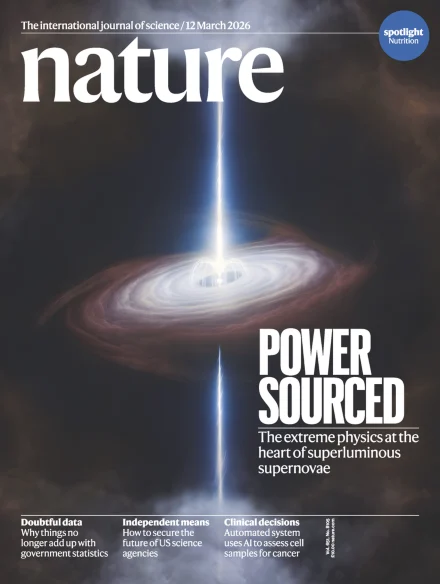
A groundbreaking astronomical discovery, prominently featured on the cover of the March 12th issue of the esteemed scientific journal Nature, has revealed the unprecedented detection of a "chirping" sound emanating from a supernova. This extraordinary phenomenon has been directly linked to the birth of an infant magnetar, one of the most exotic and powerful objects in the known universe, located over a billion light-years away. The lead author of the study, Joseph Farah, utilized the advanced 3D creation suite Blender to generate compelling visual illustrations for the publication, aiding in the comprehension of this complex cosmic event.
The Discovery: A Symphony from the Stars
The international research team, with Joseph Farah at the helm as lead author, observed a supernova that exhibited a behavior never before witnessed. Instead of a typical, relatively uniform energy release, this celestial explosion produced a distinct audio signature, characterized by a rising pitch – a "chirp." This acoustic anomaly provided scientists with a unique window into the violent processes occurring at the heart of the supernova.
"We made a very exciting discovery and saw a supernova doing something it had never been seen before—chirping!" Farah stated in a recent announcement. "We tied the chirp back to the birth of one of the most exotic objects in the universe—an infant magnetar—at the heart of the explosion, over one billion light-years away."
Magnetars are a class of neutron stars possessing exceptionally strong magnetic fields, trillions of times more powerful than those of Earth. The formation of such a powerful object is a cataclysmic event, often occurring during the collapse of a massive star in a supernova. The "chirp" observed in this instance is believed to be a direct consequence of the rapid cooling and restructuring of the stellar remnant as it transforms into a magnetar. The intense gravitational forces and burgeoning magnetic field likely induce oscillations within the nascent magnetar, which then translate into detectable gravitational waves or other forms of energy emissions that were interpreted as a "chirp."
Visualizing the Invisible: Blender’s Role in Scientific Communication
The complexity of a supernova and the formation of a magnetar presents a significant challenge for scientific visualization. To effectively communicate the findings to a broad audience, including fellow scientists and the public, the research team turned to sophisticated digital tools. Joseph Farah’s expertise in using Blender, a free and open-source 3D creation suite, proved instrumental. Blender’s capabilities in modeling, rendering, and animation allowed for the creation of highly detailed and scientifically accurate illustrations that brought the abstract concept of a "chirping" supernova to life.
The cover of the Nature issue prominently features an artistic rendering, likely generated using Blender, depicting the violent expulsion of matter from the supernova and the emergent, enigmatic magnetar at its core. This visual representation serves not only to attract attention to the scientific paper but also to convey the sheer scale and intensity of the event, making the abstract scientific data more tangible and comprehensible.
Background Context: Supernovae and the Birth of Exotic Objects
Supernovae are the explosive deaths of stars, representing some of the most energetic events in the universe. They are crucial for the synthesis and distribution of heavy elements, including those essential for life. The remnants of supernovae can vary significantly, ranging from dense neutron stars to even more enigmatic objects like black holes and magnetars.

Neutron stars are formed when massive stars, typically exceeding eight times the mass of our Sun, exhaust their nuclear fuel. The core of such a star collapses under its own gravity, crushing protons and electrons together to form neutrons. If the progenitor star is massive enough, and if certain conditions are met during the collapse, the resulting neutron star can develop an extraordinarily powerful magnetic field, classifying it as a magnetar. These fields are estimated to be in the range of 10^14 to 10^15 Gauss, a stark contrast to Earth’s magnetic field, which is a mere 0.5 Gauss.
The study of magnetars is a relatively recent field in astrophysics, with the first confirmed magnetar discovered in the late 1990s. Their extreme nature makes them difficult to observe directly, and their formation mechanisms are still a subject of intense research. This new discovery, by directly linking the "chirp" to magnetar birth, offers invaluable empirical data to refine theoretical models.
Chronology of the Discovery and Publication
While the exact timeline of the observational data acquisition and analysis is not detailed in the provided excerpt, the publication date in Nature (March 12th issue) provides a key anchor point.
- Pre-Publication Research: The study would have involved extensive telescopic observations, likely utilizing advanced radio telescopes or X-ray observatories capable of detecting faint signals from distant cosmic events. Sophisticated data analysis techniques would have been employed to identify and characterize the unique "chirping" signature.
- Manuscript Preparation: Following the analysis, the research team would have compiled their findings into a scientific manuscript. This would include theoretical interpretations of the observed phenomenon, calculations, and the generation of visual aids. Joseph Farah’s work with Blender would have been a critical component of this preparation phase.
- Peer Review and Publication: The manuscript would have undergone rigorous peer review by other experts in the field before being accepted for publication in Nature, a testament to the significance and validity of the research.
- March 12th, 2026: The issue of Nature featuring the study is published, making the discovery publicly accessible.
- Post-Publication Dissemination: The announcement on Blender Artists and Blender Nation signifies the broader dissemination of the research, highlighting the intersection of cutting-edge science and advanced visualization tools.
Supporting Data and Implications
The detection of the supernova’s "chirp" is not merely an anecdotal observation; it represents a significant advancement in our understanding of stellar evolution and the formation of extreme astrophysical objects.
- Gravitational Wave Astronomy: While the article doesn’t explicitly state the nature of the "chirp" (e.g., electromagnetic radiation interpreted acoustically or actual gravitational waves), the concept of detecting subtle oscillations from cosmic events aligns with the burgeoning field of gravitational wave astronomy. Future observatories may be able to directly detect such phenomena.
- Magnetar Formation Models: The specific frequency, duration, and amplitude of the "chirp" can provide precise constraints on theoretical models of magnetar formation. Scientists can now compare these observed characteristics with predictions from various models, potentially refining our understanding of the physical processes involved, such as the role of rapid rotation, magnetic field amplification, and the equation of state of ultra-dense matter.
- Cosmic Distances: The fact that this event occurred over a billion light-years away underscores the immense power of supernovae and the capability of modern telescopes to detect such distant phenomena. It also highlights the vastness of the universe and the potential for discovering even more exotic events.
- The Role of Visualization: The successful use of Blender in illustrating this complex discovery emphasizes the growing importance of advanced visualization in scientific communication. Tools like Blender enable researchers to translate abstract data into compelling visual narratives, fostering greater public engagement and understanding of scientific breakthroughs. This can inspire future generations of scientists and artists.
Official Responses and Broader Impact
The publication of this research in Nature, one of the world’s most prestigious scientific journals, indicates significant validation and interest from the global scientific community. While direct quotes from other astronomers are not available in the provided text, the choice of Nature‘s cover story speaks volumes.
The broader impact of this discovery extends beyond the immediate astrophysical implications. It serves as a powerful example of how interdisciplinary collaboration—combining observational astronomy, theoretical physics, and advanced digital art—can lead to profound scientific advancements. The use of open-source software like Blender democratizes access to powerful visualization tools, enabling researchers from diverse backgrounds and institutions to contribute to groundbreaking discoveries.
This event also reinforces the ongoing quest to understand the fundamental forces and exotic objects that shape our universe. The "chirping" supernova, an event that would have been unimaginable just a few decades ago, now stands as a testament to human curiosity and our ever-increasing capacity to unravel the cosmos’s deepest mysteries. The insights gained from this single event are likely to fuel further research into the life and death of stars, the nature of extreme magnetic fields, and the very fabric of spacetime.
About the Author