The landscape of extended reality (XR) underwent significant volatility this week as Meta Platforms Inc. issued conflicting reports regarding the future of its flagship social metaverse, Horizon Worlds. Simultaneously, the industry gathered for NVIDIA’s GTC 2026 conference, highlighting a pivot toward artificial intelligence and industrial applications. These developments, coupled with a mix of studio closures and technical breakthroughs, illustrate an industry in transition, balancing the "Winter of VR" with emerging technological springboards.
The Horizon Worlds Pivot: Strategic Uncertainty and Community Response
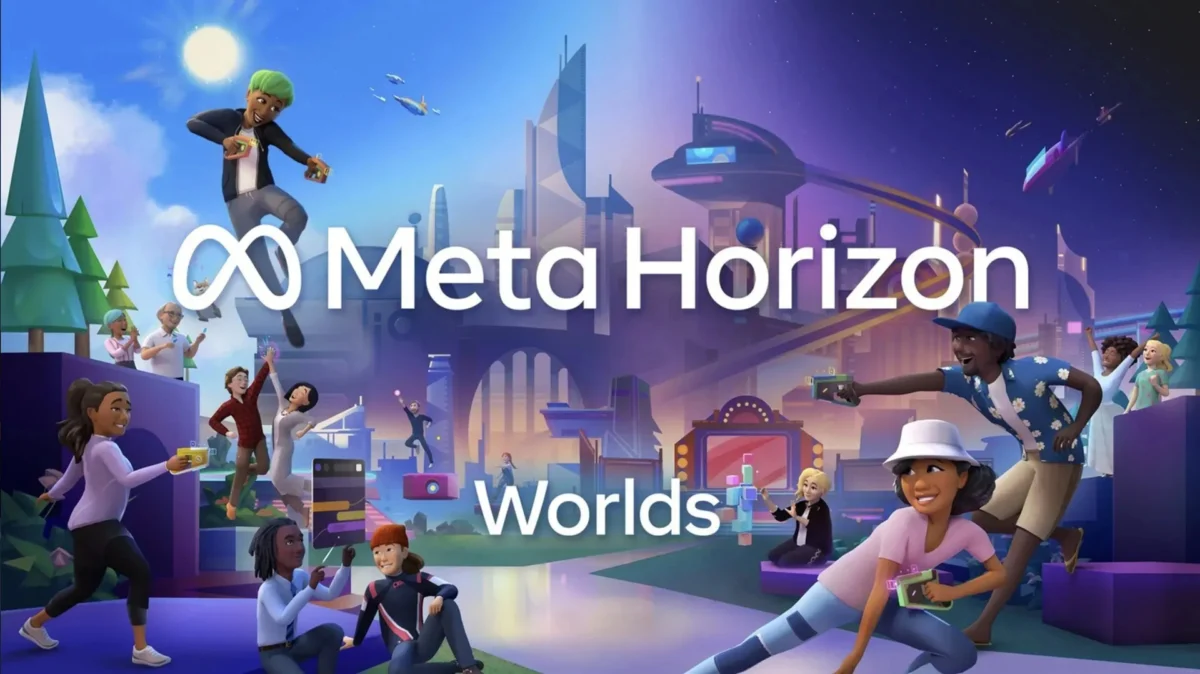
Meta’s strategy for Horizon Worlds has entered a period of profound ambiguity. Initially positioned as the cornerstone of Mark Zuckerberg’s metaverse vision, the platform has struggled to maintain consistent user engagement compared to incumbents like Roblox and Fortnite. In a series of rapid-fire announcements this week, Meta initially signaled a drastic retreat from the virtual reality (VR) roots of the platform, only to partially walk back those claims following significant community backlash.
The initial directive stated that Meta would completely discontinue the VR version of Horizon Worlds. According to that timeline, certain user-created worlds were slated for removal in March, with the entire application scheduled for deletion from the Quest Store on June 15. The company indicated a desire to shift focus toward mobile and web-based versions of the ecosystem to broaden its reach. However, within 48 hours, Meta revised this stance. The company now asserts that while the VR version is being moved to "life support" status, existing worlds—specifically those developed using the Unity-based professional tools—will remain accessible for the foreseeable future.
Despite this reprieve, Meta has proceeded with removing Horizon Worlds from the primary user interface of the Quest operating system. This move is intended to provide greater visibility to third-party indie developers on the Quest Store, but it effectively buries Meta’s own social platform. Analysts suggest this "de-prioritization" could have three major consequences: a loss of trust among professional creators who invested years into the platform, a fragmented user base as the transition to mobile begins, and a potential talent drain to competing platforms like VRChat or Rec Room.

NVIDIA GTC 2026: The Convergence of AI and Industrial XR
While Meta grappled with consumer social VR, NVIDIA’s GTC 2026 conference underscored a shift toward industrial XR and artificial intelligence. CEO Jensen Huang’s keynote focused heavily on the evolution of NVIDIA from a graphics-centric company to an "AI-first" powerhouse. The implications for the XR sector are primarily found in the expansion of NVIDIA Omniverse and CloudXR technologies.
NVIDIA announced expanded support for CloudXR on the Apple Vision Pro, facilitating high-fidelity streaming of complex 3D environments to Apple’s spatial computer. This has already seen immediate adoption in professional sectors. Autodesk VRED has integrated an immersive mode for the Vision Pro via CloudXR, allowing automotive designers to review high-poly models without local tethering. Similarly, flight and racing simulators like X-Plane and iRacing are utilizing this pipeline to bring PC-grade simulation to standalone headsets.
The conference also highlighted the role of Digital Twins. By combining generative AI with XR, NVIDIA is enabling corporations to simulate entire factory floors and robotic workflows in a virtual space before physical implementation. This shift suggests that while consumer VR faces headwinds, the enterprise and industrial sectors are seeing robust growth driven by AI integration.
Market Data and the State of XR Development
The current health of the XR ecosystem was further illuminated by the release of the Unity Game Development Report. The data reveals that 3% of developers currently using the Unity engine are working on shipping an XR-specific application. While this figure highlights the "niche" status of the industry compared to mobile or console gaming, the sheer volume of the Unity developer base means thousands of projects remain in active development.
However, this steady development is contrasted by recent high-profile studio contractions. Ubisoft confirmed the closure of Red Storm Entertainment’s VR division, the team responsible for Assassin’s Creed Nexus VR. Additionally, First Contact Entertainment, the developers behind the PSVR 2 exclusive Firewall Ultra, announced it would cease operations. Further reports from industry insiders suggest that Firesprite, a Sony-owned studio, recently canceled an unannounced Breaking Bad VR title following a wave of layoffs. These closures point to a consolidation phase where even major intellectual properties are not guaranteed commercial survival in the current market.

Technical Milestones: Hacking, Haptics, and Gaussian Splatting
On the technical front, the community has seen several grassroots breakthroughs. A group of hardware hackers successfully "jailbroken" the Sony PlayStation VR2 (PSVR 2) for enhanced PC use. While Sony recently released an official PC adapter, it lacked support for premium features like eye-tracking and HMD vibration. The new hack reportedly enables these features, potentially making the PSVR 2 one of the most capable headsets for the PC VR enthusiast market.
In the realm of haptics, VMOCION announced the VFORCE wearable, a device utilizing Galvanic Vestibular Stimulation (GVS). By sending small electrical impulses to the inner ear, the device can simulate the physical sensation of motion, a development that could significantly mitigate motion sickness in VR users while increasing immersion.
Furthermore, the emergence of 4D Gaussian Splatting (4DGS) is transforming volumetric video. Unlike traditional video, 4DGS allows for high-quality, animated 3D captures that can be viewed from any angle. While the technology is being explored for cinema and education, early adoption has surged in the adult entertainment industry. Platforms like Braindance VR have already begun streaming 4DGS content, proving the technology’s viability for high-bandwidth, immersive media.
Legal Actions and the Gaming Calendar
Meta has also taken a firm stance on ecosystem security, successfully shuttering "VRPirates," the most prominent platform for pirated Quest software. The legal victory for Meta is seen as a crucial step in protecting the revenue streams of indie developers who are currently struggling in a crowded market.
Looking forward, the VR Games Showcase scheduled for late March is expected to bolster consumer confidence. Announcements from studios like ARVORE (The Boys: Trigger Warning), Flat2VR Studios (Wrath: Aeon of Ruin VR), and Owlchemy Labs are anticipated to fill the content vacuum left by recent studio closures. Additionally, the Steam Spring Sale has launched, offering deep discounts on over a thousand VR titles, including Half-Life: Alyx and Into the Radius 2, providing an entry point for new users.

Broad Implications and Future Outlook
The events of this week suggest a bifurcated future for XR. On one hand, the consumer "Metaverse" as envisioned in 2021 is being scaled back in favor of multi-platform, mobile-accessible social spaces. On the other hand, the technical foundation of spatial computing—driven by AI, industrial digital twins, and advanced volumetric video—is maturing rapidly.
The success of the industry may no longer depend solely on the "killer app" from a major corporation, but rather on the collective efforts of the developer ecosystem. As industry veterans note, the current phase of XR is characterized by "random experimentation" from big tech, leaving the true path to mainstream adoption to be paved by independent creators and specialized industrial applications. The "Winter of VR" may persist for hardware sales, but the underlying technological spring continues to bloom in the professional and technical sectors.
About the Author