The extended reality (XR) industry faced a transformative period this week, characterized by the insolvency of a key European hardware manufacturer, significant ecosystem updates from Meta, and the introduction of new performance benchmarks by Valve. These developments highlight a sector in transition, as hardware developers navigate a tightening venture capital environment while software and streaming technologies continue to advance toward higher fidelity and broader interoperability.
Judicial Liquidation of Lynx and the European XR Landscape
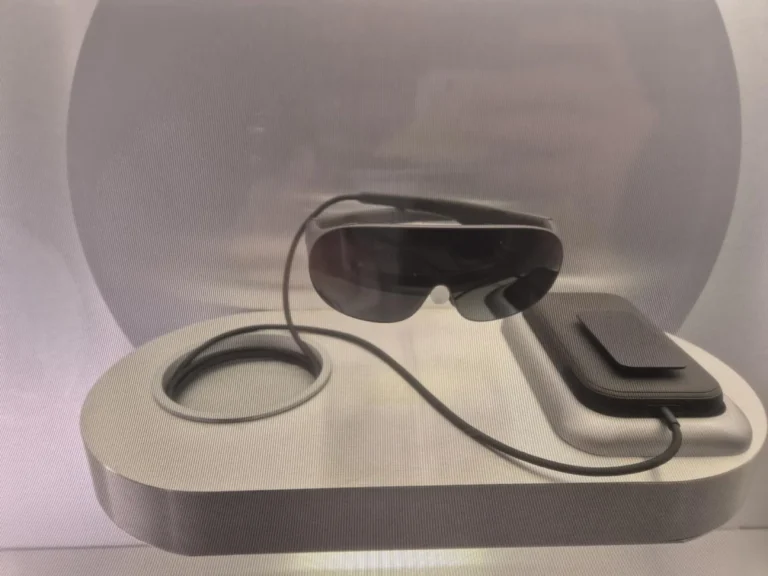
In a significant blow to the European technology sector, the French startup Lynx has officially entered judicial liquidation. Known for its development of the Lynx R1 and the recently announced R2, the company represented the only major European effort to produce a standalone mixed reality (MR) headset capable of competing with American and Asian tech giants.
The liquidation process, confirmed through French corporate registries and internal sources, follows a period of financial instability despite a successful Kickstarter campaign and multiple rounds of private funding. Lynx had positioned itself as a privacy-centric alternative to the Meta Quest ecosystem, utilizing an open-source philosophy and unique "prism" optics. However, the company struggled with manufacturing delays and the overwhelming market dominance of the Meta Quest 3 and Apple Vision Pro.
Industry analysts suggest that the assets of Lynx, including patents related to its optical stack and the designs for the R2, may be acquired by a larger entity seeking an entry point into the MR space. The failure of Lynx underscores the difficulty for small-scale hardware manufacturers to achieve the economies of scale necessary to survive in the current XR market.

Meta State of the VR Ecosystem and Future Hardware Pipelines
During the annual Game Developers Conference (GDC), Chris Pruett, Director of Content Ecosystem at Meta, delivered a "State of the VR Ecosystem" address. While the presentation avoided major hardware reveals, it provided critical data regarding developer success on the Horizon Store. Pruett emphasized that user retention has become the primary metric for long-term platform viability, moving beyond the initial "wow factor" of VR.
Key takeaways from Meta’s GDC presence included:
- Market Maturity: The Horizon Store now hosts a diverse range of profitable titles, with a shift toward long-term live-service games.
- Mixed Reality Adoption: Developers are increasingly integrating "passthrough" features, though Meta cautioned that MR must provide functional utility rather than acting as a simple visual novelty.
- Hardware Leaks: Supply chain reports indicate that Meta is collaborating with SeeYa Tech for the production of MicroOLED displays intended for a future headset codenamed "Puffin." These displays reportedly feature a resolution of 2560 x 2560 pixels per eye, representing a significant density increase over the current Quest 3 LCD panels.
Simultaneously, Meta faces internal and external pressures. Reports from Reuters indicate the company is weighing a workforce reduction of up to 20%, driven by escalating costs associated with artificial intelligence development. Furthermore, the company is contending with a new class-action lawsuit filed by Wolf Popper LLP, alleging privacy violations concerning the use of human reviewers to monitor video data processed by Meta AI.
NVIDIA and the Advancement of Cloud-Based XR Streaming
NVIDIA has announced significant upgrades to its XR streaming capabilities, aiming to bridge the gap between high-end PC rendering and mobile XR hardware. The company’s GeForce Now service has been updated to support a 90Hz refresh rate for virtual screen applications within VR headsets. This move is designed to reduce motion blur and latency for users playing traditional "pancake" games on large virtual displays.
Furthermore, NVIDIA’s CloudXR suite is now compatible with Apple’s visionOS. This allows enterprise users to stream complex, high-poly 3D environments from local workstations or NVIDIA RTX servers directly to the Apple Vision Pro. This integration is particularly relevant for the automotive, architectural, and medical sectors, where the onboard processing power of mobile chipsets is insufficient for high-fidelity digital twins.

Valve Establishes "Steam Frame" Performance Standards
Valve has introduced the "Steam Frame Verified" certification program to standardize performance expectations for games on its platform. While non-VR titles are required to maintain a minimum of 30 frames per second (FPS), the certification for VR titles is significantly more stringent, requiring a consistent 90 FPS.
This benchmark is intended to ensure a "gold standard" of comfort and immersion, as lower framerates in VR are directly correlated with vestibular mismatch and motion sickness. Although compliance is not mandatory for store listing, the "Verified" badge is expected to influence consumer purchasing decisions and set a baseline for the next generation of PC VR and standalone hardware.
Wearable Technology and the Integration of Multimodal AI
The smartglasses segment saw a major update with the release of V6.0 of the Meta Ray-Ban operating system. This update introduces enhanced AI capabilities, including multimodal processing that allows the glasses to "see" and interpret the wearer’s environment in real-time. New features include:
- Real-time Translation: Audio translation of foreign languages directly through the frame’s speakers.
- Object Identification: The ability for users to ask the AI questions about objects they are currently viewing.
- Interactive Minigames: The introduction of voice and gesture-controlled games designed specifically for audio-first wearables.
While these features represent progress in the "ambient computing" space, critics note that the user interface still relies heavily on mobile-centric paradigms. The industry continues to search for a "native" input language for smartglasses that moves beyond simple voice commands.
Innovations in 3D Reconstruction and OpenXR Interoperability
The field of Gaussian Splatting—a technique for high-fidelity 3D scene reconstruction—reached a milestone with the startup Gracia. The company announced a WebXR-based portal that allows for the streaming of Gaussian Splat videos directly to headsets via a web browser. This eliminates the need for large local downloads and proprietary applications, potentially democratizing the use of photorealistic 3D content in education and real estate.

In the realm of interoperability, independent developers have made strides in connecting disparate ecosystems. Developer Yannick Conte successfully demonstrated a custom OpenXR runtime for macOS, enabling a Meta Quest headset to function as a display for Mac-based VR applications. This "Quest Link for Mac" experiment highlights the persistent demand for cross-platform compatibility despite the "walled garden" approach favored by major manufacturers.
Market Trends and Content Ecosystem Shifts
The XR content landscape continues to fluctuate as studios adjust to changing hardware cycles. Schell Games announced it would step back from Among Us VR development to focus on new projects, while Bandai Namco confirmed the upcoming release of Little Nightmares VR: Altered Echoes.
The broader industry is also seeing a shift toward physical brand integration. Gorilla Tag, the viral VR hit, has secured a retail toy deal for 2025, signaling the transition of VR-native intellectual property into mainstream consumer culture. Additionally, The Thrill of the Fight 2 was featured in a live physical sporting event, demonstrating the growing intersection of VR fitness and professional esports.
As the industry moves into the second half of the year, the focus remains on whether hardware manufacturers can maintain consumer interest through software value and whether the enterprise sector will adopt spatial computing at a rate sufficient to offset the high costs of R&D. The liquidation of Lynx serves as a cautionary tale of the capital intensity required to compete, while Meta and NVIDIA’s technological strides suggest a future defined by AI integration and cloud-based rendering.
About the Author